

Perilla Seed
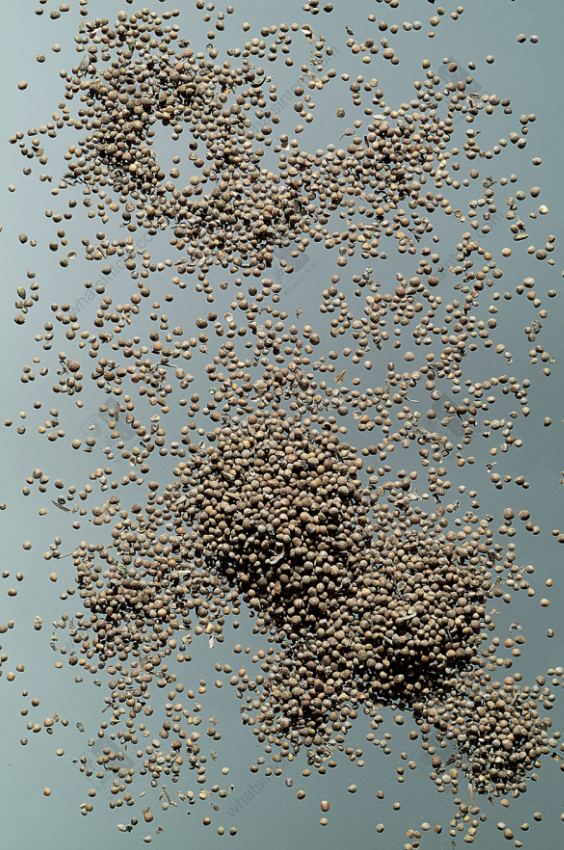 Perilla Seed (Ovate small achene, grayish-brown, raised reticulations, crushable, thin and brittle pericarp, fragrant and spicy)
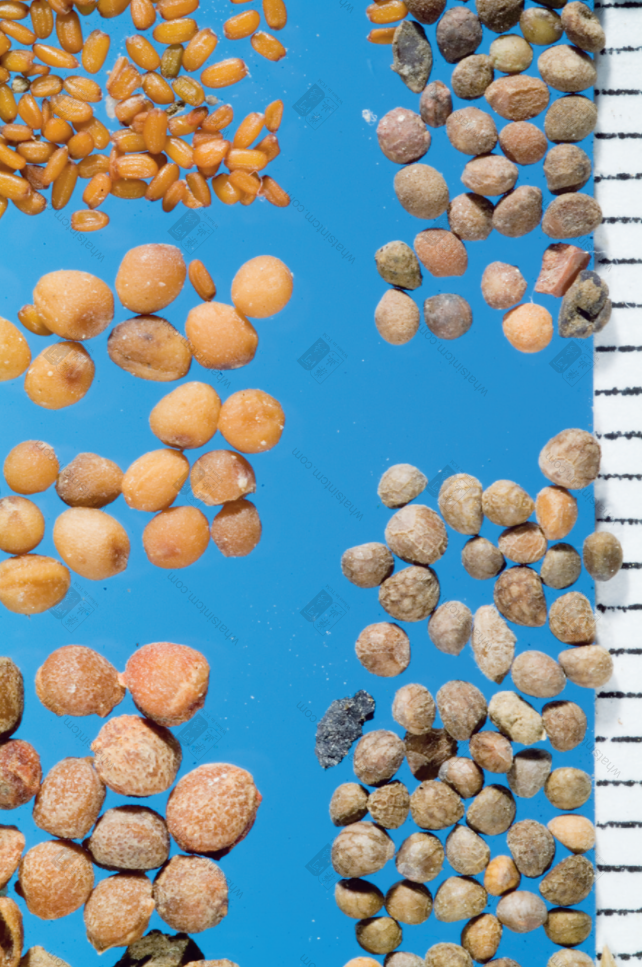 (Top right) Cuscuta Seed (Bottom right) Perilla Seed (Top left) Descurainia Seed (Middle left) White Mustard Seed (Bottom left) Paper Mulberry Fruit Seed
【Naming】
【Source】
Ming Yi Bie Lu (Miscellaneous Records of Famous Physicians), Middle Grade
【Common Usage Level】
C
【Botanical Origin】
The dried ripe fruit of Perilla frutescens (L.) Britt. var. acute (Thunb.) Kudo., family Lamiaceae.
【Characteristics】
The achene is ovate, about 1.5mm in diameter, brown to dark brown, with raised reticulations on the surface and a fruit stalk scar at the base. Under magnification, the reticulations are deep. The pericarp is hard and brittle. After removing the pericarp and seed coat, the yellowish-white kernel can be seen, containing oily substances. It has a slightly fragrant odor and a greasy feeling when chewed. Crushed, it has a fragrant aroma and a slightly pungent taste.
【Processing】
1. Raw Perilla Seed 2. Stir-fried Perilla Seed
【Identification】
The best quality seeds are dry, purplish-black, full, and free from ash, soil, sand, and other impurities. Yellowish-black seeds and small seeds are often from wild plants.
Perilla Seeds and Cuscuta Seeds are very similar in appearance and easily confused. An experienced identification method is to place both on a table or glass surface and press them with a fingernail. Seeds that break and have a fragrant aroma are Perilla Seeds, while those that do not break and bounce are Cuscuta Seeds. Alternatively, observe with a high-powered magnifying glass; seeds with raised reticulations on the surface are Perilla Seeds.
【Category】
Fruits