



Fang Ji (防己)
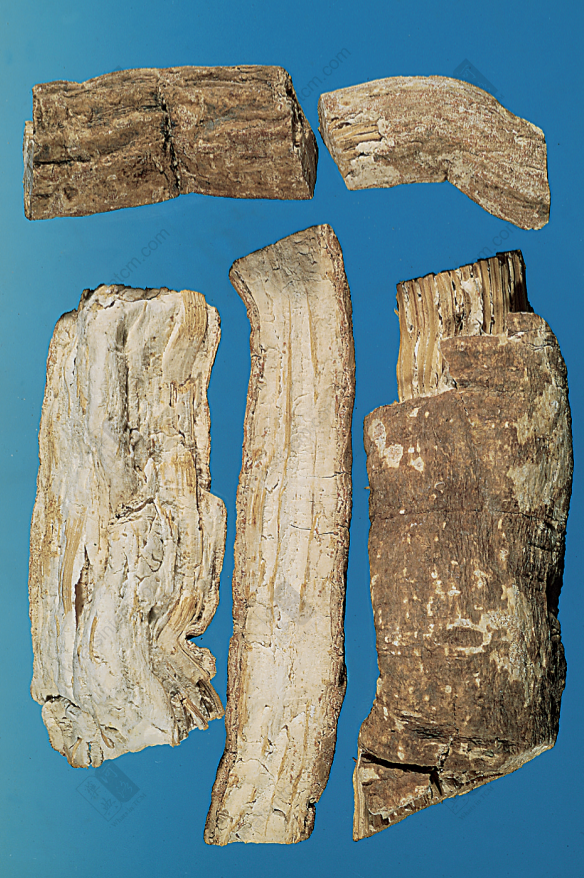
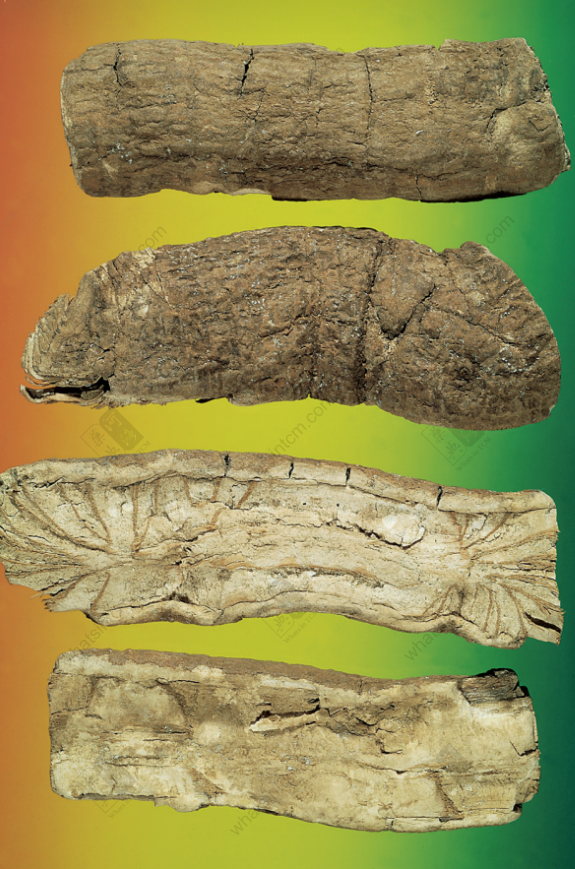
Han Fang Ji (漢防己) (= Fen Fang Ji (粉防己) (Cylindrical or semi-cylindrical, curved, with transverse grooves and nodules)
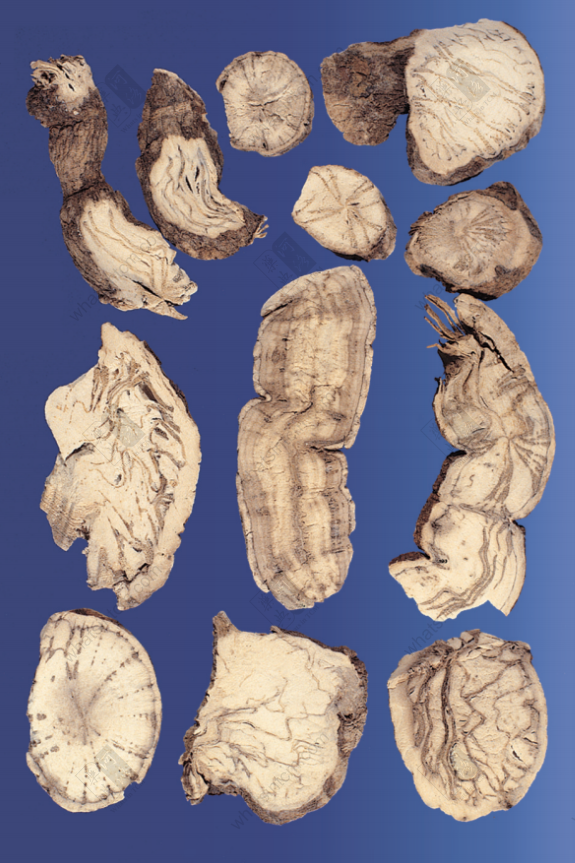
Han Fang Ji slices (漢防己片) (Brownish-white, powdery, vascular bundles, sinuous transverse lines and wrinkles)
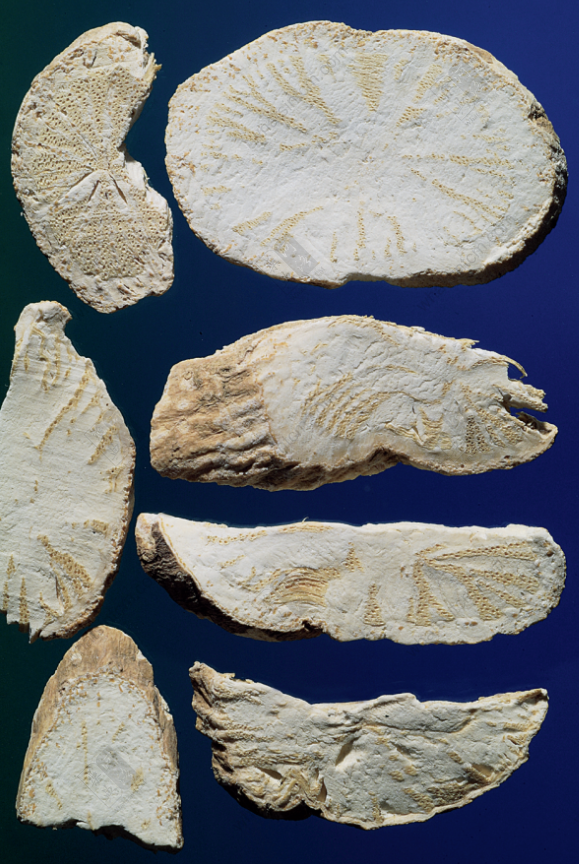
Han Fang Ji slices (漢防己片) (Spider web pattern)
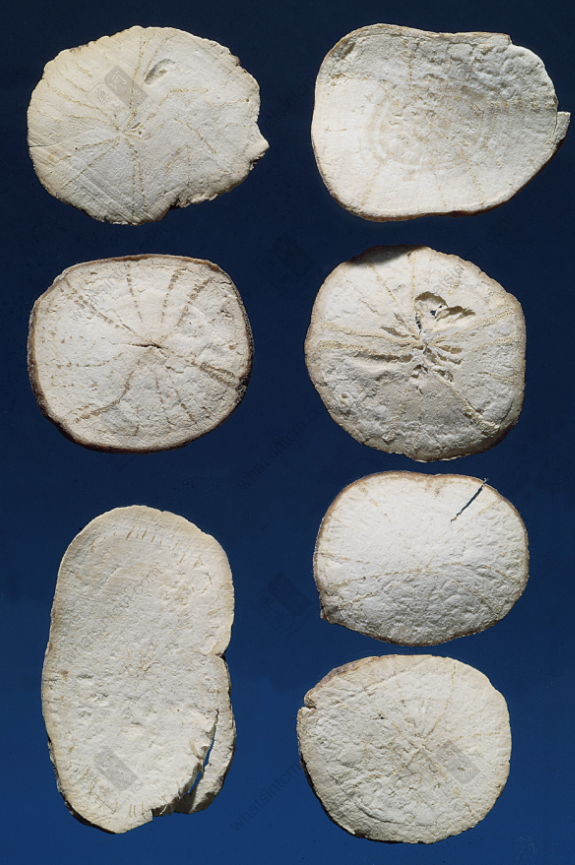
Han Fang Ji slices (漢防己片)
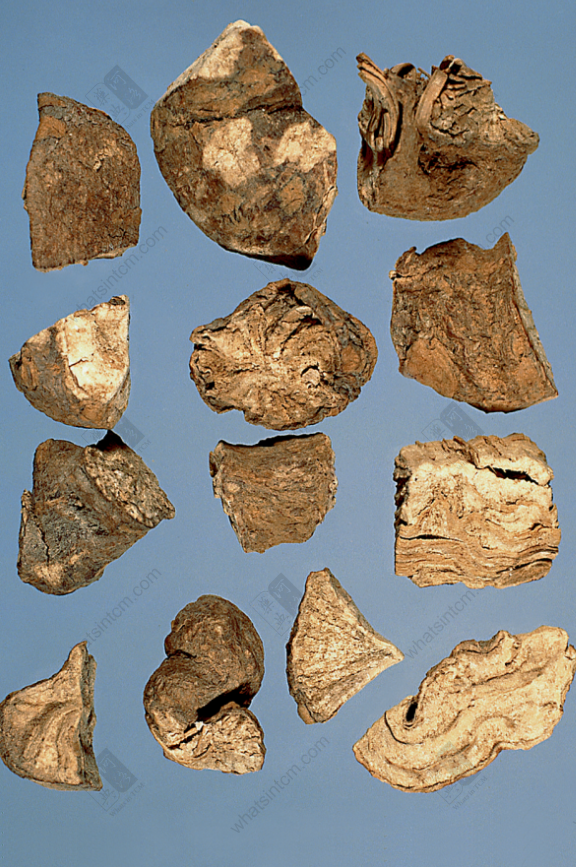
Han Fang Ji (漢防己)
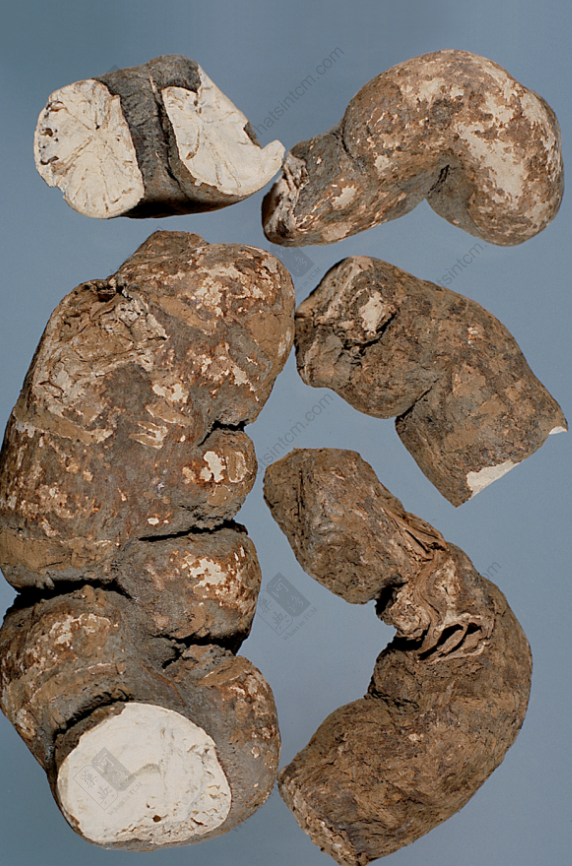
Fen Fang Ji (粉防己) (Another type)
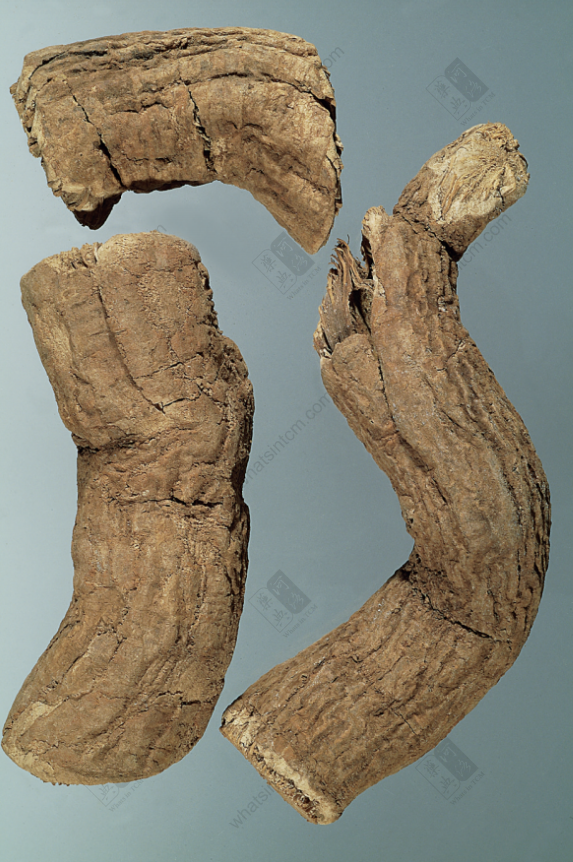
Guang Fang Ji (廣防己)
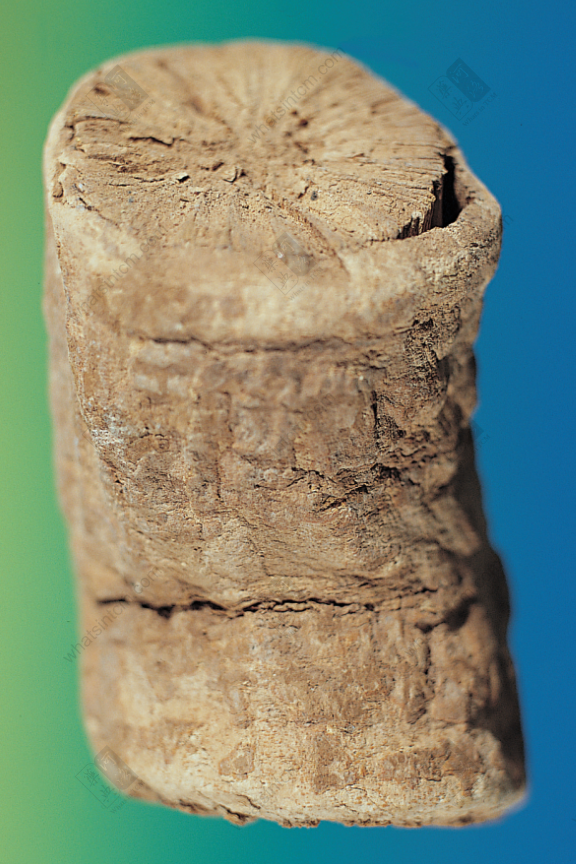
Guang Fang Ji (廣防己)
Guang Fang Ji (廣防己)
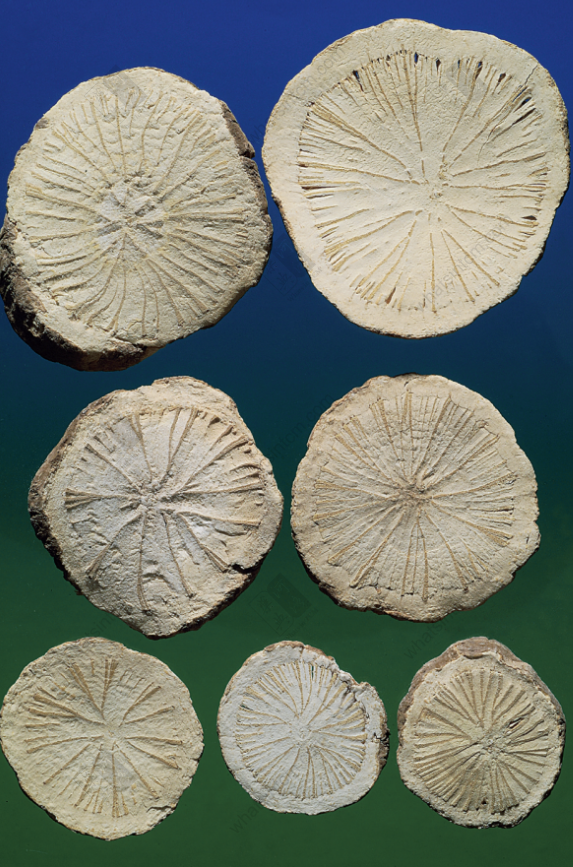
Guang Fang Ji slices (廣防己片) (Wheel pattern) (Wood part and rays arranged alternately)
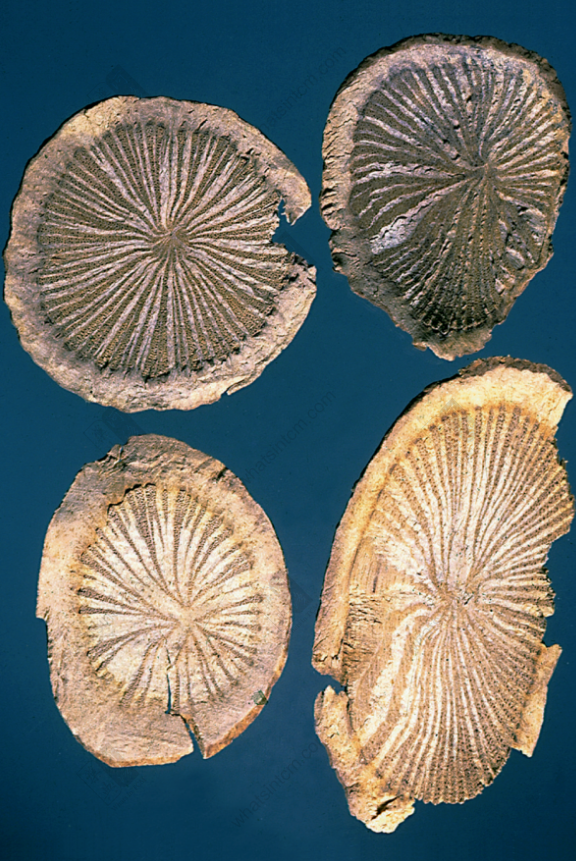
Guang Fang Ji slices (廣防己片) (Powdery)
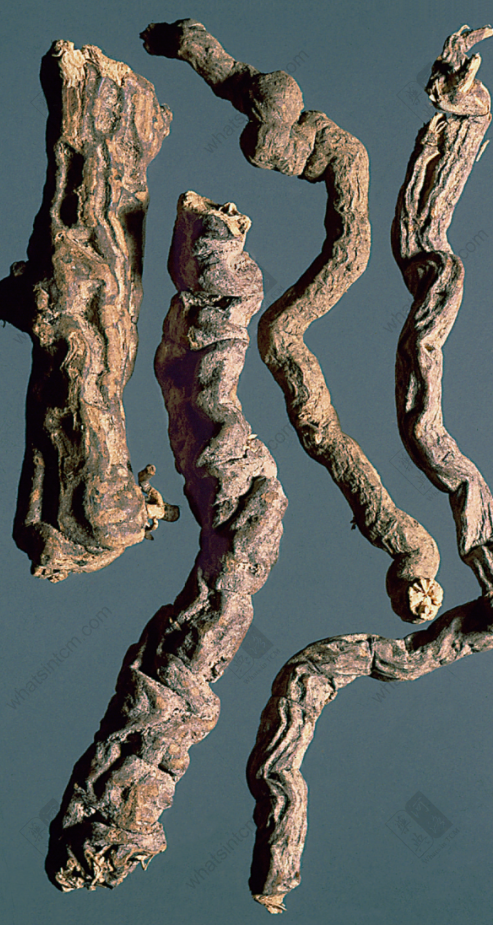
Mu Fang Ji (木防己) (Wavy and curved)
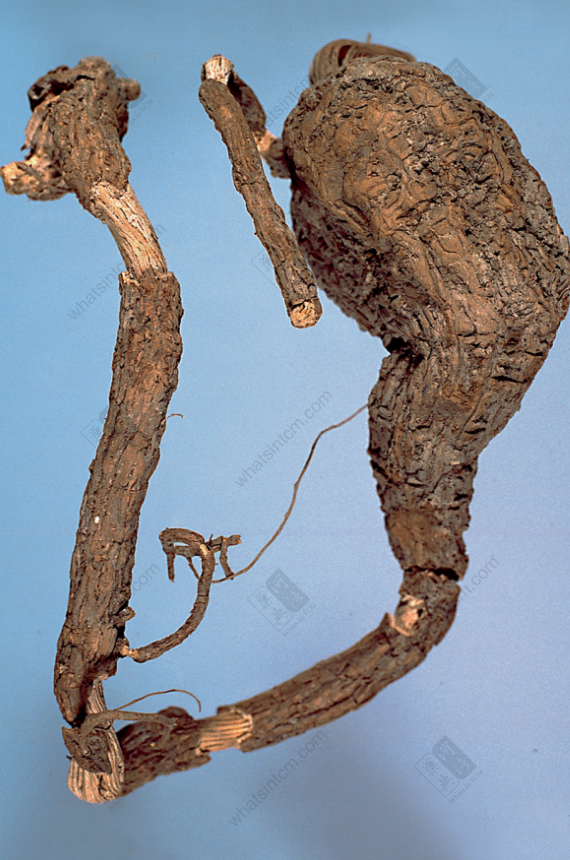
Mu Fang Ji (木防己)
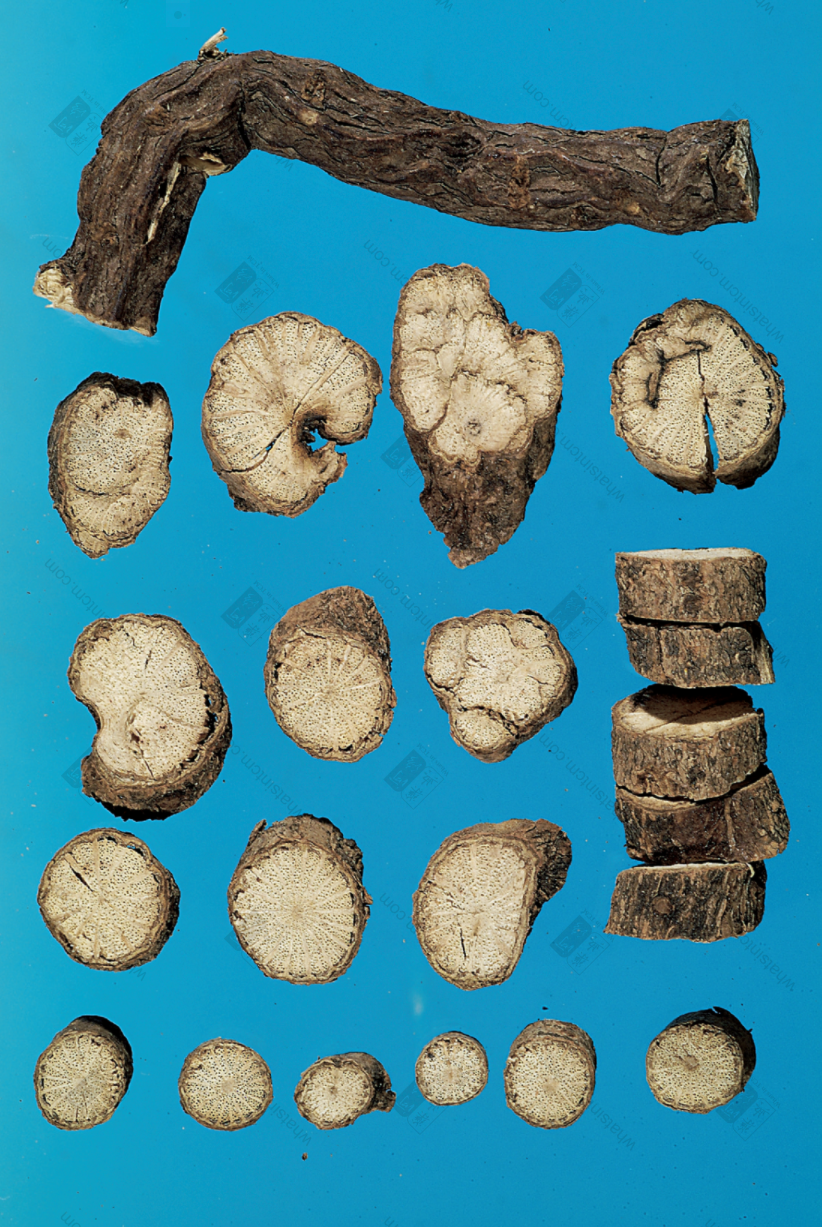 Mu Fang Ji slices (木防己片) (Non-powdery)
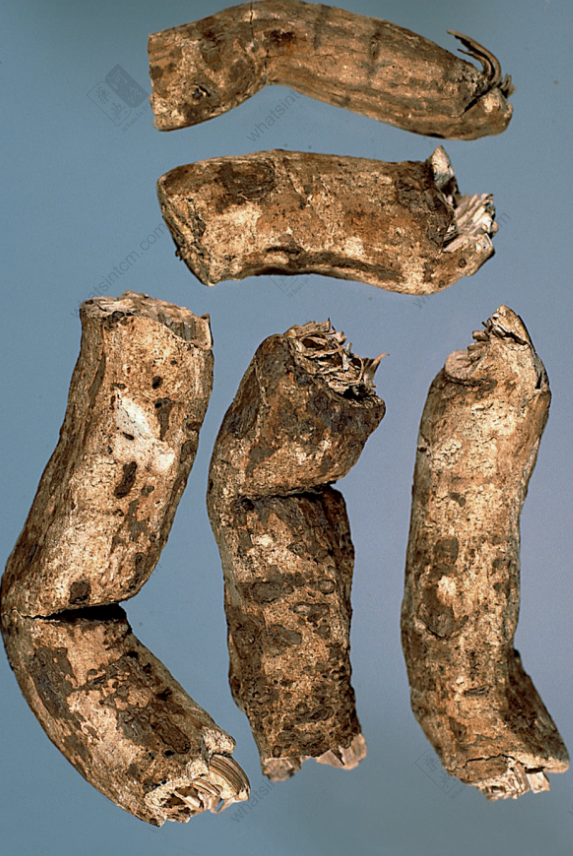
Hanzhong Fang Ji (漢中防己) (Also called Mu Fang Ji (木防己))
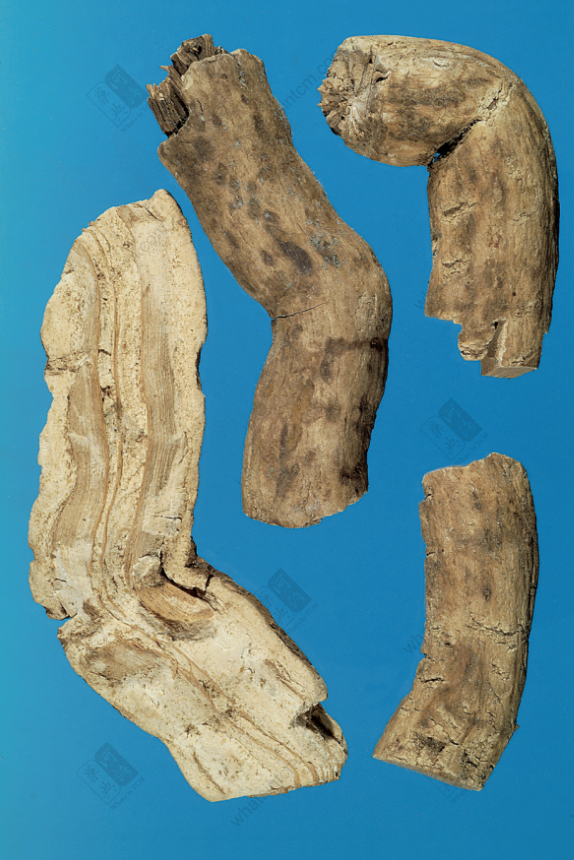
Hanzhong Fang Ji (漢中防己)
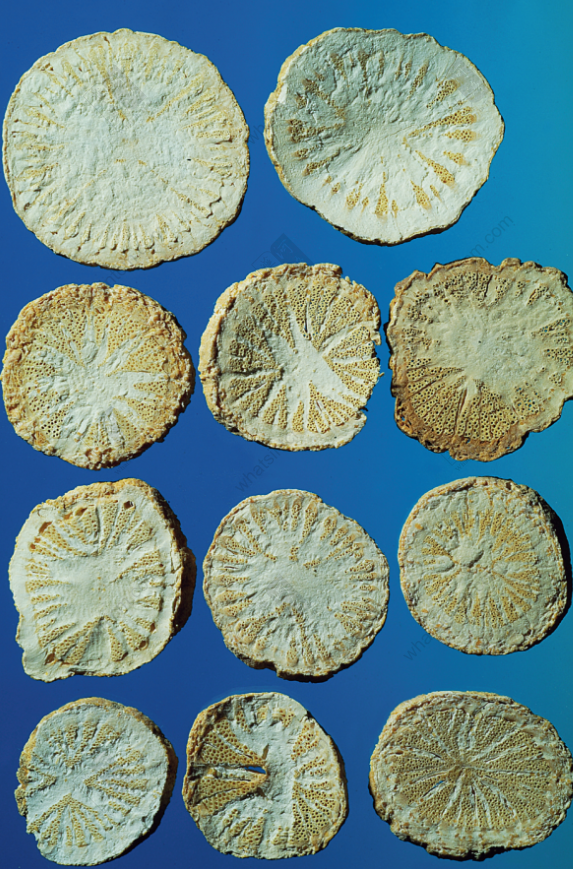
Hanzhong Fang Ji slices (漢中防己片) (Powdery, vascular bundles, bundles)
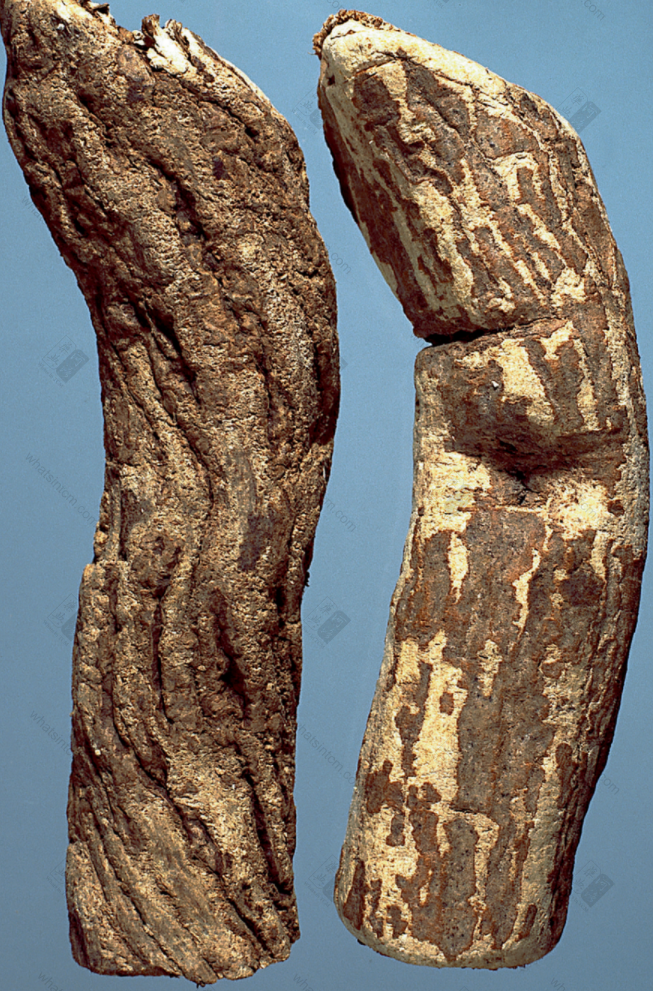
Mu Fang Ji (木防己) (Another type)
【Naming】
Fang Ji (防己)
【Source】
Shen Nong’s Herbal Classic – Middle Grade
【Common Usage Level】
B
【Botanical Origin】
(1) Han Fang Ji is the tuber of Stephania tetrandra S.Moore (Menispermaceae). (2) Guang Fang Ji is the root of Aristolochia fangchi Y. C. Wu. ex Chow et Hwang (Aristolochiaceae). (3) Mu Fang Ji is the root of Cocculus trilobus (Thunb.) DC. (Menispermaceae). (4) Hanzhong Fang Ji is the root of Aristolochia kaempferi Willd. f. heterophylla (Hemsl.) S. M. Hwang (Aristolochiaceae).
【Characteristics】
(1) Han Fang Ji is the tuber of Stephania tetrandra. The dried root is cylindrical, semi-cylindrical or lumpy, somewhat curved, with transverse grooves and nodular masses at the bends. Most of the commercial product is longitudinally cut in half, 10~15㎝ long and 1~3㎝ in diameter. The surface is grayish-white if the cork layer has not been removed, relatively smooth, and with visible dark transverse grooves. The cut surface is light brownish-white, powdery, the vascular bundles are light brown, and appear as curved transverse lines or wrinkles. The cross-section is flat, with obvious light brown curved transverse or wrinkled lines (spider web pattern). It is heavy and firm in texture and breaks easily. It has no odor and a bitter taste.
The processed pieces are circular, semi-circular or irregularly fragmented, about 1㎜ thick, the cut surface is yellowish-white, the cortex is thin, the cambium ring is obvious, and the brownish-black vascular bundle part and the yellowish-white rays form radial patterns.
(2) Guang Fang Ji, the root is cylindrical or semi-cylindrical, slightly curved, with deep transverse grooves at the bends, 8~15㎝ long and 1.5~4.5㎝ in diameter. The surface is brown, rough, and with many longitudinal wrinkles if the cork layer has not been removed. The cut surface is grayish-white, lacking powderiness, with visible longitudinally, transversely or curvedly arranged vascular bundles, and it is easy to peel off in the form of spicules along the direction of the vascular bundles. It is hard in texture and does not break easily. The cross-section shows fine and dense radial patterns (wheel pattern). It has a slight fragrance and a slightly bitter and astringent taste.
(3) Mu Fang Ji, the root is cylindrical or nearly flat cylindrical, wavy and curved. About 15㎝ long and 1~2.5㎝ in diameter. The surface is dark brown, slightly uneven, with deeply sunken and twisted grooves, and visible transversely elongated lenticel-like objects and traces of removed branch roots. It is light and hard in texture, woody, and does not break easily. The fracture surface is yellowish-white, non-powdery, the cortex is very thin, and the xylem is almost completely lignified, with visible radial narrow vascular bundle groups passing through. It has no odor and a slightly bitter taste.
(4) Hanzhong Fang Ji is the root of Aristolochia kaempferi Willd. f. heterophylla. The medicinal material is also called Mu Fang Ji, and is cylindrical and curved, 8~15㎝ long and 2~3㎝ in diameter. Usually, the outer skin has been removed, and it is light brownish-yellow in color. It is firm in texture and does not break easily. The fracture surface is yellowish-white, powdery, the cortex is thicker, and the xylem shows radial vascular bundle groups. The vascular bundle groups are mostly combined into a bundle in the central direction, branching into 2 or 3 forks outward. It has a slight fragrance and a bitter taste.
The main differences between the three types of Fang Ji:
Name
Item | Fen Fang Ji (粉防己) | Guang Fang Ji (廣防己) | Hanzhong Fang Ji (漢中防己)
Source | Root of Stephania tetrandra S.Moore (Menispermaceae) | Dried root of Aristolochia fangchi Y. C. Wu ex L. D. Chou et S. M. Hwang (Aristolochiaceae) | Root of Aristolochia hetero- phylla Hemsl. (Aristolochiaceae)
Shape | Irregular cylindrical, semi-cylindrical or lumpy, often curved and nodular | Cylindrical or semi-cylindrical, slightly curved | Cylindrical, curved
Size | Length 5-10 cm, diameter 1-3 cm | Length 6-18 cm, diameter 1.5-4.5 cm | Length 4-10 cm, diameter 1.2-1.5 cm
Surface | Grayish-brown, rough, with fine wrinkles, visible obvious transverse protruding lenticels, light grayish-yellow if the cork has been removed, with deep transverse grooves at the bends | Grayish-brown, rough, with longitudinal grooves, light yellow if the cork has been removed, with scraped marks, relatively smooth | Residual outer skin is grayish-brown, light brownish-yellow if the cork has been scraped off, relatively smooth and flat.
Fracture Surface | Slightly flat fracture surface, showing powderiness; the cross-section is grayish-white, light yellowish-green vascular bundles are sparsely or discontinuously arranged radially | Powdery, uneven fracture surface, spiky, sometimes the cortex or xylem can be seen separating; the cross-section is grayish-white or grayish-brown, with obvious light brown vascular bundles, arranged radially like a wheel | Uneven fracture surface, showing powderiness; the cross-section is yellowish-white, the cortex is thicker, and the xylem vascular bundles are mostly combined into a bundle in the center, branching outward into two or three forks.
Odor | Slight odor, bitter taste | Slight fragrance, odorless, bitter and astringent taste | Slight fragrance, slightly bitter and astringent taste
Efficacy | Promotes urination to reduce swelling, dispels wind and relieves pain | Dispels wind and relieves pain, clears heat and promotes urination | Dispels wind and relieves pain, clears heat and promotes urination
【Identification】
Mingyi Bielu: “Fang Ji with patterns like spokes of a wheel is good”. Zheng Lei Ben Cao: “Tao Hongjing said: The best ones are large, greenish-white, and soft”, “The ones with patterns like spokes of a wheel are good”. Ben Cao Pin Hui Jing Yao: “The ones with large roots and powderiness are good”.
All kinds of Fang Ji are best with uniform strips, tender texture, thick powderiness, and few tendons and cracks. Smaller cylindrical ones with less powder and larger old roots with more tendons and less powder are secondary.
【Identification Terms】
1. Wheel pattern: The cross-section of the medicinal material has a relatively sparse radial structure, and the vascular bundles and rays are arranged in alternating radial patterns, forming a wheel-shaped texture. For example: Guang Fang Ji and Hai Feng Teng of the Aristolochiaceae family.
2. Pattern: Generally refers to the texture presented by the fracture surface of roots and rhizomes. Generally, the patterns are divided into ring patterns, line patterns, net patterns, cloud patterns, wheel patterns, betel nut patterns, crack patterns, etc. For example, the fracture surface of Guang Fang Ji is called a wheel pattern.
3. Spider web pattern: A special type of network pattern on the cross-section of Fen Fang Ji medicinal material. The xylem vascular bundles are arranged radially, the fibers and thin-walled cells next to the vessels are lignified, and the ray cells are not lignified, forming a wheel-shaped pattern, also shaped like a “spider web pattern”.
【Chapter】
Roots