


Dendrobium (石斛)
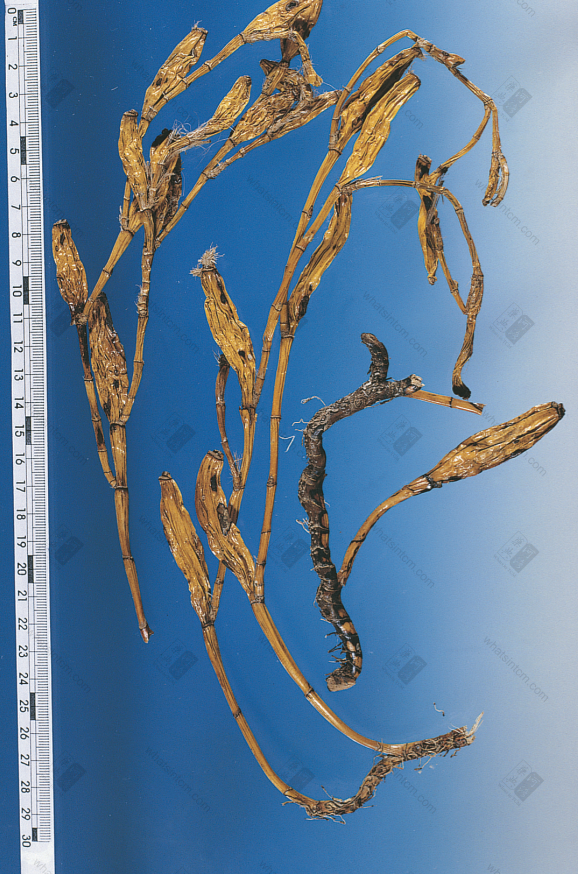
Dendrobium (Flattened cylindrical, golden yellow, smooth, firm, with fine longitudinal lines, fleshy, easily broken, yellowish-white fibrous fracture surface)
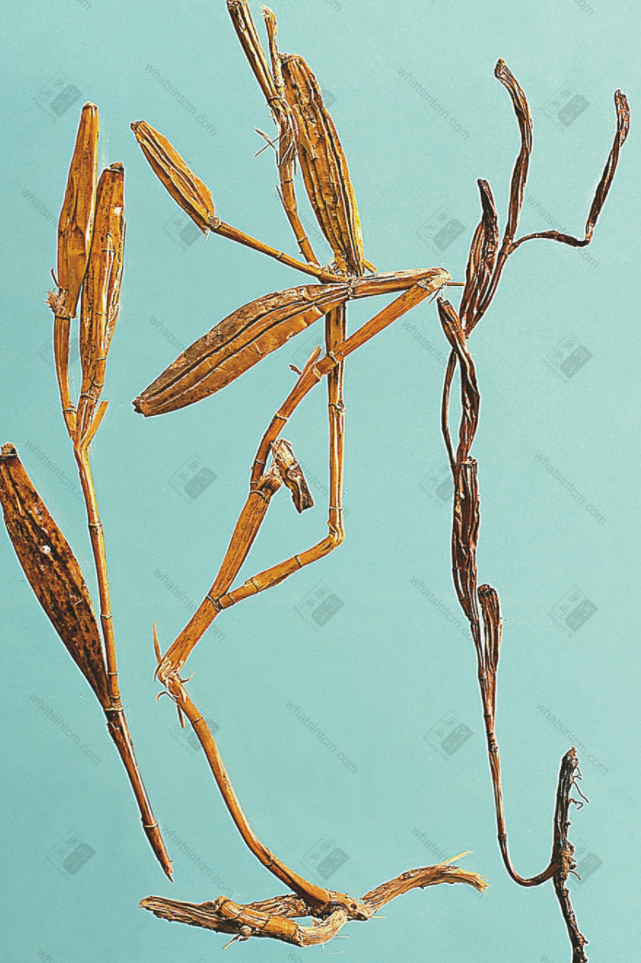
Hooked Dendrobium (Sticky) (Chewing: slightly sticky and smooth, with residue, expands when exposed to water)
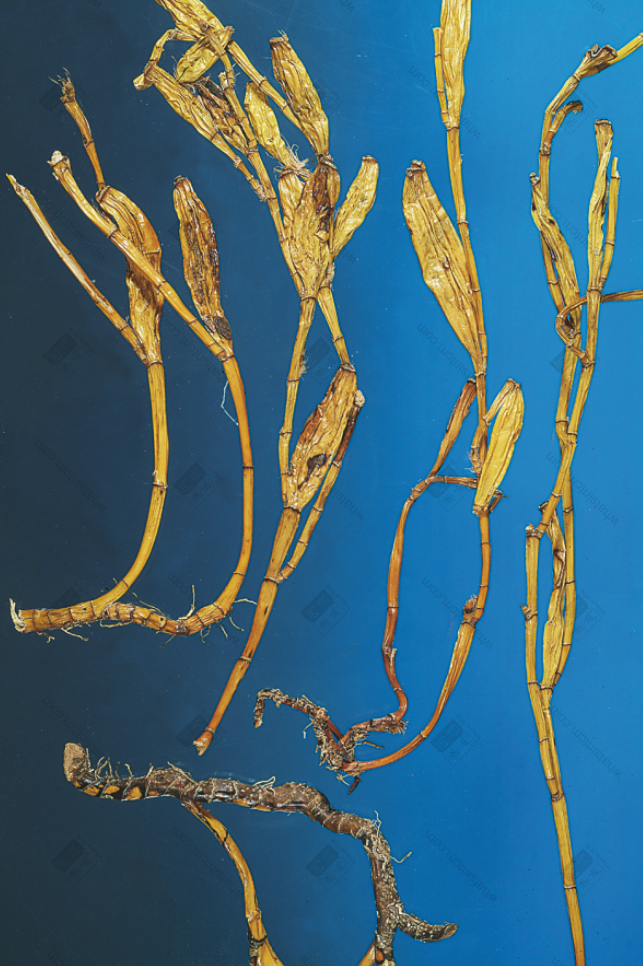
Mu Hu (木斛, Tree Dendrobium)
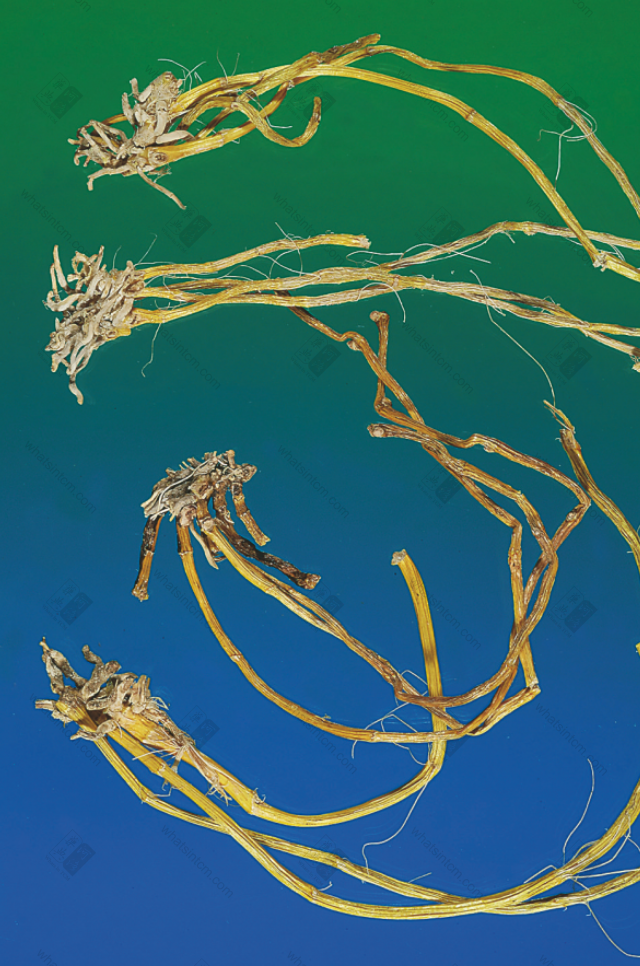
Jin Dendrobium (金石斛, Golden Dendrobium)
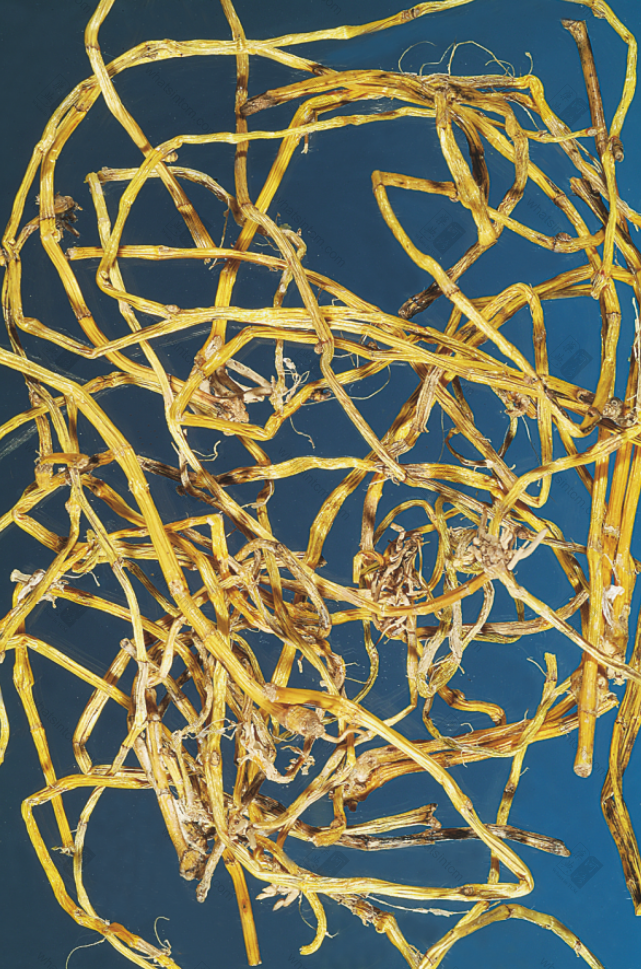
Jin Dendrobium Slices
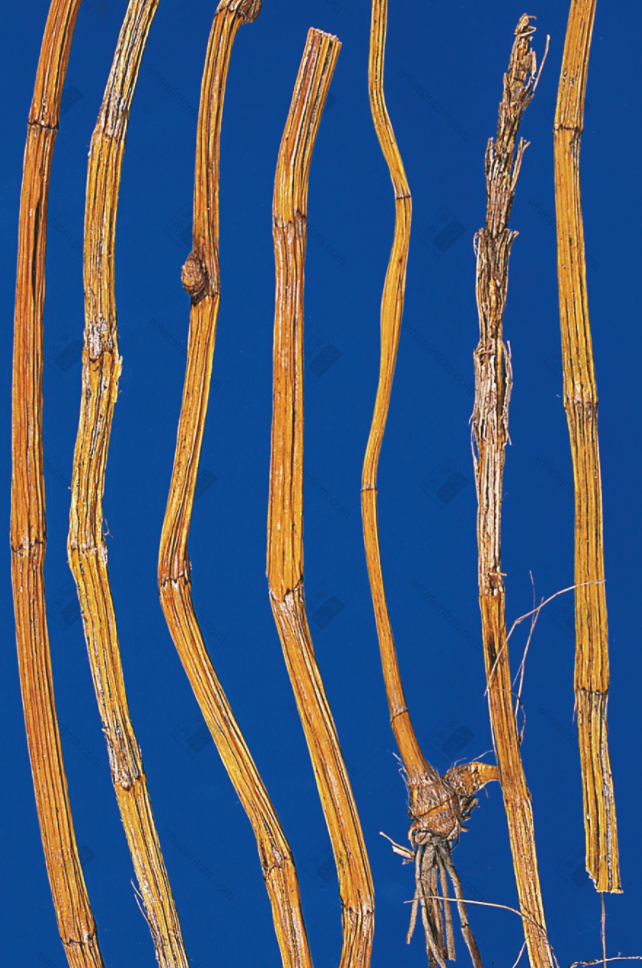
Jin Dendrobium (Stem length 20cm or more, diameter 3~5mm, cylindrical, golden yellow-green, glossy, with longitudinal grooves, distinct nodes)
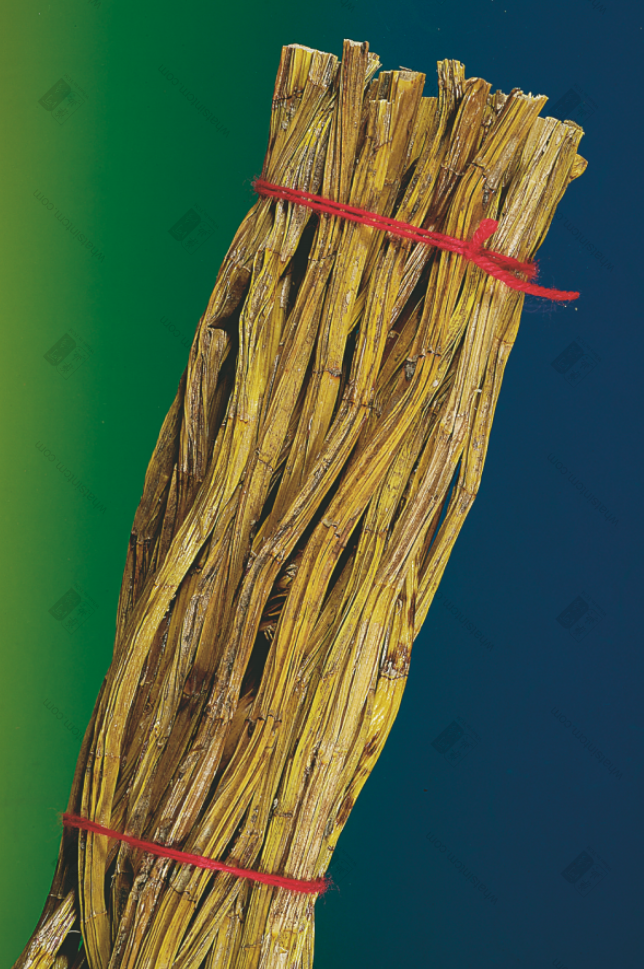
Huang Cao Dendrobium (黃草石斛, Yellow Grass Dendrobium) (Wild from Anhui)
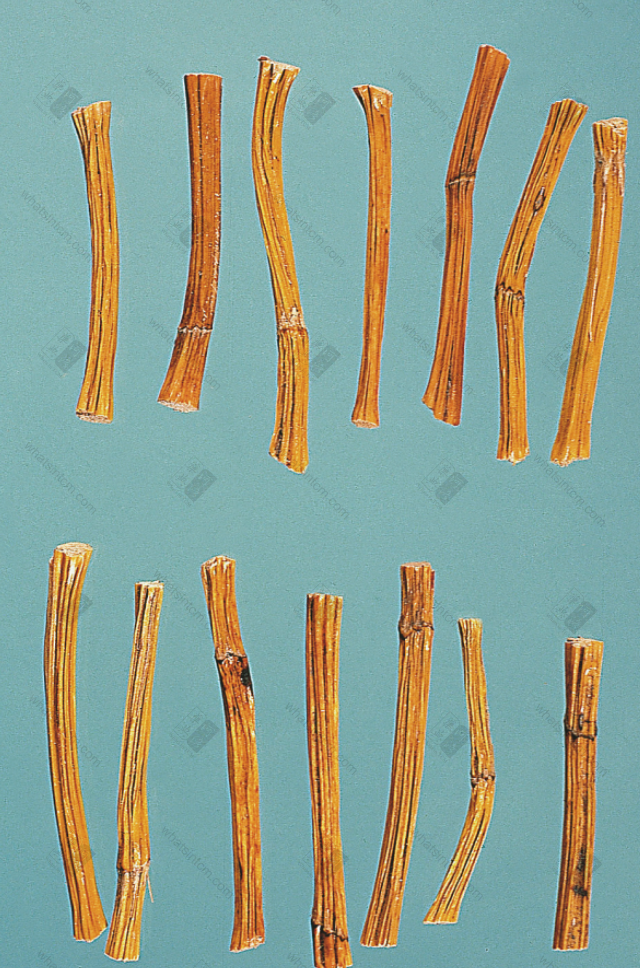
Jin Dendrobium (金石斛, Golden Dendrobium)
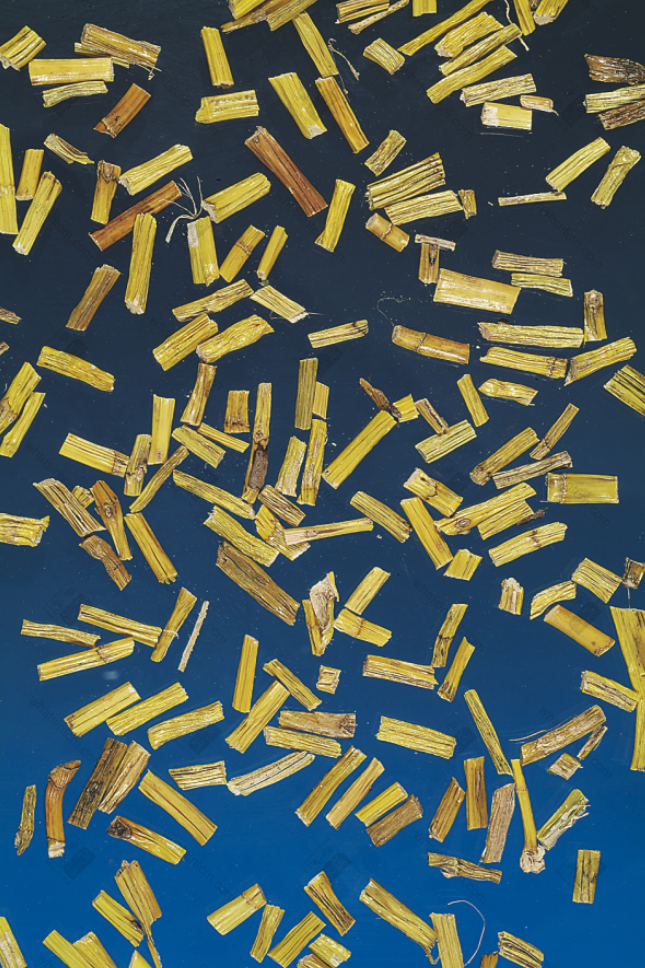
Huan Cao Dendrobium (環草石斛, Ring Grass Dendrobium)
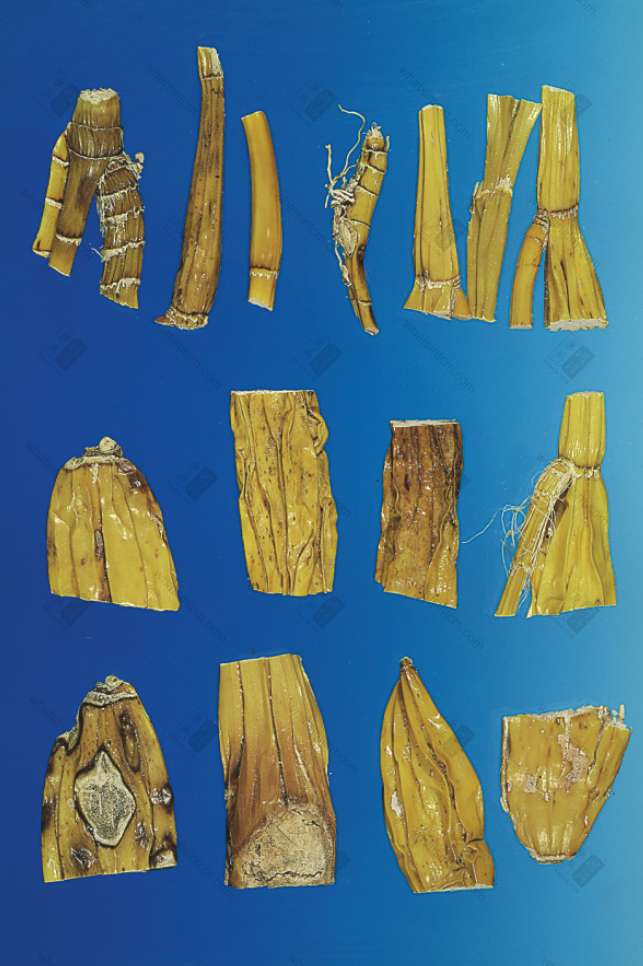
Liu Su Jin Dendrobium (流蘇金石斛, Tassel Golden Dendrobium)
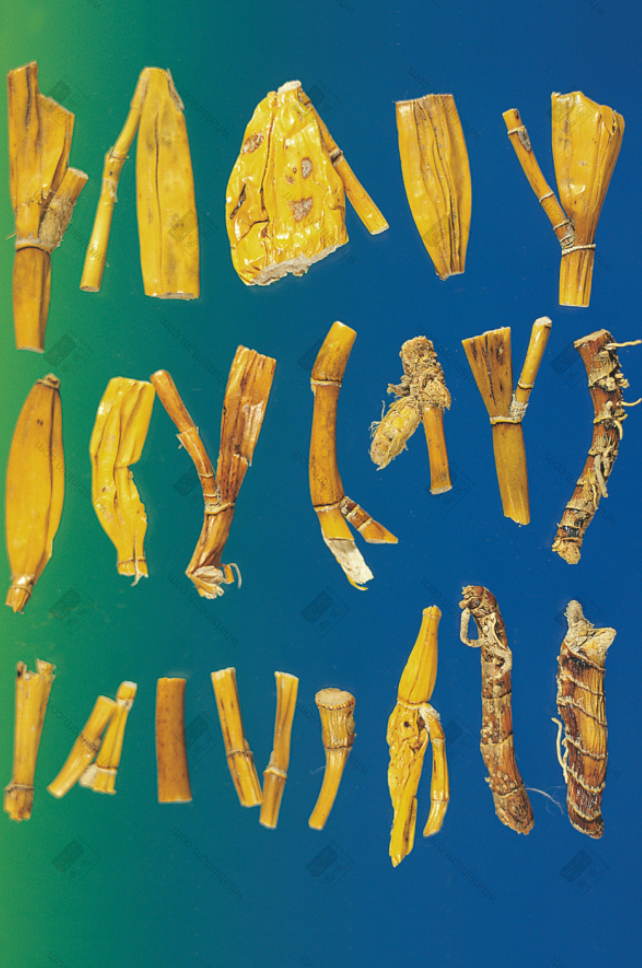
Dendrobium
【Naming】
【Source】
Shen Nong’s Herbal Classic – Superior Class
【Commonly Used Level】
B
【Botanical Origin】
Orchidaceae family, Dendrobium genus, such as Dendrobium nobile Lindl., Dendrobium chrysanthum Wall., and Dendrobium spp. The dried whole herb.
【Characteristics】
Due to different varieties and processing methods, it is usually divided into the following types:
(1) Dendrobium nobile: A processed product of the plant Dendrobium nobile. The dried stem is approximately 20-45 cm long and 0.5-1 cm in diameter. The base is cylindrical, while the middle and upper parts are flattened cylindrical. The middle and upper parts of the stem are flattened and curved in the shape of a halberd. The stems are thin and brightly colored, with a golden yellow surface and a slight green tint. It is glossy and firm, resembling a hairpin. At each node, it bends in a “zigzag” shape, with longitudinal grooves and distinct, brown nodes, sometimes slightly enlarged. The internodes are 2.5-3 cm long. It is light in weight and dense in texture, easily broken, with a whitish fracture surface, slightly fibrous and powdery. It tastes bitter and is slightly sticky when chewed.
(2) Dendrobium chrysanthum: The origin is Dendrobium chrysanthum Wall., D. faulhaberianum Schlecst, D. aduncum Wall ex Lindle, D. hercoglosum Rreihb.f., etc.
The stem is cylindrical, 30-50 cm long and 0.2-0.4 cm in diameter. The strips are straight, with a golden yellow or brownish-yellow surface and longitudinal lines. The nodes are distinct and sparse. It is light in weight and firm in texture, easily broken, with a fibrous fracture surface. The cross-sectional thick slices are nearly circular, with multiple angular edges, forming a gear shape, with whitish small dots scattered in the middle. It has no odor, tastes slightly bitter, and is slightly sticky when chewed. Sometimes, D. nanum is mixed with D. loddigesii. The difference is that D. nanum is straight and not curved, light in weight and loose in texture, and not easily broken.
(3) Dendrobium fimbriatum var. oculatum:
The stem is long cylindrical, 45-80 cm long. The commercial product is often cut into short sections of 1.5-3 cm. The strips are thicker, 0.5-1 cm in diameter. The surface is yellow or dark yellow, rough, with obvious longitudinal grooves. The stem nodes are sparse, and the internodes are about 3-4.5 cm long. It is light in weight and loose in texture, not easily broken, and the fracture surface is obviously fibrous. It has a slight odor and a slightly bitter taste. The main difference between D. fimbriatum and D. chrysanthum is that D. fimbriatum has thicker strips, darker surface color, obvious longitudinal grooves, sparse nodes, loose texture, and a large fibrous fracture surface.
(4) Ephemerantha lonchophylla (Hook. f.) P. F. Hunt et Summerh: Produced in Yunnan, Guangdong, Guangxi, and Sichuan. The whole herb is 25-40 cm long. The stem is cylindrical, 0.2-0.3 cm in diameter, shaped like a small bamboo branch. The whole body is golden yellow, with distinct nodes. A pseudobulb grows alternately on the nodes, commonly known as “gua” (melon). The pseudobulb is spindle-shaped, flattened, with longitudinal grooves, 3-6 cm long and 0.6-2 cm wide, with a golden yellow luster. It is light in weight and loose in texture, expands when burned, not easily broken, and the fracture surface is fibrous and off-white. It has a slight odor and a mild taste.
(5) Dendrobium loddigesii Rolfe, Dendrobium wilson Wang, Dendrobium moniliforme (Li) Sw., Dendrobium lohense Tang et Wang. Produced in Guangxi, Guangdong, and Yunnan.
The stem is curved and coiled into a团状 (tuán zhuàng, ball-like shape). A single stem is slender cylindrical, up to 30 cm long, and 0.2-0.3 cm in diameter. The surface is golden yellow and glossy, with fine and dense longitudinal wrinkles. It is flexible and can be broken, with a yellowish-white fracture surface, granular, and sticky when chewed. It has a slight odor and a mild taste. The highest quality small D. loddigesii is firm, easily broken, and the fracture surface is powdery. Other species are flexible and not easily broken.
【Identification】
《Annotations to Materia Medica》: “Dendrobium is best when shaped like a grasshopper’s thigh.” 《Illustrated Materia Medica》: “The best is the one that grows on rocks.” 《Essentials of Materia Medica》: “The best are those from Chenglu Jiangshi’an (authentic origin) and Guangnan.” 《Brief Materia Medica》: “Glossy like a golden hairpin, short and solid, growing on rocks, is good, named Golden Hairpin Dendrobium. The long and hollow ones are called Water Dendrobium and are not suitable for use.” 《Explanation of Classic Materia Medica》: “The newly grown ones are the best.” 《Seeking Truth in Materia Medica》: “Take those that are smooth and glossy like a golden hairpin, short and solid, as the best,” “or use it as a paste for the best results.”
1. Golden Hairpin Dendrobium: The best are those with long stems, golden yellow color, dense texture, and gloss.
2. Dendrobium chrysanthum: The best are those with uniform strips, golden yellow color, and dense texture.
3. Dendrobium loddigesii: The best are those with yellowish-green color, plumpness, and firmness.
【Identification Terms】
1. Golden Hairpin Dendrobium: A type of commercial specification for Dendrobium medicinal materials. The stem is slightly curved and slightly flattened, shaped like a golden hairpin.
2. Stickiness: Rich in mucilage, the fracture surface is gelatinous, and it is also sticky when chewed, such as Dendrobium and Asparagus.
3. Yuan Dou (圓斗, Round Dipper): One of the commercial specifications for Dendrobium medicinal materials. The word Dou (斗, dipper) comes from taking the side of the character 解 (jie, to dissect). That is, for Dendrobium stems longer than 8 cm that are not suitable for processing into Xi Feng Dou (西楓斗, Western Maple Dipper), cut them into sections of about 5 cm long, dry them on fire, and twist them into a circular shape. It is a type of product that is twisted into a clock spring shape with one end as the center of the circle. Regardless of its original plant, the product is collectively referred to as Yuan Dou or Yuan Feng Dou.
【Category】
Whole Herb
Related Products
