



Chinese Honey Locust Fruit
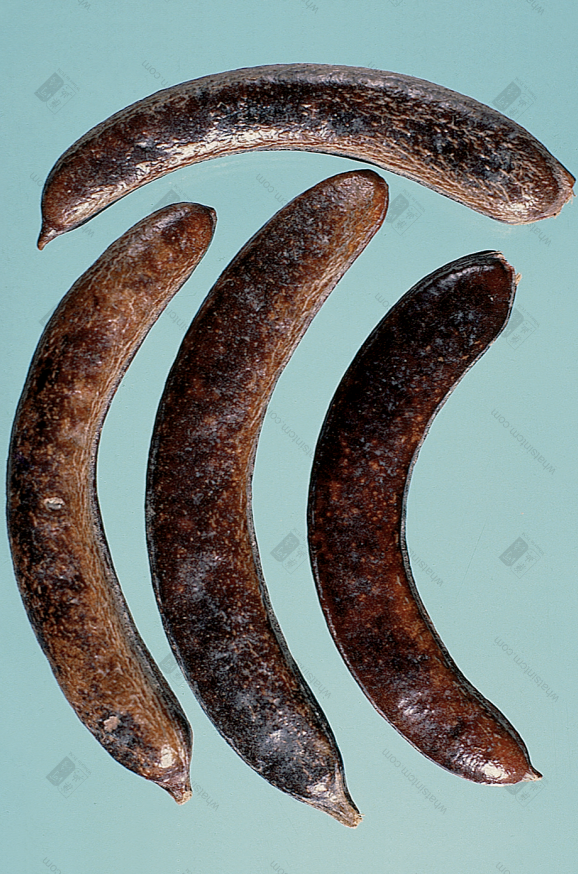 Chinese Honey Locust Fruit (Zao Jiao) (Scabbard-shaped, flat and curved, reddish-brown, with grayish-white waxy powder, hard, brittle, easily broken, pungent, causes sneezing)
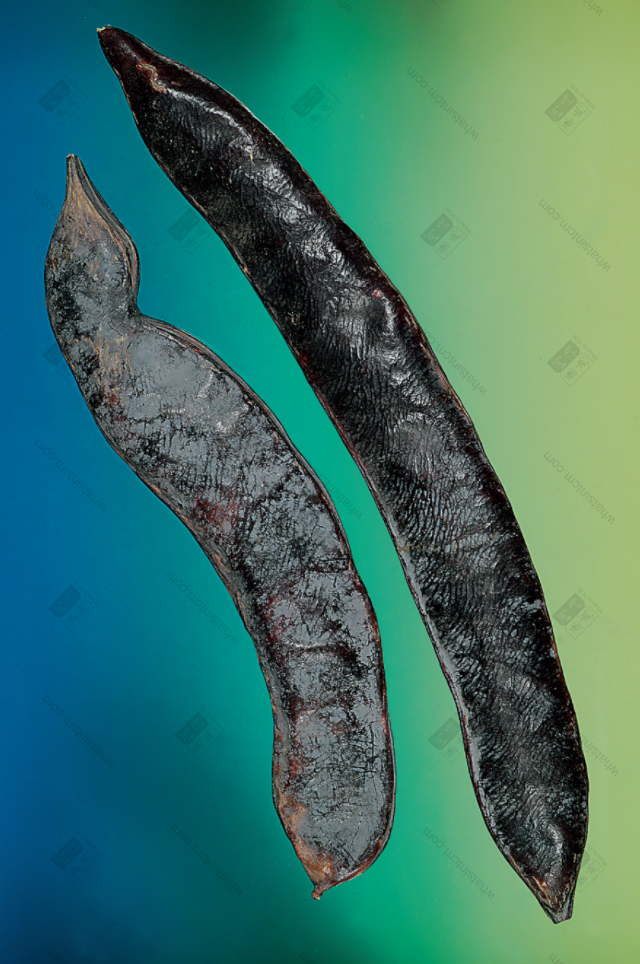 Chinese Honey Locust
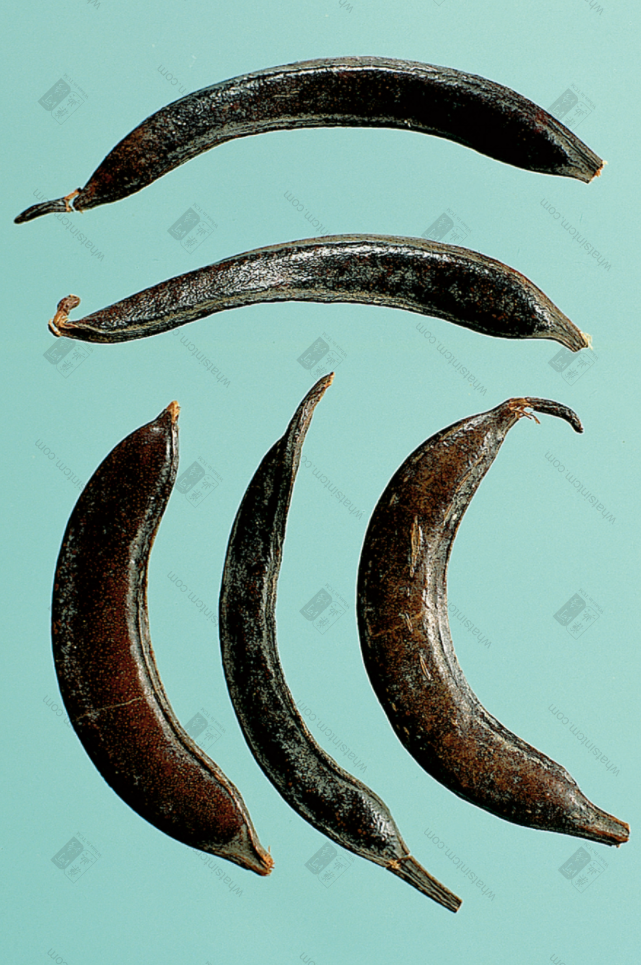 Boar Tusk Chinese Honey Locust Fruit
[Naming]
Chinese Honey Locust Fruit (Zao Jiao)
[Source]
Lower Grade in the Classic of Herbal Medicine
[Common Usage Level]
D
[Botanical Origin]
Chinese Honey Locust Fruit refers to the dried, mature fruit of Gleditsia sinensis Lam. of the Fabaceae family. Chinese Honey Locust Seeds refers to its dried seeds.
[Characteristics]
(1) The pods are scabbard-shaped and flat or slightly curved, 15~25㎝ long, 2~3.5㎝ wide, and 0.8~1.5㎝ thick. The surface is uneven, reddish-brown, and covered with a grayish-white powdery frost. After rubbing, it has a luster. Both ends are slightly pointed, the base has a short fruit stalk, and the dorsal suture is raised into a ridge. The texture is hard, and there is a sound when shaken. When peeled open, it is light yellow and contains many seeds. The seeds are flat and elliptical, with a yellowish-brown and smooth outer skin and a hard texture. The odor is pungent, and sniffing the powder causes sneezing.
(2) The seeds are spherical, 1.5~2㎝ long, with a yellowish-brown outer skin and a smooth surface. The hilum is located at the center of one end and appears as a brown spot. Peeling open the seed coat reveals two cotyledons that are white.
[Identification]
Essentials of Materia Medica: “One kind is small like boar tusks, one kind is long and withered, and one kind is fat and oily, with the oily ones being the best.” New Compilation of Materia Medica: “Chinese Honey Locust Fruit is useless when cooked; it must be used raw for the best effect.” Seeking Truth from Materia Medica: “Chinese Honey Locust Fruit is best when it is fat and oily.” Wen Tang’s Collection of Effective Prescriptions: “Chinese Honey Locust Fruit, scrape off the black skin and use the ones that are not worm-eaten.”
Chinese Honey Locust Fruit is best when the pods are long, dry, thick, plump, mature, firm, and free from insect damage. Chinese Honey Locust Seeds are best when they are large, blackish-brown, plump, firm, glossy, and free from mold and insect damage.
[Identification Terminology]
1. Boar Tusk Honey Locust: Cylindrical in shape, curved in a crescent shape, resembling a boar’s tusk. Also called Taiwanese Honey Locust or Tusk Honey Locust in the market.
2. Chinese Honey Locust Fruit: Also called Honey Locust Pods, this refers to the above-mentioned product, which is particularly long and large compared to the general product, also known as Large Honey Locust Fruit.
3. Tusk Honey Locust, also known as Boar Tusk Honey Locust, is the dried, immature fruit of Gleditsia officinalis Hemsley, belonging to the same family and genus, or the dried, infertile fruit of the aforementioned Gleditsia sinensis Lam. This product is cylindrical, slightly flat and curved, 5~11㎝ long, 0.7~1.5㎝ wide, with a purplish-brown or purplish-red surface covered with a grayish-white waxy powder. After rubbing, it has a luster, and the top has beak-shaped pistil residue. The texture is hard and brittle, easily broken, irritating, and spicy. The market considers Boar Tusk Honey Locust to be of better quality. Tusk Honey Locust is best when it is dry, small, plump, purple-red in color, glossy, and has a light green cross-section.
[Chapter]
Fruits