



Mulberry Leaf
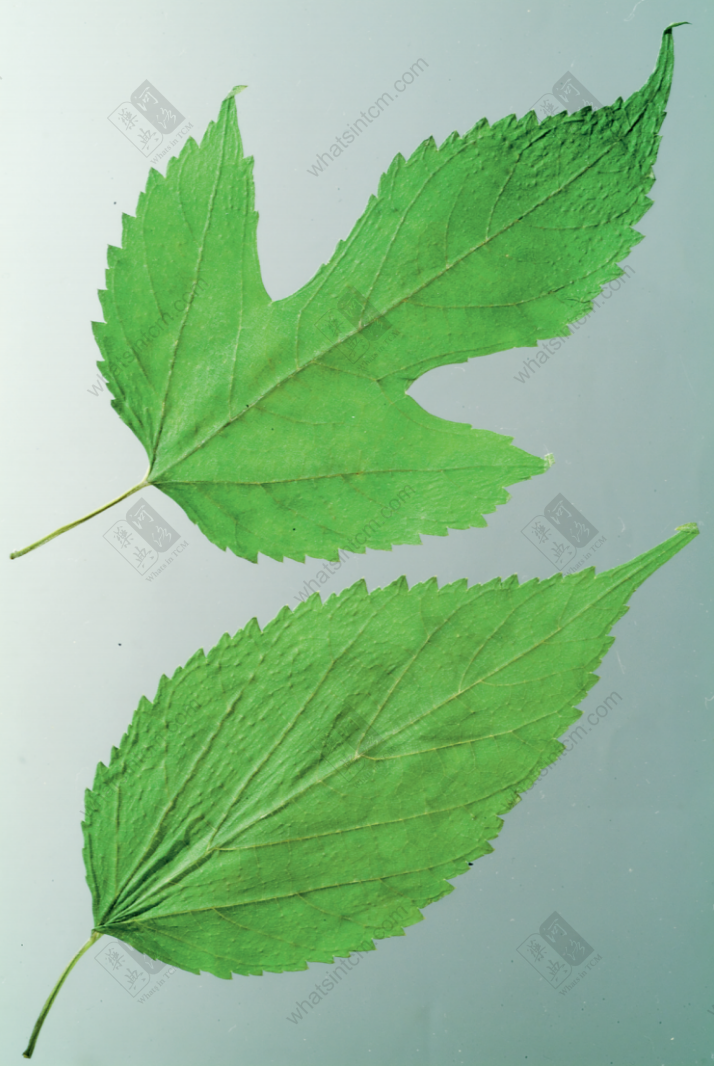
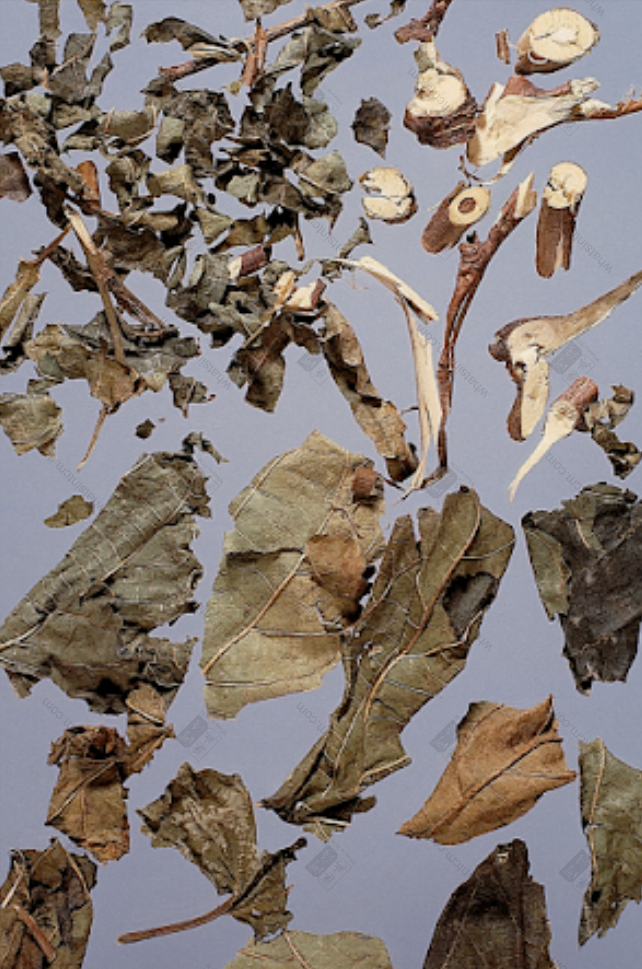 Mulberry Leaf (shrunken, broken, cracked, yellowish-green, yellowish-brown, with stalks, veins protruding in a small net-like pattern)
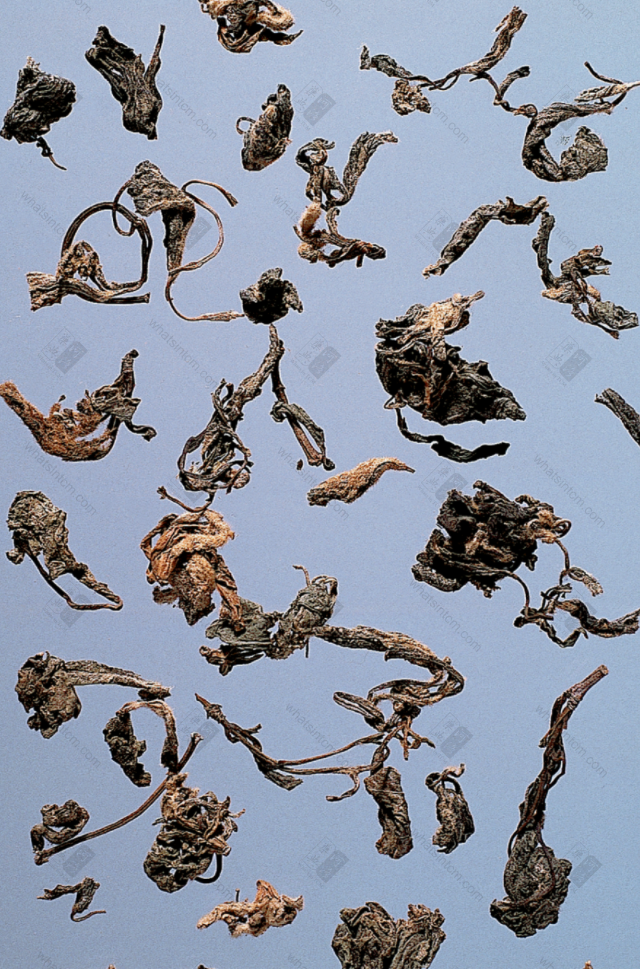 Mulberry Bud
【Naming】
【Source】
Classified as medium grade in the Classic of Herbal Medicine
【Frequency of Use】
C
【Botanical Origin】
The dried leaves of the mulberry tree Morus alba L. and the chicken mulberry M. australis Poir. of the Moraceae family.
【Characteristics】
The dried leaves are mostly curled and broken. Intact leaves are ovate or broadly ovate, 8~13cm long and 7~11cm wide. The apex is pointed, the edges are serrated, and sometimes they are irregularly divided. The base is truncate, rounded, or cordate. The upper surface is yellowish-green, slightly glossy, with fine hairs along the veins. The lower surface is slightly lighter in color, and the veins are interwoven into a network, densely covered with fine hairs. The texture is brittle and easily broken. It has a slight odor, and the taste is bland, slightly bitter and astringent.
【Identification】
《Xu Ming Yi Lei An》: “Mulberry leaves are best when collected on the 5th day of the 5th month, the 6th day of the 6th month, or the day of the Beginning of Winter.”
Good quality leaves are complete, large and thick, yellowish-green in color, brittle, and free of impurities. It is customary to use mulberry leaves that have been exposed to frost, called frost mulberry leaves or winter mulberry leaves. Mulberry buds are also good.
【Category】
Leaf Category
Related Products
