



Morinda Root
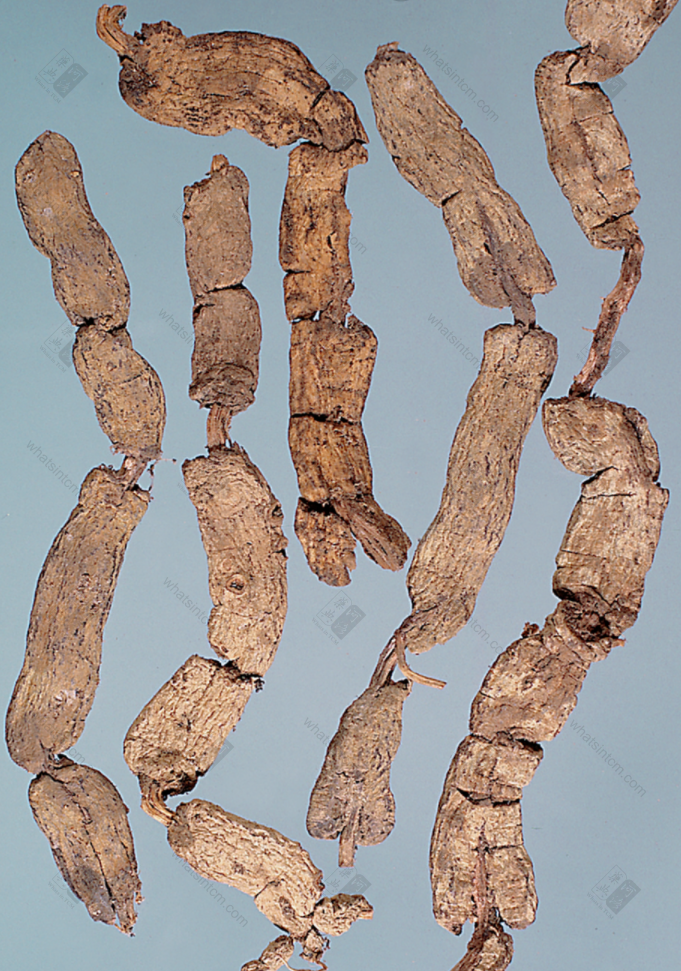
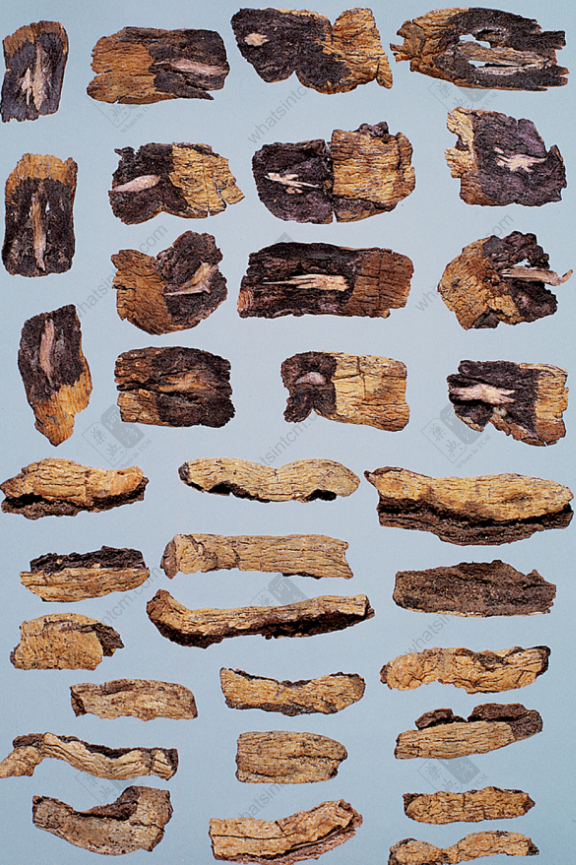
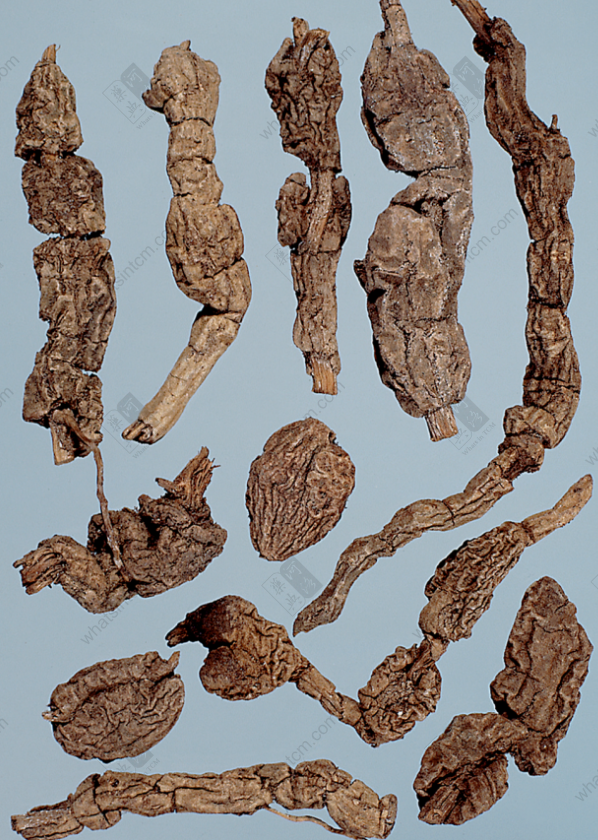
<img class="wp-image-13047 size-full" src="https://whatsintcm.com/wp-content/uploads/2020/07/p53-11-1巴戟天一等-e1608105238636.png” alt=”” width=”550″ height=”866″ /> Grade 1 Morinda Root (Thickened bark) (Rosary-like)
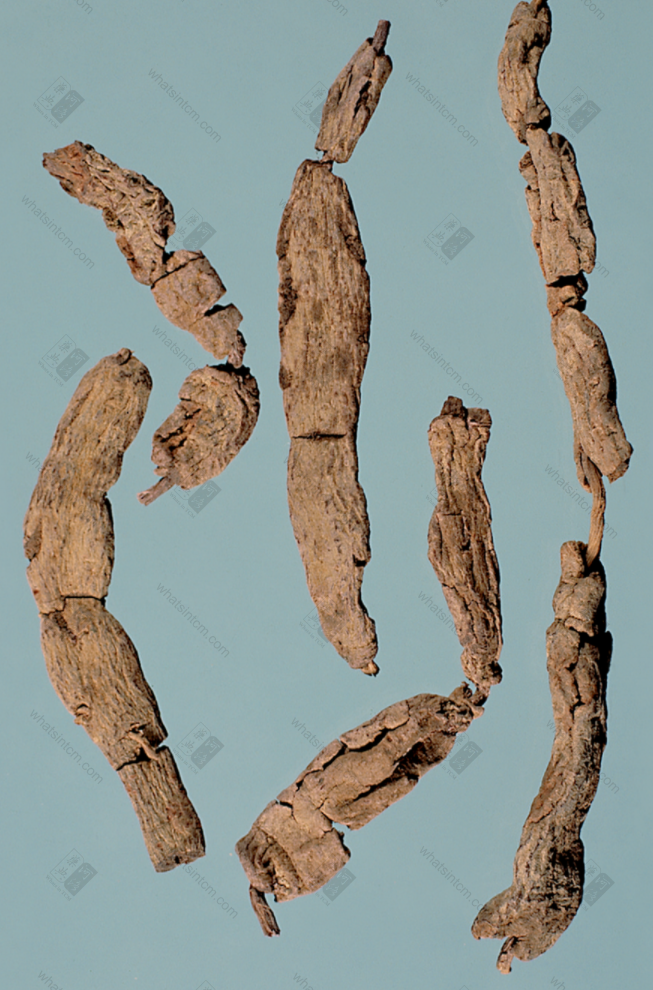
 Grade 2 Morinda Root (Chicken Intestine)
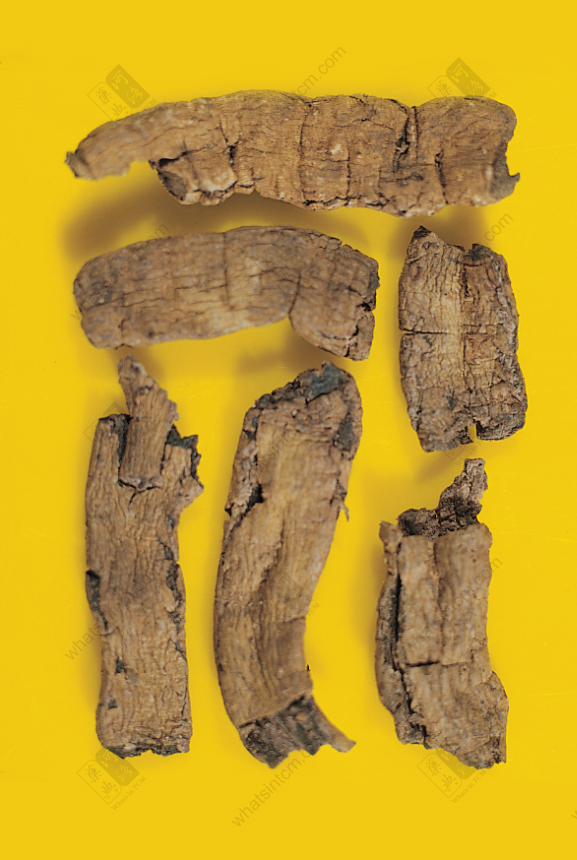
 Grade 3 Morinda Root (Exposed woody core at constrictions, small and tough)
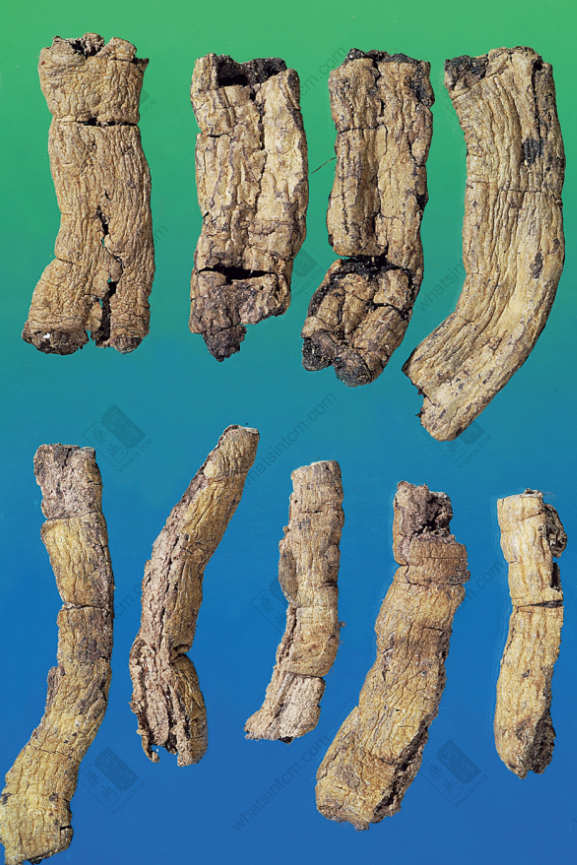
 Salt-steamed Grade 1 Morinda Root (Thick flesh)
 Wine-processed Morinda Root (Grades 1 & 2, core removed)
 Morinda Root Slices (Sliced, light purple, core removed)
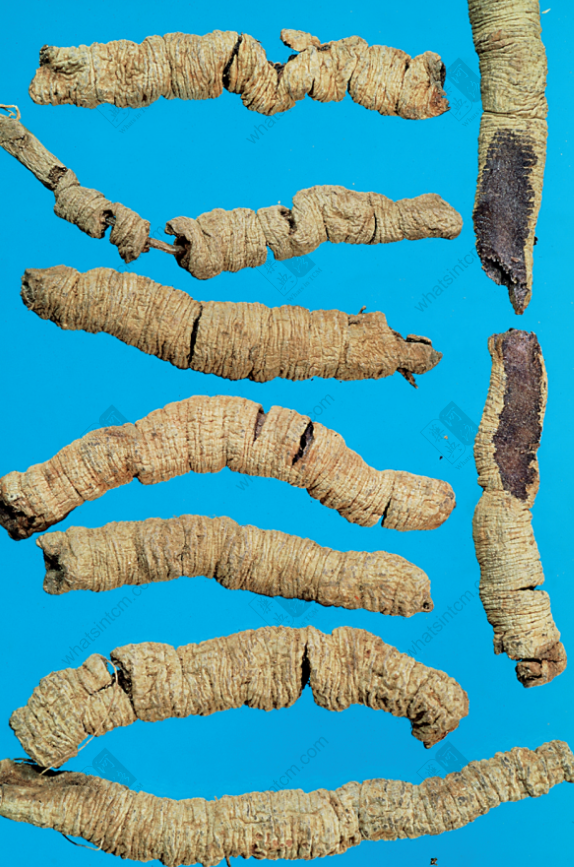 Morinda Root (Round, not flattened, not steamed)
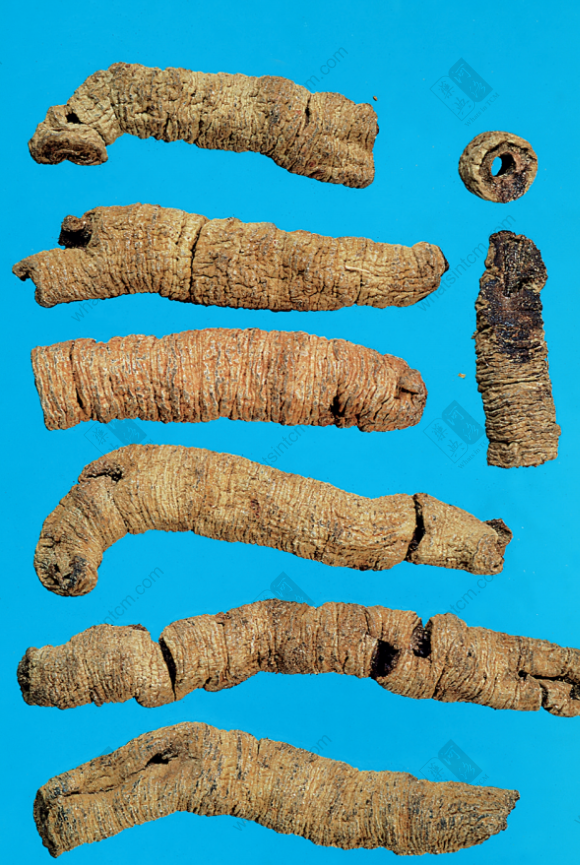 Round Morinda Root (Steamed)
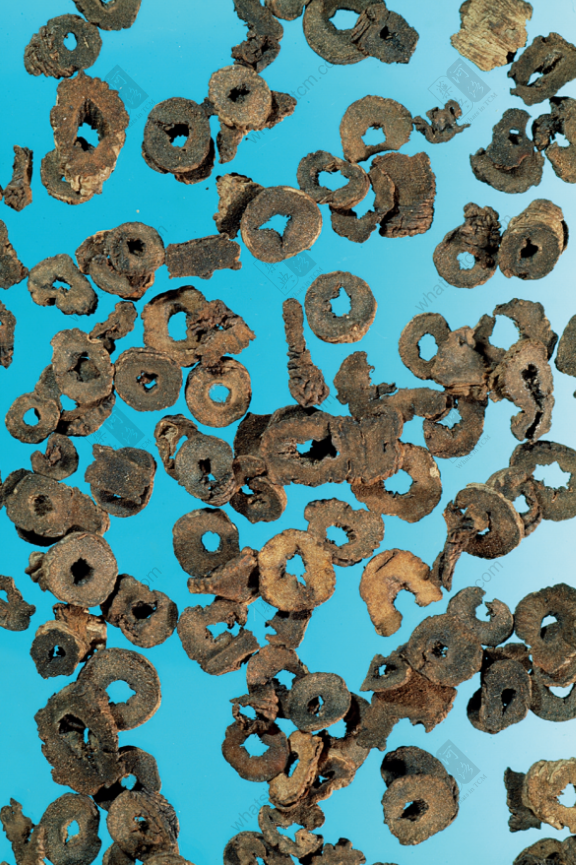 Round Morinda Root Slices (Steamed)
 Haiphong Morinda Root
【Naming】
【Source】
Shen Nong’s Herbal Classic, Superior Grade
【Frequency of Use】
B
【Botanical Origin】
The dried root of Morinda officinalis How, of the Rubiaceae family.
【Description】
This product is slightly (1) flattened into a flat-round shape or (2) a round cylindrical shape that has not been flattened, curved, with transverse cracks in the bark that expose the woody part, forming a rosary-like shape, resembling a chicken intestine. It varies in length, with a diameter of approximately 1-2.5 cm. The outer surface is greyish-brown with longitudinal wrinkles. The bark is easily broken. The woody part is strong and tough. The cross-section shows a very developed bark, deep purplish-brown in color, with a width twice that of the woody part. The woody core is small, firm, and tough, yellowish-brown in color. The xylem has longitudinal grooves, and the cross-section resembles a small gear. The flesh is thick and easily detached, with a sweet and slightly astringent taste.
Processed slices are hollow, flattened cylindrical segments, with a rough, greyish-black surface and longitudinal wrinkles. The texture is firm and tough, the flesh is thick and easily peeled off, and the slices are light purple. The taste is sweet and slightly astringent.
【Processing】
1. Morinda Root 2. Salt-Morinda Root 3. Baked Morinda Root
【Identification】
Illustrated Materia Medica: “Present-day herbalists mostly consider the purple ones to be superior.” Classified Materia Medica: “Roots that are like rosary beads, with many being good,” “Those with thick, rosary-like flesh are preferred.” Formulas for Universal Relief: “Use Morinda Root with the core removed, purple in color, as the best.” Collection of Medical Formulas: “Sichuan Morinda Root is blackish-purple in color, large, and with a hole through the center, making it good.” Essentials of Materia Medica: “Although the center is purple, those with fine white specks and slightly dark texture are genuine.” Seeking Truth in Materia Medica: “Those with slightly dark texture are genuine.” Identifying Quality Herbs: “Morinda Root with thick, sweet, and slightly moist flesh is good; constricted Morinda Root connected like beads, with a astringent taste, thick bark, and a dark brownish-black color, is good.”
Good quality is indicated by a clean body, a fine core, large and plump segments, a rosary-like shape, thick flesh, a purple color, and a sweet and moist taste. Lower quality is indicated by a loose body, thick and rough bark lines, a coarse and large core, and many cracks. In terms of origin, those from Guangdong are superior, while those from Hainan Island are inferior. Generally, cultivated ones are better than wild ones, because they are cultivated properly, dug out in a timely manner, are uniformly sized, have reddish and moist outer skin, and plump, purple flesh. Wild ones lack management, have rough outer skin, are brownish, have hard, dry flesh, and are often cylindrical.
【Identification Terminology】
1. Woody core: Usually refers to the woody central column seen in the center of the cut surface of root-type medicinal materials. It is relatively hard and often easily separated from the bark.
2. Woody texture: The texture of the medicinal material is strongly lignified, hard like dry firewood, such as the woody part of the false Morinda Root *Rourea microphylla*.
3. Rosary-like (rosary, string of beads): Root-type medicinal material that looks like beads strung together.
4. Chicken intestine: The root of Morinda Root, with coarse and shallow wrinkles, resembling a chicken intestine.
【Category】
Roots