



Bai Wei (Radix Cynanchi Atrati)
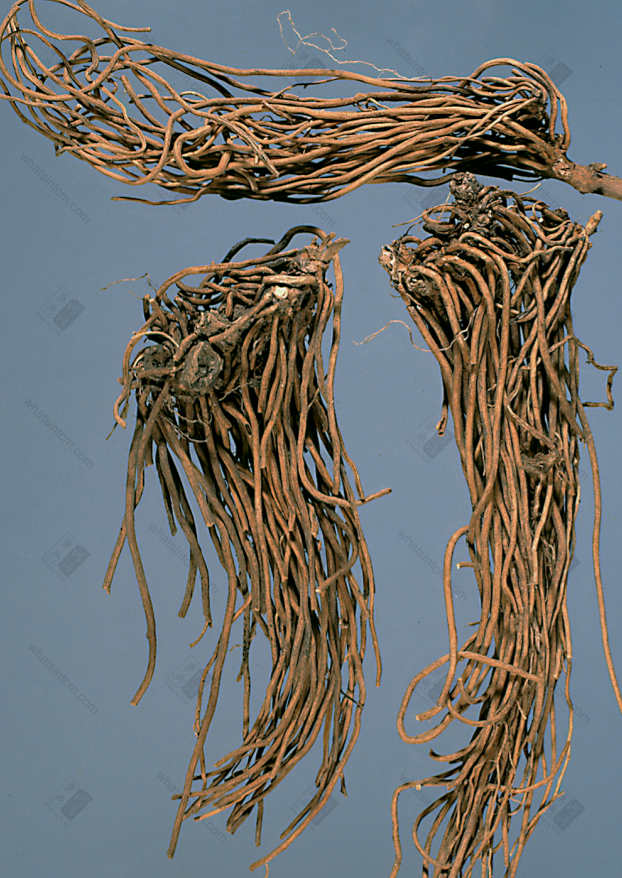 Bai Wei (Rhizome short and thick, round stem scars on top, many slender horsetail-like roots below)
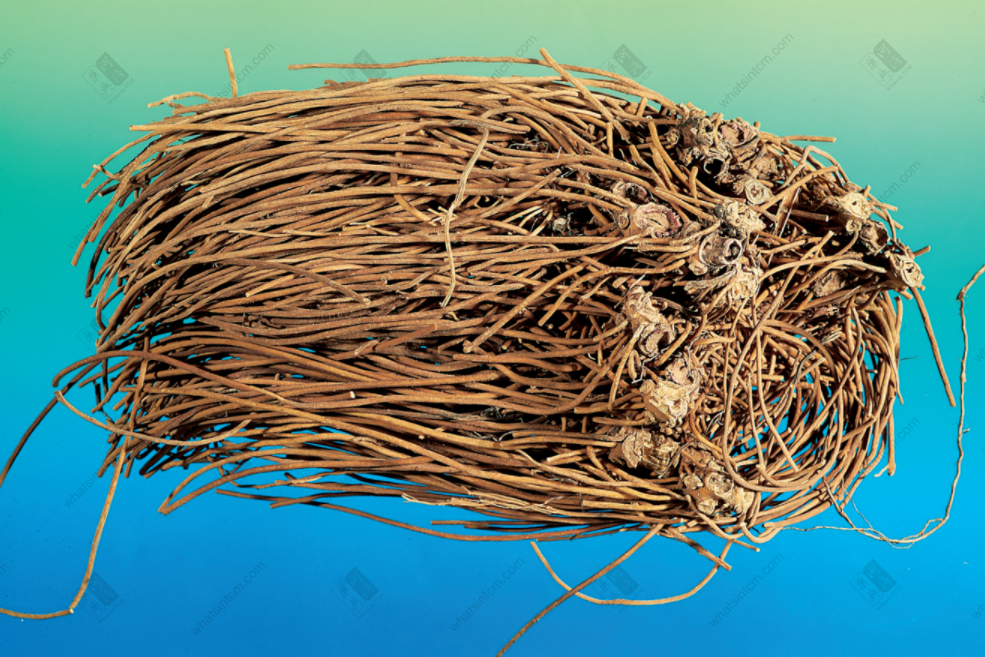
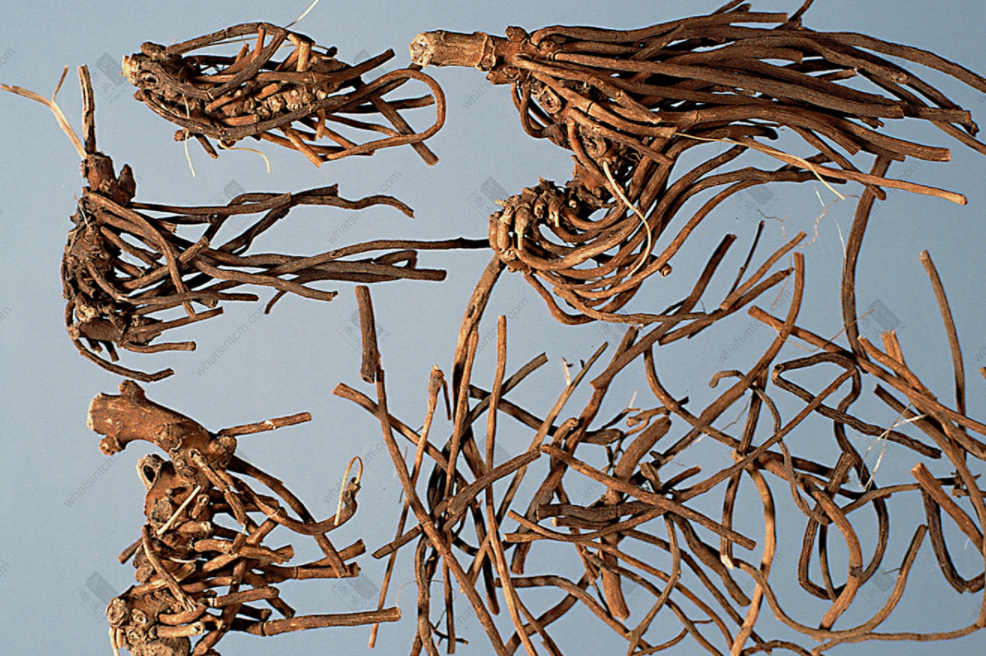
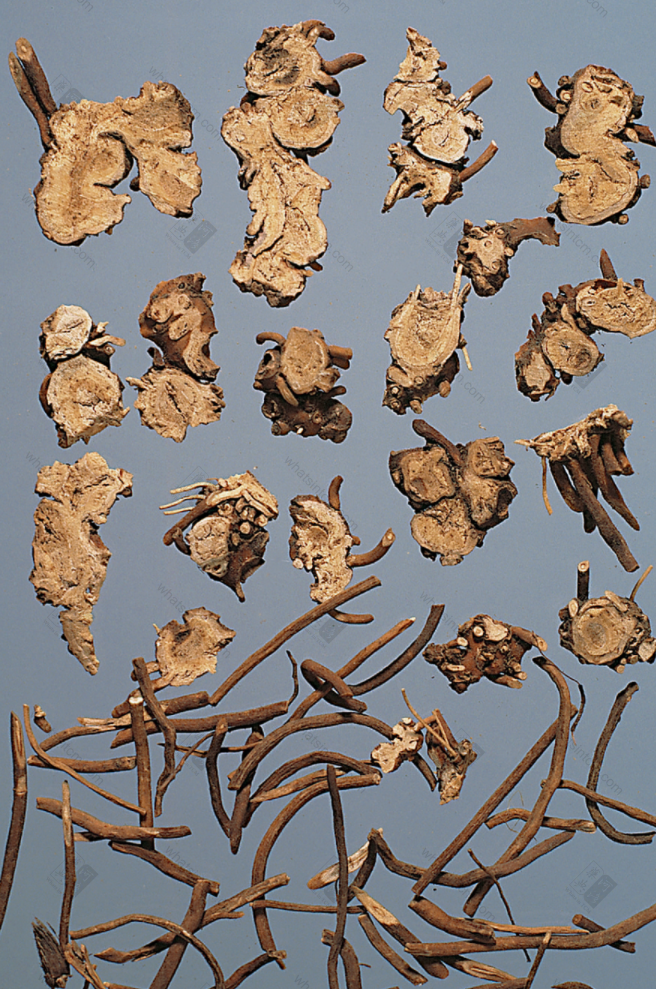 Bai Wei Slices
[Naming]
[Source]
Shen Nong’s Herbal Classic, Middle Grade
[Common Usage Level]
E
[Botanical Origin]
The root and rhizome of the swallowwort plant Cynanchum atratum Bunge. (Family Asclepiadaceae).
[Characteristics]
The rhizome is short, small, and nearly cylindrical, appearing nodular, approximately 1.5~3~5 cm long and 0.5~1~2 cm in diameter. The surface is grayish-brown to brown. It is firm and brittle, easily broken, and the fracture surface is slightly flat and off-white. The roots are long cylindrical, sometimes curved or curled, growing in clusters on the rhizome, resembling a horsetail. They are approximately 10~15~20 cm long and 1~2.5 mm in diameter, with a yellowish-brown surface and fine longitudinal wrinkles. They are brittle and easily broken, and powder flies out when broken.
The processed pieces are mostly cut into thin strips, and a few are irregular round slices. The slices are yellowish-white with uneven, grayish-brown edges, 2~3 mm long and approximately 1 mm thick. The taste is bitter.
[Identification]
Good quality is characterized by yellowish-brown roots, being thick and uniform in size, with a solid white cross-section, dryness, cleanliness from mud, and tied into bundles.
[Identification Terminology]
1. Long Dan (Gentianae Radix) vs. Bai Wei: Bai Wei is harder and has a woody core, similar to Long Dan.
[Category]
Root Category