



Pei Lan (Eupatorium)
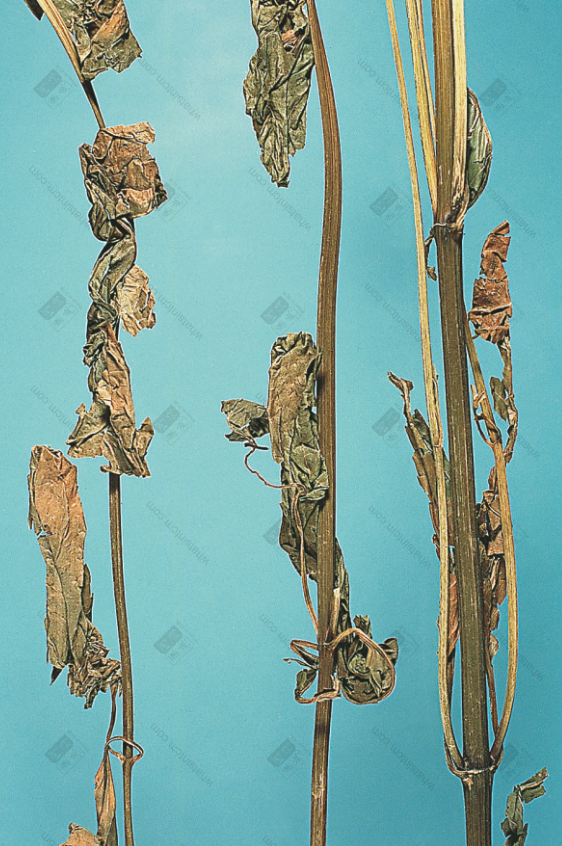 Pei Lan (Eupatorium) (cylindrical, yellow-green, distinct nodes, straight stem with few branches)
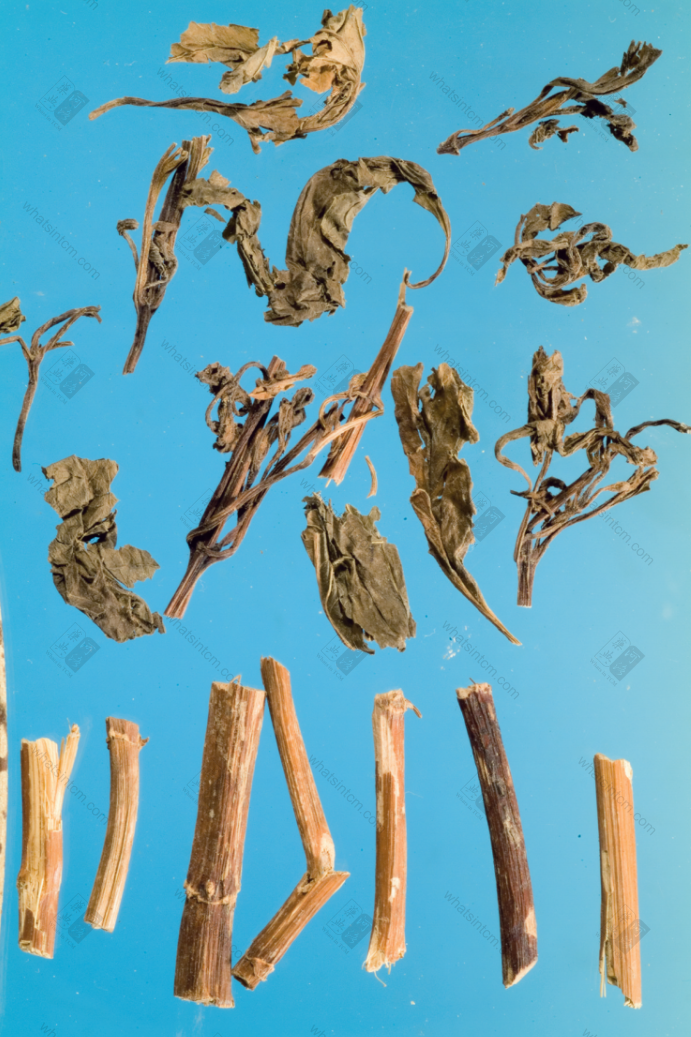 Pei Lan (Eupatorium) (central pith, hollow, wrinkled leaves, lanceolate when flattened, thin and brittle, easily broken, fragrant)
【Name】
【Source】
Shen Nong’s Herbal Classic
【Commonly Used Degree】
E
【Botanical Origin】
The dried stems and leaves of Eupatorium fortunei Turcz. of the Compositae family.
【Characteristics】
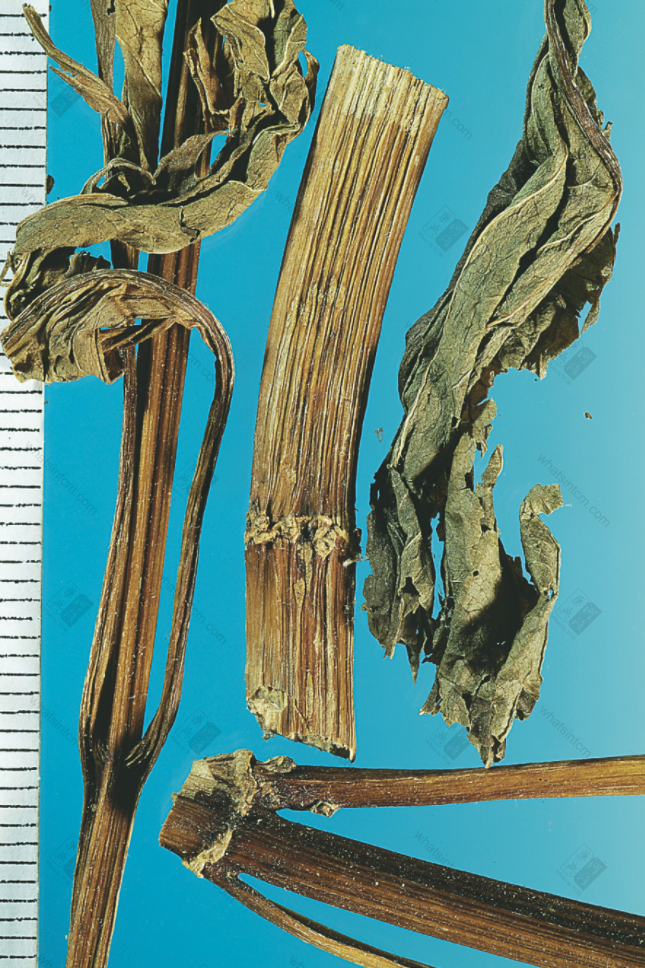
The dried whole plant, the stems are mostly straight, with few branches. It is cylindrical or flattened, 30~100㎝ long and 1.5~4㎜ in diameter. The surface is yellowish-brown or yellowish-green, with longitudinal lines and obvious nodes, the nodes are not enlarged. It is brittle and easily broken, the fracture surface is nearly white, with pith in the center, sometimes hollow. The leaves are mostly wrinkled and broken, and complete ones are mostly 3-lobed, the central lobe is larger, the edges have coarse serrations, the color is dark green, the texture is thin and brittle, and easily broken. It has a slightly fragrant odor and a slightly bitter taste.
【Identification】
It is best to use the dried one, with many leaves, green color, few stems, unopened flowers, and strong fragrance.
Pei Lan (Eupatorium) and Ze Lan (Lycopus), and Lin’s Ze Lan (Lycopus) are all different species of plants in the Compositae family. The difference between the three is: Pei Lan (Eupatorium) (Lan Cao) has a green or reddish-purple stem, the middle stem leaves are usually deeply 3-lobed, the leaf surface is smooth with coarse serrations or fine teeth, and the fragrance is stronger. Ze Lan (Lycopus) has bristly hairs on the stem, the leaves are lanceolate with sharp canine teeth, usually not divided, and the fragrance is weaker. Lin’s Ze Lan (Lycopus) has soft or rough hairs all over the stems and branches, and the leaves are elliptical and long lanceolate with coarse teeth. The three are equally used as Pei Lan (Eupatorium) for medicinal purposes in different regions.
【Category】
Whole Herb