



Mica
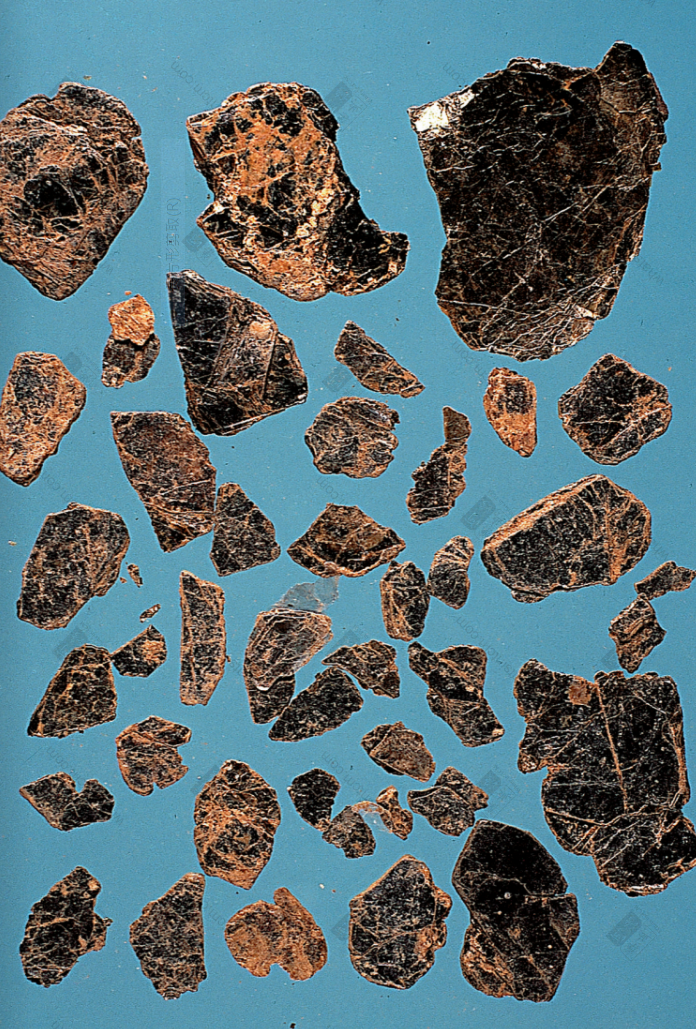 Mica flakes (composed of multiple thin layers, glassy luster, tough texture, not easily broken, layers can be peeled off smoothly)
【Naming】
【Source】
Shen Nong’s Herbal Classic, Upper Grade‧Mica
【Frequency of Use】
E
【Botanical Origin】
Natural white mica mineral, mainly containing potassium and aluminum silicate.
【Characteristics】
Occurs in irregular flakes of varying sizes, composed of numerous thin layers, generally 2-6 cm long. Colorless and transparent or white, with a glassy luster. Tough in texture, not easily broken, but can be peeled off layer by layer. The surface of the thin flakes is smooth, transparent like cellophane, elastic, can be bent, and the fracture surface is uneven. Has a clay-like odor and is tasteless.
【Processing】
1. Mica powder 2. Calcined mica
【Identification】
The best quality is when it can be peeled off layer by layer into colorless, extremely thin flakes and is free of soil impurities.
【Identification Terminology】
(Modern)
1. Iridescence: Refers to the phenomenon of color variations sometimes seen in certain minerals, caused by the interference of light waves due to the reflection of projected light from internal fracture surfaces, cleavage surfaces, and oxide films on the surface, such as mica.
2. Cleavage: Refers to the property of mineral drugs to split along a specific crystal direction into smooth planes when subjected to force, such as mica, gypsum, calcite, etc.
3. Elasticity: Refers to the property of a mineral to deform under the action of external force and, within the elastic limit, return to its original shape after the external force is removed, such as mica.
【Category】
Minerals