



Spring Health Preservation: As Everything Awakens, Angelica Sinensis is Great for Nourishing the Liver, But Choose Wisely
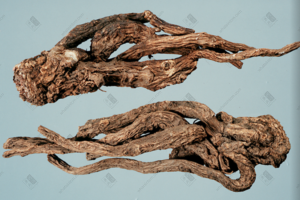
Tou Di Gui: Smaller body with slender, branching roots.
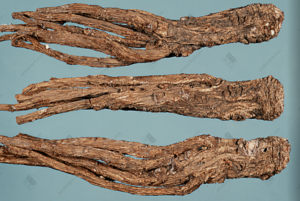
Qin Gui (Angelica from Qin region)
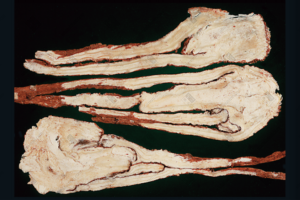
Slices of Angelica Sinensis: Yellowish-white, visibly oily, soft and moist, with a rich, clear fragrance. Tastes sweet with a hint of bitterness.
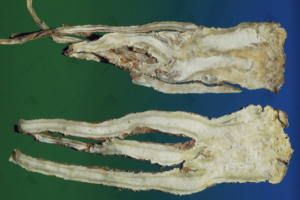
Slices of Angelica Sinensis: Oily on the upper part, indicating good quality.
Spring is a time when all things awaken and teem with vitality. According to the ancient text “Huangdi Neijing” (The Yellow Emperor’s Inner Canon): “The three months of spring, this is called the period of renewal. Heaven and Earth are in sync with life, and all things flourish. Sleep late and rise early, walk widely in the courtyard, let down your hair and loosen your form, to allow your spirit to grow. Grow and do not kill, give and do not take away, reward and do not punish. This is the response to the spring Qi, the way of health preservation. To go against this will harm the liver, leading to cold transformations in summer, and a lack of sustenance for growth.” This primarily means that the three months of spring are a time for the renewal of all things in heaven and earth. One should sleep late and rise early, but the “sleep late” here is relative to the “sleep early” of winter, ideally going to bed before eleven. After waking, one should walk slowly and broadly in the courtyard, relaxing the body to allow the spirit to flow smoothly with the ascending Qi of spring, and to allow all things to grow by “not killing,” “not taking away,” and “not punishing.” Violating this principle will harm the liver, and this harm may not manifest immediately but rather in the summer. This is because in the five-element theory, spring belongs to wood, and summer belongs to fire. According to the principle of mutual generation in the five elements, strong wood generates fire. Therefore, if spring health preservation is not done well, the conditions for summer growth will be poor, thus affecting health.
Spring health preservation focuses on nourishing the liver. Angelica sinensis is a common and effective traditional Chinese medicine for nourishing the liver. According to the Third Edition of the Taiwanese Chinese Materia Medica, its source is the dried root of the umbelliferous plant *Angelica sinensis* (Oliv.) Diels. It is mainly produced in Sichuan, Shaanxi, Gansu, and Yunnan. Depending on the region of origin, it is commercially known as Qin Gui, Xi Dang Gui, Yun Gui, and Min Dang Gui. It is harvested in late autumn and dried in the sun. Since ancient times, Angelica sinensis from Min County, Gansu, has been considered of higher quality. Currently, Yamato Angelica is also cultivated in Japan, and there has been a cultivation history of over fifty years in Taiwan, mainly of Yamato Angelica. Therefore, fresh Angelica sinensis can be consumed in Taiwan. According to “Shen Nong Ben Cao Jing” (The Divine Farmer’s Materia Medica), “Angelica sinensis is sweet, warm, and non-toxic. It treats coughs and upward-flowing Qi, warm malaria with chills and fever within the skin, women’s abnormal bleeding, infertility, all types of sores, and traumatic wounds. When ingested, it has these effects.” It primarily enters the liver, heart, and spleen meridians, with the functions of tonifying blood, invigorating blood, regulating menstruation, and relieving pain. It also has good effects on moistening the intestines due to its rich volatile oil content. Commercially available Chinese medicinal materials are generally divided by part. The upper part of the root is called “Gui Tou” (angelica head), which is strongest in tonifying blood. The main root is called “Gui Shen” (angelica body), mainly used for tonifying and invigorating blood, and harmonizing blood. The fibrous and branching roots are called “Gui Wei” (angelica tail), mainly used to improve peripheral circulation. Therefore, different parts are chosen based on different clinical applications. Furthermore, for different clinical uses, Angelica sinensis is processed in various ways. Slices of Angelica sinensis are mixed with yellow wine, steamed until the yellow wine is absorbed, then stir-fried in a pot over low heat until the color deepens. This is called Jiu Dang Gui (wine-processed Angelica sinensis) and can be used to alter the medicinal properties and guide the herbs upwards. Another method involves heating a pot over low heat, adding yellow earth, and when the earth turns more slippery, adding slices of Angelica sinensis and stir-frying until the surface is evenly coated with the earth color. After removing and sifting off excess earth, this is known as Tu Dang Gui (earth-processed Angelica sinensis). There is also charcoal-baked Angelica sinensis, used to enhance its effect of harmonizing blood.
When purchasing processed slices of Angelica sinensis in the market, pay attention to differentiation, as you might encounter European Angelica. There are several ways to distinguish them. First, consider the length of the main root. Most processed slices of Angelica sinensis are cut longitudinally and are usually no more than 10 cm long, with the shortest being only 2 cm. The shortest main root of European Angelica is over 10 cm. Another method is to smell them. Both have an aroma, but the scent differs. Finally, tasting also reveals differences. Angelica sinensis is sweet upon entering the mouth. After chewing for a few seconds, a slight bitterness appears. After chewing for a few more seconds, a slight numbing sensation on the tongue occurs, accompanied by a spicy taste. These mixed flavors, along with the unique aroma of Angelica sinensis, can linger in the mouth and nasal cavity for up to 10 minutes. European Angelica is also sweet initially, but after about 10 seconds, it develops a bitter and spicy taste, irritating the tongue like chili peppers, accompanied by a strong numbing sensation that contorts the face. These three methods can help distinguish between Angelica sinensis and European Angelica slices. Another easily confused traditional Chinese medicine is *Du Huo* (Angelica pubescens), another umbelliferous plant. Its efficacy is not entirely the same as Angelica sinensis. Du Huo is mainly used to dispel wind and dampness, relieve pain from cold, and is effective for treating lower back and knee pain, chronic bronchitis, and headaches. Therefore, be careful not to buy the wrong one. Additionally, due to its rich nutrients, Angelica sinensis is prone to insect infestation. Sometimes, sulfur fumigation is used to prevent this. Fumigated Angelica sinensis tastes sour, and the sourness intensifies with prolonged tasting; this indicates a problem and should be discontinued to avoid harming health.
Although Angelica sinensis is a commonly used medicinal herb, caution is still advised in its general use. It contains coumarin, which has pharmacological effects similar to Western medicines. If taken long-term with anticoagulant drugs such as warfarin, it may increase the risk of bleeding. Additionally, antiplatelet drugs like aspirin can enhance its anticoagulant effects, increasing the risk of bleeding. Women should also use it cautiously during menstruation or pregnancy. Spring health preservation is about nourishing the liver Qi. The liver wood element governs growth, meaning the upward ascending nature of liver wood. By nourishing the liver well at the beginning of the year in spring, one can ensure a year of peace and health.
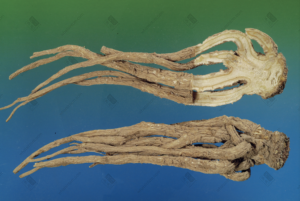
Shaanxi Angelica Sinensis
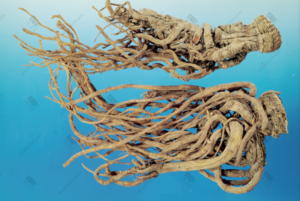
Japanese Angelica Sinensis: Cultivated in Sichuan
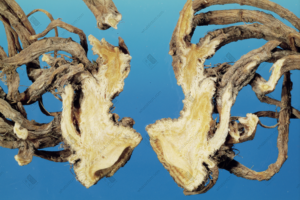
Processed slices of Japanese Angelica Sinensis
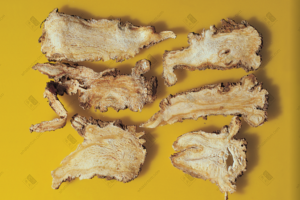
Tou Di Gui slices
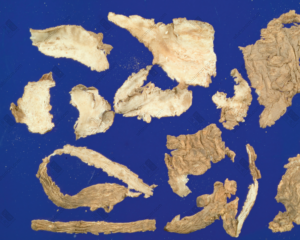
Gui Pi (Angelica bark): Used as incense.
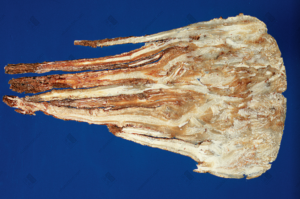
Artificially glued fan-shaped Angelica slices
About the Author
Education: PhD in Chinese Medicine, China Medical University
Current Position: Assistant Research Fellow, Medical Intelligence Center, Taichung Tzu Chi Hospital
Member of the Editorial Committee for Chinese Materia Medica, National Joint Curriculum Committee for Chinese Medicine Schools
Distinguished Lecturer, Industrial Technology Research Institute
Adjunct Lecturer, Graduate Institute of Post-Baccalaureate Chinese Medicine, China Medical University
Adjunct Assistant Professor, Department of Pharmacy, Kaohsiung Medical University
Co-founder of Heluo Pharmacopoeia and www.whatsinTCM.com
Image Credits: Professor Chang Hsien-Cheh, “Atlas of Authentic Medicinal Materials”
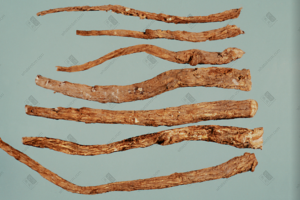
Gui Tui (Angelica root tip)
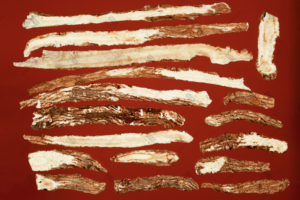
Processed slices of Angelica root tip
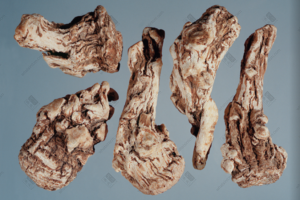
Hu Shou Gui: Angelica head portion
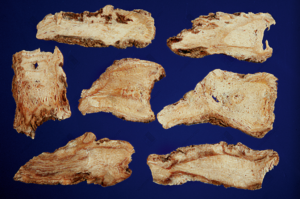
Processed slices of Angelica head