



Longan Dried: The Essential Vegetarian Ingredient for the Jade Emperor’s Birthday, Don’t Buy the Wrong Kind!
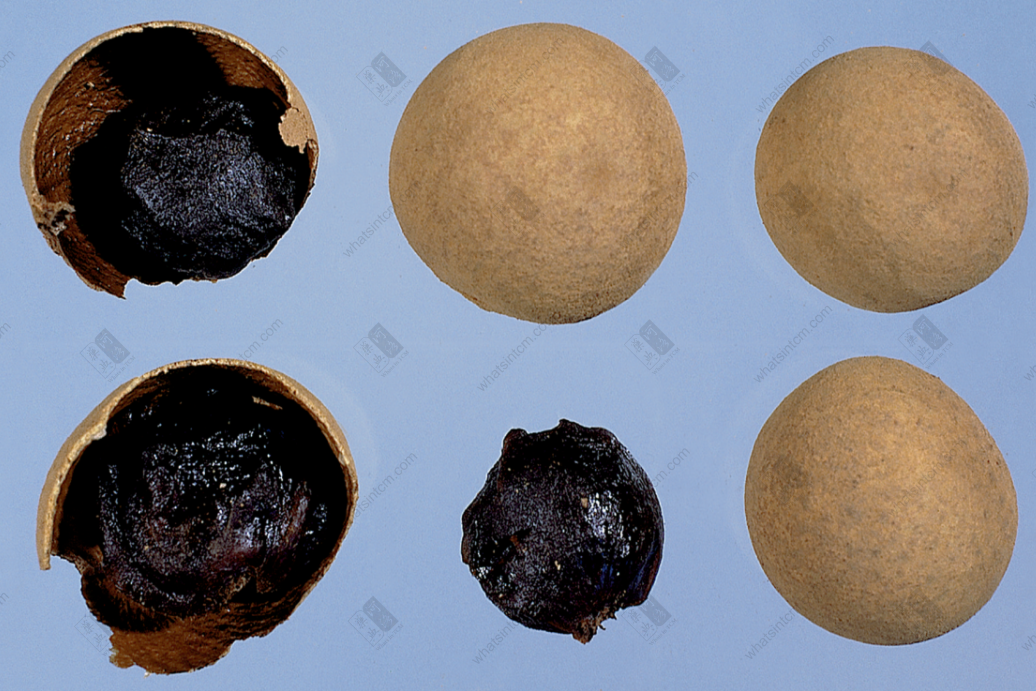 Longan flesh: The left shows a slightly opened state, the right is with shell.
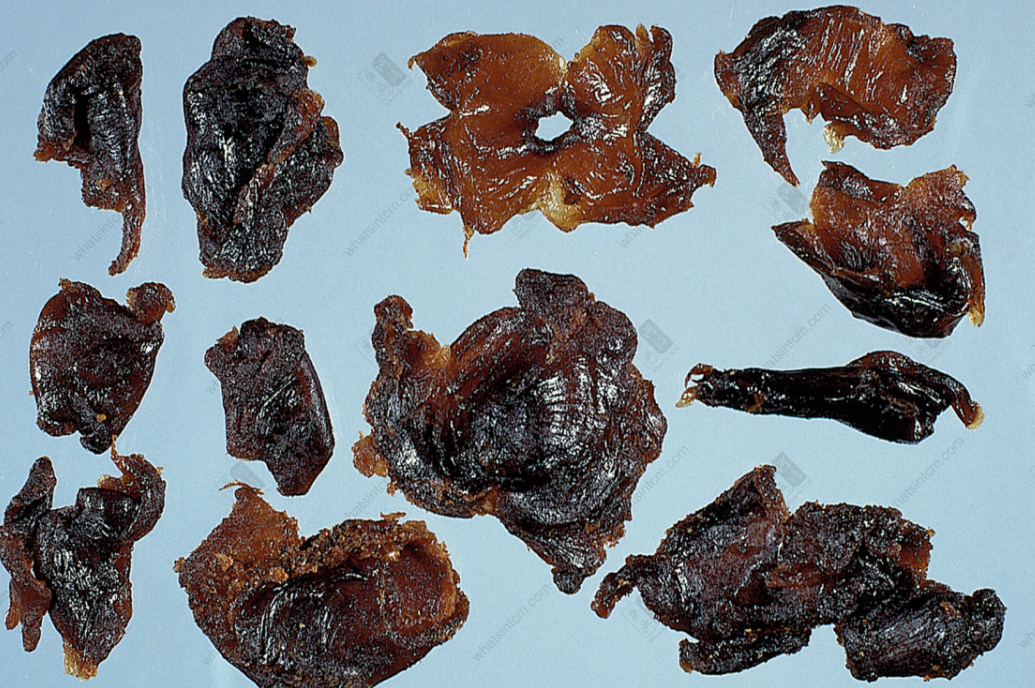 Longan flesh: Flat pieces, reddish-brown, semi-transparent, thick flesh, oily and shiny, sweet taste.
“Why is it called the servant of lychee? Its alluring richness surpasses all fruits. Its mellow nectar shames the dew of heaven, and its golden orbs rival pearls. May it be grown by the immortal from Mount Gushé, and offered as tribute to the Queen Mother at the Jasper Pool. It should be considered a peer of lychee, and moreover, it possesses the virtue of benefiting the mind and aiding concentration.”
From Wang Xiangjin’s “Longan” in the Ming Dynasty
The author of this poem, Wang Xiangjin, was a scholar in the Ming Dynasty. In his later years, he lived at home, paid attention to agriculture, and compiled the book “Qun Fang Pu” (A Compendium of Flowers and Fruits). This poem mainly defends the name “servant of lychee” for longan. Its taste is sweet, with golden fruit skin and crystal-clear flesh, more beautiful than white pearls. It is like a fruit grown by immortals on Mount Gushé, meant to be an offering for the grand banquet at the Jasper Pool in heaven. It should be considered a peer of lychee, and furthermore, longan has the benefits of improving intelligence and calming the mind, so it should not merely be called the “servant of lychee.”
According to folk custom, the ninth day of the first lunar month is the birthday of the Jade Emperor. Therefore, in Minnan, it is called “Tiangong Sheng” (Heavenly God’s Birthday). The offering table is divided into “top table” and “bottom table.” The top table is for the Jade Emperor and should be set with three cups of clear tea, five fruits, and six types of vegetarian dishes. Dried longan is one of these six vegetarian items.
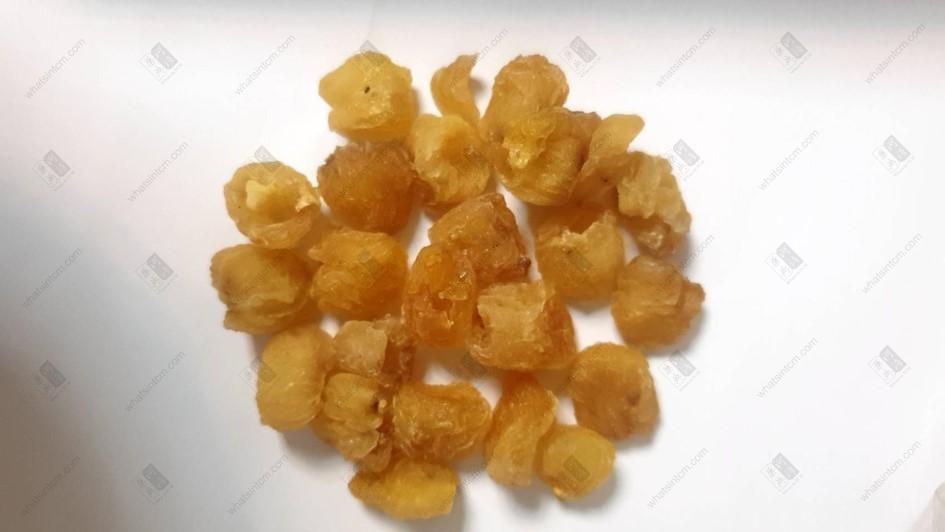
Dried longan (https://whatsintcm.com/en/dt_articles/longan-aril/) is the dried aril of Dimocarpus longan Lour. from the Sapindaceae family, Longan genus. It is mainly produced in tropical Asia, including Fujian, Guangxi, Guangdong, and Yunnan provinces. Due to the suitable climate, Vietnam also cultivates it in large quantities. In Taiwan, it is primarily produced in areas south of Nantou and Miaoli. Harvesting usually occurs in autumn after the fruits mature. After drying, the shell and kernel are removed, and the fruit is sun-dried until it is dry and not sticky. It is also known by other names such as Guiyuan, Longmu, Guiyuan, Longan Gan, and Lichi Nu. The medicinal aril is irregular in shape, appearing as flakes or chunks of varying sizes. The surface is reddish-brown or brown, semi-transparent. The side attached to the pericarp is wrinkled and slightly reticulated, while the side attached to the seed is usually shiny with fine longitudinal wrinkles. They often stick together in clumps, are soft, moist, and sticky, with a unique aroma and a strong, sweet taste. Generally, thicker pieces with a soft, moist texture, brown color, and a strong sweet taste are considered superior. Longan flesh was first recorded in the “Shen Nong Ben Cao Jing” (Herbal Classic of Shen Nong) and classified as a middle-grade medicinal. It nourishes the heart and spleen, and has the functions of nourishing blood and calming the spirit. It is clinically used for symptoms such as palpitations, forgetfulness, and insomnia. There are commonly two types of dried longan in the market: one is peeled from dried fruits, often in flake form and darker in color, which is more common. The other is fresh pulp directly peeled and dried, usually spherical in shape and lighter in color, and less commonly seen. Additionally, some products are found to be fumigated with sulfur, then soaked in sugar water and dried. These are thicker, which increases their weight, are whiter in color, feel sticky to the touch, and have a sulfurous odor. The sweetness is very pronounced, lacking the unique fresh aroma of longan. Some products are soaked in high-concentration brown sugar water and then dried. These are usually thicker, close to purplish-brown in color, often clumped together. When separated, one can see brown sugar granules within, they are sticky to the touch, and have a distinct brown sugar flavor, lacking the unique scent of longan. Some have also been found to be mixed with fruit jam. These are thick and often stick together in multiple pieces. Sometimes, when broken apart, fruit jam can be found, and the luster is poorer. The inner surface lacks fine longitudinal wrinkles, they are sticky to the touch, and taste like fruit jam. There are also dried raisins that are dyed or misrepresented as longan, which are similar in size and color to dried longan. They usually have a slightly sweet taste but lack the characteristic aroma of longan, and they decolorize when soaked in water. Dried lychee flesh mixed in has also been found. The peeled pulp of dried lychee is thicker, brownish-brown, and less translucent. Another confused variety is “Long Li” used as dried longan. The outer surface of the dried fruit has many circular tumor-like protrusions, and the seed coat of the mature seed splits longitudinally. The aril is not easily separated from the seed, and the seed is irregularly ovate. It has a faint aroma and a slightly sweet taste, and feels sticky when chewed. Currently, Vietnamese longan varieties are similar to the early Taiwanese indigenous longan, being smaller in size, but possessing a more intense longan aroma and flavor.
Taiwanese dried longan is either machine-dried or dried using longan wood. Dried longan made with wood fire, due to the slow release of moisture, requires continuous effort for several days and nights. Furthermore, constant control of the fire and the smoking effect is necessary, making it very labor-intensive and time-consuming. However, in addition to the aroma of longan, it has a special smoky flavor, which is highly favored by the public. All dried longan in Taiwan on the market complies with food safety and hygiene management standards, so the public can consume it with peace of mind.
【Image provided by】Professor Zhang Xianze, “Authentic Medicinal Material Illustration” https://whatsintcm.com