



What Traditional Chinese Medicines Can Combat the Rampant COVID-19 Virus Globally?
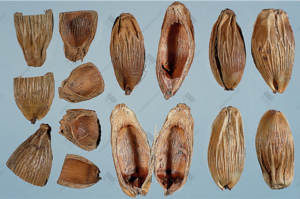
Areca husk
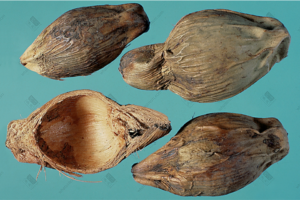
Areca husk: It presents as a gourd-shaped, hard, yellowish-gray shell with longitudinal fibers, and is lightweight.
As the pandemic ebbs and flows, the COVID-19 virus has severely impacted our daily lives and changed our habits. Many of our loved ones and friends have been affected. Throughout human history, epidemics have occurred numerous times, leading to significant advancements in medical science. The widespread epidemic in the late Eastern Han Dynasty gave rise to the revered physician Zhang Zhongjing, who left behind the classic “Treatise on Cold Damage Disorders and Miscellaneous Illnesses,” saving countless lives. Similarly, the epidemic in the late Ming Dynasty inspired the esteemed physician Wu Youke, who authored “Treatise on Epidemic Febrile Diseases,” where he first explained that illnesses are caused by “liqi” (pathogenic qi), marking a major step forward for human medicine. These treatment methods have left behind a wealth of knowledge for future generations. Therefore, we can search the vast database of Traditional Chinese Medicine for ancient wisdom to address this current viral transmission.
In the Heluo Pharmacopoeia (https://whatsintcm.com/) database, which contains nearly 760,000 characters and close to 3,500 images of medicinal materials, searching with the keyword “virus” reveals numerous formulas related to viruses. These include Gui Zhi Jia Hou Po Xing Zi Tang, Fang Feng Tong Sheng San, Ding Chuan Tang, Zhi Gan Cao Tang, Xin Jia Xiang Ru Yin, Da Yuan Yin, Gui Zhi Tang, Lang Shi Gun Tan Wan, Shen Su Yin, Ma Xing Yi Gan Tang, Ma Huang Tang, Pu Ji Xiao Du Yin, Jiu Wei Qiang Huo Tang, Ge Gen Huang Qin Huang Lian Tang, Yin Qiao San, Qian Jin Nei Tuo San, Wu Wei Xiao Du Yin, San Ao Tang, Sheng Ma Ge Gen Tang, Sheng Xian Tang, Si Ni San, and Bai Hu Tang, totaling twenty-two formulas. Many of these are commonly used prescriptions. This article will first introduce the characteristic medicinal material of Da Yuan Yin, a formula created by the great Ming dynasty physician Wu Youke and recorded in his work “Treatise on Epidemic Febrile Diseases.” The formula consists of seven herbs: Areca nut, Magnolia bark, Cao Guo (a type of spice), Anemarrhena asphodeloides, Peony root, Scutellaria baicalensis, and Licorice root. It primarily uses Areca nut to expel the miasma of Lingnan, Magnolia bark to break down pathogenic qi, and Cao Guo to eliminate latent pathogens. These three herbs work together to directly attack the source of the illness, causing the pathogenic qi to collapse and rapidly leave the “membrane region” (a concept in TCM), hence the name Da Yuan Yin. Clinically, it is used to treat damp-heat obstructing the middle Jiao, leading to fluctuating fever that persists for days, fullness and distension in the chest and epigastrium, nausea, and loose stools, indicative of a gastrointestinal type of common cold.
Areca nut is quite well-known in Taiwan, but people may not understand it fully. Let’s take a look. According to the Third Edition of the Taiwanese Pharmacopoeia, Areca nut (https://whatsintcm.com/en/dt_articles/betel-nut/) is the dried mature seed of the Areca palm, a plant of the palm family. It is mainly produced in the Lingnan region, including Taiwan, Hainan, and Guangxi. Historically, in the “Ode to Shanglin” written by Sima Xiangru during the Western Han Dynasty, the plant “ren pin” is mentioned, and according to Tang Dynasty annotations, “ren pin” refers to the Areca nut we know today. Another common alias in Taiwan is “qing zai,” which can sometimes be seen on roadside signs. Other names include bin men, white Areca nut, and ren lang. The mature fruits are typically harvested in late spring or early autumn. The raw medicinal material should be large, round, firm, heavy, unbroken, and free from insect damage. The sliced preparation should be thin, showing marble-like patterns, with a bright color being preferred, and a dark color being secondary. Depending on clinical needs, some Areca nuts are stir-fried to become slightly yellow, mainly used for killing parasites, aiding digestion, descending qi, moving qi, and treating edema and beriberi. Another Chinese medicine, Areca husk, is described in the Third Edition of the Taiwanese Pharmacopoeia as Areca husk (https://whatsintcm.com/en/dt_articles/da-fu-pi-areca-peel/) which is the dried husk of the Areca palm. It is a processed and loosened dried product of the Areca nut husk, consisting of mesocarp fibers. The outer layer of fibers is loose, while the inner layer is fibrous, yellowish-white or light brown, and sometimes fragments of the exocarp and endocarp may be attached. It is generally considered good if it is fluffy, soft, odorless, tasteless, and free from impurities. In the market, one might also find a medicinal material called “da fu mao,” which is obtained by drying mature fruits and removing impurities. It is usually oval in shape, with the exocarp often detached. The mesocarp is fibrous, yellowish-white or light brown, loose, soft, with a faint aroma and mild taste, and is considered good.
Although the consumption of Areca nut has a negative connotation in Taiwanese society due to the additives like red or white lime in commercial products, which accelerates the risk of cancer, historical records show that Areca nut was consumed by Xuanzang, the Tang Dynasty monk, during his pilgrimage to Nalanda Monastery in India. Famous Tang and Song Dynasty literary figures like Han Yu and Su Dongpo, as well as the Ming Dynasty Neo-Confucian master Zhu Xi, were also Areca nut users. In some traditional festivals, Areca nuts are given to guests as a symbol of peace and health. As a Chinese medicinal material used for thousands of years, the efficacy of Areca nut is undeniable. However, it should be used with caution and not in excess to avoid harming the body.
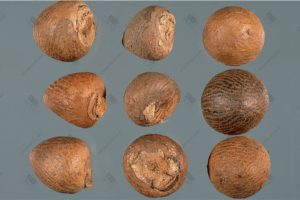
Raw Areca nut: Conical, yellowish-brown, flat and concave at the base, firm and not easily broken.
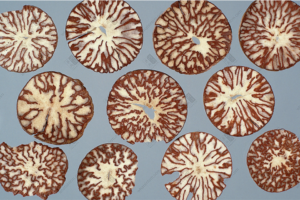
Sliced Areca nut: Marble pattern of brown and white, known as Areca nut pattern.
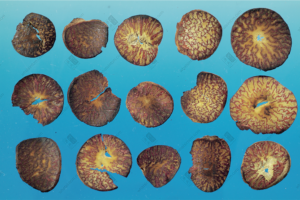
Processed charred Areca nut slices.
【Image provided by】Professor Zhang Xianzhe, “Atlas of Authentic Medicinal Materials” https://whatsintcm.com
【Author Introduction】
Education: Ph.D. in Chinese Medicine, China Medical University
Current Position: Assistant Research Fellow, Center for Medical Intelligence, Taichung Hospital, China Medical University Hospital
Member of the Editorial Committee for Chinese Medicine Subject, National Common Textbook Compilation Committee for Chinese Medicine Schools
Distinguished Lecturer, Industrial Technology Research Institute
Part-time Lecturer, Graduate Institute of Post-Baccalaureate Chinese Medicine, China Medical University
Part-time Assistant Professor, Department of Pharmacy, Kaohsiung Medical University
Co-founder of Heluo Pharmacopoeia www.whatsinTCM.com
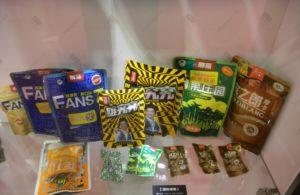
Convenience store sold Areca nut pocket packaging.
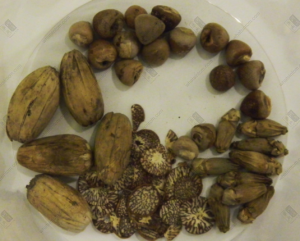
Areca nut: Left side shows the husk, top is whole Areca nut, bottom is sliced Areca nut. **Provided by Dr. Da Zhen Chen.**