

The Poria Fungus Used in Si Shen Tang Comes in Many Varieties with Different Efficacy; Careful Identification is Necessary
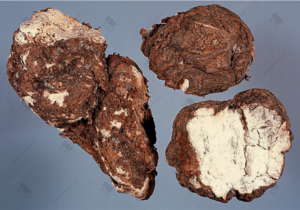
Poria cocos (Fu Ling): A block-shaped fungus, reddish-brown in color, with distinct wrinkles on its outer skin, which is thin and rough.
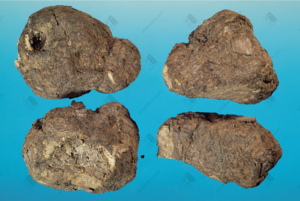
Cultivated Poria cocos (Jia Zhong Fu Ling): The outer layer is dark brown, and the inner layer is white. It has a granular texture and fissures.
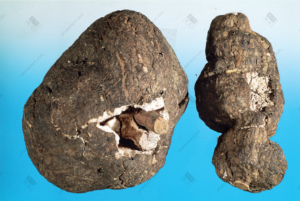
Poria cocos with Pine Root (Fu Shen): A pine root runs through the center.
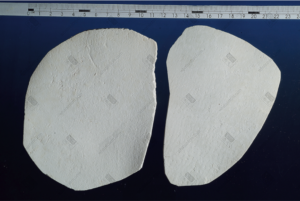
Top-grade Hubei Jing Ling
“Severing worldly ties, bringing peace to the mind and spirit. Gathering herbs in the mountains to cultivate life. Poria grows abundantly beneath green pine trees, and Solomons Seal thrives in the deep white clouds.”
“With a hundred flavors, fragrant and sweet, the body is pure and clean. My life can be preserved free from illness. I need not crave the delicacies of the eight treasures, nor the luxurious offerings of the tripod. Carnal desires and chaotic affairs only cloud human nature.” Zhang Lun (Song Dynasty)
This poem by Zhang Lun, a ci poet of the Southern Song Dynasty, states in its first stanza that Poria often grows near pine roots and that it has the effect of calming the mind and spirit. The great Tang Dynasty writer Liu Zongyuan also wrote an essay titled “A Discussion on Fu Shen and its Preface,” recounting his experience of buying Fu Shen at a pharmacy but being given wild taro, which worsened his discomfort after consumption. This illustrates that from ancient times to the present, the selection of Chinese medicine has required extreme caution to avoid harming oneself by purchasing the wrong herb.
According to the third edition of the Taiwan Chinese Materia Medica, Poria (Fu Ling) is the dried sclerotium of the fungus *Poria cocos* (Schwein.) F.A.Wolf. It is mainly produced in Yunnan, Hubei, Anhui, and other regions. It is usually harvested in July or August. After harvesting and removing mud and sand, it is piled up to “sweat” and dry. This process is repeated several times until the surface appears wrinkled and most of the moisture is removed, after which it is cut. Different Chinese medicine names and efficacies correspond to different parts of the cut. Red Poria (Chi Fu Ling), according to the third edition of the Taiwan Chinese Materia Medica, has the same origin as Fu Ling, with the difference being that the cut part is closer to the outer skin and has a slight reddish hue, hence its name. Poria Cortex (Fu Ling Pi), according to the third edition of the Taiwan Chinese Materia Medica, is the dried outer skin of the sclerotium of the fungus *Poria cocos* (Schwein.) F.A.Wolf. As for Poria cocos with Pine Root (Fu Shen), it is described in the third edition of the Taiwan Chinese Materia Medica as the dried sclerotium of the fungus *Poria cocos* (Schwein.) F.A.Wolf, with a pine root embedded in the center. From this, we can understand that Fu Ling, Chi Fu Ling, Fu Ling Pi, and Fu Shen all originate from the same plant but are different medicinal parts. Furthermore, Fu Ling is also known as Bai Fu Ling, Yun Fu Ling, Fu Ling, and Jin Weng, and depending on the place of origin, it is called Yun Ling, Wan Ling, E Ling, and Min Ling. Poria produced in Jiuzihe, Hubei, is generally of higher quality. Due to its dense population and limited land, Taiwan has developed liquid culture technology to produce medicinal mushrooms like Poria. This method can yield large amounts of mycelium and fermentation broth in a short period, allowing for the production of Poria mycelium and Poria polysaccharides.
In the market, several types of Poria cocos can be purchased based on different cutting methods: Poria slices, Poria blocks, and Poria rolls. Poria slices are Poria cut after removing the skin, usually appearing as irregular thick slices of varying thickness. Those of higher grade are often called Jing Ling, with thick slices, firm texture, and white color being preferred. Poria blocks are Poria cut into cubic shapes after the skin is removed. Poria rolls are usually very thin and often rolled into cylindrical shapes. All of these are considered good if they have a bland taste and are sticky when chewed. Another way to distinguish genuine from fake is by adding iodine solution; if the color turns deep red, it is genuine, while if it turns blue-purple, it is a counterfeit. This is because Poria is mycelium, not starch, so it will not react with iodine solution to turn blue-purple like starch does.
Poria cocos is a commonly consumed food in daily life. Traditional Chinese medicine books record its taste as sweet and bland, with primary benefits of strengthening the spleen, calming the spirit, and promoting urination. Poria cakes are commonly sold as snacks in Taiwan. Li Shizhen’s “Compendium of Materia Medica” from the Ming Dynasty also records the efficacy and preparation of “Poria Wontons”: “For the elderly who have difficulty swallowing and are unable to digest food, take four ounces of yellow hen meat, chopped, two ounces of Poria powder, and six ounces of white flour. Make wontons, boil them in soy sauce, and eat them. Three to five servings will be effective.” Alternatively, Poria can be ground into a fine powder and consumed with hot milk for excellent calming effects. It is advisable to avoid consuming Poria with rice vinegar. Modern pharmacological research on Poria indicates diuretic and blood-sugar-lowering effects. Therefore, individuals taking diuretics or blood-sugar-lowering medications should consult their doctor regarding its consumption. Currently, the Taiwanese regulatory authorities for Chinese medicine have regulations on the limits of sulfur dioxide and heavy metals such as arsenic, cadmium, mercury, and lead in Poria, so the public can consume it with peace of mind.
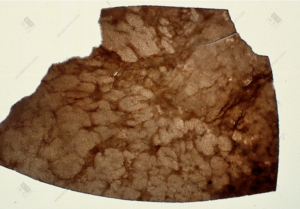
Growth of Poria cocos mycelium
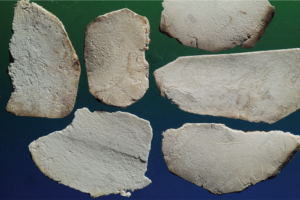
Wild Poria cocos
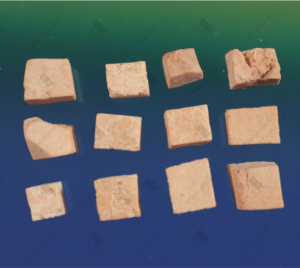
Poria cocos blocks
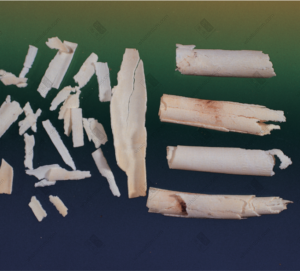
Poria cocos rolls
【Image Credit】 Professor Zhang Xianzhe, “Illustrated Guide to Authentic Medicinal Materials” https://whatsintcm.com
【Author Biography】
Chen Da Zhen, Education: Ph.D. in Chinese Medicine, China Medical University
Current Position: Assistant Researcher, Medical Intelligence Center, Taichung Tzu Chi Hospital
Editor, Traditional Chinese Medicine Subject Committee for the National Chinese Medical Colleges and Universities Common Textbook Compilation Committee
Distinguished Lecturer, Industrial Technology Research Institute
Adjunct Lecturer, School of Post-Baccalaureate Chinese Medicine, China Medical University
Adjunct Assistant Professor, Department of Pharmacy, Kaohsiung Medical University
Co-founder, Heluo Pharmacopoeia www.whatsinTCM.com
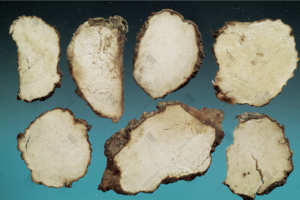
Red Poria cocos
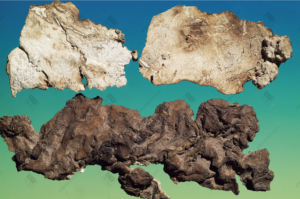
Poria cocos Cortex: Dark brown on the outside, light reddish-brown on the inside.
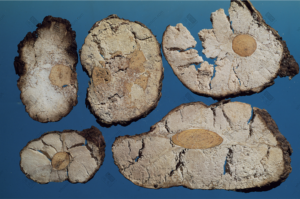
Poria cocos with Pine Root: A pine root runs through it.
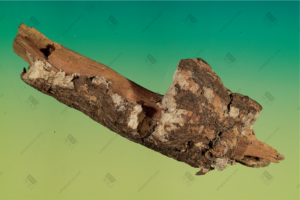
Poria cocos wood