
Jujube Season: Is the ‘Da Zao’ commonly used in Traditional Chinese Medicine Red Dates or Black Dates?
In the ‘Poem of Admonition’ by Zhao Zheng of the Jin Dynasty, he describes the appearance of the jujube tree: ‘In the north garden there are jujube trees, whose dense leaves cast a deep shade; although thorny on the outside, they hold a red heart within.’ He uses the characteristics of the tree, specifically its thorny branches, to express his unwavering loyalty. Even earlier, the ‘Classic of Poetry’ records: ‘In the eighth month, jujubes are harvested; in the tenth month, rice is reaped. With this, spring wine is made to wish for longevity.’ This illustrates the strong vitality of the jujube tree. During the Chinese New Year, families gather to ‘shousui’ (stay up on New Year’s Eve), and snacks are always placed on the table, with red dates being indispensable. They symbolize ‘the early arrival of spring,’ wishing for better fortunes in the coming year. Similarly, during weddings and celebrations, dried fruits such as red dates, peanuts, longan, and lotus seeds are typically arranged on tables, symbolizing the concept of ‘giving birth to noble children early.’ For this reason, artists throughout history have depicted jujube trees in ‘hundred children’ paintings, signifying this auspicious omen. The wood of the jujube tree is hard, making it an excellent material for ancient chariot axles. Furthermore, in block printing, printing blocks were typically carved from jujube and pear wood. Thus, ‘pear and jujube’ (梨棗) became a general term for printing blocks, giving rise to the idiom ‘fu zhi li zao’ (付之梨棗), meaning ‘to publish a book.’ This demonstrates how deeply jujubes have influenced our daily lives.
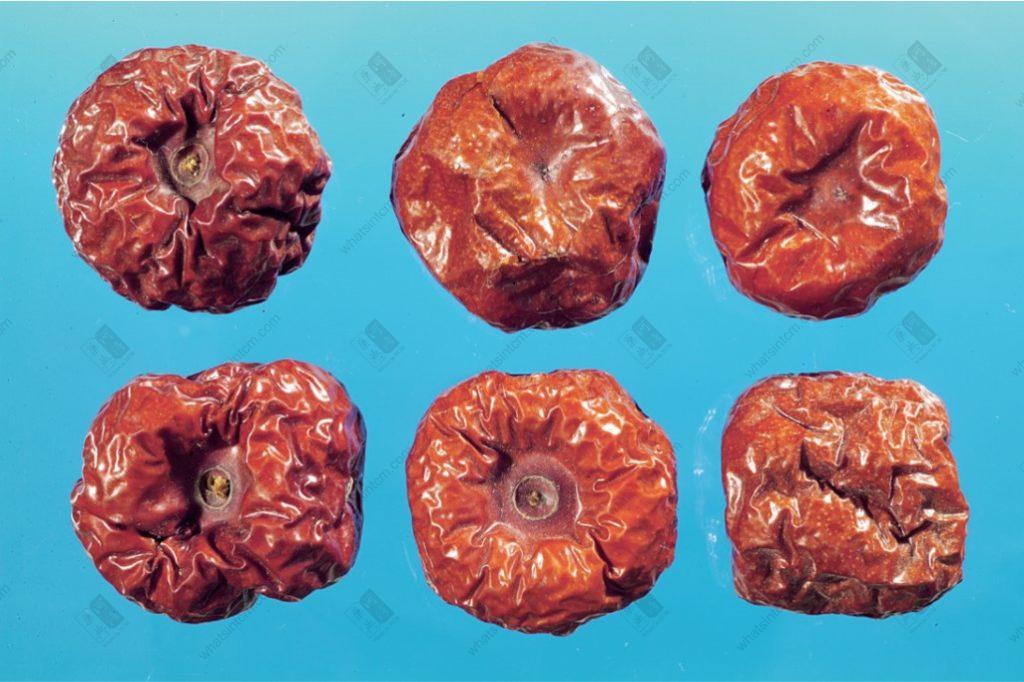
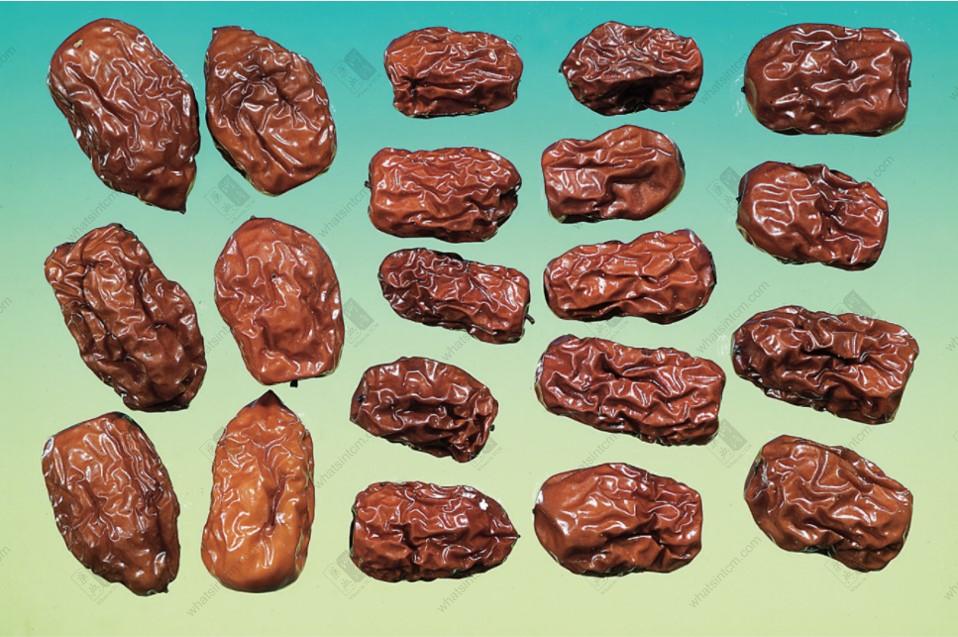
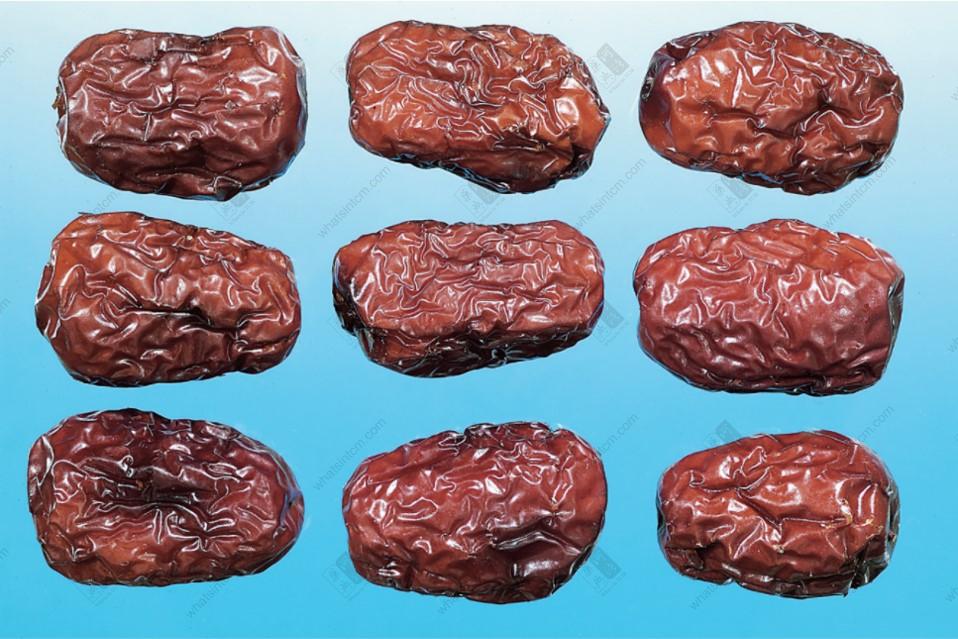
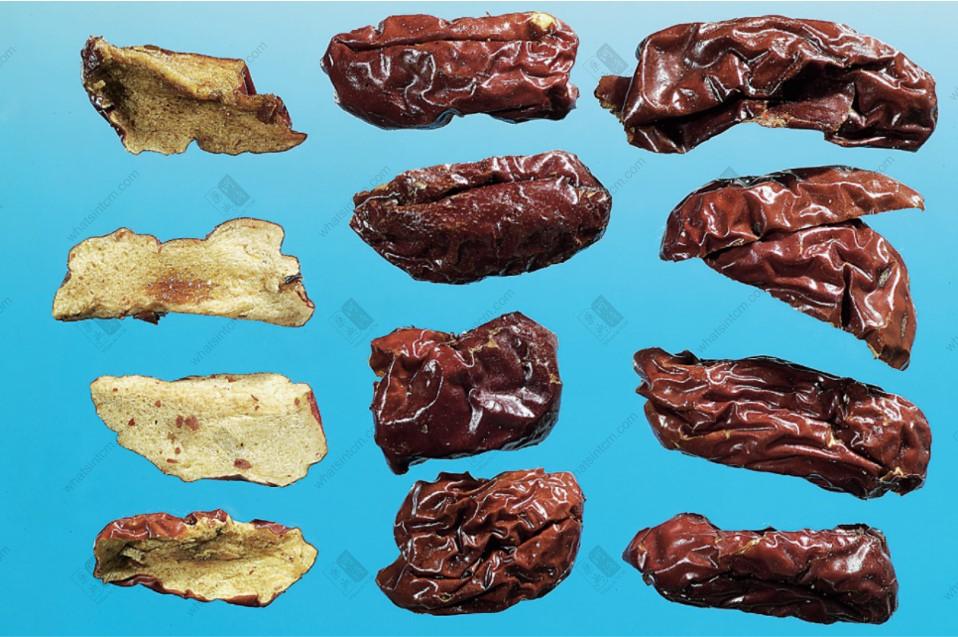
According to the third edition of the Taiwan Herbal Pharmacopoeia, the botanical origin of Da Zao (Jujube) is the dried fruit of Ziziphus jujube Mill. from the Rhamnaceae family (https://whatsintcm.com/en/dt_articles/jujube-red-date/). It is primarily produced in regions such as Shandong, Hebei, Shanxi, and Shaanxi, with related cultivation also found in Taiwan. Due to the strong vitality of the jujube tree, it is grown in many places. The size, sweetness, and names of jujubes vary depending on the environment. For instance, Jinzao (Shanxi Jujube) grown in Shanxi is large and sweet, as are Dazao from Xinzheng, Henan. The widely available Hotan Dazao from Xinjiang is renowned for its large size and sweetness. Miaoli, Taiwan, also has a century-long history of red date cultivation, with its peak season in July and August each year. The ‘Shennong Ben Cao Jing’ (The Divine Farmer’s Materia Medica) states: ‘Sweet in taste, neutral in nature. It treats pathogenic qi in the heart and abdomen, calms the center, nourishes the spleen, assists the twelve meridians, harmonizes stomach qi, opens the nine orifices, supplements deficiency of qi and fluids, addresses bodily deficiencies, treats great fright, heaviness in the four limbs, and harmonizes various medicines.’ This indicates its detoxifying effects. In Zhang Zhongjing’s ‘Shanghan Lun’ (Treatise on Cold Damage) and ‘Jinkui Yaolue’ (Synopsis of Prescriptions of the Golden Chamber), Da Zao is used in as many as fifty-eight formulas, with approximately forty-seven formulas combining Da Zao with ginger. Its primary effect is to harmonize the Ying (nutritive qi) and Wei (defensive qi); ginger mainly governs Wei, while Da Zao mainly governs Ying. Their combined use is an excellent method for harmonizing Ying and Wei.
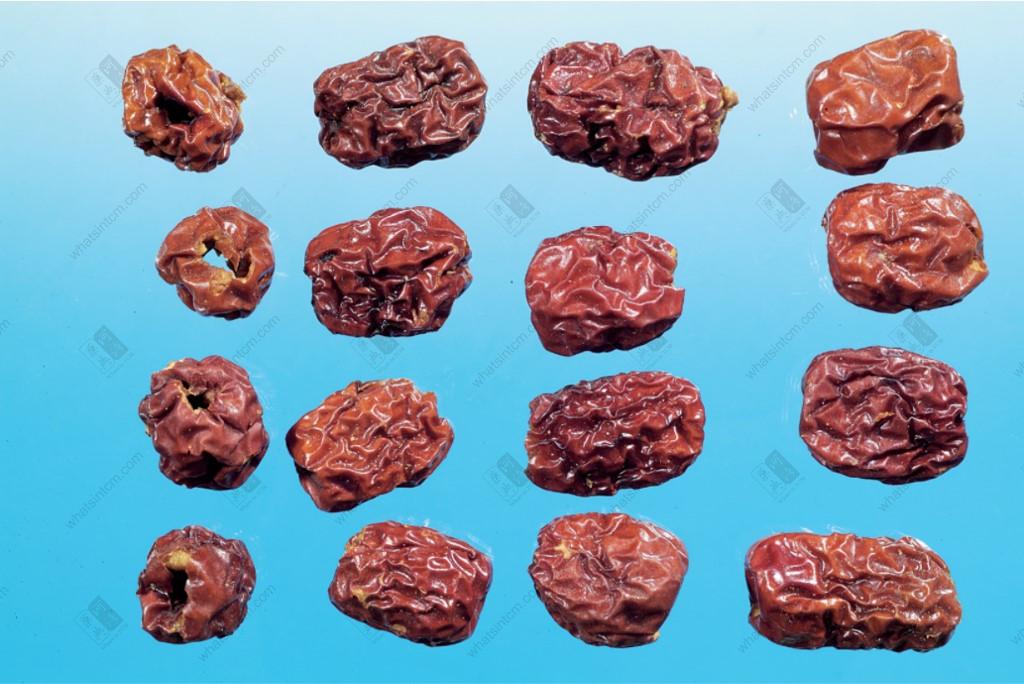
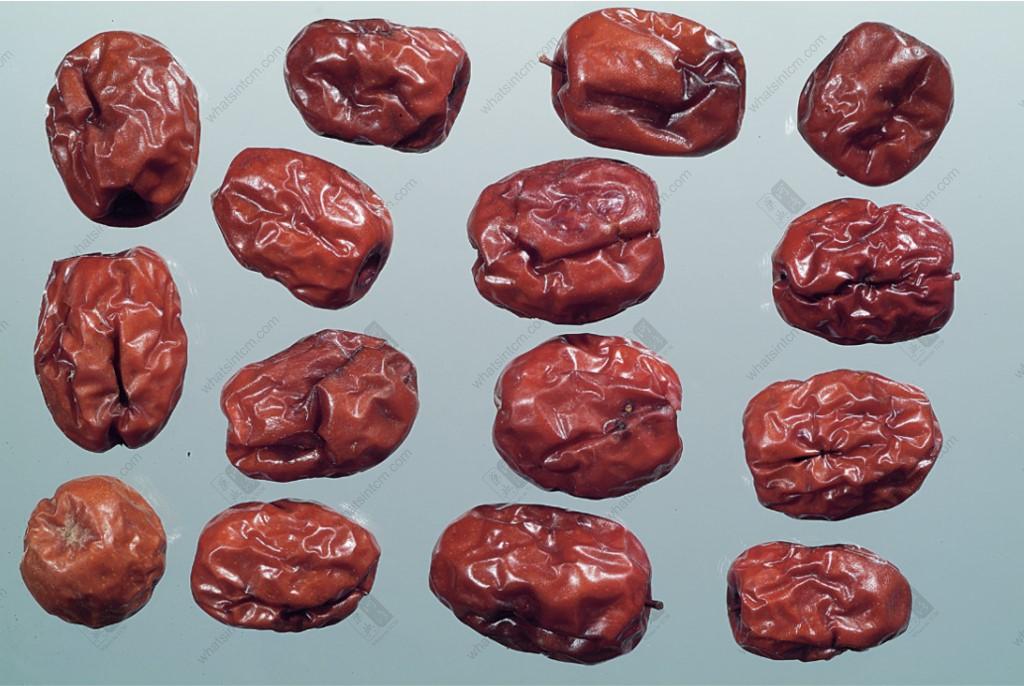
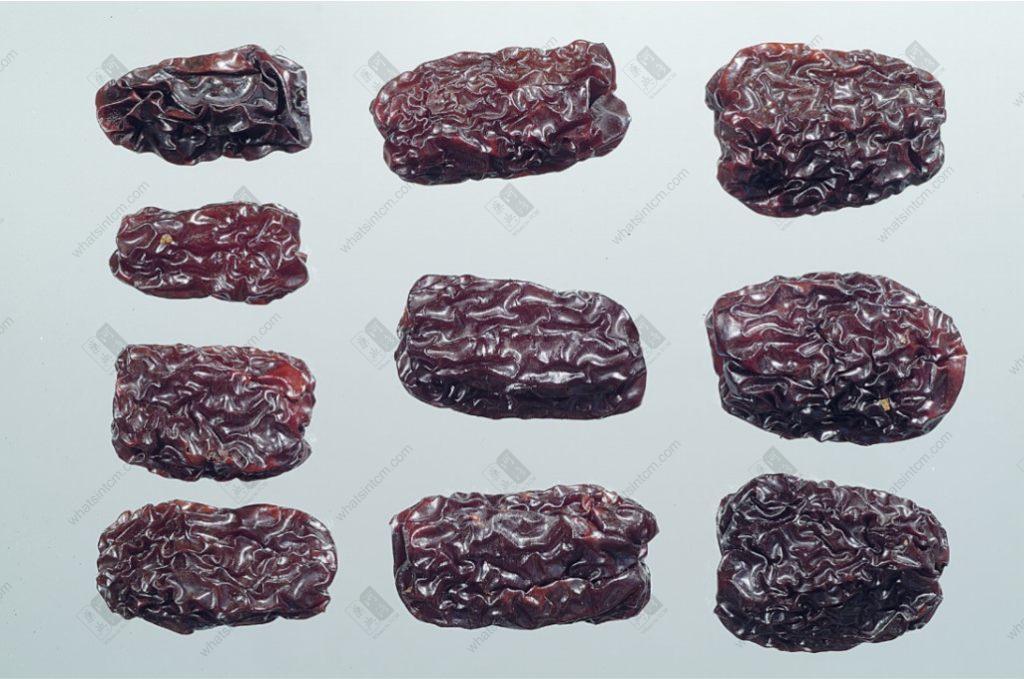
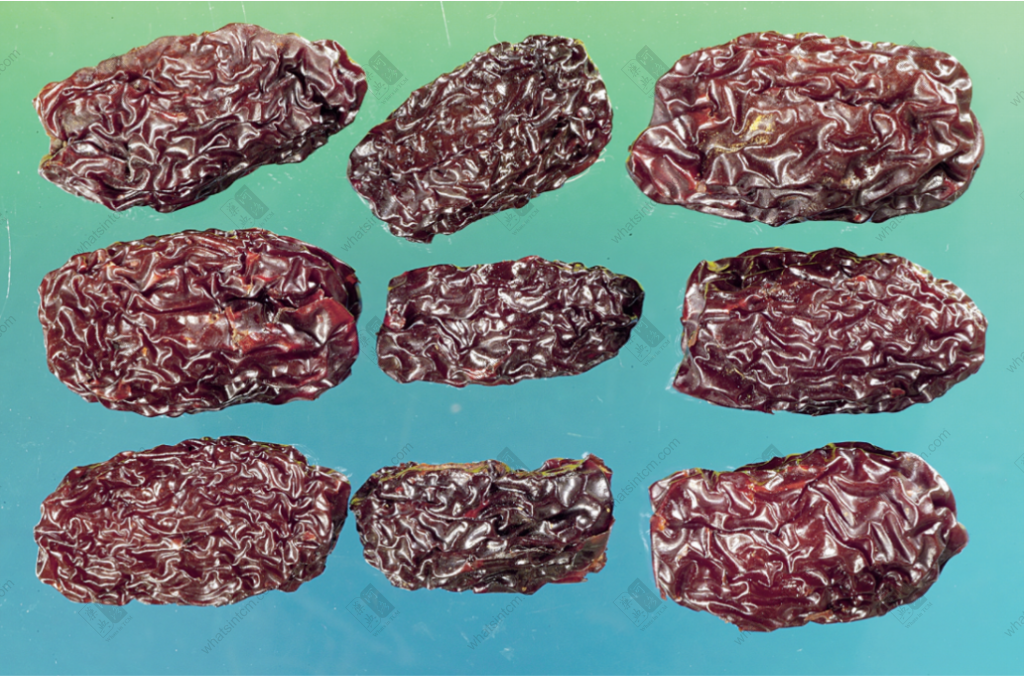
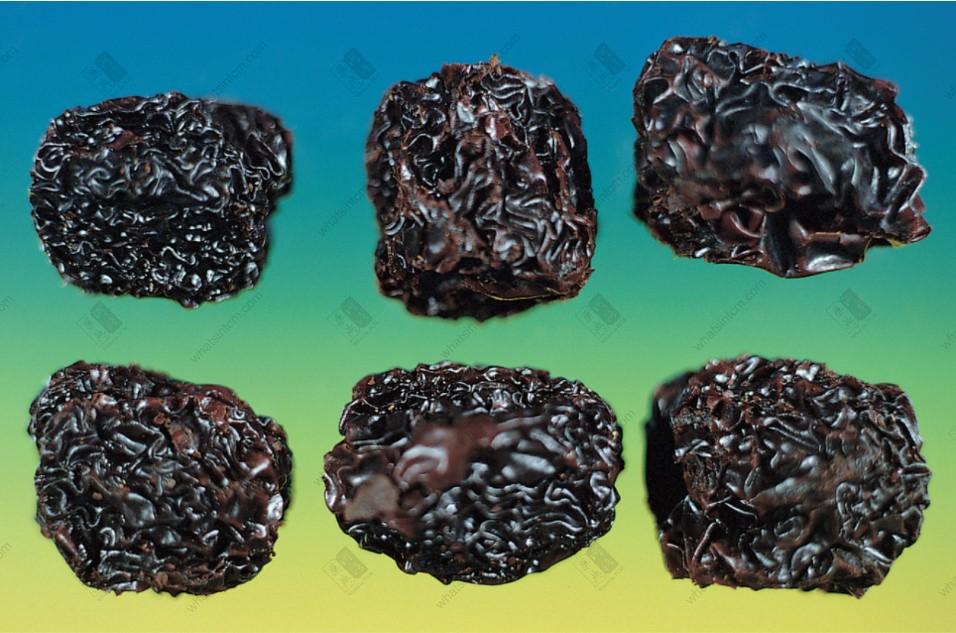
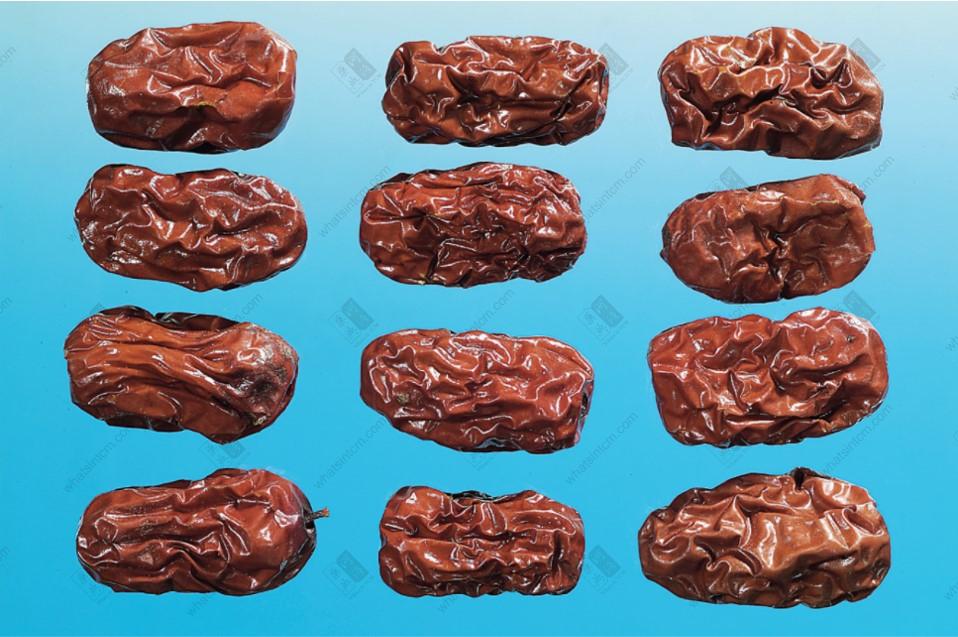
After Da Zao is harvested, there is a distinction between red dates (紅棗, *hong zao*) and black dates (烏棗, *wu zao*) due to different processing methods. Red dates are generally considered sweet and warm in nature, primarily entering the Spleen and Stomach meridians, with effects of tonifying qi, generating fluids, and harmonizing Ying and Wei. Black dates, after processing, are more sweet and hot, and in addition to entering the Spleen and Stomach meridians, they also enter the Liver and Kidney meridians. They do not pose the problem of raw dates harming the spleen, nor do they carry the disadvantage of red dates causing damp-phlegm when consumed in excess. Furthermore, they have the effect of nourishing the Liver and Kidneys, hence their common presence in the market. When purchasing, it’s important to note that there is another type of ‘black date’ (黑棗, *hei zao*) which is the fruit of Diospyros lotus L. (persimmon family). It has the effect of clearing heat and stopping cough, and its taste is sweet and slightly astringent, similar to a persimmon. Because its appearance and color are similar to *wu zao*, one should be careful to distinguish between them when buying. Another common Rhamnaceae herb is Guai Zao (Hovenia dulcis), also known as Zhi Ju.
Its seeds are mainly used for their effects of relieving restlessness and clearing heat, commonly used in folk remedies to detoxify alcohol.
Da Zao is lauded as a ‘natural multivitamin’ because, in addition to sugars and proteins, it contains vitamins A, C, riboflavin, niacin, and various minerals such as calcium, phosphorus, and iron. Every 500 grams of fresh Da Zao contains 2,700 milligrams of vitamin C, making it richer than the same weight of apples and peaches. Its vitamin P content is also very high, thus having excellent effects on maintaining health. The currently abundant ‘milk jujube,’ also known as ‘honey jujube,’ is a close relative and also has high nutritional value.
【Image Source】Professor Zhang Xian-zhe, ‘Illustrated Guide to Authentic Medicinal Materials>’ https://whatsintcm.com
【Author Biography】
Chen Da-zhen. Education: Ph.D. in Chinese Medicine, China Medical University.
Current Position: Assistant Researcher, Medical Intelligence Center, China Medical University Hospital.
Editorial Board Member, Chinese Materia Medica Discipline, National Common Textbook Compilation Committee for Chinese Medicine Colleges and Universities.
Distinguished Lecturer, Industrial Technology Research Institute (ITRI).
Adjunct Lecturer, Post-Baccalaureate Program in Chinese Medicine, China Medical University.
Adjunct Assistant Professor, Department of Pharmacy, Chia Nan University of Pharmacy and Science.
Co-founder of Heluo Pharmacopoeia www.whatsinTCM.com