


Autumn Wellness: Lily, the Premier Choice
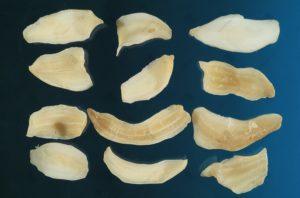
Author: Professor Chen Da-zhen Image Source: Professor Zhang Xian-zhe’s Authentic Medicinal Materials Illustrated Guide
As autumn arrives and temperatures gradually cool, our bodily care routines also shift. The Yellow Emperor’s Inner Canon states: “The three months of autumn are called the period of ‘smooth harvesting.’ The celestial qi is urgent, the terrestrial qi is clear. Sleep early and rise early, rising with the chickens. Keep the spirit tranquil to mitigate the autumn’s harshness. Conserve the spiritual qi to equalize the autumn qi. Do not let your aspirations wander outwards, to keep the lung qi clear. This is the way to nourish and gather in response to autumn qi.” Therefore, in autumn, one should sleep early and rise early, with the morning rise time similar to when chickens crow. The main way to preserve health in autumn is to keep one’s thoughts tranquil, unlike the passionate exuberance of summer. Another aspect is to gather one’s spirit and gradually settle down from the vigorous state of qi and blood experienced in summer. Finally, it’s about gradually transitioning inwards, slowly shifting from outward ‘activity’ to ‘stillness.’ To align your body with nature’s rhythm, in addition to adjusting your mindset and daily routine, you can also make dietary changes. Next, I will introduce a health-preserving treasure for autumn.
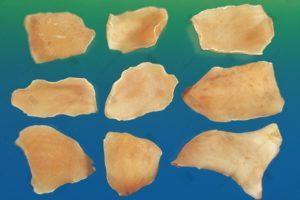
Lily (https://whatsintcm.com/en/dt_articles/lily-bulb/) is also known as Mountain Garlic, Wild Lily, Mountain Lily, and Medicinal Lily. It is primarily produced in places like Taiwan, Hunan, and Zhejiang. According to the third edition of the Taiwan Herbal Pharmacopoeia, its main sources are the fleshy scales of the dried bulbs from three species of the Liliaceae family: Lilium lancifolium Thunb., Lilium brownii F.E.Br. var. viridulum Baker, and Lilium pumilum Redoute. The *Shennong Ben Cao Jing* (Divine Farmer’s Materia Medica) records: “Lily, sweet in taste, neutral in nature. It primarily treats abdominal distension due to pathogenic qi, heart pain, facilitates urination and defecation, and tonifies the middle burner and boosts qi.” Its main effects include clearing heat and promoting diuresis, nourishing yin and moistening the lungs, calming the heart and tranquilizing the mind, and promoting fluid production to relieve cough. Besides starch, protein, calcium, phosphorus, iron, vitamins B1, B2, and carotene, it also contains various alkaloids.
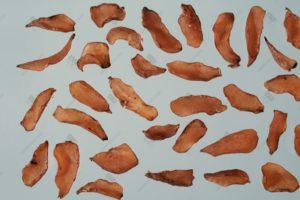
Currently, three common forms found on the market are dried lily bulb, honey-processed lily bulb, and fresh lily bulb. Dried lily bulb is usually harvested in autumn and winter. After washing, the fleshy scales are blanched briefly in boiling water and then sun-dried. The best quality is thick, firm, and white. For processing honey-processed lily bulb, honey is first refined, then lily bulb is added and allowed to steep for four hours. Afterwards, it is stir-fried over a low flame until the surface is slightly yellow and no longer sticky to the touch. It is then removed and cooled completely before use. Fresh lily bulb is mainly available in vegetable markets, with thick, white ones being preferred.
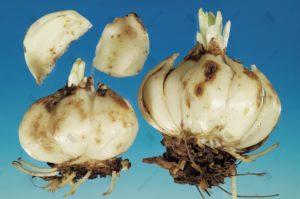
For a health-preserving soup, take 15g of lily bulb, 30g of lotus seeds, and 1 piece of tremella mushroom. Soak all ingredients until soft. Regarding lotus seeds, please refer to the webpage (https://whatsintcm.com/en/dt_articles/lotus-seed/) to ensure you don’t buy the wrong type. Place all ingredients in an electric pot and steam until cooked. Add an appropriate amount of rock sugar according to personal preference, then it’s ready to eat. This soup has good effects in protecting the lungs and preventing colds. If you cook it for a longer period, the collagen from the tremella mushroom will dissolve into the soup. Besides improving coughs caused by lung heat, it can also moisten the intestinal lining, thereby aiding in bowel movements. Currently, Taiwan’s Ministry of Health and Welfare stipulates that the residue limit for sulfur dioxide in lily bulbs must not exceed 400ppm. Other heavy metals such as arsenic, cadmium, mercury, and lead must all be below 5ppm. Furthermore, because lily bulb is a commonly used food ingredient, it is also regulated according to the “Standards for Pesticide Residue Limits in Foods.” Therefore, everyone can consume it with peace of mind, without any concerns.