



Teasel Root
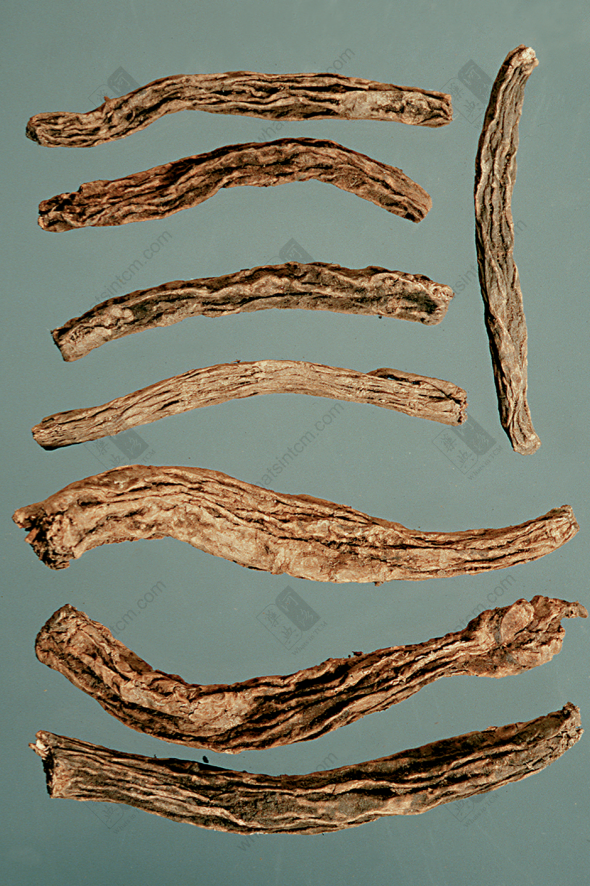 Teasel Root (Upper 4 Sichuan, Lower 3 Hanzhong) (Flattened cylindrical, grayish-brown, longitudinal striations)
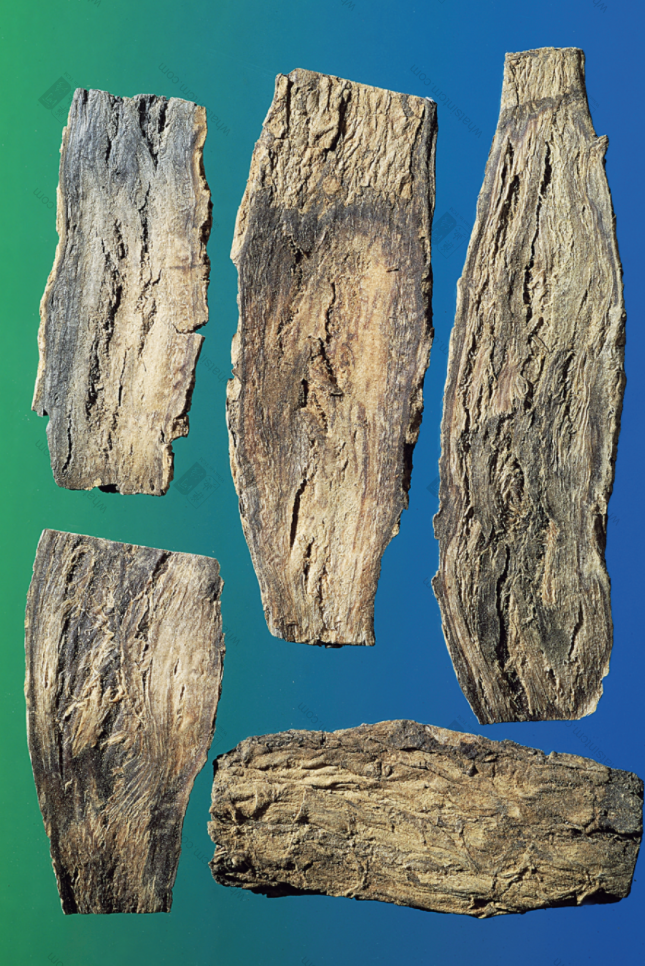 Hankou Teasel Root Slices
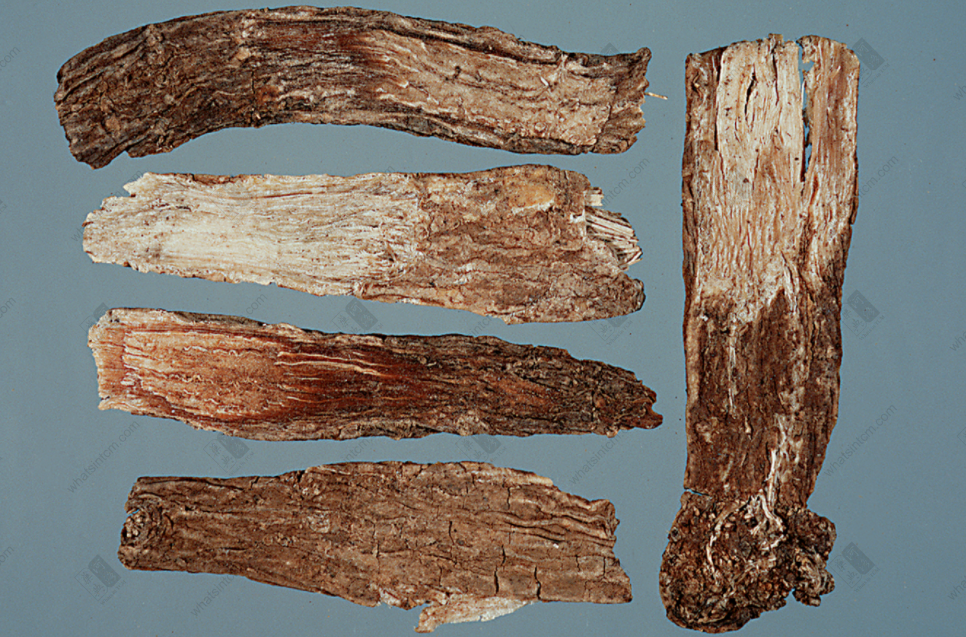 Sichuan Teasel Root Slices
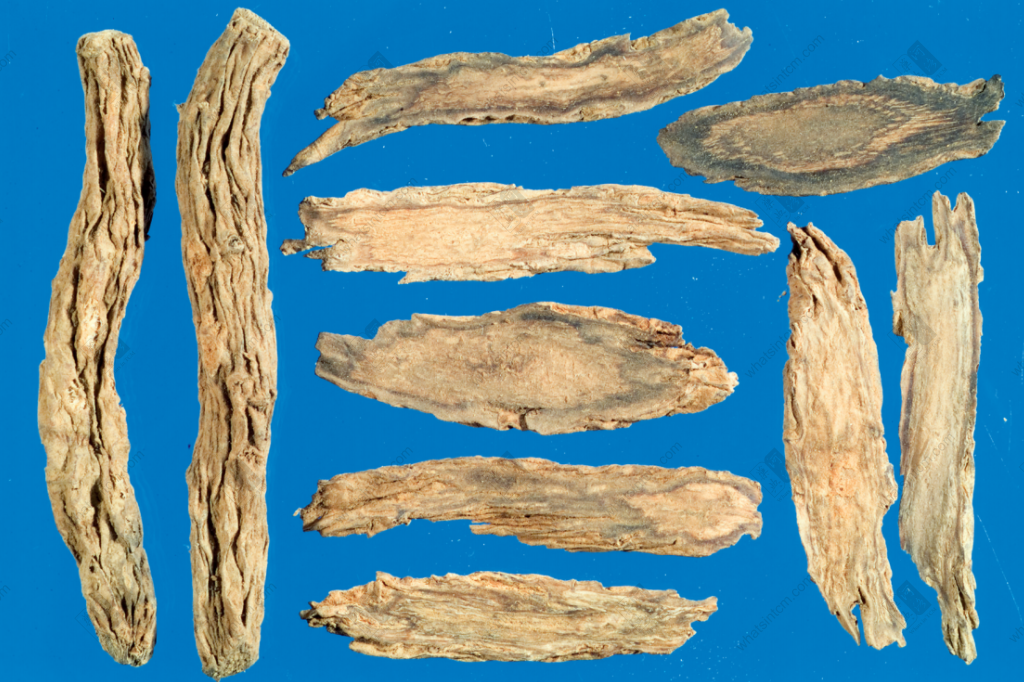 Han Teasel Root
【Naming】
【Source】
Superior Grade from *Shennong Ben Cao Jing*
【Common Usage Level】
B
【Botanical Origin】
The root of Dipsacus asper Wall. or Dipsacus japonicus Miq. of the Dipsacaceae family.
【Characteristics】
It is long cylindrical, or slightly curved, 7-10 cm long and 1-1.5 cm in diameter. The surface is grayish-brown, with twisted longitudinal wrinkles and shallow grooves, transversely cracked lenticels, and a few root scars. It is soft in texture and not easily broken.
Processed slices are thin, longitudinally or transversely cut, about 1-3 mm thick, with irregular edges. The cut surface shows brownish-black irregular annular patterns, separating the cortex and xylem. The cortex is dark brown, the xylem is light brown, with whitish specks. The cortex is about half the width of the xylem, and the vascular bundles are arranged radially, appearing slightly dark green. It has a faint aroma, and a bitter, sweet, and astringent taste.
【Processing Methods】
1. Raw Teasel Root 2. Stir-fried Teasel Root 3. Wine-processed Teasel Root 4. Salt-processed Teasel Root.
【Identification】
*Zhenglei Bencao* (Classified Materia Medica) states: ‘The genuine one is easily broken at the nodes, with yellowish, wrinkled bark.’ *Bencao Gangmu* (Compendium of Materia Medica) states: ‘The good one is reddish and slender, and when broken, emits smoke and dust.’ *Bencao Gangmu* further states: ‘[Hongjing said] Light, thin, and dark in color is superior. [Song said] Those from Sichuan with thick flesh and dark color are good. Tight bark, two or three fen thick, and bright yellow is excellent.’ *Bencao Beiyao* (Essentials of Materia Medica) states: ‘Those from Sichuan are good, resembling chicken feet, with yellowish, wrinkled bark, and easily broken at the nodes are genuine.’ *Paozhi Quanshu* (Complete Book of Processing) states: ‘What people use today are those from the prefecture, reddish and slender, and when broken, emit smoke and dust, which are considered good.’ *Bencao Qiuzhen* (Pursuit of Truth in Materia Medica) states: ‘Those from Sichuan are good.’ The best are coarse and plump, firm in texture, easily broken, with a yellowish-brown outer surface and grayish-green inner surface.
【Identification Terms】
1. Zhengtí (正提): A third-grade specification for Teasel Root medicinal material. The root strips are completely dry, bluish-green, and as thick as a little finger.
2. Zhengduan (正斷): A first-grade specification for Teasel Root medicinal material. The root strips are completely dry, plump, soft in texture, emerald green, and as thick as a thumb.
3. Douqingcha (豆青碴): Teasel Root that has hardened with prolonged storage, is easily broken, has an uneven cross-section, with the outer edge of the cortex appearing brown and the inside dark green.
4. Mianduan (面斷) (Fuduan/Secondary Break): A second-grade specification for Teasel Root medicinal material. The root strips are completely dry, soft in texture, emerald green, and as thick as a middle finger. Also known as “Fuduan”.
5. Futi (副提): A third-grade specification for Teasel Root medicinal material. The root strips are completely dry, bluish-green, and as thick as a cigarette.
【Category】
Root Herbs