
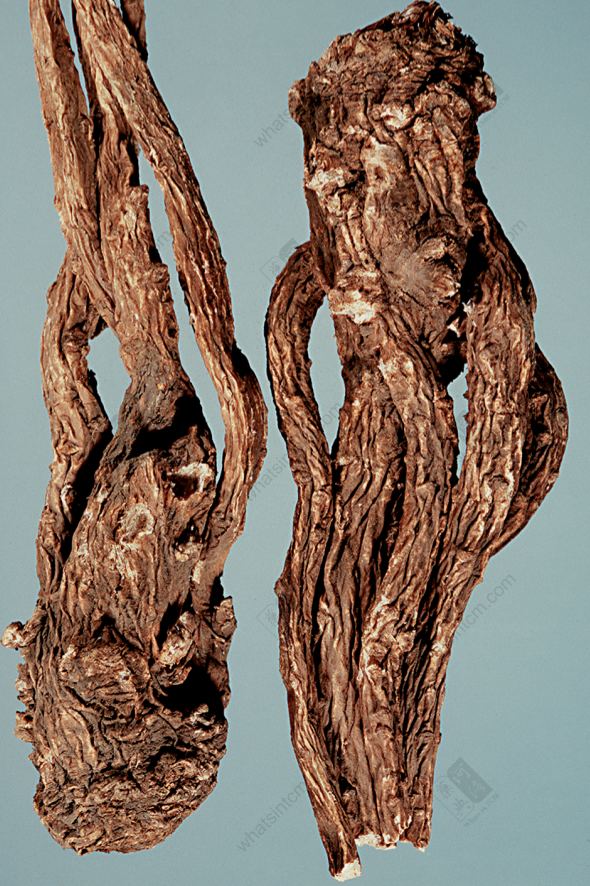
Danggui (Angelica sinensis) (Thick and short root head with several branch roots, strong and fragrant aroma)
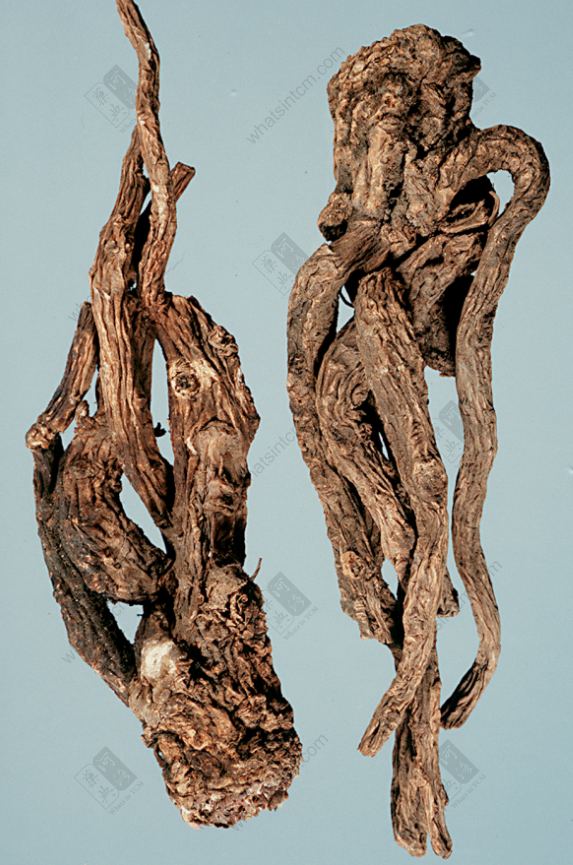
Touti Gui (Danggui with small body and slender branch roots)
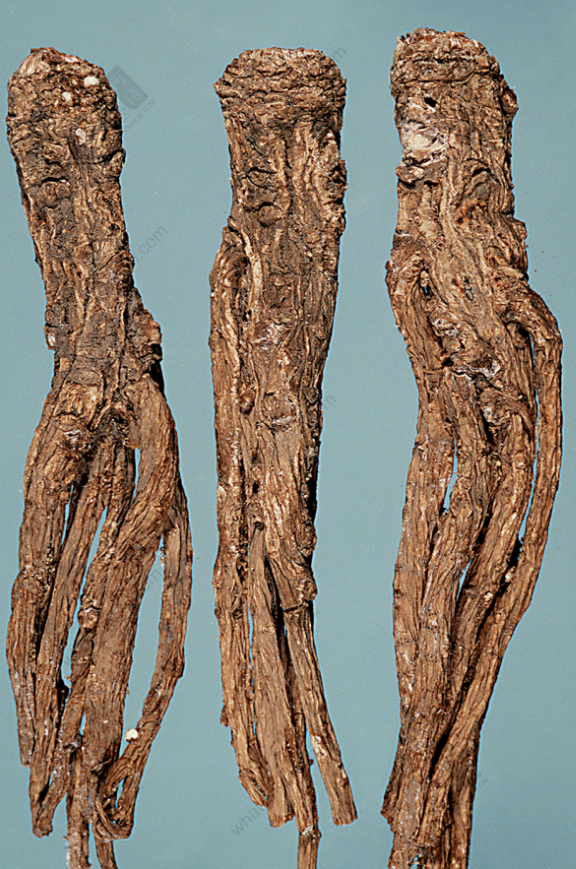
Qin Gui (Angelica sinensis from Qin region)
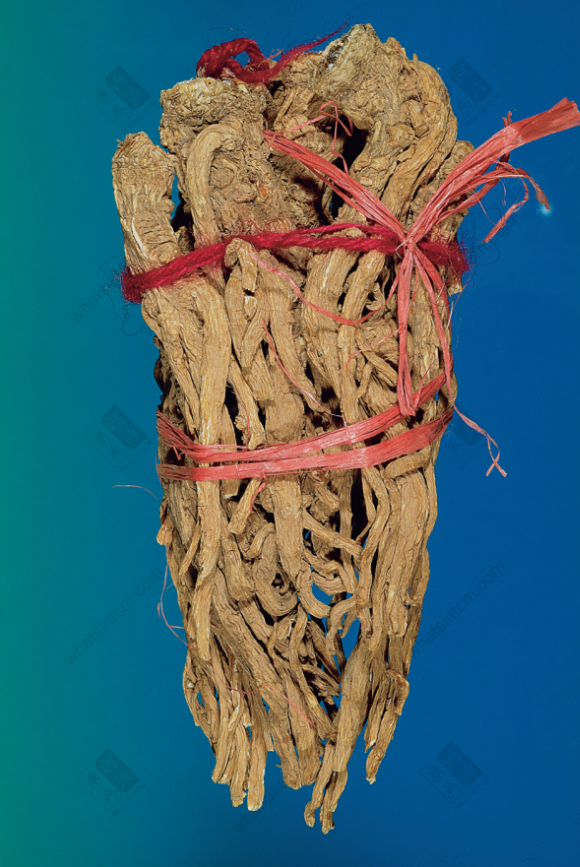
Danggui (Angelica sinensis) (Cylindrical, yellowish-brown, with twisted fibrous roots, soft and pliable)
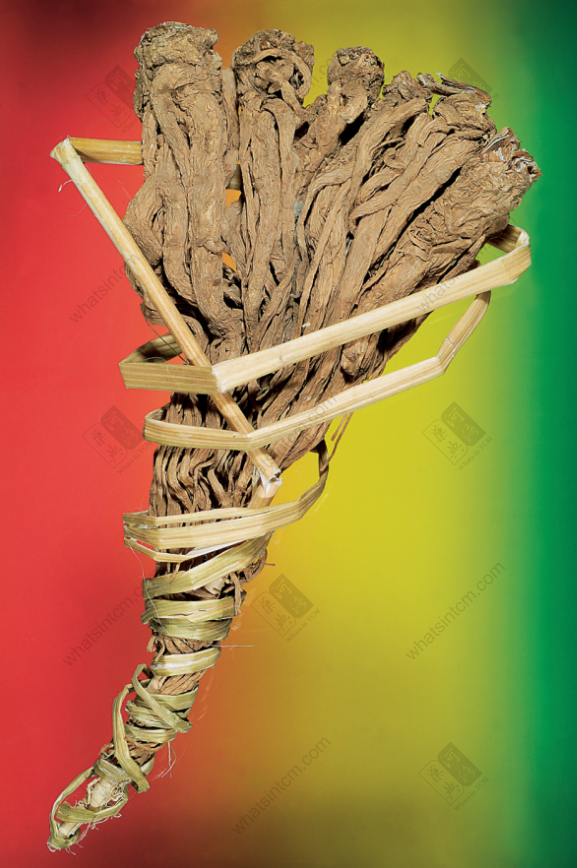
Qin Gui (Angelica sinensis from Qin region)
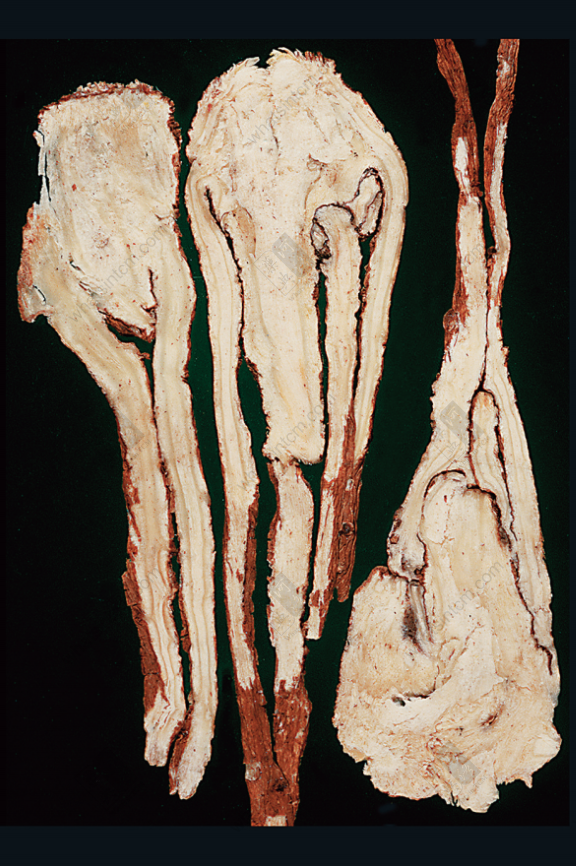
Danggui (Angelica sinensis) Slices (Yellowish-white with oily appearance, supple, clear and strong fragrance, sweet with slight bitterness)
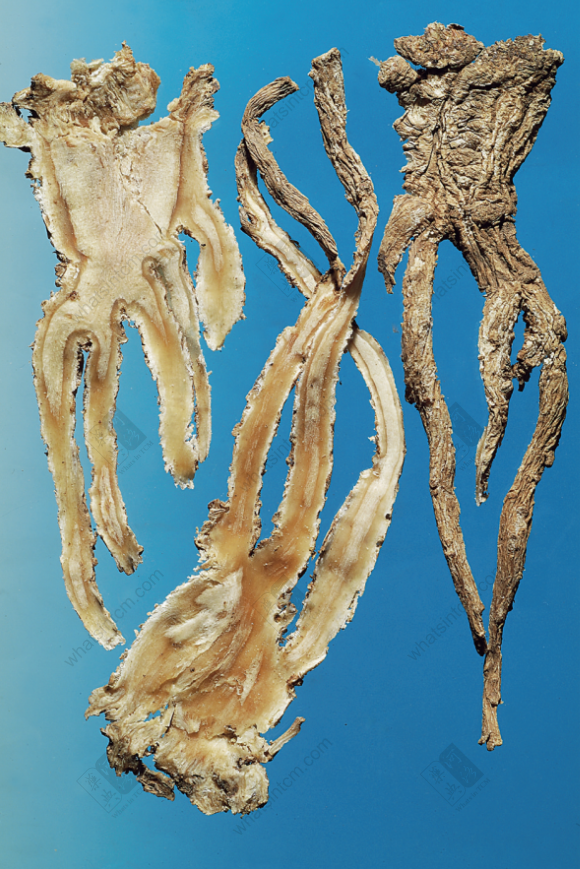
Hand-cut Danggui Slices (Oily) (Oily, with oil spots)
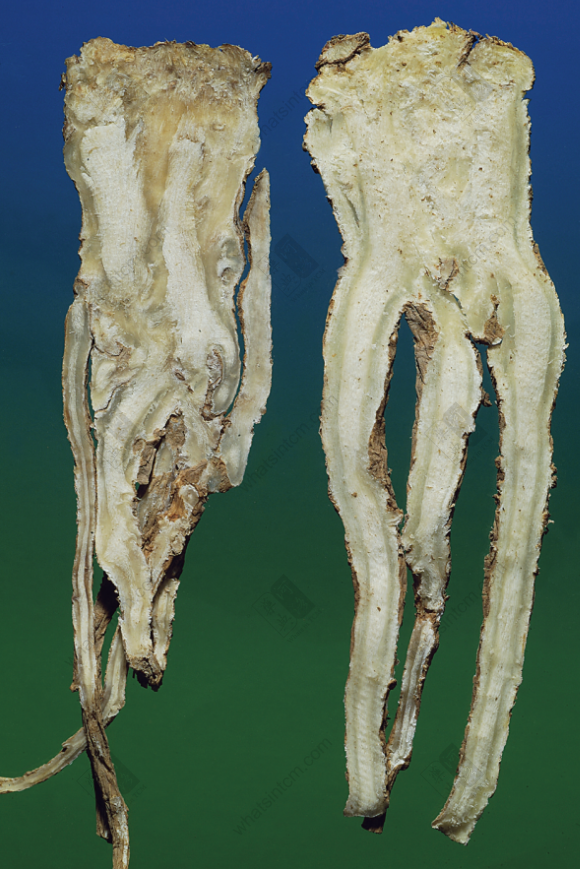
Danggui (Angelica sinensis) Slices (The left one is more oily)
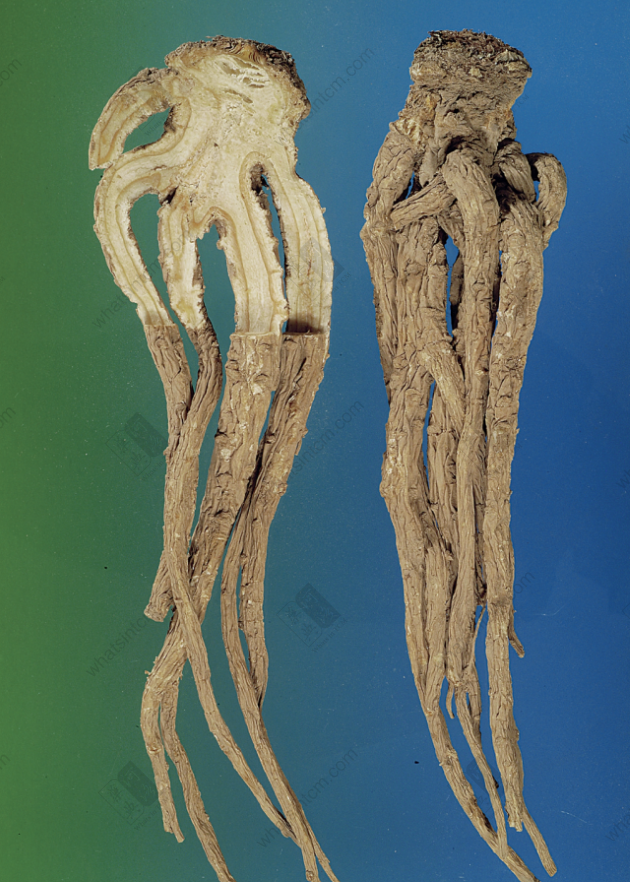
Shaanxi Danggui (Angelica sinensis)
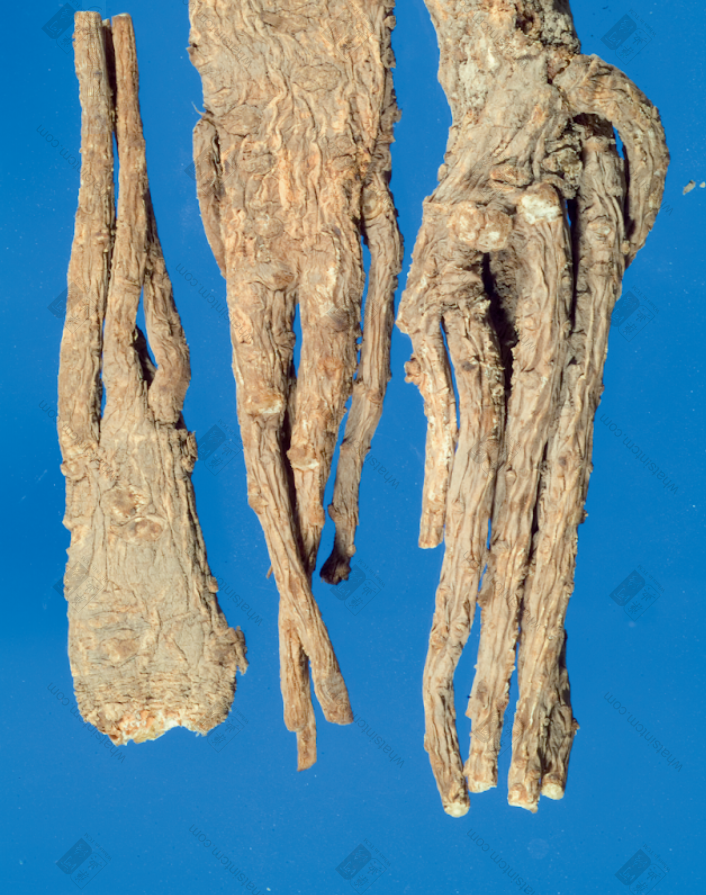
Left: Flattened Danggui (Angelica sinensis) waiting to be sliced
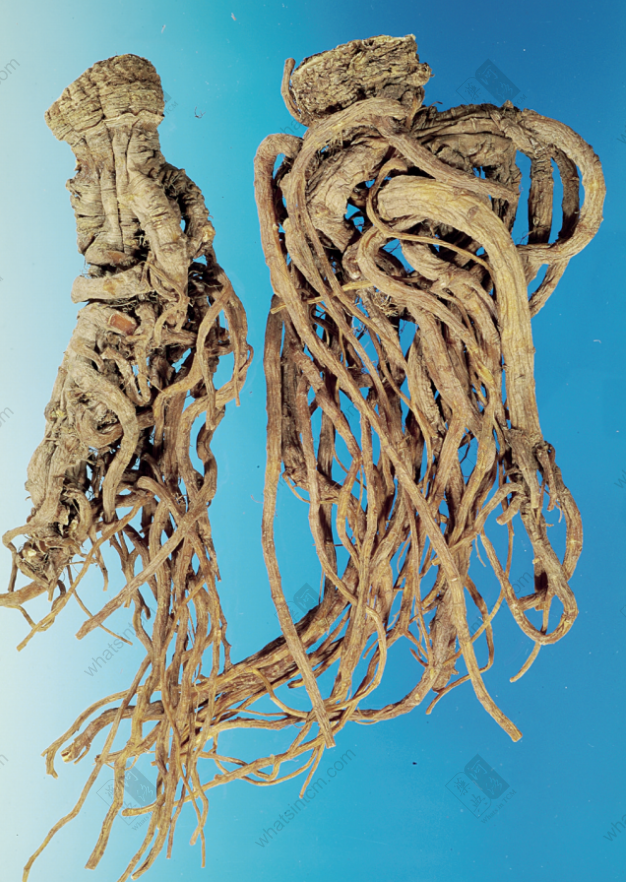
Japanese Danggui (Angelica sinensis) Cultivated in Sichuan
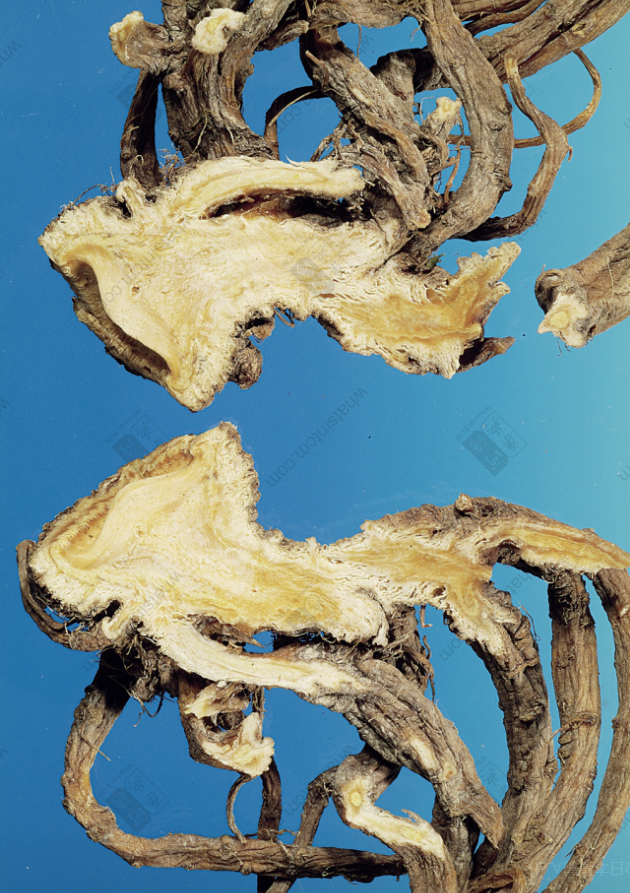
Japanese Danggui (Angelica sinensis)
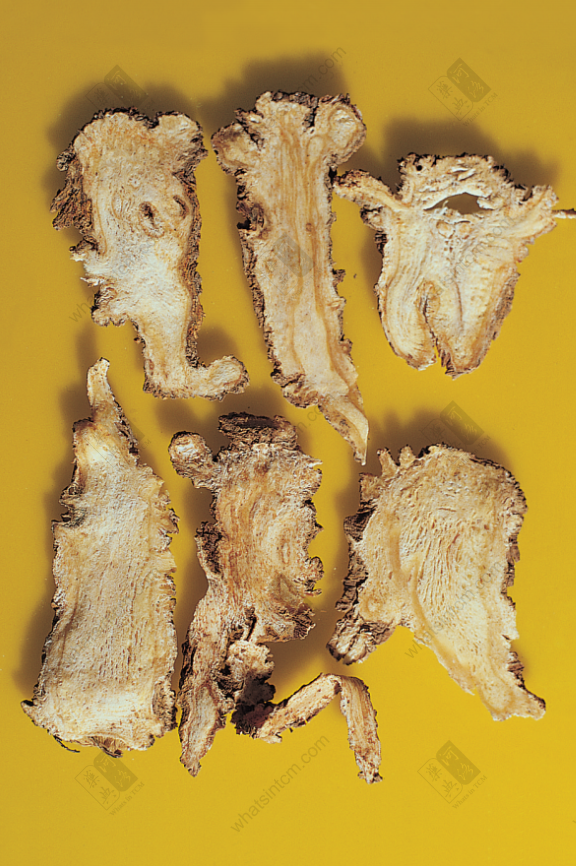
Touti Gui (Danggui with small body and slender branch roots) Slices
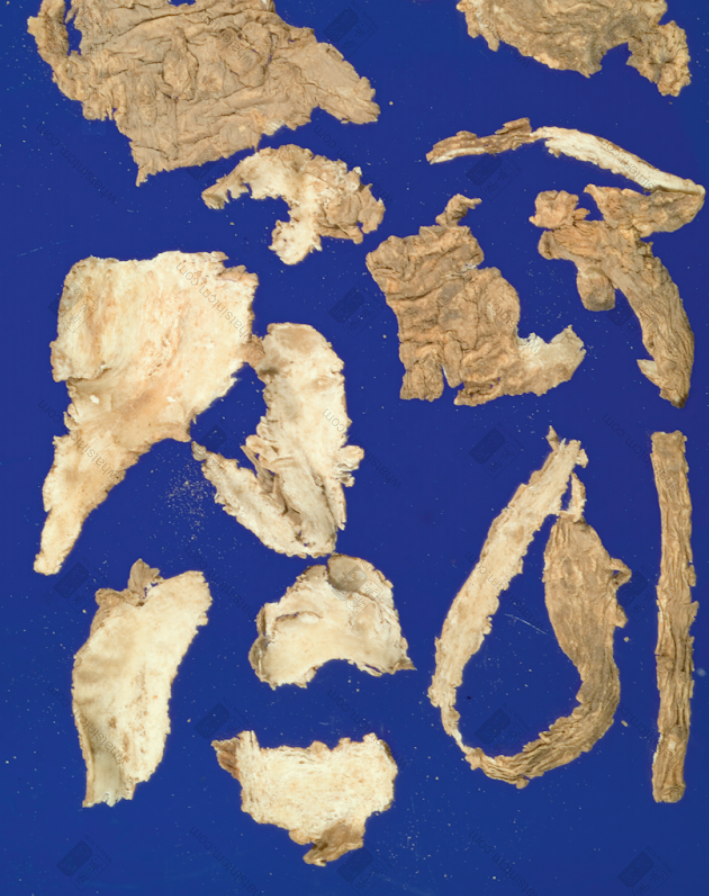
Gui Pi (Danggui Bark, used for fragrance)
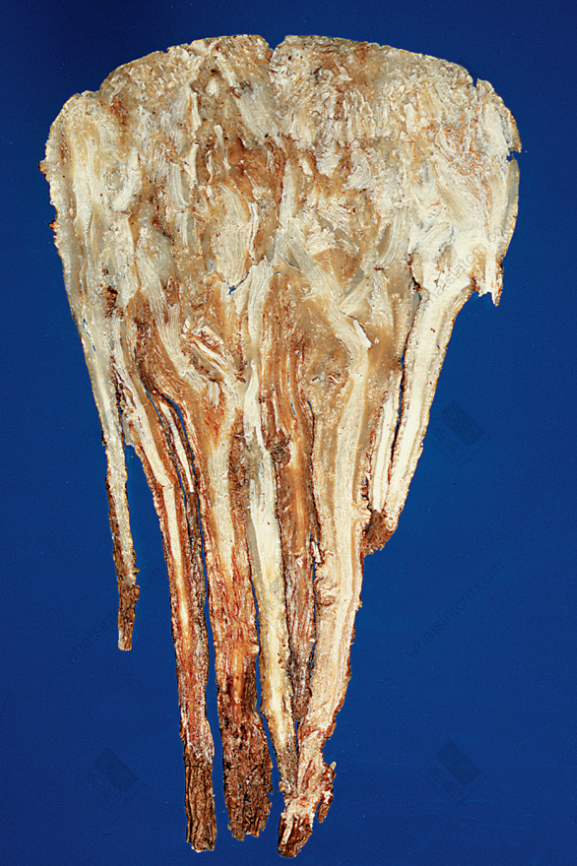
Artificially Adhered Fan-shaped Danggui Slices
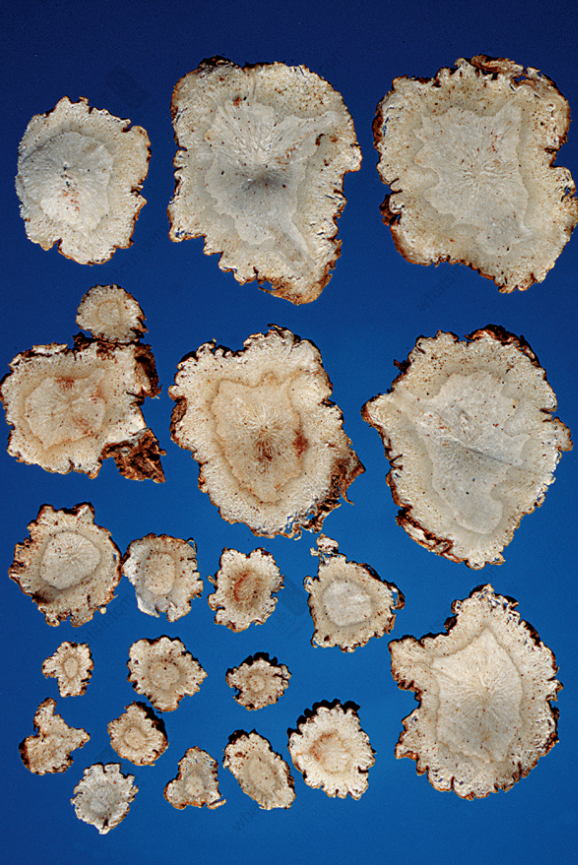
Danggui (Angelica sinensis) Slices
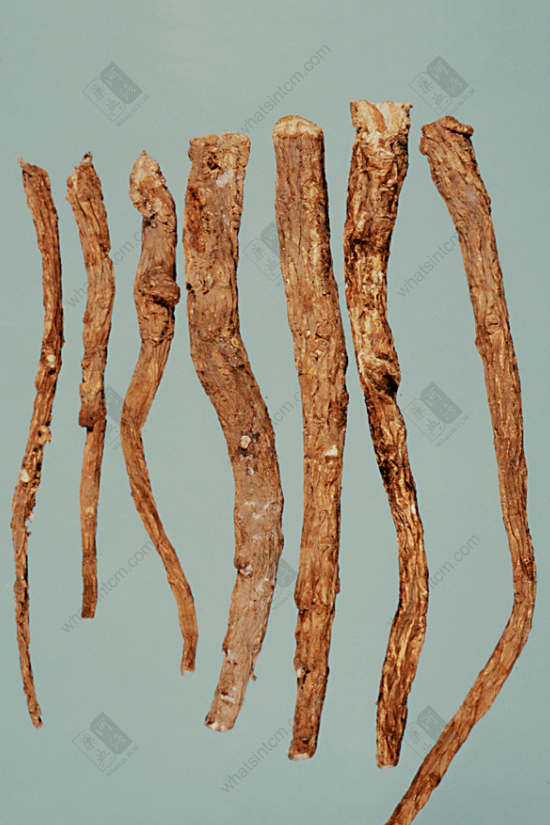
Gui Tui (Danggui Leg, branch root)
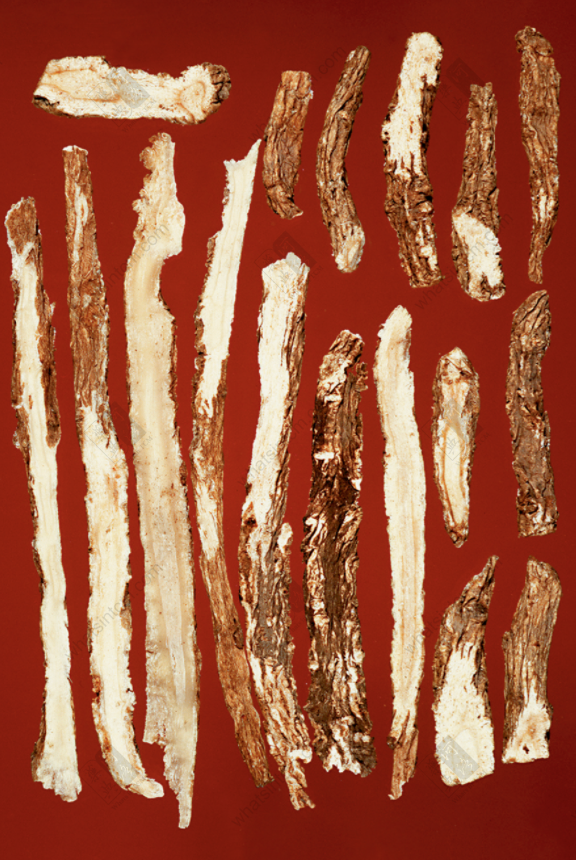
Gui Tui (Danggui Leg, branch root) Slices
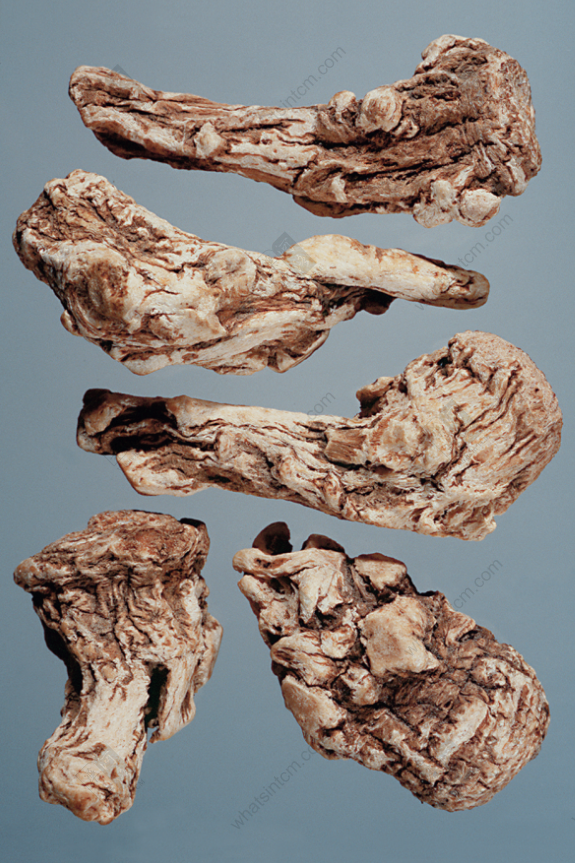
Hulushou Gui (Danggui head, root head)
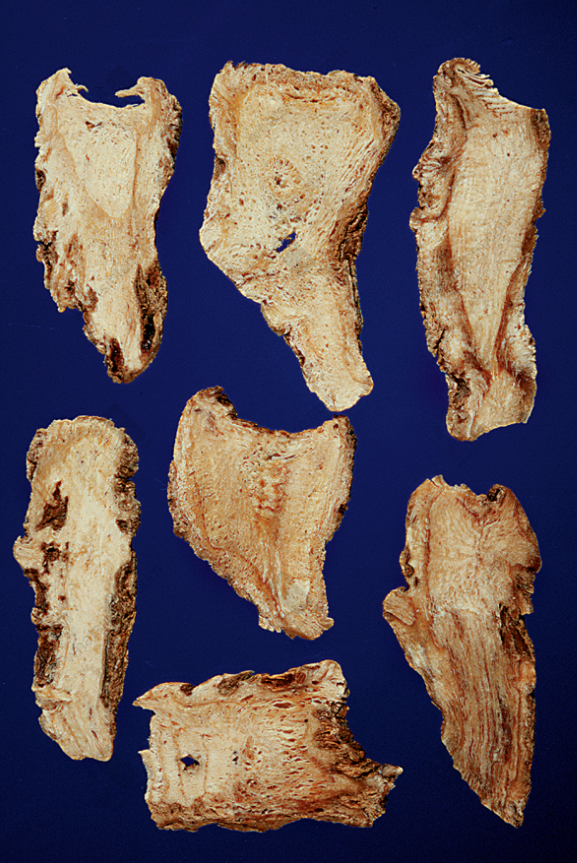
Gui Tou (Danggui Head, root head) Slices
【Naming】
【Source】
Classified as a medium-grade herb in the Shen Nong Ben Cao Jing (Divine Farmer’s Materia Medica)
【Common Usage Level】
A (Very Common)
【Botanical Origin】
The root of Angelica sinensis (Oliv.) Diels, belonging to the Umbelliferae (Apiaceae) family.
【Characteristics】
The root head and main root are thick and short, with five or six to more than ten branch roots of similar thickness and length growing unevenly from the lower end. Sometimes, finer roots branch out further, giving the entire structure a slightly horsetail-like appearance. The total length is about 15-25 cm, and the root head diameter is about 0.5-1 cm. The outer surface is yellowish-brown to dark brown, with irregular longitudinal wrinkles. When dry, it is hard, but it easily absorbs moisture and becomes soft and pliable. When squeezed forcefully, a yellow oily substance exudes. The aroma is fragrant, strong, and distinctive, with a slightly sweet taste followed by a slight bitterness.
Prepared slices are transversely, obliquely, or longitudinally cut into thin pieces. In Taiwan, it is commonly flattened, with the main and branch roots entirely longitudinally sliced. The thickness is about 0.5-1 mm. Transverse or oblique slices of the branch roots have uneven edges. The cambium layer shows a brown ring layer, and the cortex accounts for about half the diameter of the root, appearing light brown. There are numerous small oil spots. The xylem is pale yellowish-white, and the rays are light in color, radiating from the center outwards. It is oily, with a light brown ring, and brown oil spots are characteristic. Transverse sections of the root head have a broad pith. Longitudinal sections of the root head alone are less common, being longitudinally cut from the main root, appearing as long rectangles about 3-5 cm long and 1.5-2 cm wide. The cambium layer appears as dark-colored linear stripes, and the xylem is off-white with straight, fine stripes (vascular bundles).
Wine-processed Danggui: Appears brownish-yellow with charred spots. The aroma is fragrant with a hint of wine, and the taste is sweet with a slight bitterness.
Danggui Charcoal: The surface appears dark brownish-black, and the cross-section appears grayish-brown.
【Processing】
1. Danggui 2. Wine-processed Danggui 3. Danggui Charcoal
【Identification】
“Fan Zi Yun: Danggui without dryness is good,” according to Zheng Lei Ben Cao. “Generally, the thicker and less dry the flesh, the better.” “Only those that are plump and not dry are good.” According to Pu Ji Fang, “Danggui with a sweet taste is good, and those with a spicy taste should not be used.” According to Pu Ji Fang, “Danggui (choose those from Sichuan that are large like a horsetail, moist, sweet, spicy, and fragrant) is good.” According to Pu Ji Fang, “Danggui from Longxi is good.” According to Ben Cao Pin Hui Jing Yao, “Roots that are more pliable and moist are better.” According to Ben Cao Gang Mu, “Roots that are blackish-yellow in color, with thick and non-dry flesh, are better.” According to Ben Cao Gang Mu, “Those with a purplish color, fragrant aroma, and plumpness are called Mawei Gui (Horsetail Danggui), which is the best.” According to Ben Cao Bei Yao, “The product from Sichuan is strong and good at attacking, while the product from Qin is gentle and good at tonifying. The best is the Qin product with a round head, many tails, plumpness, and a fragrant aroma, called Mawei Danggui (Horsetail Danggui).” According to Ben Cao Hai Li, “[Preparation] Harvest the roots in February and dry them in the shade. Those with round and multiple purple heads and tails, plumpness, a fragrant aroma, and white flesh without oil are good. Mawei Gui (Horsetail Danggui) from Qin is the best.” According to Liang Lie Jian Bie, “Those that are plump and large, with clustered fibrous roots like a horsetail, a brownish outer skin, yellowish-white inside, a slightly sweet taste at first followed by a slight pungency, a fragrant aroma, and moistness are good.”
Those with a dry body, large branches, plump branch heads, a long body with few legs (branch roots), a golden-brown outer skin, full and powdery flesh, a white cross-section, a strong and fragrant aroma, and a sweet taste are considered good. Those with short main roots, many branch roots, a weaker aroma, and a reddish-brown cross-section are of lower quality.
【Identification Terminology】
1. He Kou (Closed Mouth): The root head of Danggui (Angelica sinensis) and Duhuo (Angelica pubescens) is round and blunt, with purple or yellowish-green stem scars and residual leaf stalk bases.
2. Shen (Body): Refers to the main root of certain roots and rhizomes. For example, the main root of Danggui is called “Gui Shen (Danggui Body).” Descriptions of the “body” include “length,” “shortness,” and “thinness,” while descriptions of quality include “loose,” “firm,” and “heavy.”
3. You Xing (Oily): The cross-section of the medicinal material is moist and oily, with more secretions, and the texture is soft and moist. It feels soft to the touch and often has brownish-yellow oil spots and a fragrant aroma, such as Danggui.
4. You Dian (Oil Spots): The medicinal material contains volatile oil, and the cross-section has brownish-yellow oil spots with a fragrant aroma, such as Danggui.
5. Qian Shan Tui Zi Hou Shan Wang (Legs from the Front Mountain, King from the Back Mountain): An evaluation of Danggui medicinal material. The Front Mountain refers to Danggui from Dangchang and Wudu in the Bailong River basin south of the Minshan Mountains. Danggui from the Front Mountain has a thick head, short body, long tail, and loose texture, and the quality is lower. The Back Mountain refers to Minxian, Lintan, and Danli in the Tiaotiao River basin of the Minshan Mountains. Danggui from the Back Mountain has a thick main root, long body, few lateral roots, and a strong aroma, and the quality is better than that of the Front Mountain.
6. Yuan Zhi Gui (Original Branch Danggui): Refers to the entire Danggui root.
7. Yuan Lou Gui (Original Basket Danggui): Also called Yuan Lai Gui (Original Danggui), refers to unprocessed original Danggui medicinal material.
8. Mawei Gui (Horsetail Danggui): The main root of Danggui is thick and short, with numerous branch roots that are whisker-like and purplish in color, resembling a horsetail.
9. Chang Xing Gui (Common Form Danggui): Refers to Danggui medicinal material with extremely small individuals.
10. Hulushou (Gui) (Gourd-head Danggui): A commercial specification of Danggui medicinal material, referring to the Gui Tou (Danggui Head), but it actually includes both the Gui Tou (Danggui Head) and Gui Shen (Danggui Body).
11. Tui (Leg): Generally refers to the branch roots of root and rhizome medicinal materials, also called “Wei (Tail).” Examples include Danggui and Renshen (Ginseng). Descriptions of the legs include “length,” “shortness,” “curved,” “straight,” and “number.” Generally, fewer legs are considered better.
12. Tou (Head): Generally refers to the top or upper rhizome of root and rhizome medicinal materials. It is distinguished from the middle main root (body) and lower branch roots (tail). Sometimes it is also used to distinguish the upper-middle part from the lower part, such as the rhizome of Danggui, which is called “Gui Tou (Danggui Head).”
13. Gui Wei Tui (Danggui Tail Leg): Refers to the branch roots of Danggui.
14. Can Tou Gui (Silkworm-head Danggui): The root head of Danggui is large, the branch roots are thick, and the body has fine ring-shaped wrinkles, resembling a silkworm’s head.
【Category】
Roots