



Ligusticum sinense
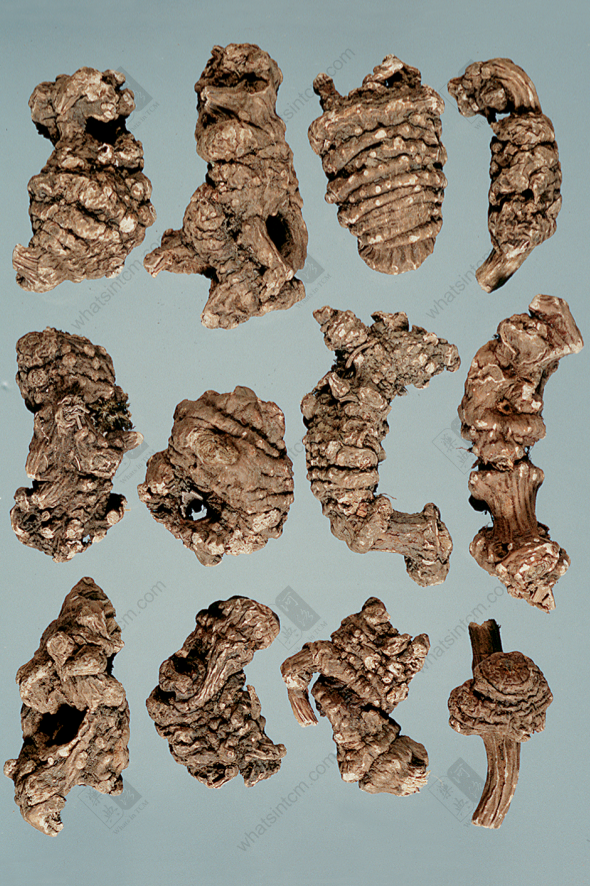
Chuan Gao Ben (Remnant fibrous roots with splits)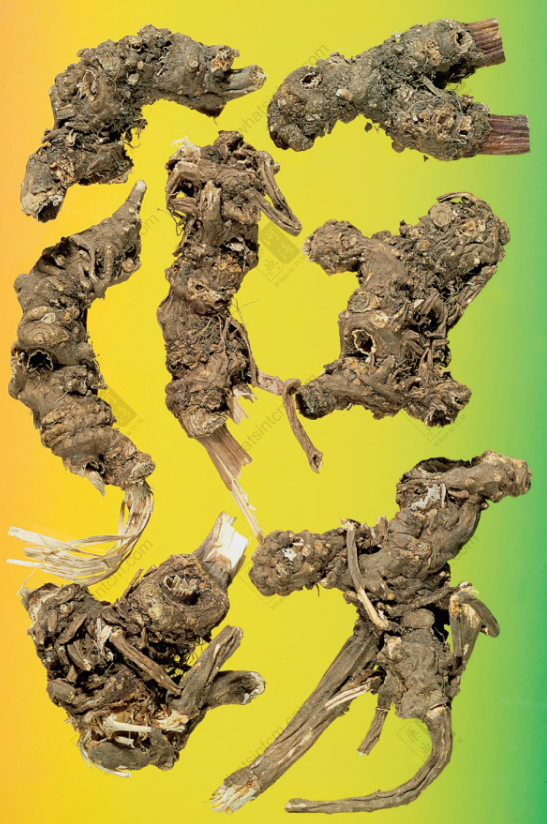
Chuan Gao Ben
Chuan Gao Ben (Nodular cylindrical shape, hollow in the center, brownish-red)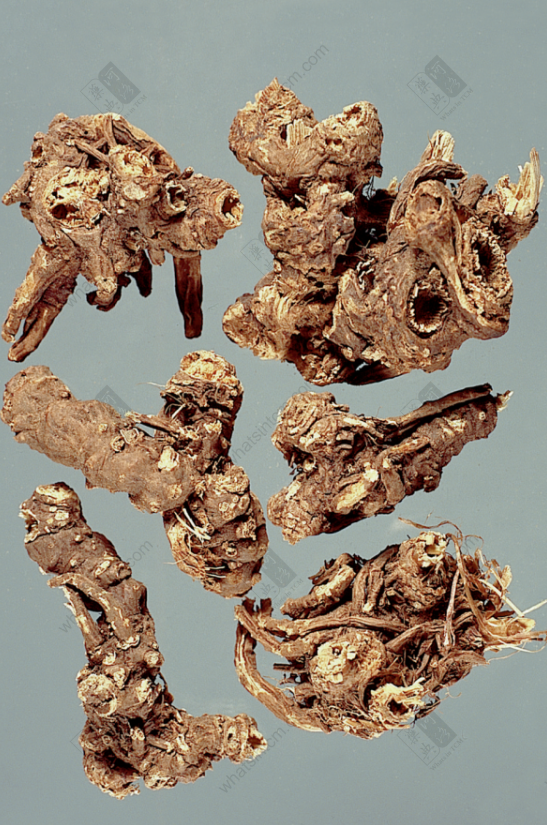
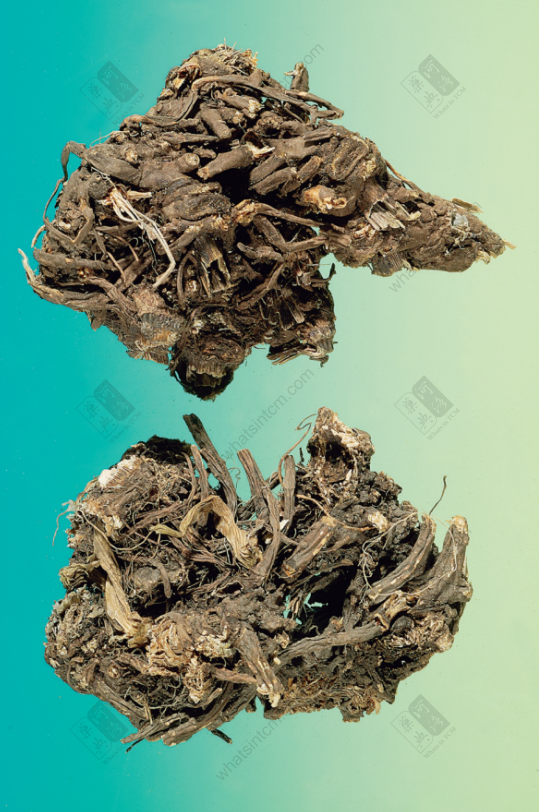
Badong Gao Ben
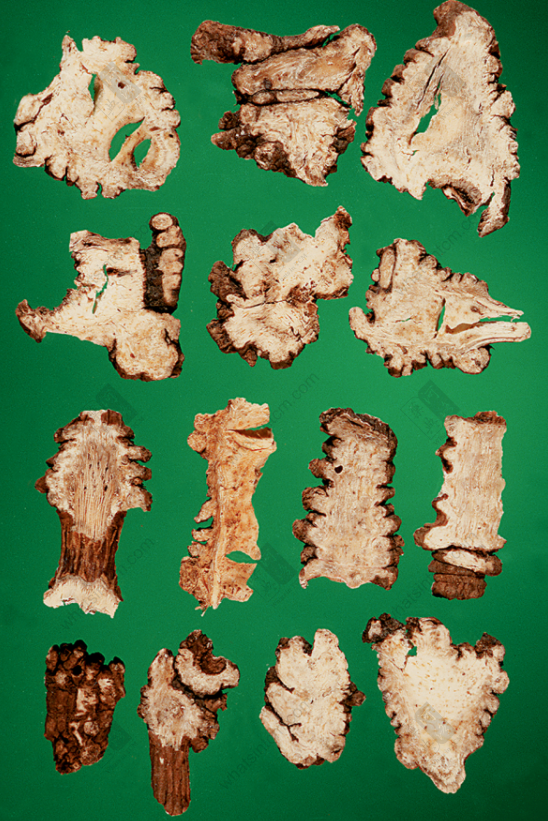
Chuan Gao Ben Slices (Fragrant, numbing, bitter, pungent)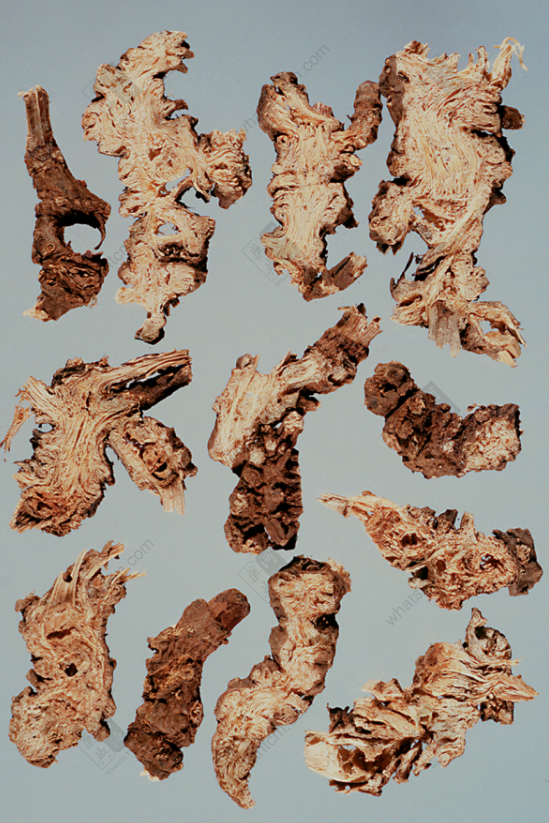
Badong Gao Ben (Badong has many splits; Chuan is solid and even)
【Naming】n
n 【Source】n
Shen Nong Ben Cao Jing, Middle Grade
n 【Common Usage Level】n
C
n 【Botanical Origin】n
The roots and rhizomes of Ligusticum sinense Olive. or Ligusticum jeholense Nak. et Kitaga. (Liao Gao Ben) of the Umbelliferae family.
n 【Characteristics】n
(1) The rhizome is an irregular, nodular cylinder, resembling an abacus bead string, with branches that are slightly curved and mostly grow horizontally. It is 3~8 cm long and 0.7~3 cm in diameter. The outer skin is brownish-red, wrinkled with grooves, and relatively rough. The upper side has several longer stem base remnants that are hollow with holes. The surface has longitudinal straight grooves. The lower side bears numerous branch roots and fibrous roots (mostly removed in commercial products). The outer skin is easily peeled off, the texture is hard and easily broken, the fracture surface is light yellow or yellowish-white, fibrous, with an aromatic odor, and a bitter, pungent, and slightly numbing taste on the tongue.nnThe sliced pieces are transverse thin slices, approximately circular or irregular in shape, about 1~2 mm thick. The cut surface is yellowish-white, the cambium ring is obvious and brown, the cortex has small reddish-brown spots, the xylem is yellow, hollow, and has many splits. It has an aromatic odor and a bitter and pungent taste.nn(2) Bei Gao Ben: The original plant is Ligusticum jeholense. It differs from the above in that the rhizome is an irregular columnar or rounded block shape, often branched, growing both longitudinally and transversely, about 1.5~6 cm long and 0.5~1.5 cm in diameter. The upper end has multiple clustered protruding nodes, and the lower end has numerous slender, curved roots. The top has residual stem bases, sometimes sunken into hollow holes. The surface is grayish-brown, rough, densely covered with slender, curved roots, with protruding nodules and root scars. It is light in texture, easily broken, and the fracture surface is slightly fibrous, yellowish-white to light brown, with scattered brown secretory cavities and a pith in the center. It has a fragrant odor and a bitter and pungent taste.nnThe outer skin of the sliced pieces is grayish-brown to dark brown, rough. The cut surface is slightly fibrous, with many splits, yellowish-white to light brown. It has a peculiar and aromatic odor, and a bitter and pungent taste.
n 【Identification】n
Good quality is indicated by a dry body, neat appearance, and strong fragrance.
n 【Category】n
Roots
相關產品
