



Radix Aucklandiae
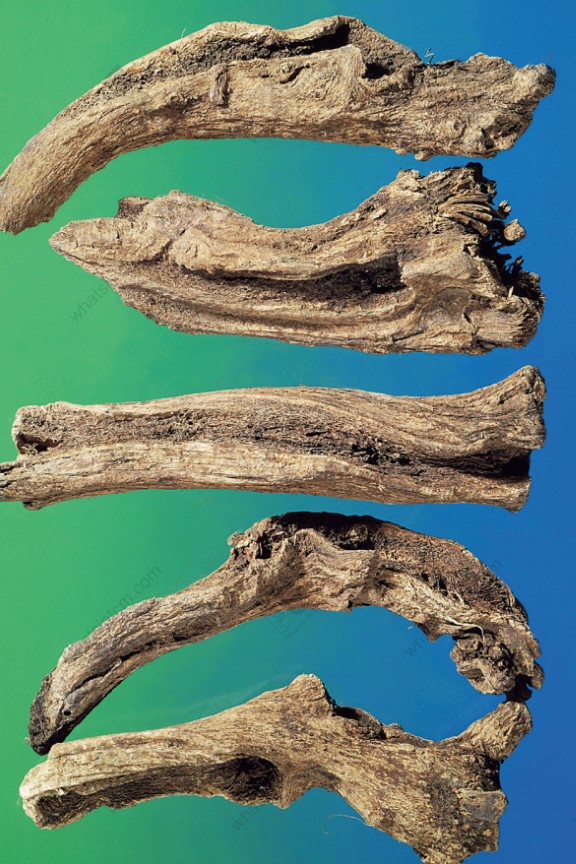 Old Radix Aucklandiae (Oily, sticky when chewed, strong flavor)
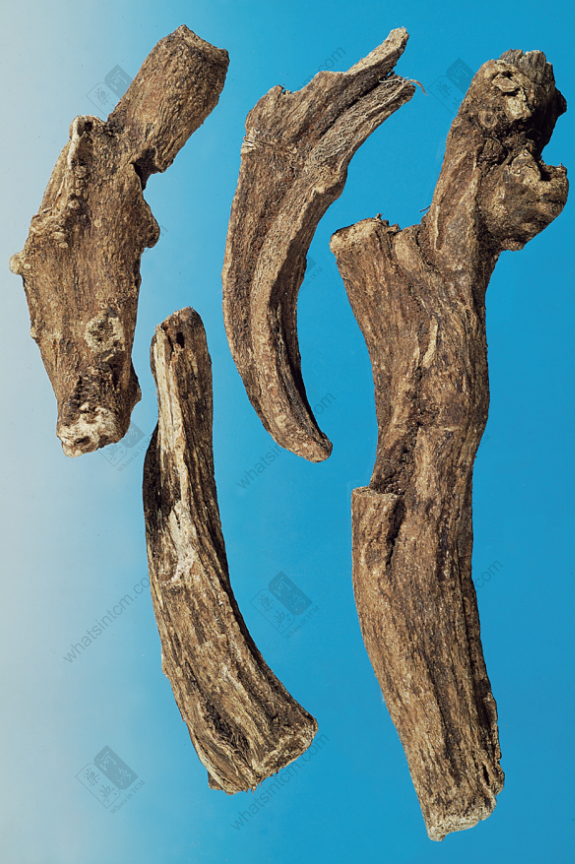 Old Pakistan Radix Aucklandiae (Cylindrical, semi-circular, obvious lateral grooves and wrinkles)
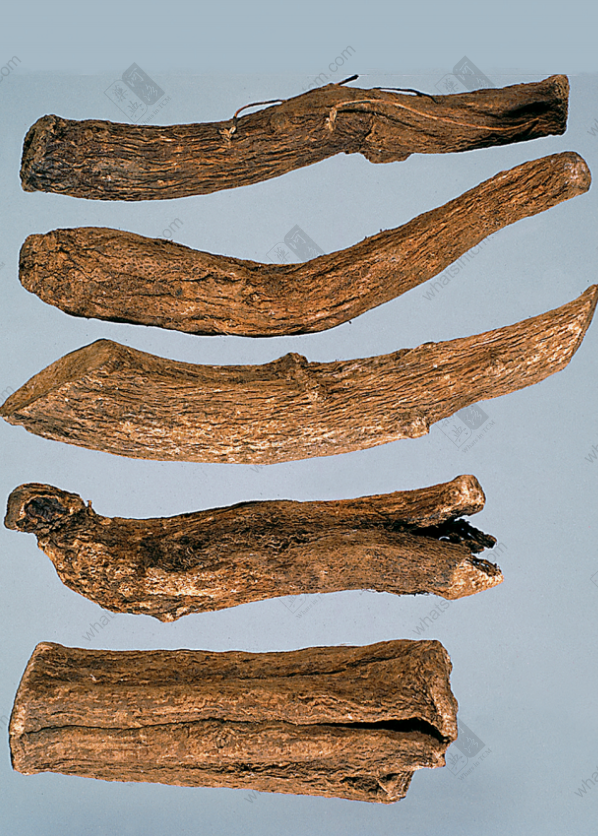 Xinshan Radix Aucklandiae
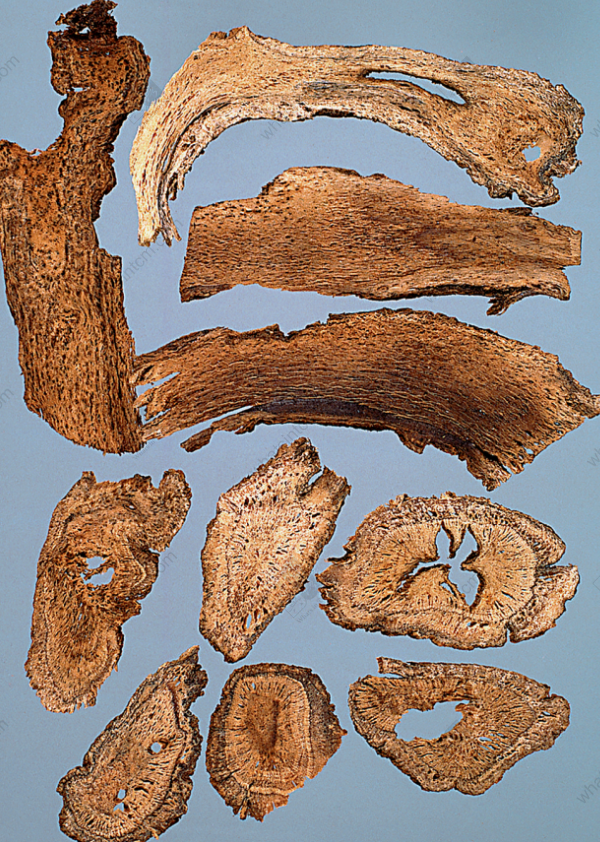 Old Radix Aucklandiae Slices (Oily, pungent taste)
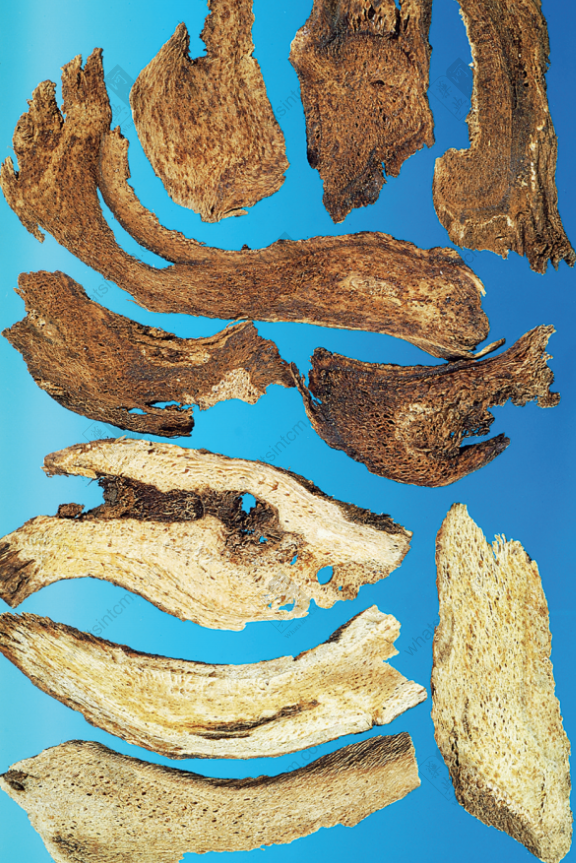 Old Pakistan Radix Aucklandiae Slices
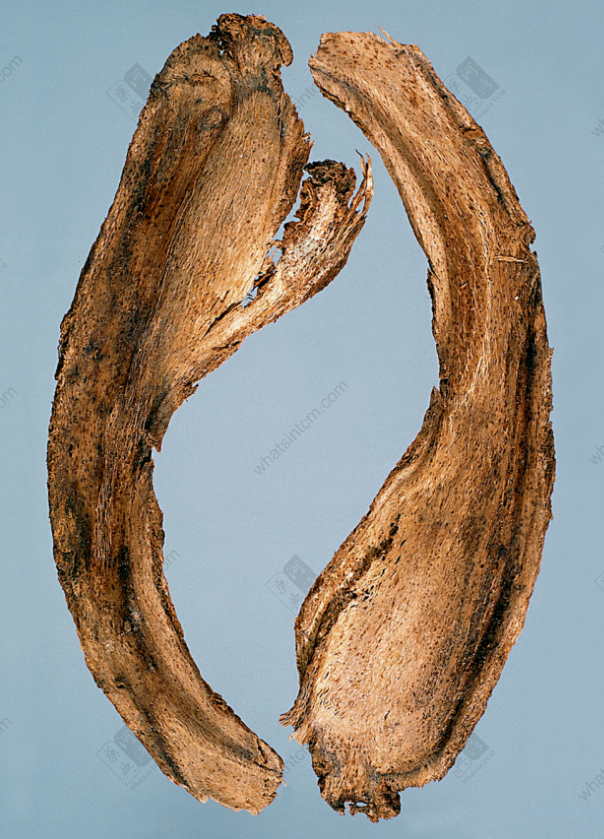 Large Xinshan Radix Aucklandiae Slices
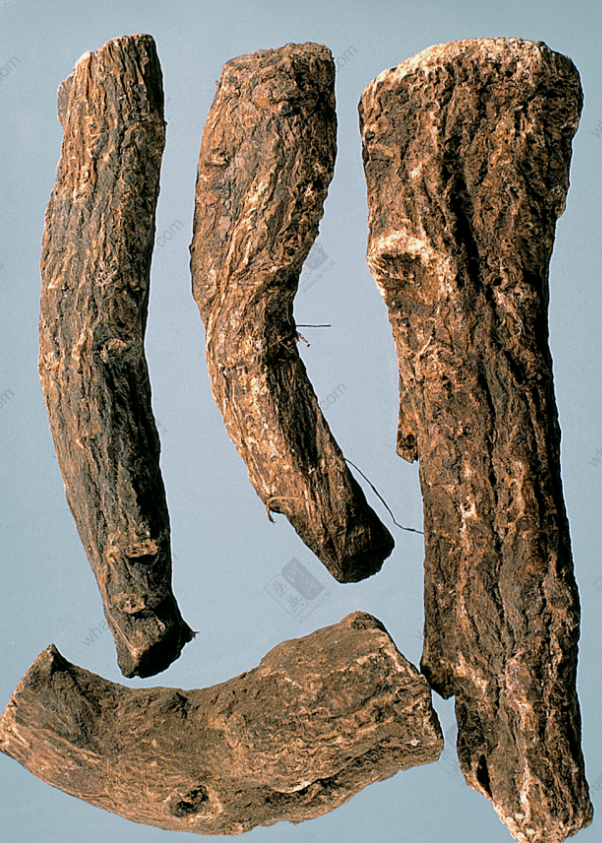 Yunnan Radix Aucklandiae (Top left: ‘Eel Trap’ shape)
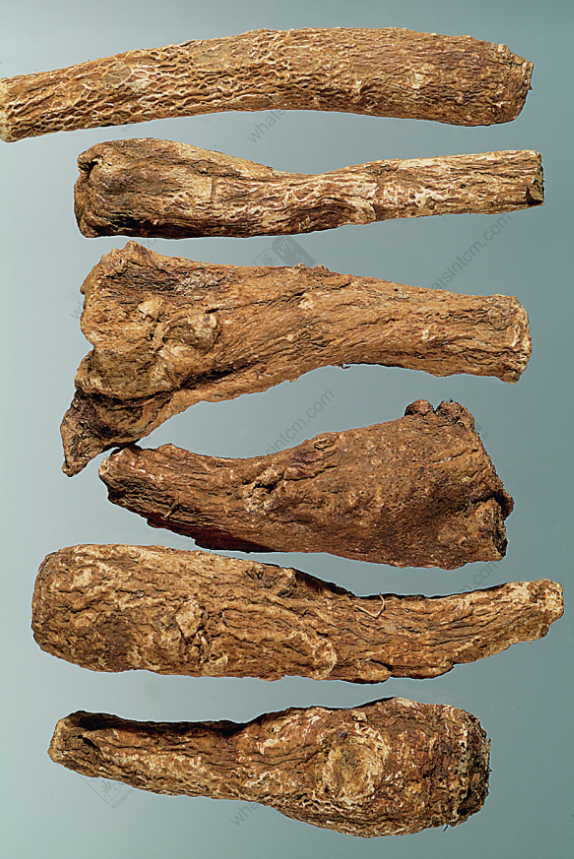 Yunnan Radix Aucklandiae (Cylindrical, twisted longitudinal grooves and root traces, hard)
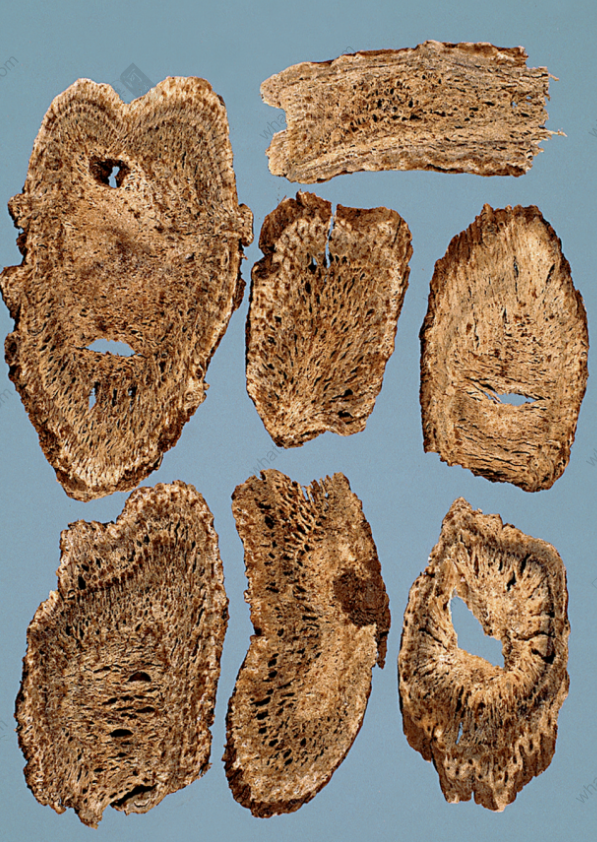 Yunnan Radix Aucklandiae Slices (Oil spots, ring layers, old root decay)
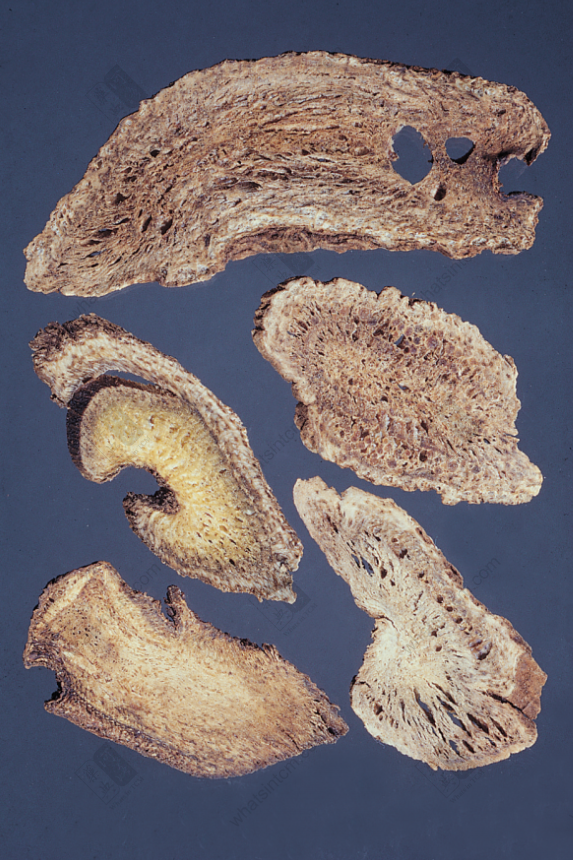 Yunnan Radix Aucklandiae Slices (Radial oil ducts, fresh new product)
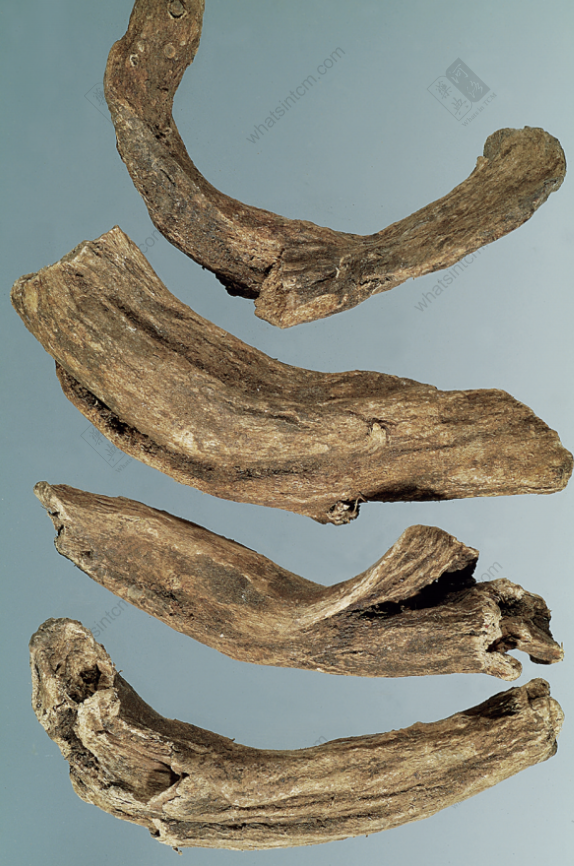 Cultivated and processed, resembling old Radix Aucklandiae – Yunnan Radix Aucklandiae (No pungent taste, can be distinguished by smell)
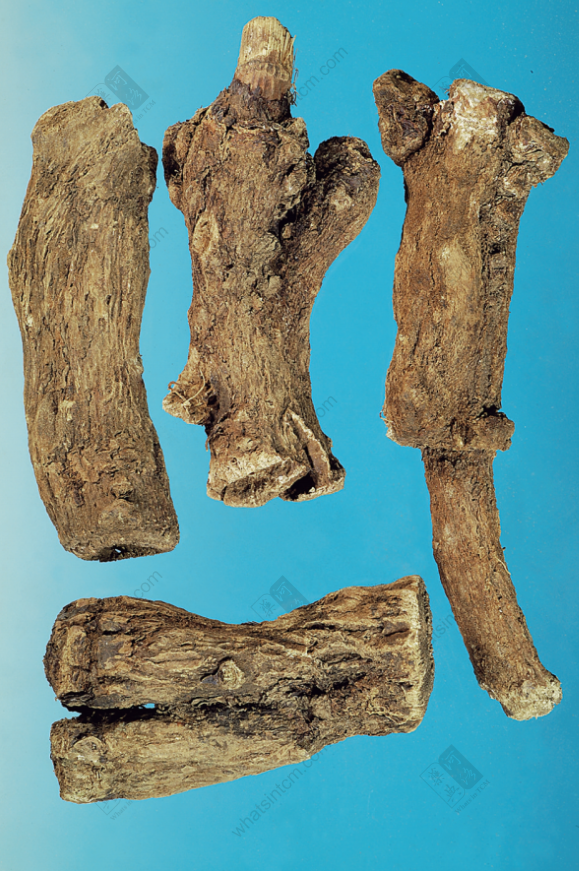 Guangxi Radix Aucklandiae
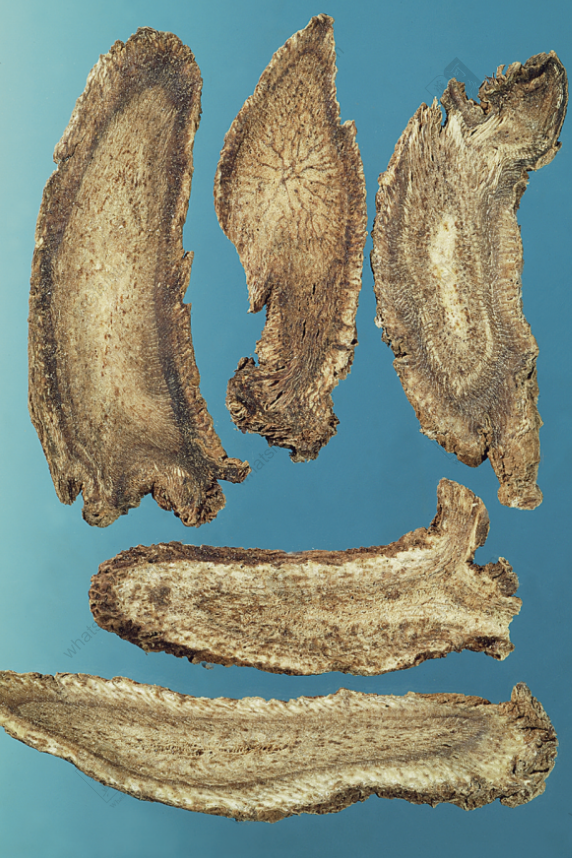 Guangxi Radix Aucklandiae Slices
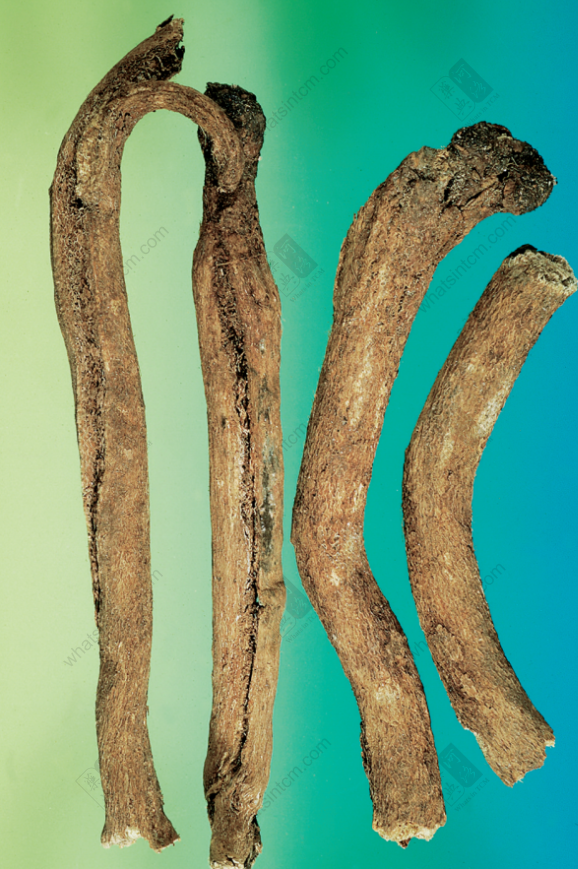 Sichuan Radix Aucklandiae (Loofah-like net pattern)
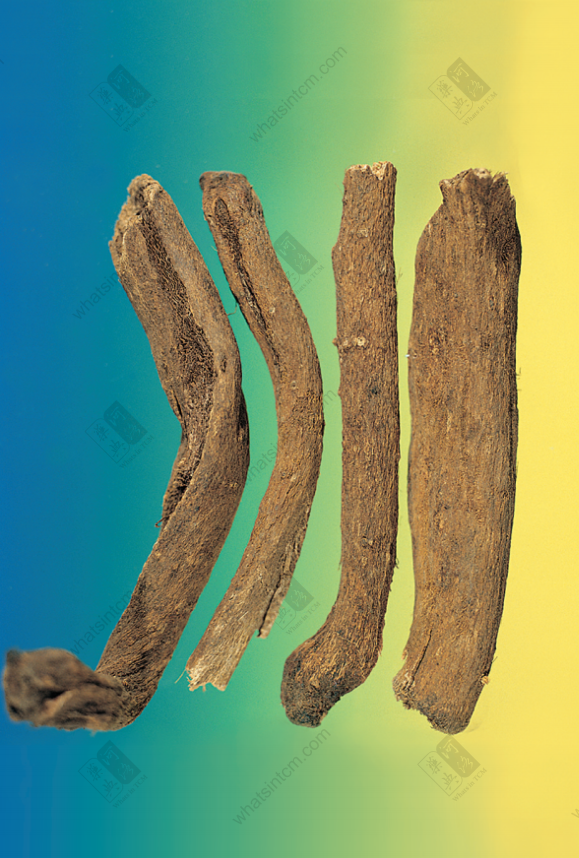 Sichuan Radix Aucklandiae (Left: semi-circular ‘Trough’ Radix Aucklandiae, Right: cylindrical ‘Iron Rod’ Radix Aucklandiae)
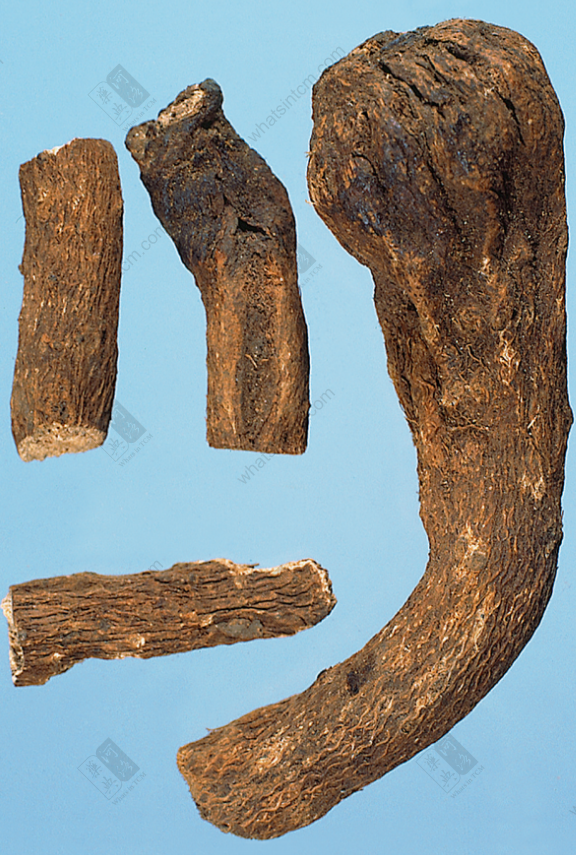 Sichuan Radix Aucklandiae (Top right: Paste head)
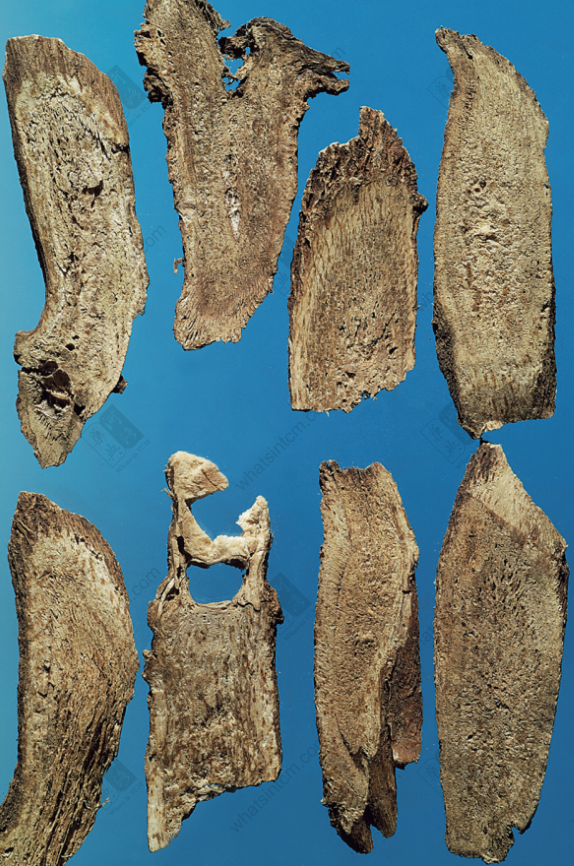 Sichuan Radix Aucklandiae Slices (Loose and porous like a net)
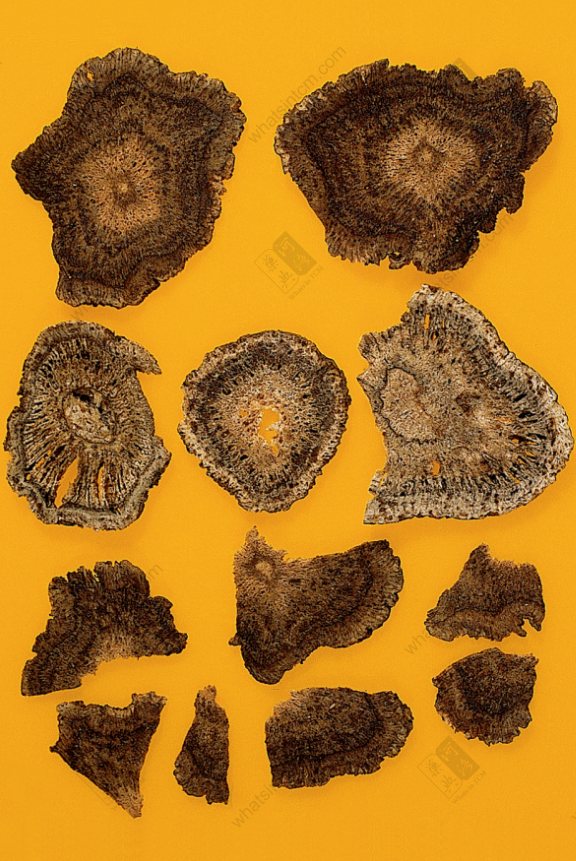 Baked Radix Aucklandiae Slices
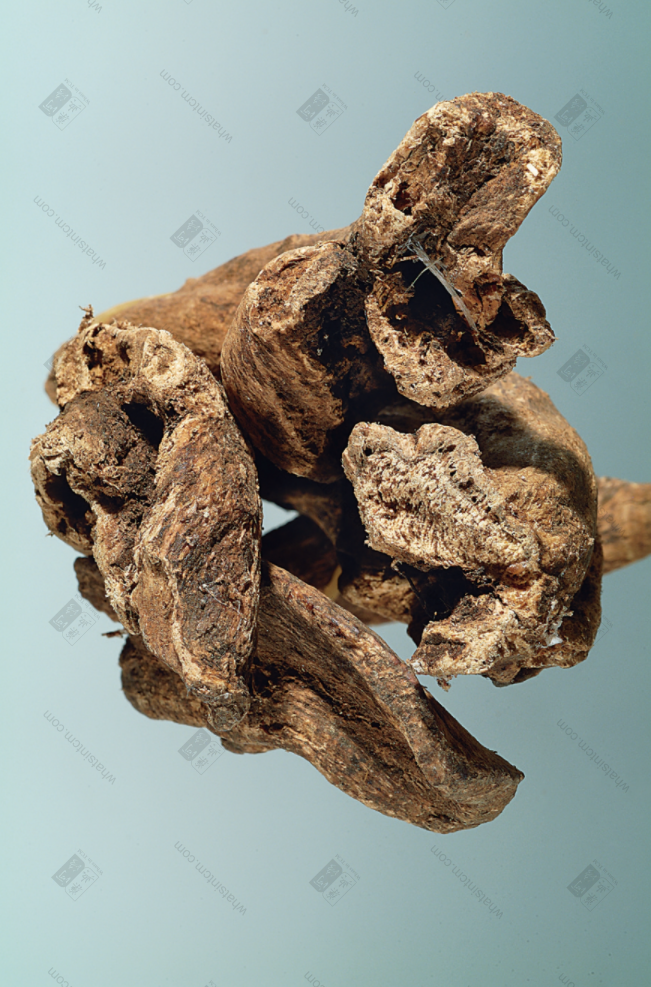 Old Radix Aucklandiae Head
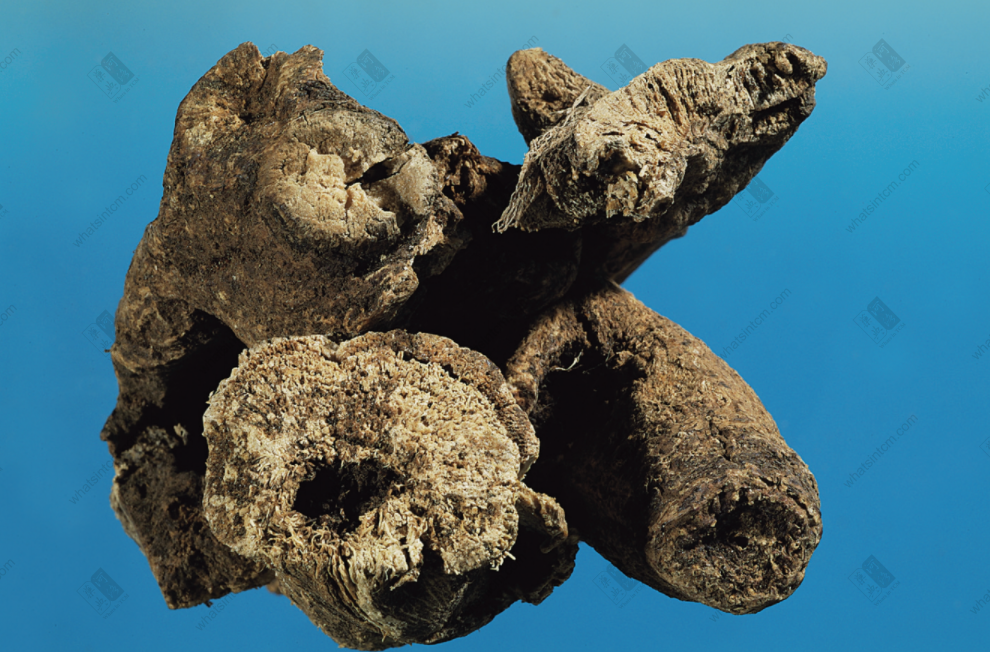 Old Pakistan Radix Aucklandiae Head
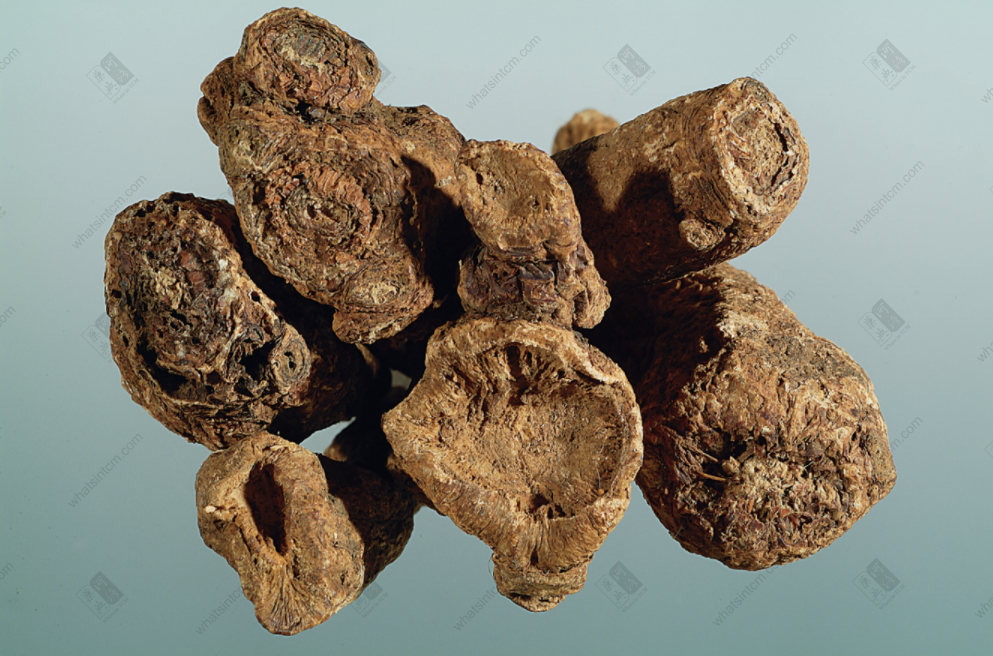 Yunnan Radix Aucklandiae Head
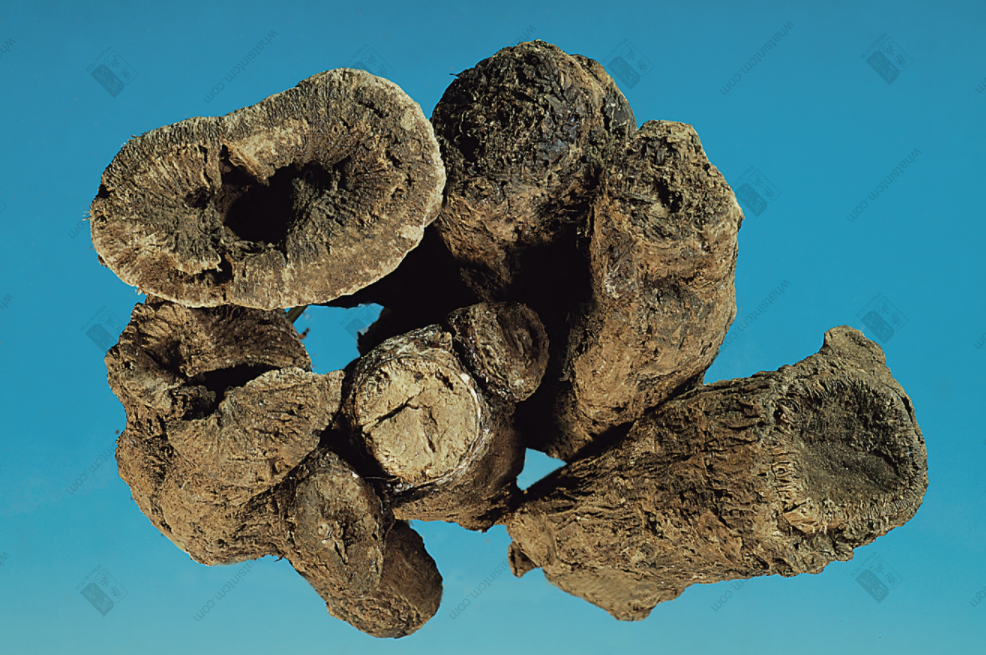 Guangxi Radix Aucklandiae Head
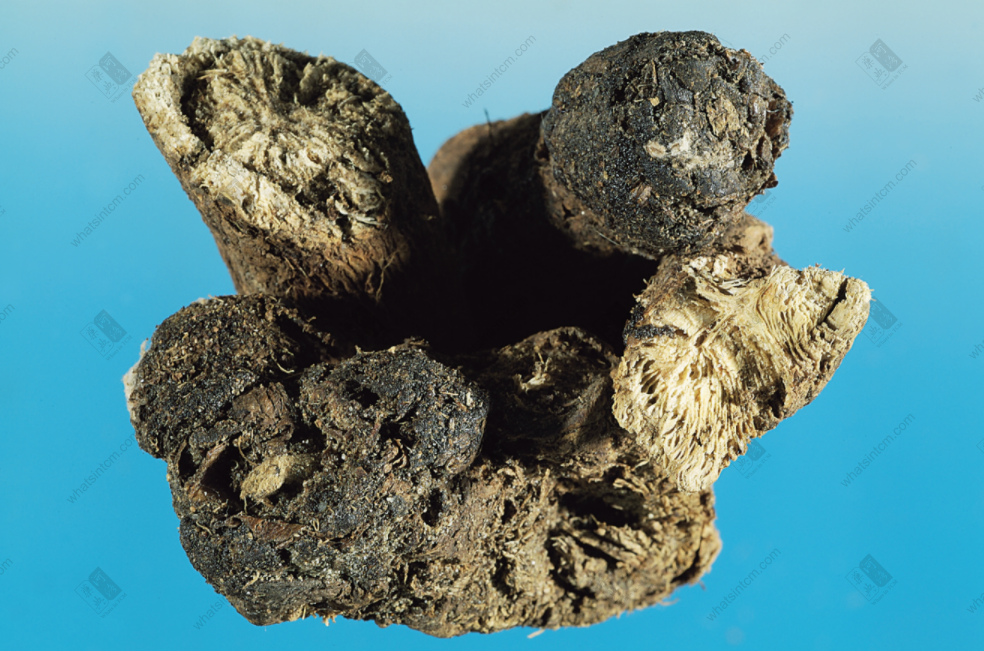 Sichuan Radix Aucklandiae Head (Paste head, Oily head)
【Name】
【Source】
Shen Nong’s Herbal Classic, Superior Class
【Botanical Origin】
Yunnan Radix Aucklandiae, also known as Guangxi Radix Aucklandiae, is the dried root of Aucklandia lappa Decne. (Saussurea lappa Clarke) of the Asteraceae family. Sichuan Radix Aucklandiae is the dried root of Vladimiria soulei (Franch.) Ling (Jurinea souliei Franch.) of the Asteraceae family.
【Characteristics】
(1) Yunnan Radix Aucklandiae: The root is cylindrical or bone-shaped, sometimes branched, 5-10-15cm long and approximately 0.5-3-6cm in diameter. The surface is yellowish-brown to grayish-brown. Most of the cork layer has been removed, with significant twisted longitudinal grooves and lateral root scars, and sometimes reticulate wrinkles. The texture is hard and heavy, difficult to break.
Processed Slices: The outer skin is brownish-yellow to grayish-brown, with obvious wrinkles and longitudinal wrinkles, and residual lateral root scars. The texture is firm, the cut surface is yellowish-white and brownish-red, with a chrysanthemum-like core. Scattered oil spots and ring-shaped forming layers can be seen on the cut surface. The central xylem of old root slices often has decay. It has a unique aroma, bitter and spicy taste, and is sticky when chewed. Baked Radix Aucklandiae: The color becomes darker and has a unique aroma.
(2) Sichuan Radix Aucklandiae: The root is round or longitudinally cut in half, slightly curved, 10-20-30cm long and approximately 1.5-3cm in diameter. The surface is yellowish-brown to dark brown, and the reticulate pattern is exposed after the cork layer is removed. The head of the root is mostly blackened and sticky, with a black “paste head”. The root is rough, and most of the cork layer has been removed, exposing the fiber network. Light in weight and hard to break.
Processed Slices of Sichuan Radix Aucklandiae: The surface is yellowish-brown or brownish-black, rough, light in weight and hard in texture. The slices are yellow or yellowish-brown, with radial patterns and forming layers, chrysanthemum-shaped patterns and cracks, and brownish-yellow oil spots. Some central parts are loose and porous like a net. The aroma is unique and the taste is bitter. Baked Sichuan Radix Aucklandiae Slices: The color becomes darker.
【Processing】
1. Raw Radix Aucklandiae 2. Baked Radix Aucklandiae 3. Another Method for Baking Radix Aucklandiae
【Identification】
«Zhenglei Bencao»: “The bone-shaped ones are good.” «Yifang Leiju»: “Radix Aucklandiae from Guangzhou is the best.” «Bencao Pinhui Jingyao»: “The roots that are light, bitter, and sticky to the teeth are good.” «Bencao Beiyao»: “Imported from foreign ships, bone-shaped, bitter, and sticky to the tongue are good, called Green Radix Aucklandiae.” «Jingyan Danfang Huibian»: “Radix Aucklandiae should be firm, bone-shaped, bitter, and sticky to the teeth to be genuine.” «Lianglie Jianbie»: “The form is like withered bones long exposed to rain and dew, the outside is light brown, the inside is grayish-white, hard as horn, and the substance is bitter to the taste is superior.”
Guang (Yunnan) Radix Aucklandiae: It is best if it is dry, evenly sized, firm, has many oil spots on the cut surface, and has a strong and pure aroma with sufficient oil. The best comes from Lijiang, Yunnan, followed by Gansu.
Sichuan Radix Aucklandiae: It is best if it is thick and solid, heavy, has a strong aroma, few cracks, and contains sufficient oil.
【Identification Terminology】
1. Old Radix Aucklandiae (Old Mountain Radix Aucklandiae): Refers to first-class Radix Aucklandiae medicinal material, also known as “No. 1 Radix Aucklandiae”. Its shape is like withered bones, yellow, with thick longitudinal grooves, heavy and hard texture, sticky, and oily. See below for details.
2. Loofah Net Pattern: The surface of Sichuan Radix Aucklandiae has fiber bundles forming a texture similar to loofah network.
3. Yunnan Radix Aucklandiae: Produced in Yunnan, refers to second-class Radix Aucklandiae medicinal material, also known as “No. 2 Radix Aucklandiae”. The root is cylindrical, the inside is grayish-white, the texture is loose, and the odor is slightly lighter. See below for details.
4. New Radix Aucklandiae (Xinshan Radix Aucklandiae): Refers to third-class Radix Aucklandiae medicinal material, also known as “No. 3 Radix Aucklandiae”. Its root head is like a carrot top, grayish-yellow, thick at the top and thin at the bottom, and the aroma is slightly lighter. See below for details.
5. Trough Radix Aucklandiae: Sichuan Radix Aucklandiae has hollows or is in the shape of a withered trough, commonly known as Trough Radix Aucklandiae.
6. Paste Head (Oily Head): Refers to the root head of Sichuan Radix Aucklandiae often having charred, black, and sticky gelatinous substances due to processing. This is caused by processing. This point can be used as one of the identification characteristics of Sichuan Radix Aucklandiae.
7. Eel Trap: Refers to the root of Yunnan Radix Aucklandiae being cylindrical, semi-cylindrical, or bone-shaped, shaped like an “eel trap”.
8. Iron Rod Radix Aucklandiae: Sichuan Radix Aucklandiae is round, dark brown in color, and hard in texture, called “Iron Rod”.
【Chapter】
Root Category