



After Recovering from Infection, Use Atractylodes Macrocephala to Regulate Qi and Strengthen the Spleen to Prevent Sequelae
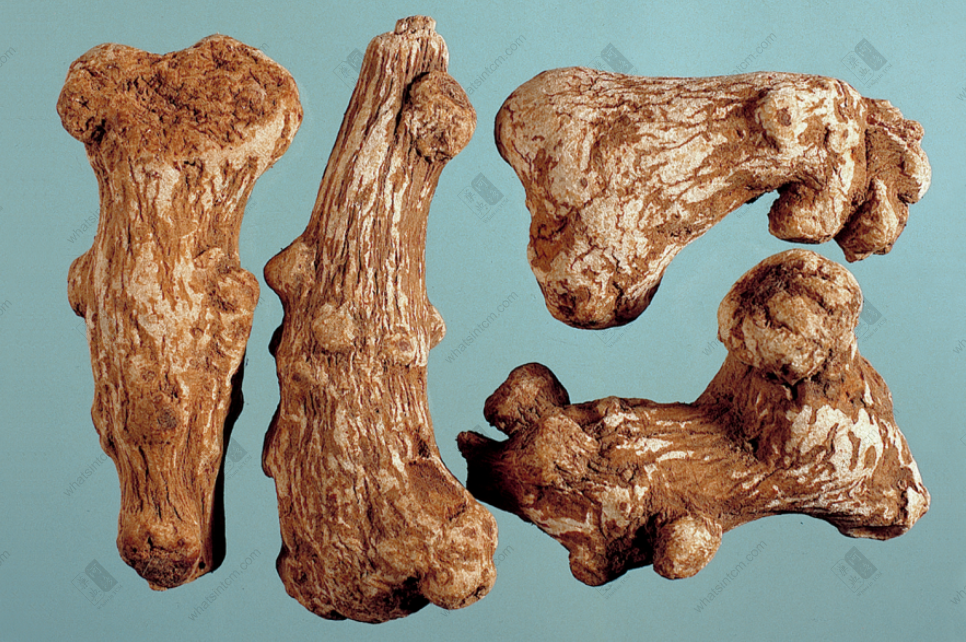 Zhejiang Atractylodes: Thick and lumpy, grayish-yellow, tumor-like, with grooves on the surface.
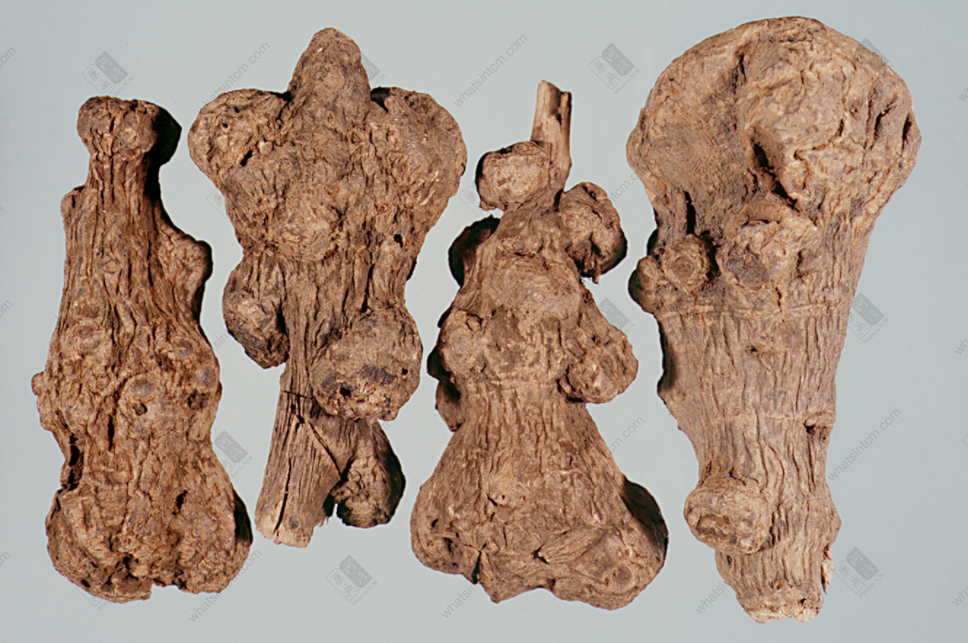 Zhejiang Atractylodes: Features such as rhizome leg and cloud head are visible.
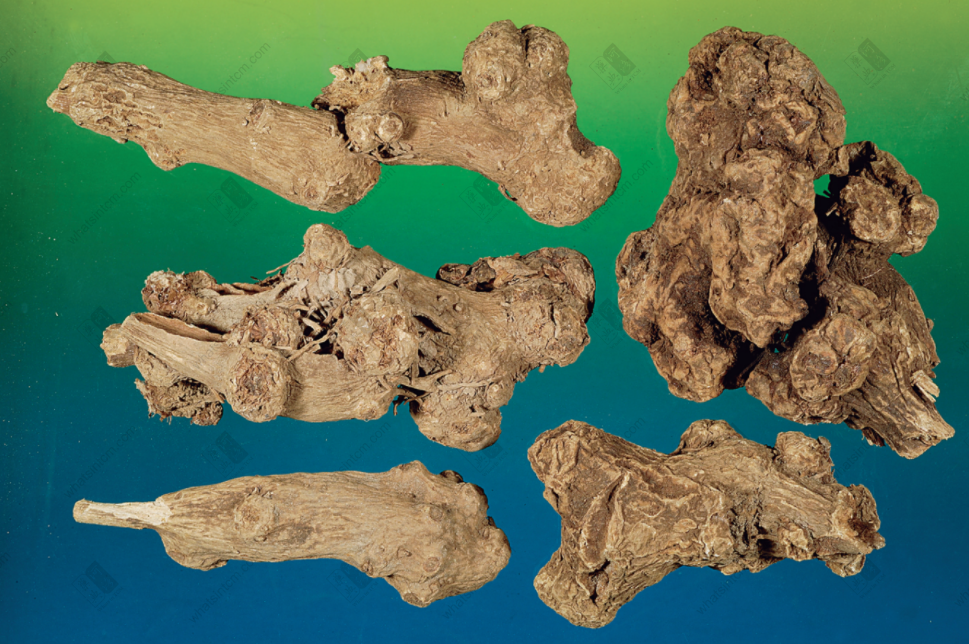 Homegrown Zhejiang Atractylodes.
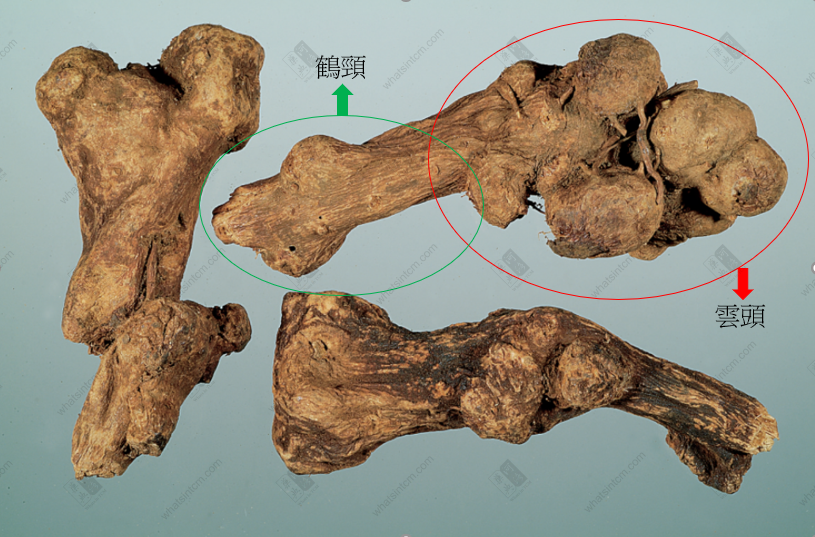 Atractylodes: Features such as cloud head and crane neck are visible.
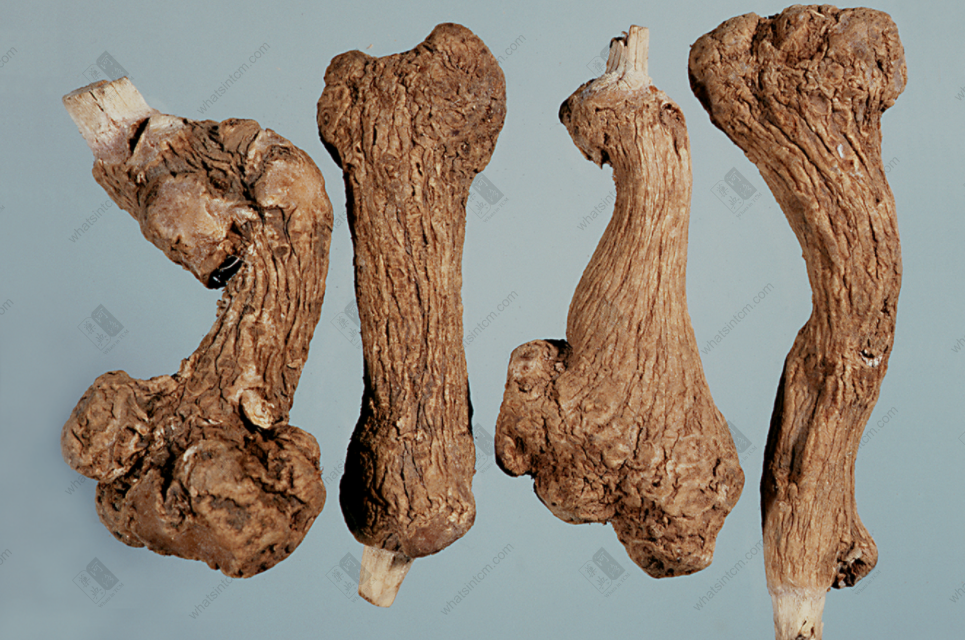 Yuhu Atractylodes: A type of Atractylodes.
“Wu Shan’s mists and dews are clear, and many grasses grow luxuriantly. Atractylodes forms spiritual roots, harvested with a hoe under the autumn moon. Returning, they are washed in a cold stream, their fragrance flowing without cease. At night, the fire boils spring water from stones, and morning smoke fills the rocky caves. For a thousand years, they maintain a jade-like complexion, and forever, they solidify black hair. I am not a hermit of Shouyang, yet I dare to admire eating fern and bracken.”
“Harvesting Atractylodes” by Mei Yaochen of the Northern Song Dynasty
According to the fourth edition of the Taiwan Chinese Materia Medica, Atractylodes (https://reurl.cc/8ojmb4) is the dried rhizome of the Compositae plant Atractylodes macrocephala Koidz. It is mainly produced in Zhejiang, Hubei, Hunan, Jiangxi, Anhui, and other places. Large-scale cultivation is rare in Taiwan. This medicinal material is usually harvested in winter when the lower leaves of the plant turn yellow and the upper leaves become brittle. After harvesting, stems, leaves, and impurities such as mud are removed, then dried by baking or sun-drying. After removing the fibrous roots, it is stored for use. Because it is mainly harvested in winter, it is also called Dong Zhu (winter atractylodes). In the “Bencao Tujing” written by Su Song of the Song Dynasty, it is recorded: “‘Erya’ says: ‘Zhu, mountain thistle, Yang Bao.’ Explained: Thistle. This distinguishes between thistles growing in mountains and on flat ground. Those growing on flat ground are called thistle, and those growing in mountains are called zhu.” Therefore, Atractylodes is also called Shan Ji (mountain thistle). In addition, “Mingyi Bielu” records it as “Shan Jiang” (mountain ginger), and “Wupu Bencao” names it “Shan Jie” (mountain mustard) or “Tian Su” (heavenly su), all derived from its pungent taste similar to ginger and mustard. Furthermore, Atractylodes produced in the Yulian area of the Tianmu Mountains in Zhejiang is known as “Yu Zhu” due to its superior quality. Wild “Yu Zhu” is specially called “Tian Sheng Zhu” (naturally grown atractylodes), which is a very rare medicinal material. Atractylodes medicinal material appears as thick, fist-shaped lumps or irregular masses. It is usually considered good if the pieces are large, the texture is firm, the surface is grayish-yellow or grayish-brown, the cross-section is yellowish-white and horny after drying, without a hollow center, has a strong aroma when smelled, and is slightly sticky when chewed. Traditionally, there are several special terms for identifying Atractylodes medicinal material: “Yun Tou” (cloud head) mainly refers to the tumor-like protuberances on the entire body of the Atractylodes, and the swollen parts on both sides of the lower part of the rhizome, which resemble the head of a Ruyi scepter, hence it is also called “Ruyi Tou” (Ruyi head). In addition, “He Nian” (crane neck) refers to the shape of the Atractylodes rhizome resembling a crane, sometimes with residual above-ground parts, like the neck of a crane. Furthermore, the cross-section of the medicinal material is mostly pale grayish-yellow and horny, with fleshy and porous parts, called “Gu Tou Zha” (bone dregs). The above three terms are common characteristics of Atractylodes medicinal material. Clinically, Atractylodes is commonly used to strengthen the spleen and benefit Qi, dry dampness and promote urination, as well as stop sweating and stabilize pregnancy.
When purchasing in the market, confusion can easily occur. For example, the root head of Paeonia lactiflora (Bai Shao) from the Ranunculaceae family can be mistaken for Atractylodes. The main differences are that the root head of Bai Shao is grayish-brown on the surface with obvious root scars, the cross-section has no punctate oil glands, and the radial texture is not very obvious. Its taste is slightly bitter and sour. Another variation is stir-fried Bai Shao root head, which is sprayed with sugar water and then stir-fried over low heat. The main difference from Atractylodes is that its cross-section has no punctate oil glands, and the radial texture is not obvious; its taste is bitter and sour. There is also the dried root head of Inula helenium (Tu Mu Xiang) decoction pieces, the main difference from Atractylodes is that Inula helenium is yellowish-brown or dark brown on the surface, with a sunken stem scar and leaf petiole remnants at the apex. The cross-section is pale yellowish-brown to brown, with scattered brown or light brown punctate oil glands. Basically, these counterfeit products have some similarities in color, oil dots, or texture to Atractylodes, but they can still be distinguished. You can also taste them. Atractylodes initially has a mild taste when chewed, and becomes slightly sweet after prolonged chewing. If you bite an oil dot, it will have a pungent sensation, and it will feel sticky to the teeth. Other counterfeit products will not be sticky to the teeth. In addition, there are several common types of inferior Atractylodes medicinal material. One is that there are too many non-medicinal parts, mainly residual hollow above-ground stems or woody, lignified parts. Others are adulterated with weighting powder. The method to distinguish this is that in the center of a true Atractylodes slice, a fingernail can make an indentation and scrape off powder, and it is easily broken. However, decoction pieces of Atractylodes adulterated with weighting powder are particularly hard, cannot be indented with a fingernail, and require great effort to break. Under a microscope, small white crystals can be seen.
Clinically, there are different processing methods depending on the intended use. Among them, for stir-fried Atractylodes with bran, the pot is first heated over high heat, then wheat bran is evenly sprinkled. When the bran smokes, the Atractylodes decoction pieces are added and stir-fried over medium heat until the surface is dark yellow and a fragrant aroma emerges. Then it is removed, the burnt bran is sieved out, cooled, and set aside. Stir-fried Atractylodes with bran occasionally shows burnt spots and has a burnt aroma. There is also earth-fried Atractylodes, which uses fine powder from stove core fire. It is placed in a pot and stir-fried over medium heat until it is loose, then the Atractylodes decoction pieces are added and stir-fried until the surface is yellowish-brown and a fragrant aroma emerges. Then it is removed, the remaining soil powder is sieved out, cooled, and set aside. It usually has an earthy aroma. There is also charred Atractylodes, which is made by placing Atractylodes decoction pieces in a pot and stir-frying over high heat until the surface is charred brown. Then it is removed, cooled, and set aside.
This pandemic has affected most people’s lives, but some have also come through it and are facing a new life. When embracing a new life, it is important to maintain good health. The Taiwanese regulatory authorities have set limits for heavy metals and sulfur dioxide content in Atractylodes, so the public can use it with peace of mind.
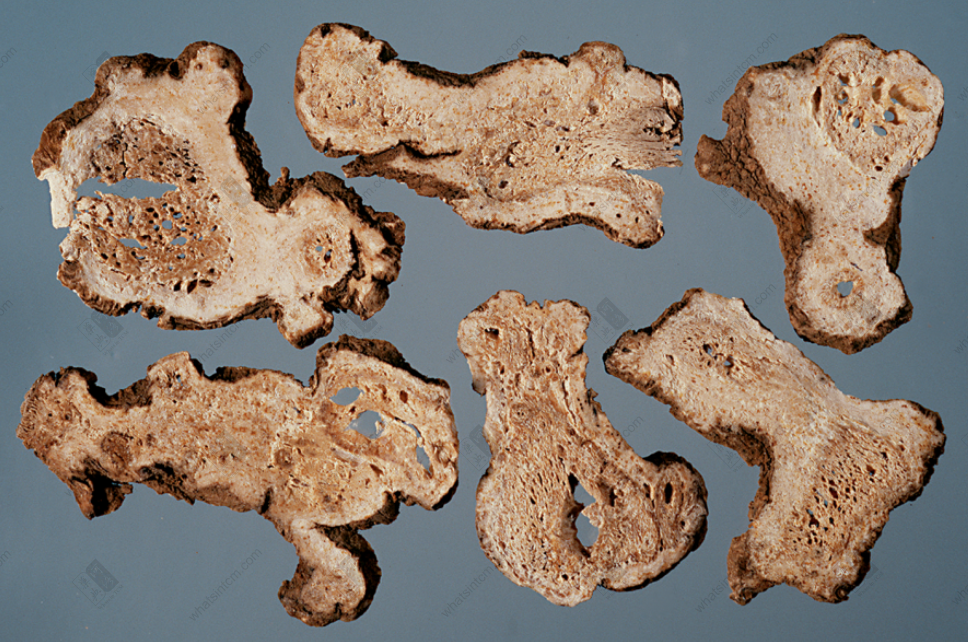 Atractylodes slices: Punctate oil glands like cinnabar dots and a fragrant aroma are visible on the cross-section.
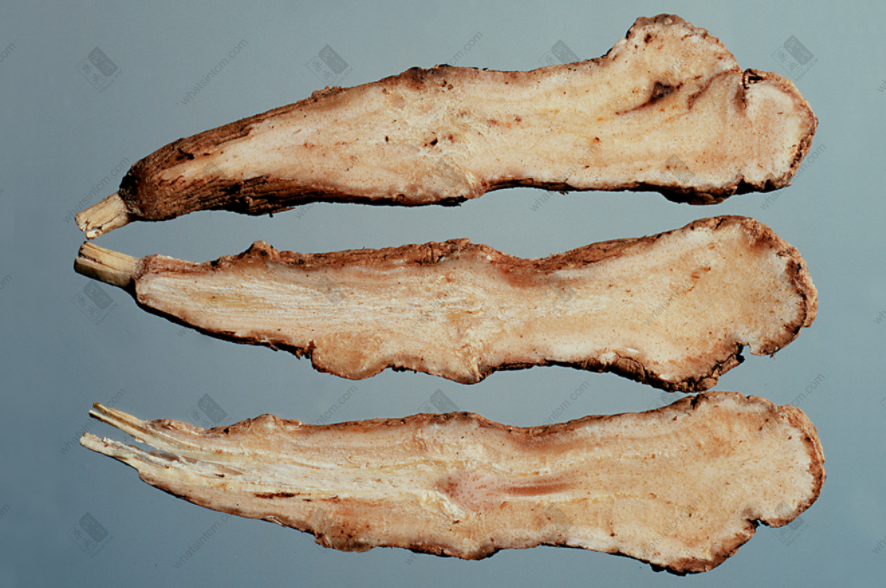 Tian Sheng Zhu slices.
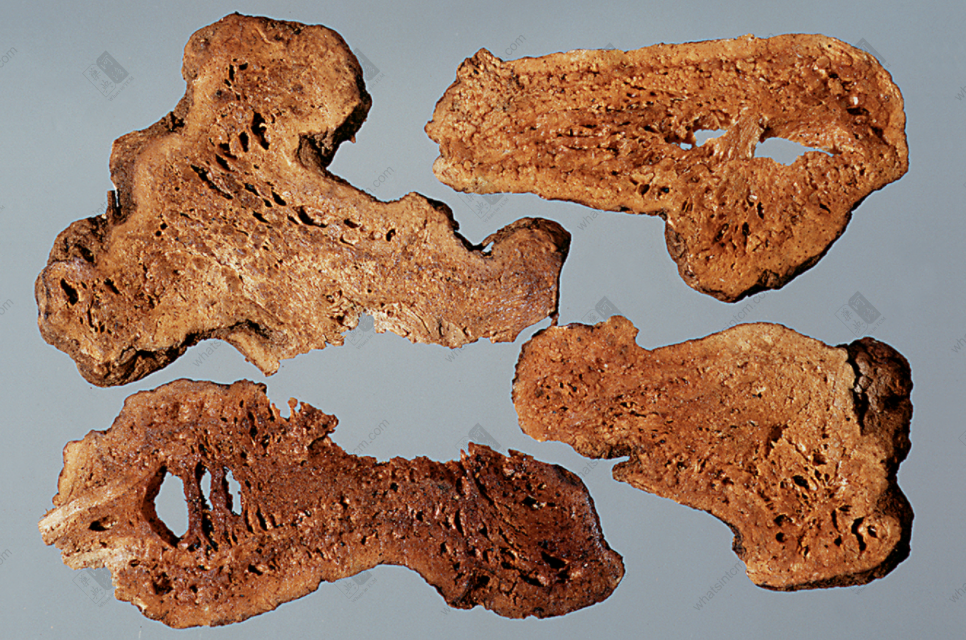 Bran-fried Atractylodes slices.
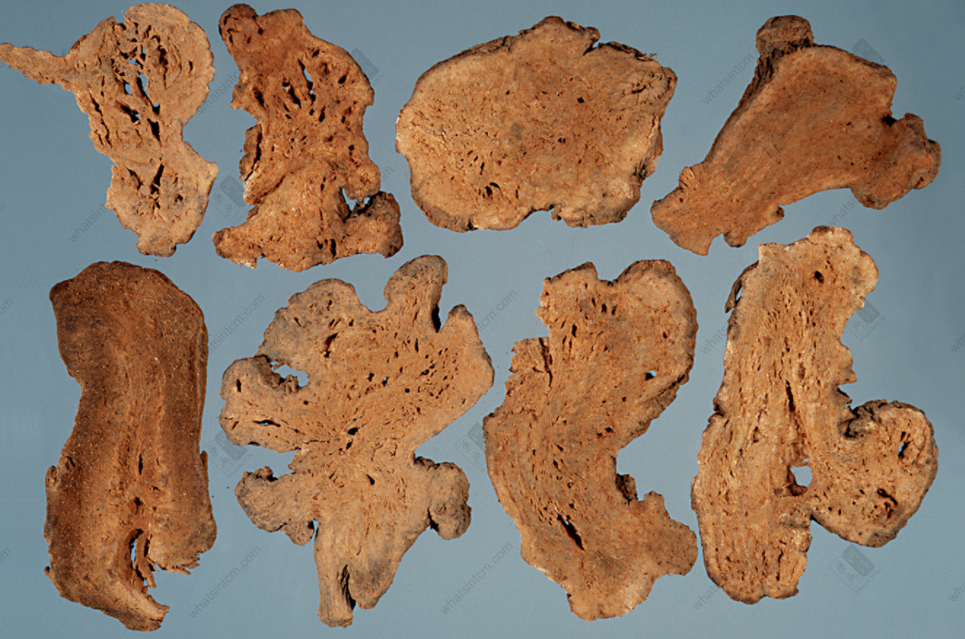 Earth-fried Atractylodes slices.
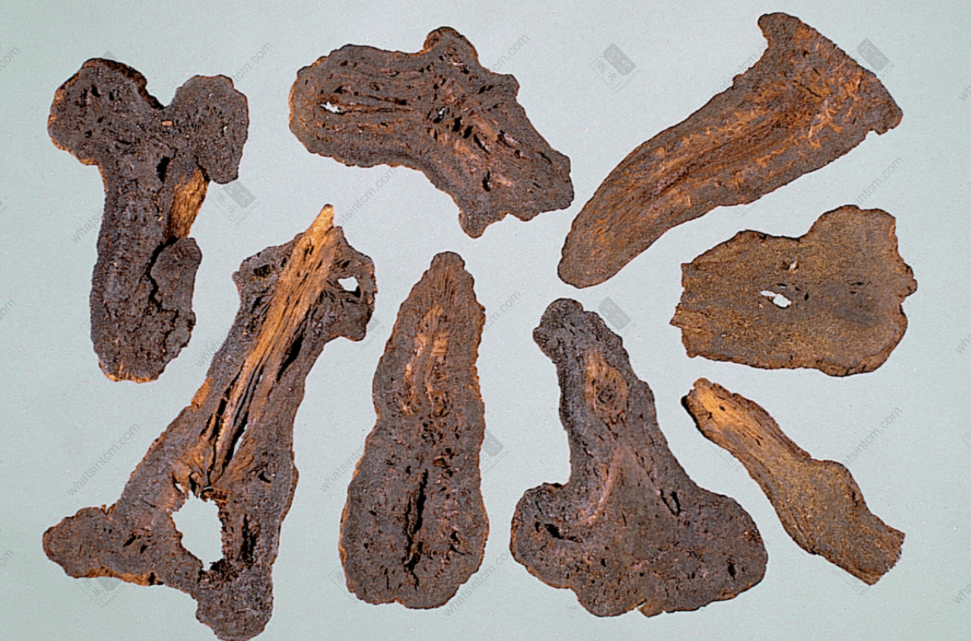 Charred Atractylodes slices.
【Image provided by】Professor Chang Xian-che, “Illustrated Guide to Authentic Medicinal Herbs” https://whatsintcm.com