



Beware of Buying the Wrong Herbs for Popular Pandemic Prevention Herbal Teas
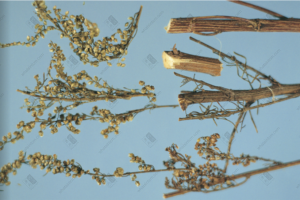
Artemisia annua
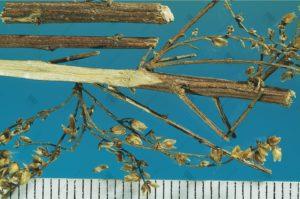
Artemisia annua: Cylindrical stem, much branched, with longitudinal grooves, hollow pith in the center when cut, small capitate inflorescences, yellow-green.
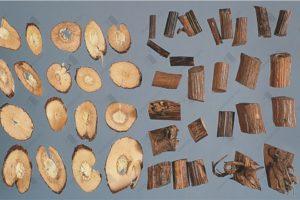
Artemisia annua stem
According to the basic theory of Traditional Chinese Medicine (TCM), “Qi” is the most fundamental and important substance that constitutes the human body and life activities. The origin of Qi is mainly divided into two parts: congenital and acquired. Congenital Qi comes from parents and is called “congenital essence Qi.” Acquired Qi comes from the substances in nature, including air, food, and water. Qi from the air is called “clear Qi,” and Qi from food and drink is called “essence Qi of water.” These two types of essence Qi serve as raw materials for Qi, and through the processing and transformation by the Zang-Fu organs, they form human Qi. The primary mechanism involves the kidneys transporting congenital essence Qi upwards and combining it with the essence Qi derived from food by the spleen. This Qi then continues upwards, combines with the clear Qi inhaled by the lungs, and is transformed into human Qi. Therefore, important factors for maintaining good health, in addition to congenital inheritance, include a healthy lifestyle. Only through healthy diet and living habits can we generate human Qi.
Congenital Qi is also known as “Yuan Qi,” referring to the original Qi. After being generated from the congenital essence stored in the kidneys, it is nourished by the acquired essence produced by the spleen and stomach. “Yuan Qi” originates from the “Mingmen” between the kidneys and circulates throughout the body via the San Jiao, reaching the internal Zang-Fu organs and extending to the skin and muscles. Acquired Qi is also known as “Zong Qi,” which is formed by the combination of clear Qi inhaled from nature by the lungs and the essence Qi derived from food by the spleen and stomach. This Qi mainly gathers in the chest and flows into the脉 (channels) of the heart and lungs. The combination of “Yuan Qi” and “Zong Qi” is known as “Zheng Qi.” “Zheng Qi” is further divided into “Ying Qi” and “Wei Qi” based on its properties. “Ying Qi” is Qi that has a nutritional function. It begins in the Middle Jiao, enters the meridians through the lungs, circulates throughout the body, can transform Qi into substances, and promotes the generation of blood by being infused into the脉 (channels). “Wei Qi” can be understood as the Qi responsible for defense and resisting external pathogens, and it can be considered a part of the body’s immune system, protecting the body from disease invasion.
The “Huangdi Neijing. Suwen” states: “When Zheng Qi is internally present, evil cannot invade.” It also states: “Where evil gathers, Qi must be deficient.” Therefore, during the period of not being ill, it is necessary to “support Zheng” to enhance immunity and increase “Zheng Qi.” Only after infection is “expelling evil” the primary treatment method. Thus, using bitter and cold medicines for prevention when the body is healthy can easily damage “Zheng Qi” and negatively impact health. Currently, popular pandemic prevention tea bags usually focus on “supporting Zheng.” Common herbs include honeysuckle and forsythia, which clear heat, dry dampness, and detoxify, or aromatic herbs that resolve dampness such as Amomum cardamom, White cardamom, Artemisia annua, Agastache rugosa, Artemisia capillaris, etc., or herbs that strengthen the spleen and remove dampness such as Atractylodes macrocephala and Astragalus propinquus. Banlangen, often heard during this pandemic as a TCM for pandemic prevention, is a cold and cooling herb and is less suitable for generally healthy individuals. In TCM’s approach to epidemic prevention, there is usually a special emphasis on regulating the “Middle Jiao,” the spleen and stomach. Therefore, aromatic herbs that resolve dampness are commonly used. Here, we will discuss some easily confused aromatic herbs that resolve dampness.
One: Agastache rugosa and Pogostemon cablin:
According to the third edition of the Taiwan Chinese Herbal Medicine Pharmacopoeia, Agastache rugosa (https://whatsintcm.com/en/dt_articles/agastache-rugosa/) is the dried aerial part of the Lamiaceae plant Agastache rugosa (Fisch. et C.A.Mey.) Kuntze. It is mainly produced in Sichuan, Jiangsu, Zhejiang, Hunan, and Guangdong provinces. Taiwan also has some scattered cultivation due to its suitable climate. It is usually harvested when the inflorescences emerge but before flowering in spring and summer. After harvesting, it is dried and stored for later use. Another plant with a similar name and also belonging to the Lamiaceae family is Pogostemon cablin. According to the third edition of the Taiwan Chinese Herbal Medicine Pharmacopoeia, Pogostemon cablin is the dried aerial part of the Lamiaceae plant Pogostemon cablin (Blanco) Benth. It is mainly produced in Guangdong and the South China Sea. Taiwan also cultivates it due to its suitable climate and soil. It is usually harvested when the branches and leaves are lush, then sun-dried and stored overnight for use. Generally, when purchasing, look for specimens with more leaves, a square-shaped stem, and a rich aroma. The main difference between the two is that Agastache rugosa consists of branches with leaves, sometimes with inflorescences. The leaves are usually opposite, dark green, heart-shaped at the base, and the stem has four angular ridges with a hollow pith in the center when cut horizontally. Pogostemon cablin has a slightly square-cylindrical stem, pale brown outer skin, and a stepped plate-like cross-section. The leaves are brown-green to brown, covered with grayish-white villi on both sides, opposite, and wedge-shaped or obtuse-rounded at the base. Based on the different characteristics of the leaves and stems, one can select the correct medicinal material.
Two: Artemisia capillaris, Artemisia annua, and Northern Artemisia capillaris
According to the third edition of the Taiwan Chinese Herbal Medicine Pharmacopoeia, Artemisia annua (https://whatsintcm.com/en/dt_articles/qing-hao-artemisiae-annuae-herba/) is the dried aerial part of the Asteraceae plant Artemisia annua L. It is cultivated throughout China and is mainly harvested in autumn when the flowers are in full bloom. After removing old stems, it is air-dried and stored for use. Generally, specimens that are dry, have thick stems (not exceeding 0.6 cm in diameter), green leaves, full seeds, and a strong aroma are preferred. According to the third edition of the Taiwan Chinese Herbal Medicine Pharmacopoeia, Artemisia capillaris (https://whatsintcm.com/en/dt_articles/yin-chen-hao-capillaris/) is the dried aerial part of the Asteraceae plants Artemisia scoparia Waldst. et Kit. or Artemisia capillaris Thunb. Young seedlings are commonly called “Mian Yinchen,” and those with flower buds are called “Yinchenhao.” It is mainly produced in Shanxi, Shaanxi, and Anhui provinces. Young seedlings are usually harvested in spring when they are 5-10 cm tall and are called “Mian Yinchen.” In autumn, when the flower buds mature, they are harvested, impurities and old stems are removed, and they are dried to be called “Yinchenhao.” Since the pharmacopoeia states that the medicinal part is the aerial part, any root in the specimen makes it an inferior product. “Mian Yinchen” is usually preferred in rolled-up clumps, grayish-white or grayish-green, soft like velvet, brittle and easily broken, with a fragrant aroma. “Yinchenhao,” because it has flower buds, is also called “Hua Yinchen.” According to the third edition of the Taiwan Chinese Herbal Medicine Pharmacopoeia, oregano is the dried whole herb of the Lamiaceae plant Origanu um vulgare L. It is commonly known as “Northern Artemisia capillaris” and is easily confused with Artemisia capillaris due to its name. The easily confused herbs are Artemisia annua, Artemisia capillaris, and Northern Artemisia capillaris. The main differences are that Artemisia annua has a cylindrical stem, pinnately compound leaves, and capitate, spherical flowers arranged in a panicle. Artemisia capillaris has capitate, oval flower heads. Northern Artemisia capillaris has a square-cylindrical brown stem with prominent nodes. Its leaves are opposite, with brown-black glandular dots or fine hairs on both sides. Its stem and leaves have a strong aroma. The above are the main identification methods for these herbs.
Besides pandemic prevention tea bags, the best way to prevent illness is to wear a mask at all times when going out, disinfect frequently, stay updated with news from the Central Epidemic Command Center, and avoid panic. Engage in relaxing exercises, listen to music, ensure sufficient sleep, and consume nutritious food to strengthen your body, thereby achieving the TCM principle of “Zheng Qi is internally present, and evil cannot invade,” and remaining unaffected by external pathogens.
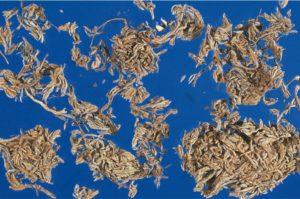
Mian Yinchen: Rolled into clumps, densely covered with white hairs, soft like velvet, brittle and easily broken, fragrant aroma.
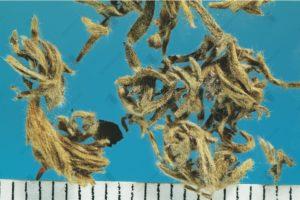
Mian Yinchen
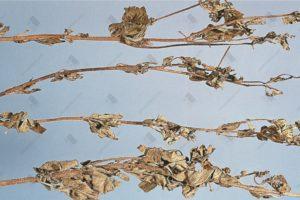
Northern Artemisia capillaris: Surface grayish-green, densely covered with villi, nodes are prominent, leaves are shriveled.
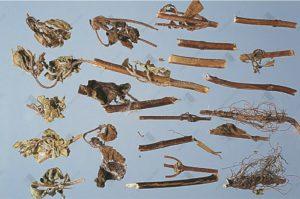
Northern Artemisia capillaris
【Image Provided by】Professor Zhang Xian-zhe, “Illustrated Guide to Authentic Medicinal Materials” https://whatsintcm.com
【Author Biography】
Education: Ph.D. in Chinese Medicine, China Medical University
Current Position: Assistant Researcher, Center for Medical Intelligence, Taichung Tzu Chi Hospital, Buddhist Tzu Chi Medical Foundation
Editor, Committee for the Compilation of Common Textbooks for TCM Schools Nationwide, Department of Chinese Materia Medica
Distinguished Lecturer, Industrial Technology Research Institute
Adjunct Lecturer, Graduate School of Post-Baccalaureate Chinese Medicine, China Medical University
Adjunct Assistant Professor, Department of Pharmacy, Kaohsiung Medical University
Co-founder, Heluo Pharmacopoeia www.whatsinTCM.com
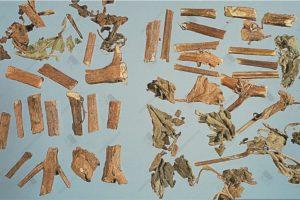
Agastache rugosa
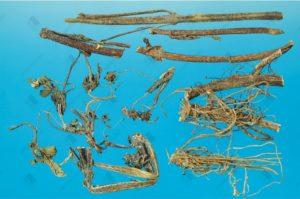
Sichuan Agastache rugosa
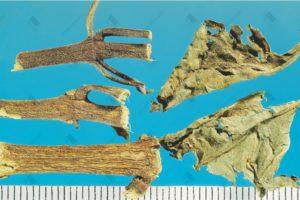
Agastache rugosa: Hollow pith when cut, opposite leaves, triangular-ovate, densely covered with villi, strong clear aroma.
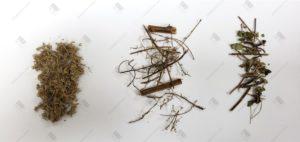
Left: Mian Yinchen, Center: Yinchenhao, Right: Northern Artemisia capillaris (Oregano). Provided by Dr. Chen Da-zhen.