

Beware of Buying the Wrong Kind of Suanzaoren, a Common Traditional Chinese Medicine for Insomnia
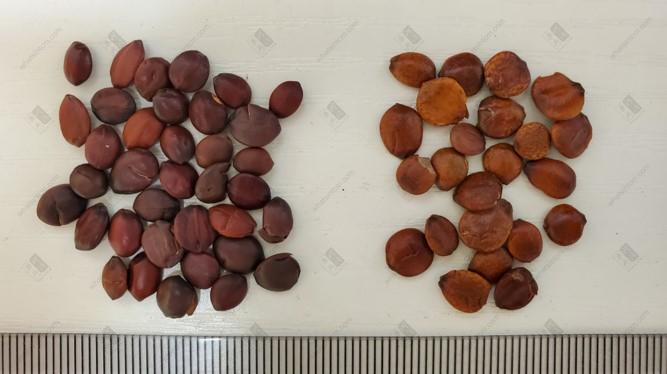
The genuine Suanzaoren is on the left, and the adulterated product Dianzaoren is on the right. Photo provided by Dr. Chen Dazhen.
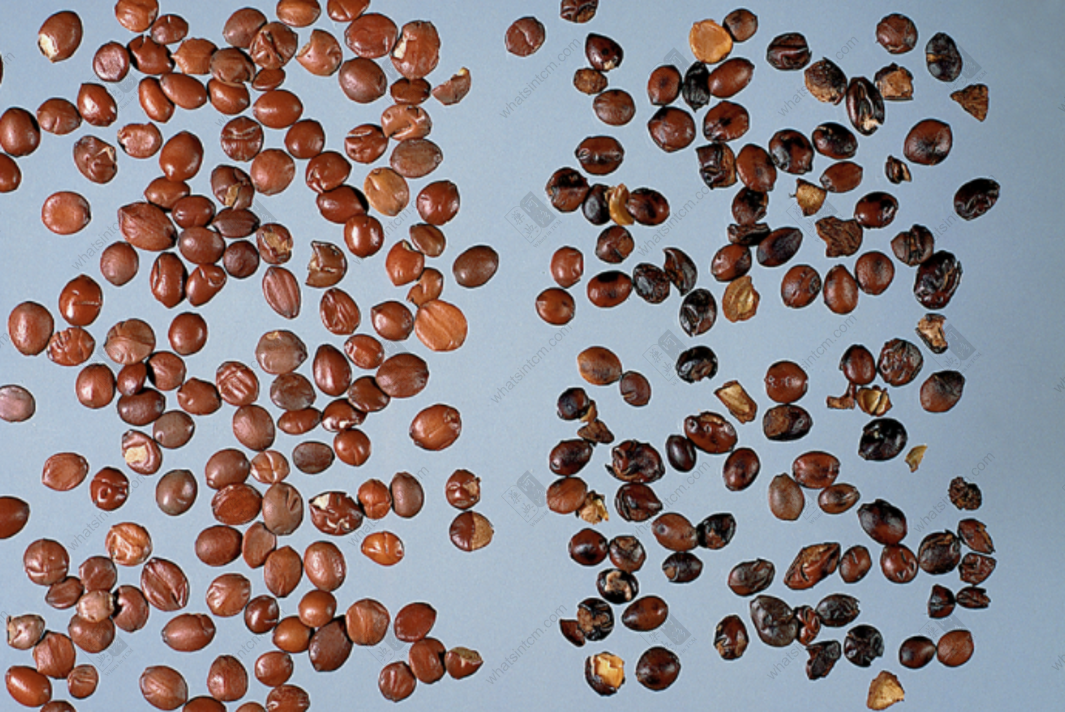 Suanzaoren: The raw form is on the left, and the stir-fried form is on the right. It is flattened or round, reddish-brown in color, with a smooth and glossy surface and cracks. The seed coat is brittle, the endosperm is white, and the cotyledons are light yellow.
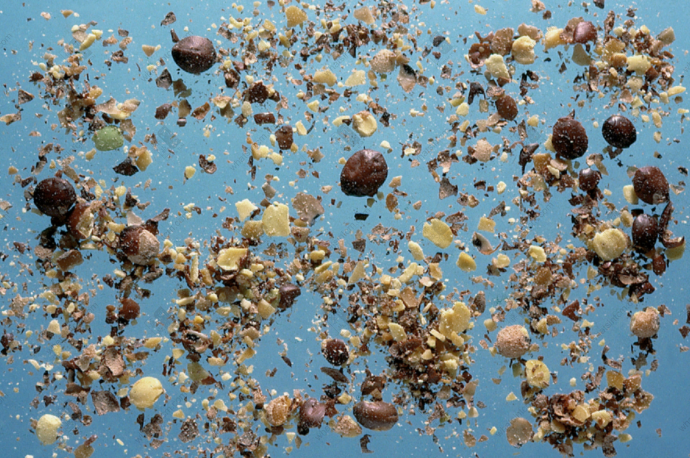
Ground Suanzaoren
“Planting peaches as in the past, planting dates as I desire. In its fruit, it is a delicious fruit; in its wood, it is excellent timber.”
“Ode to Dates” by Wang Anshi of the Northern Song Dynasty
Lord Wang’s poem praises the date tree, whose fruit is delicious and whose wood is excellent. The wild jujube discussed here, though from a different species within the same family, is also highly esteemed by later generations.
According to the Fourth Edition of the Taiwanese Pharmacopoeia, Suanzaoren (https://whatsintcm.com/en/dt_articles/suan-zao-ren-sour-jujube-seed/) is the dried mature seed of the Rhamnaceae plant *Ziziphus jujuba* Mill. var. *spinosa* (Bunge) Hu ex H.F.Chow. It is mainly produced in Henan, Hebei, Shaanxi, and other regions. Wild jujubes typically have their mature fruits harvested in late autumn after fruiting in August. The pulp and shell are removed, the seeds are collected, and then dried for use. It is also known as Huaizao ren, Zaoren, Suanzaizi, Shanzaoren, and Ci Suanzao. The *Shen Nong Ben Cao Jing* (Classic of Materia Medica) states: “Suanzao, with a sour taste, is neutral. It treats cold-heat in the heart and abdomen, accumulation of evil qi, and sour pain and numbness in the limbs. Long-term consumption calms the five zang-organs, lightens the body, and prolongs life.” It is classified as a superior-grade herb, highlighting its esteemed efficacy. Its primary functions are to calm the heart and spirit, and to astringe sweat and promote fluid production. It is commonly used today to treat insomnia with excessive dreaming, easy fright, forgetfulness, night sweats, and neurasthenia. Raw Suanzaoren is typically flattened or oblong, measuring 5-8mm in length and 4-6mm in width. The surface is reddish-brown or purplish-red, slightly glossy, with one side flatter and a raised longitudinal line in the center, while the other side is convex. There is a small indentation at one end, which is the seed hilum. After peeling the seed coat, a yellowish-white, oily endosperm is visible inside. It has a faint aroma and a bitter taste. Generally, plump seeds with a reddish-brown outer layer and free from shell fragments are considered superior. Different processing methods are used depending on clinical application. Stir-fried Suanzaoren is common; it is prepared by gently stir-frying clean Suanzaoren over low heat until it expands, the color slightly darkens, and a fragrant aroma is released, then it is removed and cooled. There is also charred Suanzaoren, prepared by stir-frying clean Suanzaoren over high heat in a hot pan until the surface is dark brown and the seed coat is partially cracked, then it is removed and cooled.
Due to the excellent efficacy and relatively high price of Suanzaoren, there may be confused products in the market. A common one is the seed of *Dianci Zao*, also known as Lizao ren. This is recognized as a genuine product in China’s Yunnan region but is sold as “Suanzaoren,” causing market confusion. Its fruit skin, called Dianzao pi, is used in Yunnan as a substitute for Shan Zhurou (Cornus officinalis fruit), hence the name “Zao pi” for Shan Zhurou. However, the current production of Yunnan Lizao ren is limited; it is mostly produced in Vietnam, Myanmar, and other countries, and is known in the Chinese market as “imported Zaoren.” The difference between it and genuine Suanzaoren lies in the outer color, which is mostly brown or yellowish-brown, whereas Suanzaoren is purplish-red or purplish-brown. Furthermore, Dianzaoren has dark spots on its surface, while Suanzaoren does not. Additionally, Dianzaoren lacks lines on both sides, while Suanzaoren has a longitudinal line on one flattened side. Another adulterated herb is Bingdou (kidney beans), which are yellowish-brown or yellow when raw and turn purplish-red or purplish-brown after cooking, resembling Suanzaoren. However, Bingdou are round without a tip, whereas Suanzaoren has a small tip. Bingdou also lacks the ridge line on either side, while Suanzaoren has one. Moreover, Bingdou are legumes and will have a beany smell when chewed, while Suanzaoren has a sweet taste when chewed. Another adulterant found is Zhiju zi (fruit of *Gleditsia sinensis*), mainly because individual regions in China, such as Wenjiang and Mianyang in Sichuan, mistakenly use it as Suanzaoren. As most Taiwanese Chinese medicine is imported from China, it may also be found on the Taiwanese market. However, due to the visual similarity between Zhiju zi and Suanzaoren, they can be distinguished. Zhiju zi are flattened and round, with a smooth and shiny surface that is blackish-brown or reddish-brown, and both sides are symmetrical and flat without longitudinal lines. Suanzaoren has one flatter side and a convex opposite side. The seed coat of Zhiju zi is harder and tastes slightly bitter and astringent, while the seed coat of Suanzaoren is more brittle and has a sweet taste when chewed. This is the basis for identification. There are also instances of using Da Zao Ren (large jujube seed) as an adulterant. The main difference is that Da Zao Ren seeds are 1-2 times larger than Suanzaoren seeds, which can be used for identification.
In addition to the aforementioned adulterants, the most common practice in the market is to mix different adulterated products together. Therefore, when purchasing, one should identify each seed individually or buy from a reputable seller to avoid disappointment. The Taiwan Food and Drug Administration lists Suanzaoren as a food ingredient, so it must be managed in accordance with relevant food regulations and is handled with great care. The Taiwanese Pharmacopoeia also specifies standards for heavy metal content, aflatoxin content, and sulfur dioxide content, allowing the public to use it with confidence.
【Image provided by】Professor Zhang Xianzhe, “Illustrated Guide to Authentic Medicinal Materials” https://whatsintcm.com