



Beware When Buying ‘Cordyceps Sinensis,’ a Common Winter Tonic Herb, as There Are Many Varieties
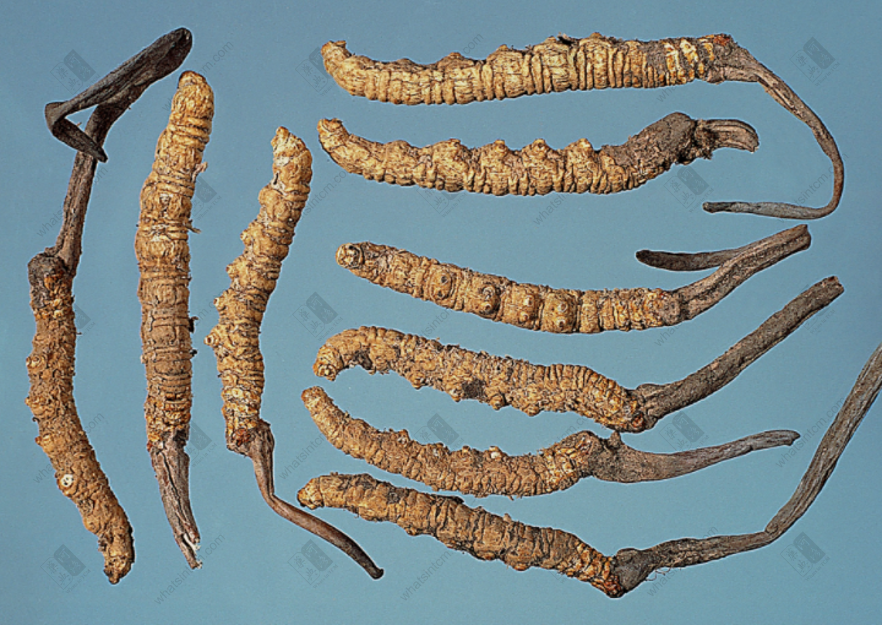 Cordyceps sinensis: Insect body with stroma, old silkworm, deep yellow, with many transverse wrinkles on the back. The stroma is rod-shaped, the body is curved, and the perithecia on the upper part are slightly enlarged, appearing blackish-brown.
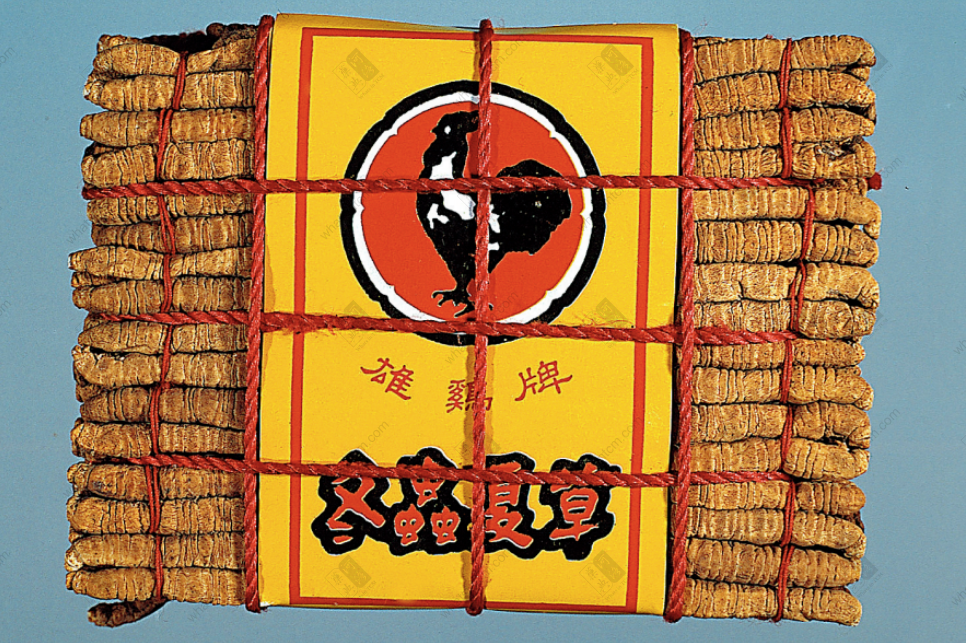 Cordyceps sinensis: The insect body is plump and robust, golden yellow, resembling a silkworm body; the best quality has a yellowish-white interior.
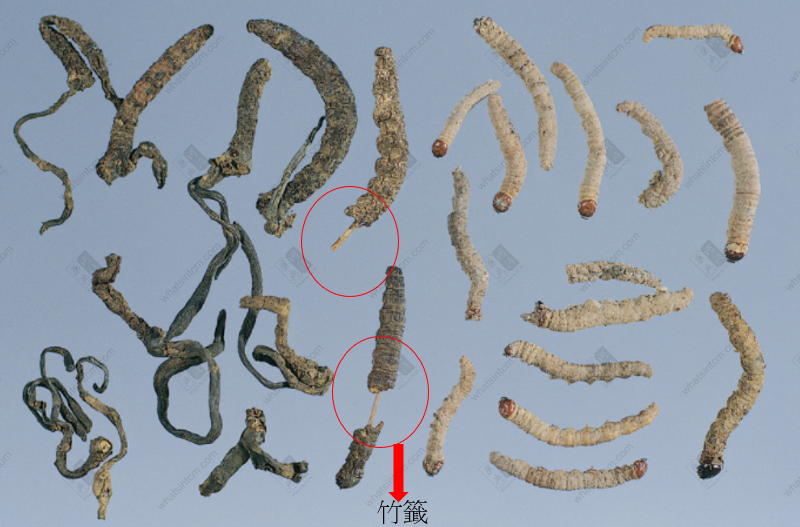 Adulterated Cordyceps sinensis: The two specimens in the middle have bamboo skewers inserted inside.
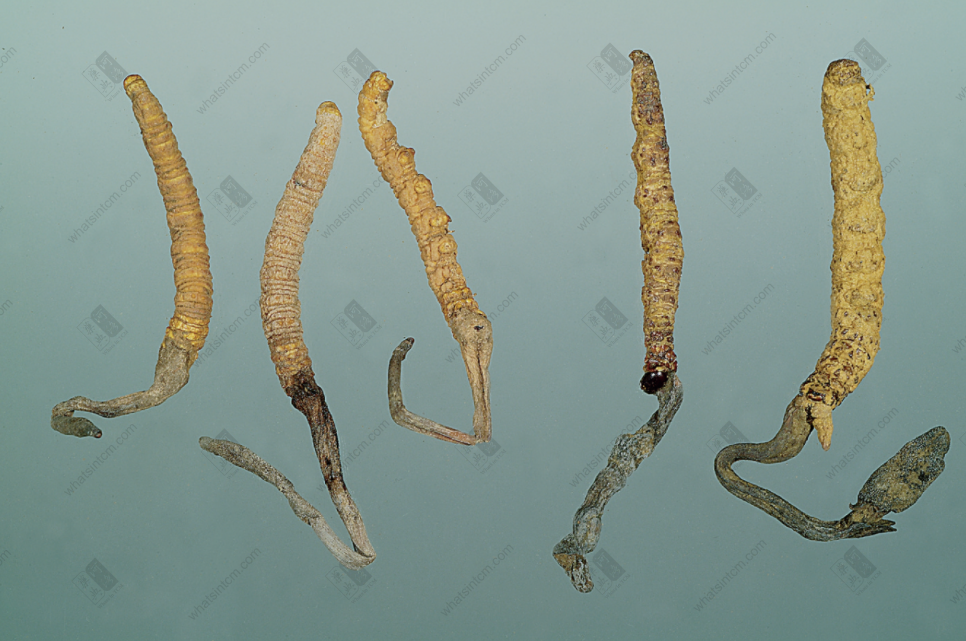 Two different types of Sichuan-produced Cordyceps sinensis on the left and right.
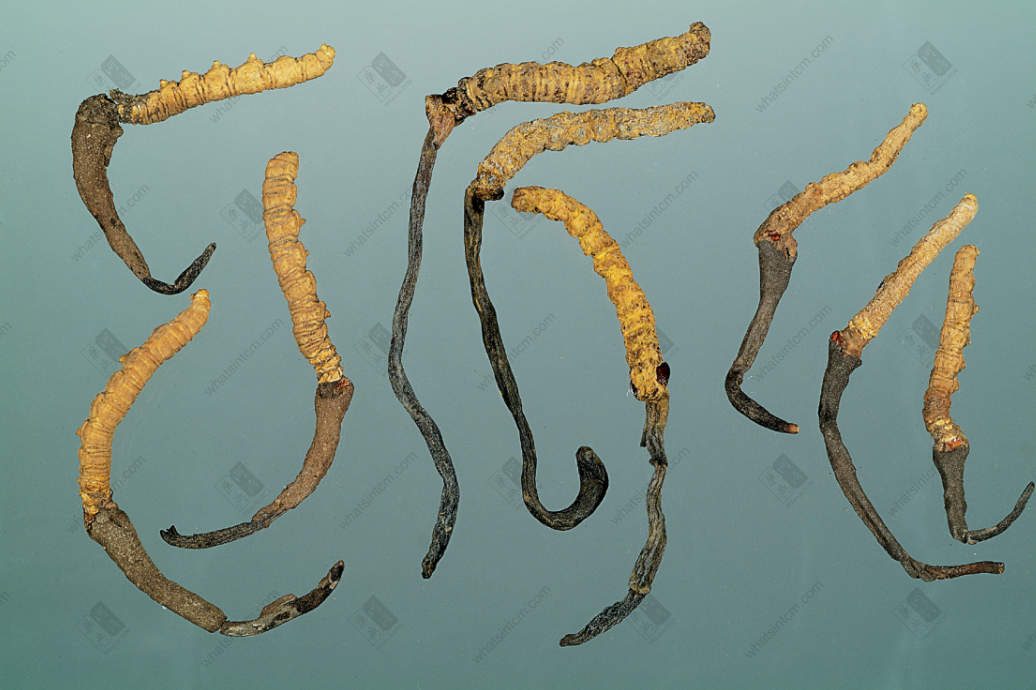 Three different types of Sichuan-produced Cordyceps sinensis on the left, middle, and right.
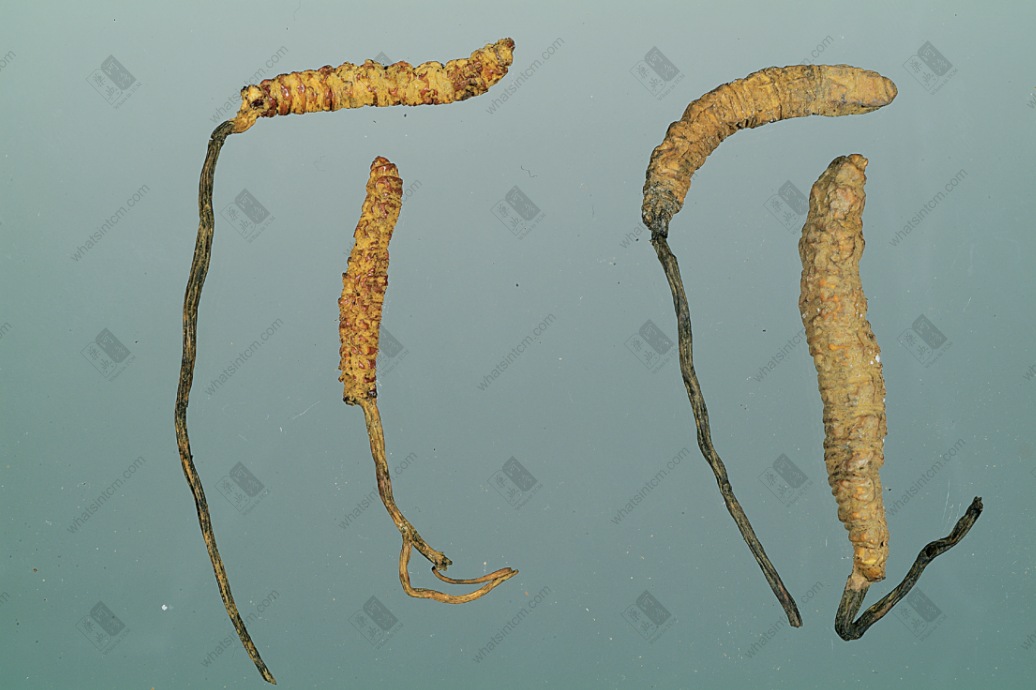 Xinjiang-produced Cordyceps sinensis.
“Cordyceps sinensis lives up to its name, transforming and connecting energy. One substance can encompass both animal and plant, revealing the endless mysteries of the world.”
—————-《Ode to Cordyceps Sinensis》Qing Dynasty, Pu Songling
According to the Fourth Edition of the Taiwan Chinese Materia Medica, Cordyceps sinensis is the complex of stromata and insect bodies of the fungus Ophiocordyceps sinensis (Berk.) G.H.Sung, J.M.Sung, Hywel-Jones & Spatafora, which parasitizes the larvae of Hepialidae insects. It is commonly found at altitudes of 4000 meters, especially in cold alpine grasslands with accumulated snow and good drainage. Thus, it is mainly produced in Qinghai, Sichuan, Yunnan, Tibet, and other regions, as well as in Bhutan, which borders Tibet. It is typically harvested in early summer when the stroma emerges from the ground and the spores have not yet dispersed. After drying to 60-70% dryness, fibrous attachments and impurities are removed, and it is then dried or low-temperature dried for storage. In winter, when the larvae of Hepialidae moths are parasitized and killed by the Cordyceps fungus, their internal tissues and exoskeleton combine with mycelia to form a hard mycelial body, while the outer appearance remains that of a larva. This stage is called “winter worm.” Over winter, by the following spring, the fungal hyphae begin to grow slowly. In summer, it grows out of the ground, resembling a plant with a rod-shaped stroma emerging above ground, thus forming the “summer grass.” Hence, it is named “Cordyceps sinensis.” Generally, specimens that are complete, with plump and large insect bodies, bright yellow color, white cross-section, and short stromata are considered of better quality. Zhao Xuemin, in his compilation “Supplement to the Compendium of Materia Medica” from the Qing Dynasty, recorded: “Cordyceps sinensis is sweet and neutral in nature, entering the Lung and Kidney meridians. It tonifies the lungs and benefits the kidneys, stops bleeding, and resolves phlegm. It is used for chronic cough, deficiency-induced asthma, consumptive cough with hemoptysis, impotence, seminal emission, and soreness of the lower back and knees. It can conserve essence, benefit qi, and specifically tonify the Gate of Vitality.” This indicates that Cordyceps sinensis has good efficacy for individuals with chronic cough and sore lower back and knees.
Due to its high price, with a per-kilogram cost reaching hundreds of thousands of yuan, there are many adulterated products on the market. These mainly fall into several categories: some are passed off as plant rhizomes with visible segments, others are molded from mineral substances, and some have iron wires or bamboo skewers inserted into genuine Cordyceps sinensis to increase their weight. Alternatively, other species of Cordyceps are used to adulterate it, or plastic is used for counterfeiting. Therefore, extreme caution is required when purchasing. Several methods can be used for identification: First, examine the head. The head of genuine Cordyceps sinensis is reddish-brown and mostly embedded in the stroma, with only about one-third visible from the side. Several reddish-brown protrusions are arranged side-by-side below the stroma on the ventral surface. Then, use a magnifying glass to closely inspect the junction between the head and the stroma. After using tweezers or other tools to peel away the black soil from the junction of the insect and the grass, gently shake the stroma to confirm if it is artificially attached. Artificially cultivated Cordyceps is particularly clean and lacks the black soil at the junction. Second, examine the stroma. It is typically about 4-7 cm long, sometimes with two stalks. The stromata of adulterated products are sometimes too long, lack enlargement at the upper part, or are broken off. Artificially cultivated Cordyceps has a noticeably thinner stroma. Third, examine the body. The insect body of genuine Cordyceps sinensis is deep yellow to yellowish-brown. Adulterated products are dyed, with uneven and unnatural yellowish-brown coloration, sometimes with peeling pigment, or the color can be wiped off with alcohol. The color of genuine products cannot be wiped off. Furthermore, use a magnifying glass to carefully observe for any signs of breakage or adhesion, and check for inserted substances like bamboo skewers in the middle. Fourth, examine the legs. Genuine Cordyceps has 8 pairs of legs on its ventral surface. The anterior 3 pairs are smaller and arranged consecutively behind the reddish-brown head. The middle 4 pairs are larger and particularly prominent from a side view. Each pair of legs is separated by 3 narrow segments, and the last pair of legs is very small, located at the posterior end of the insect body. Fifth, use a magnet to check for inserted iron wires to increase weight. Lastly, the cross-section of genuine Cordyceps sinensis is off-white with distinct dark lines, and a clear dark brown U-shaped, V-shaped, or S-shaped pattern in the center. This pattern is formed by the flattened internal organs and varies in shape depending on the part and location. The above are a few simple methods for identifying Cordyceps sinensis. Due to its high price, it is best to purchase from reputable stores. Typically, purchased Cordyceps sinensis can be used for stewing in chicken soup, steeping in wine with other tonic Chinese herbs, or brewing as tea. However, it may not be suitable for use during a cold.
Previously, the agricultural improvement stations in central Taiwan developed Cordyceps militaris cultivated from silkworms. Its origin is quite different from Cordyceps sinensis, so it is important to verify clearly when purchasing to avoid mistakes. Additionally, there are also products sold as food made from the mycelia of cultivated Cordyceps sinensis. Therefore, the competent government authority, in its announcement No. 1081302650 dated 2019, clearly stipulated that for Cordyceps sinensis mycelia used as food ingredients, the product packaging must include a warning statement: “This product is not made from the traditional Chinese medicine Cordyceps sinensis.” The strain used must be Hirsutella sinensis or related strains isolated from Cordyceps sinensis to ensure the safety of public consumption.
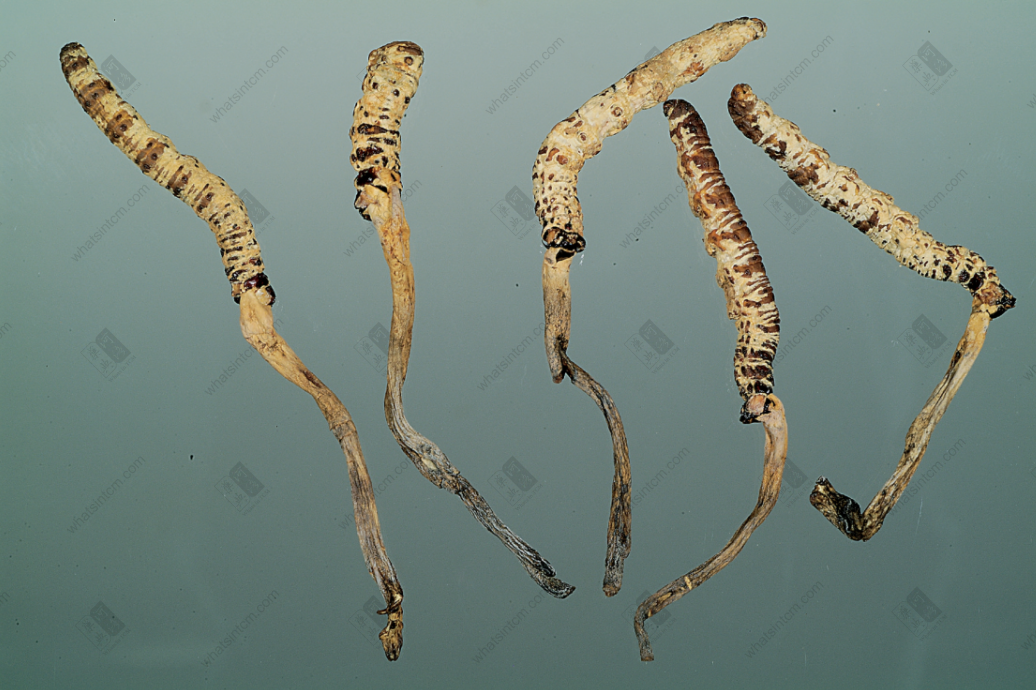 Changbai Mountain-produced Cordyceps sinensis.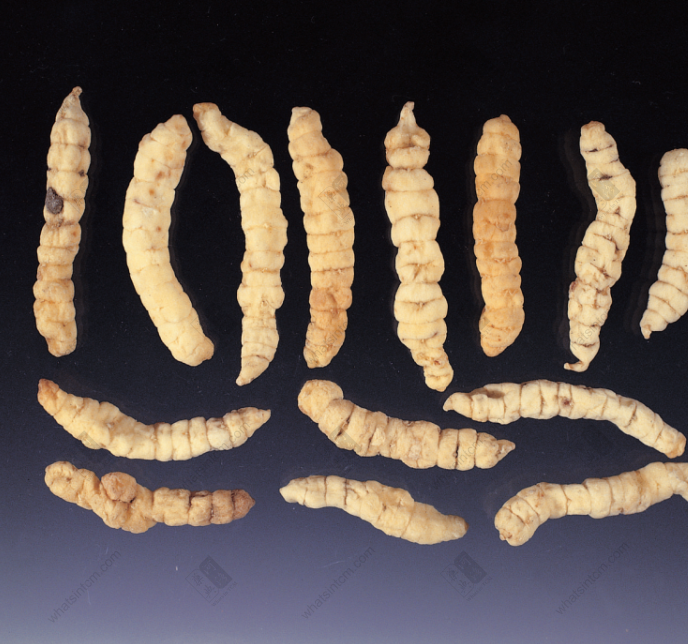
Adulterated Cordyceps sinensis: Botanical grass stone silkworm.
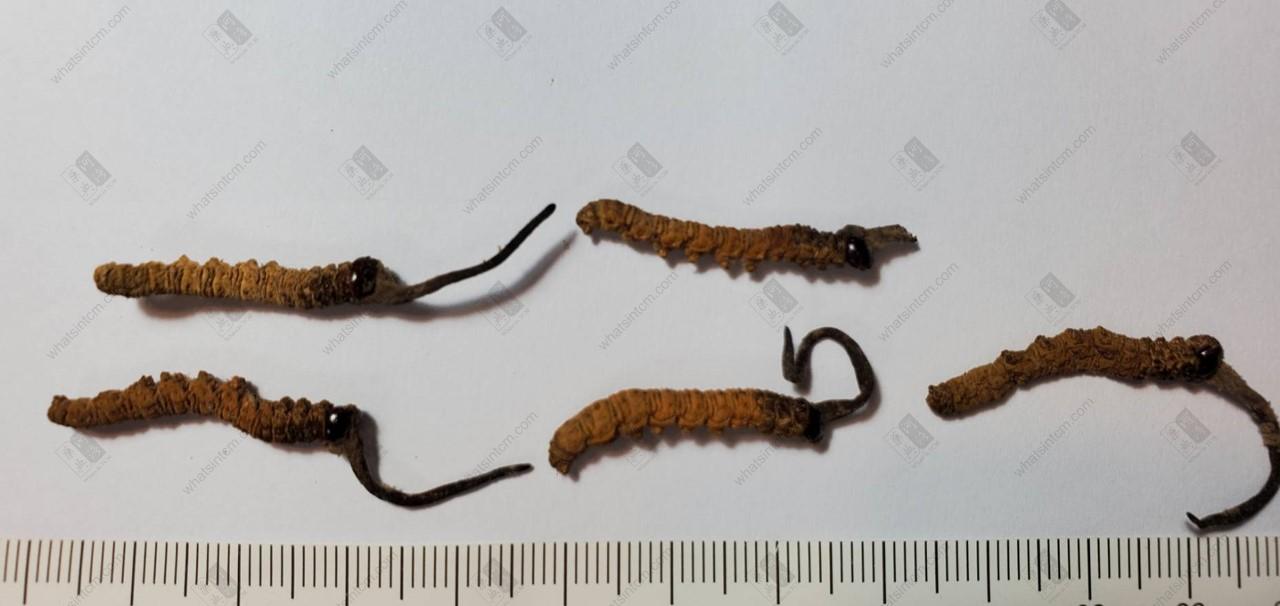 Wild Cordyceps sinensis from Bhutan (photo provided by Dr. Chen Da-zhen).
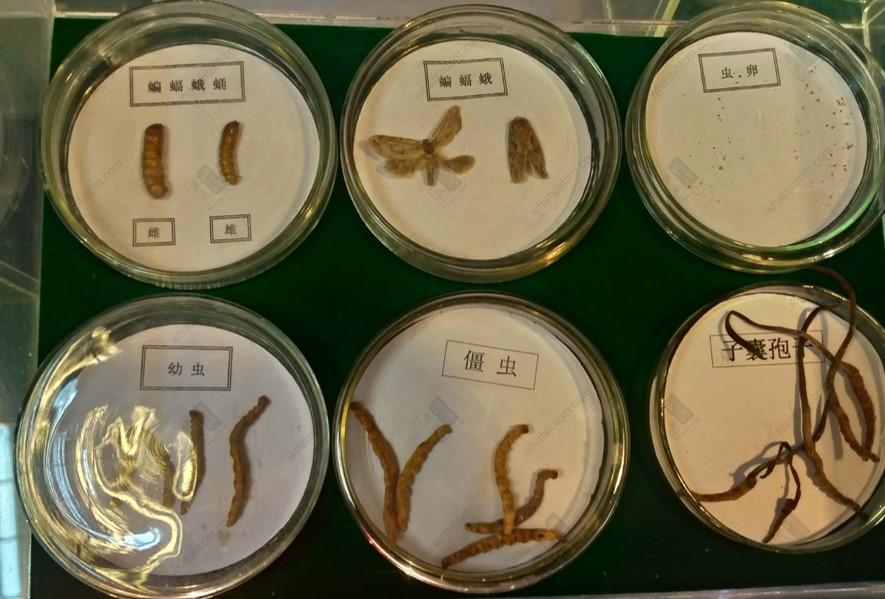 The life cycle of Cordyceps (photo provided by Dr. Chen Da-zhen).
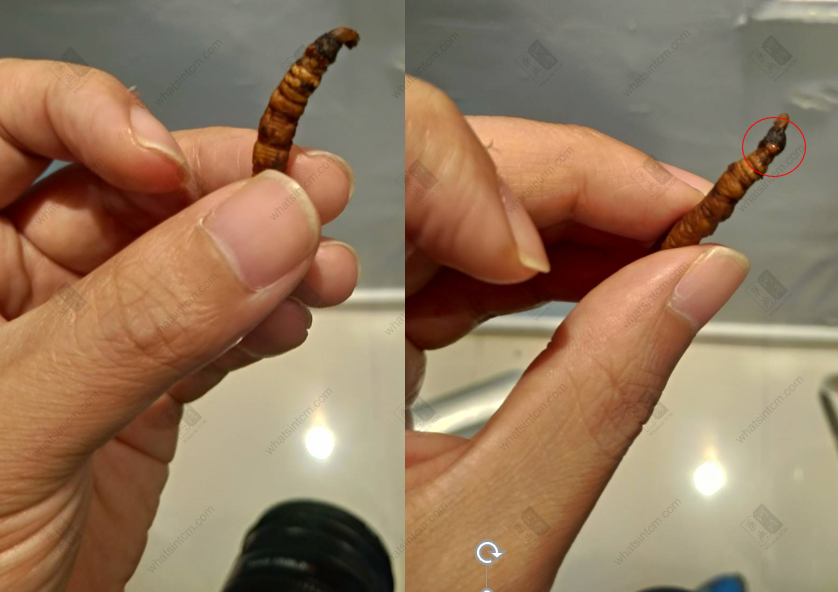 Artificially propagated Cordyceps sinensis: The right side shows the head with reddish-brown protrusions, and the left side shows the tail (photo provided by Dr. Chen Da-zhen).
【Image Credits】Professor Zhang Xian-zhe, “Illustrated Handbook of Authentic Medicinal Materials” https://whatsintcm.com