



Commonly Used Herbs for Diuresis and Lactation: Caution Needed When Selecting Akebia
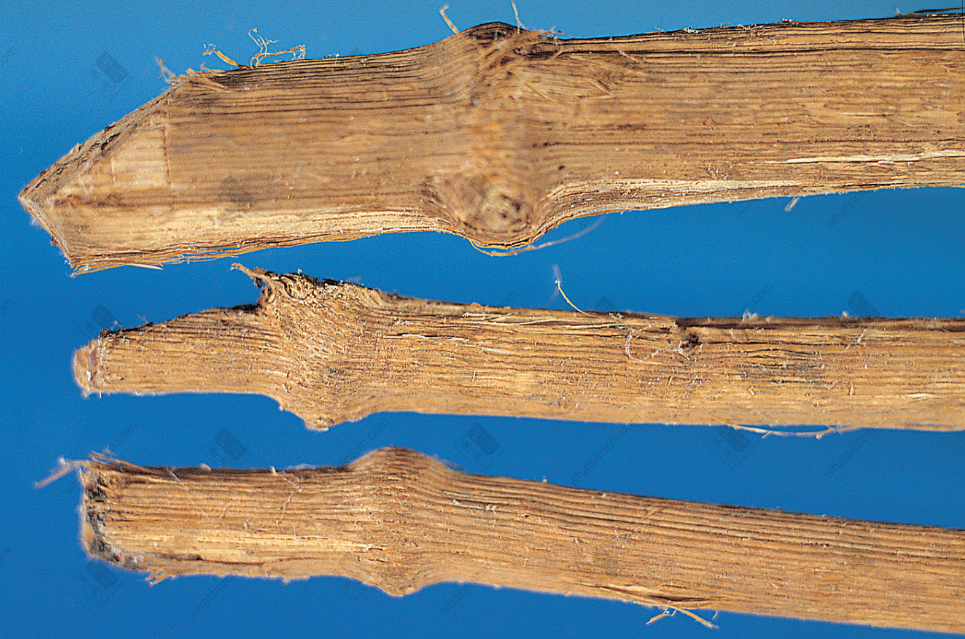 Raw material of *Chuan Mu Tong* (Sichuan Akebia): Long, cylindrical, curved, reddish-brown in color, hard in texture, with enlarged nodes and traces of lateral branches, and longitudinal grooves.
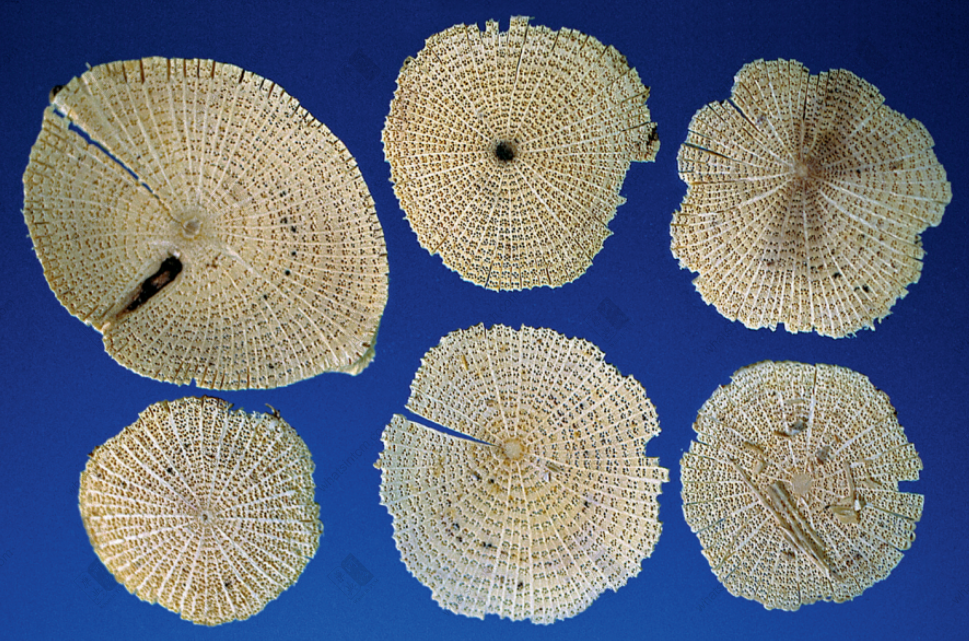 Sliced *Chuan Mu Tong* exhibits a radial, fissured appearance.
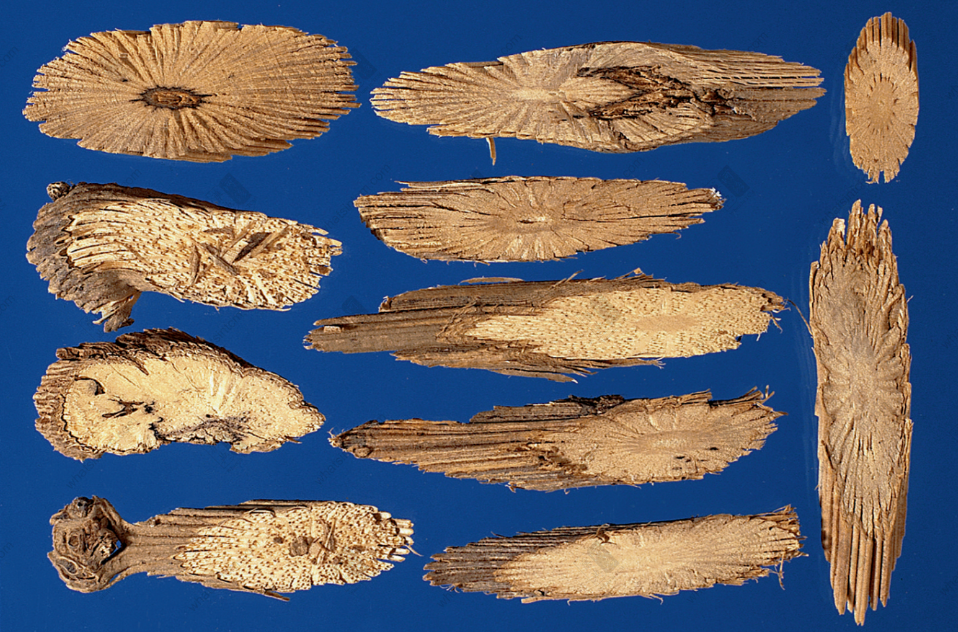 Sliced *Chuan Mu Tong*.
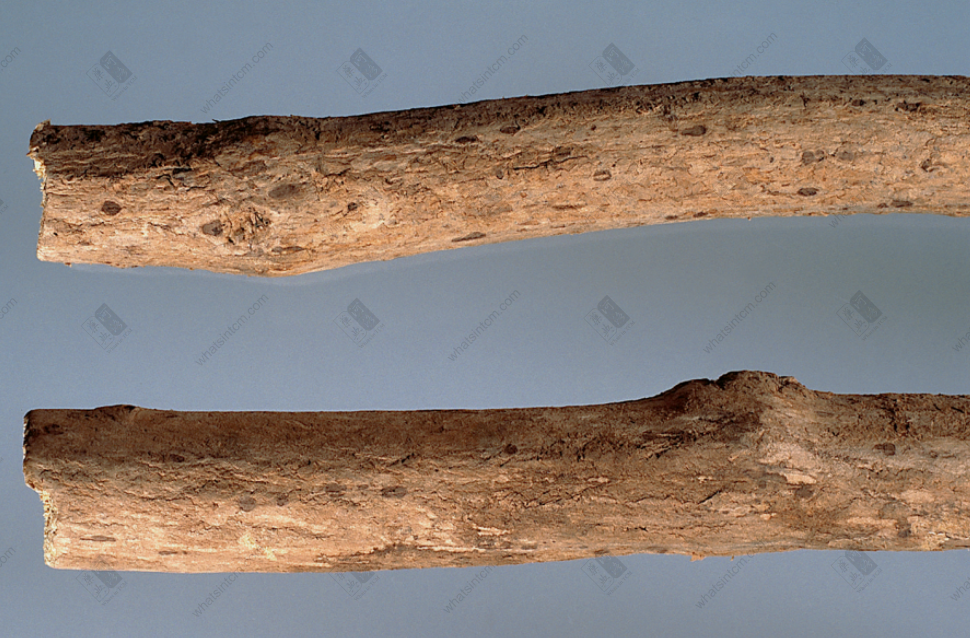 Raw material of *Guan Mu Tong* (Aristolochia manshuriensis): Cylindrical, grayish-yellow in color, rough, with irregular cracks, enlarged nodes and branch scars, light in weight, thin-skinned, and fibrous.
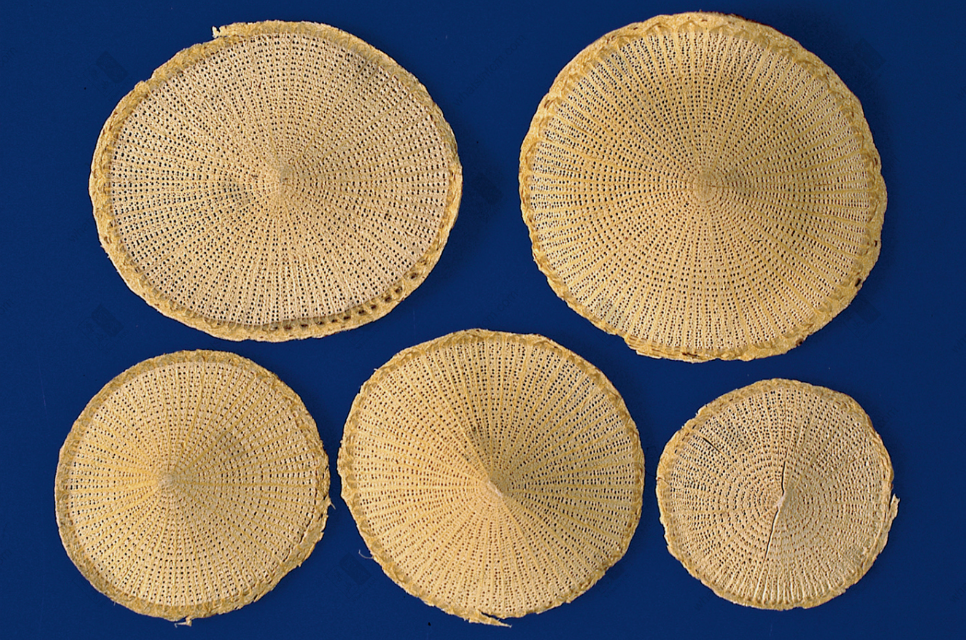 Sliced *Guan Mu Tong* preparation: Round slices with fine pores, the woody part is radiate yellow with wheel-like patterns.
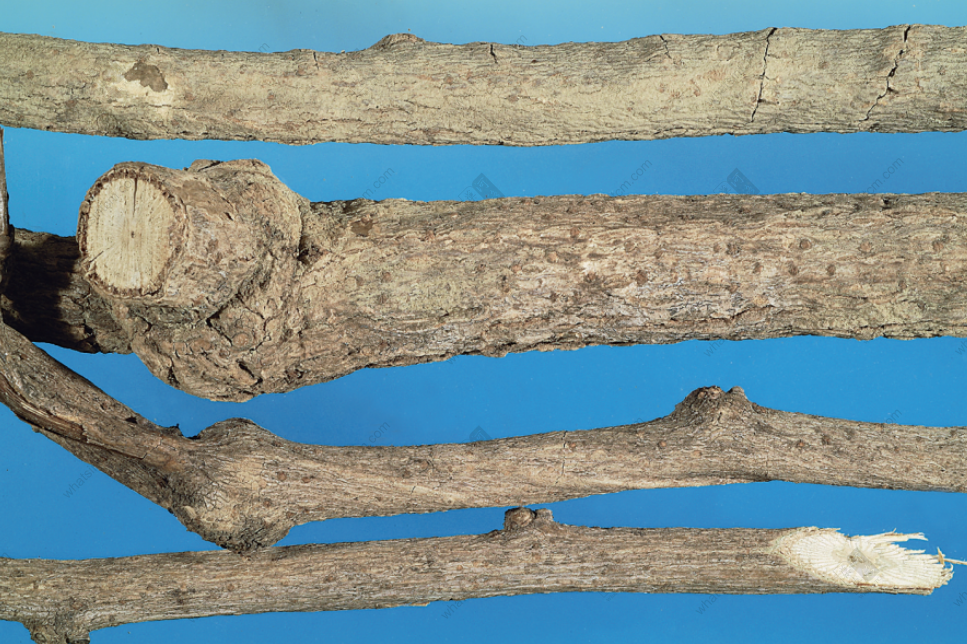 Raw material of *Bai Mu Tong* (White Akebia).
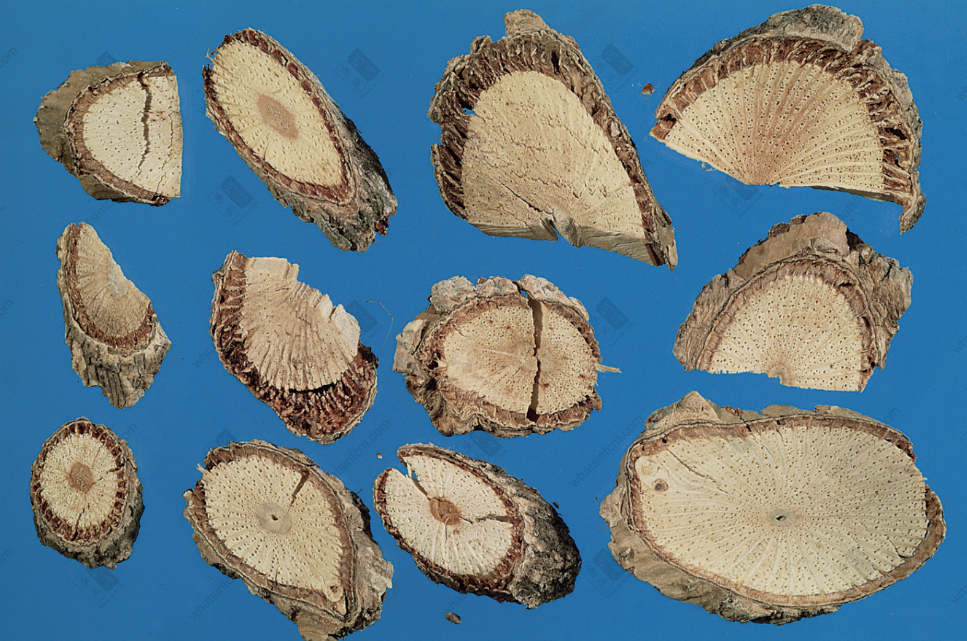 Sliced *Bai Mu Tong* preparation.
“Tong Cao has fine pores, and is open at both ends, hence the name Tong Cao, which is what is called Mu Tong today. The Tong Cao of today is the Tong Tuo Mu of ancient times. The Compendium of Materia Medica of the Song Dynasty confused them as one, mixing the name and substance. Now they are distinguished.”
From the *Compendium of Materia Medica*, Section on Herbs, Climbing Plants.
From the above passage, it is clear that the *Compendium of Materia Medica* by Li Shizhen in the Ming Dynasty clearly pointed out the different sources of two similarly named medicinal herbs, “Tong Cao” and “Mu Tong.”
According to the fourth edition of the Taiwanese Pharmacopoeia, Mu Tong (https://reurl.cc/V17bzY) is the dried vine stems of Akebia quinata (Thunb.) Deone., Akebia trifoliata (Thunb.) Koidz., or Akebia trifoliata (Thunb.) Koidz. var. australis (Diels) Rehder, belonging to the Akebiaceae family. Chuan Mu Tong is the dried stem of Clematis montana Buch.-Ham. ex DC. or Clematis armandii Franch. of the Ranunculaceae family. Another type, which the government has strictly prohibited from use, is Guan Mu Tong, derived from the dried vine stems of Aristolochia manshuriensis Kom. of the Aristolochiaceae family. Due to its content of Aristolochic acid, improper use can lead to kidney failure, and therefore it is usually not found in the market. Mu Tong is typically harvested in autumn. During harvesting, the stem is first cut, the outer skin is removed, and then the fine branches are stripped, and it is air-dried. Both “Mu Tong” and “Tong Cao” are commonly used herbs for diuresis and promoting lactation. Because both have the character “Tong” (meaning to pass through or unblock) in their names, these two traditional Chinese medicines have sometimes been confused in historical texts. Mu Tong is usually produced in Jiangsu, Zhejiang, Jiangxi, and other regions. San Ye Mu Tong (three-leaf Akebia) is mainly produced in Zhejiang. Bai Mu Tong (white Akebia) is mainly produced in Sichuan, Hubei, Hunan, Yunnan, Jiangxi, and other places. In Taiwan, there are also bases for cultivating “Tong Cao” in areas like Hsinchu. Mu Tong is also known as Ding Weng, Fu Zhi, Ding Fu, and Wang Weng. The prepared slices of Mu Tong are round, oval, or irregularly shaped. The outer skin is mainly grayish-brown. The cross-section of the raw material shows a radial arrangement, with a small or sometimes hollow pith. It has a faint odor and a slightly bitter and astringent taste. Slices of Chuan Mu Tong have a yellowish-white cross-section, typically with a small pith, occasionally hollow, and exhibit radial textures and fissures. The outer skin is often peeled off, and the edges of the slices are irregular.
According to the fourth edition of the Taiwanese Pharmacopoeia, Mu Tong is bitter and cold in nature. It enters the Small Intestine and Bladder meridians and primarily has the functions of promoting urination, clearing heart fire, and promoting milk secretion. Due to its significant diuretic and urinary tract clearing effects, it is quite commonly used in the market. However, because it is frequently used, there can be accidental confusion. Common confusions include the dried leaves of Clematis lanuginosa, also known as Gan Mu Tong, which is easily distinguished because its medicinal part is the leaf, differing from the usual stem. Another is the Xinjiang Mu Tong, which is the dried vine stem of Clematis orientalis of the Ranunculaceae family. It is slender and cylindrical with enlarged nodes, a rough surface, dull yellow in color, brittle, and easily broken, with a faint odor and a slightly bitter taste. There is also the dried vine of Clematis serrata of the Ranunculaceae family, which is cylindrical, yellowish-brown or brown on the surface, with 6 longitudinal grooves making the stem hexagonal. The nodes are enlarged, the texture is hard and difficult to break. The cross-section of the woody part is yellowish-white, filled with small pores, and the pith is small and off-white. It has a faint odor and a bland taste. Another is the dried vine stem of wild papaya, a plant of the Akebiaceae family, characterized by a cylindrical stem with a grayish-brown surface and coarse longitudinal lines. The cork layer often peels off, revealing internal fibrous bundles and loose granular white ring-like medullary sheaths. The wood is broad, yellowish-white or light brownish-yellow, with fine rays, and the pith is small or sometimes hollow. It has a faint odor and a slightly bitter and astringent taste. There are also the dried stems of Clematis armandii and Clematis montana of the Ranunculaceae family. The former, Xiao Mu Tong, has a long cylindrical stem, yellowish-brown or brownish-yellow on the surface, the outer skin easily separates from the woody part, with traces of lateral branches and leaf scars, hard in texture, difficult to break. The cross-section is yellowish-white, the bark is thin, the wood is wide, arranged radially with rays, and there is a small, off-white central pith. It has a faint odor and is slightly bitter. The latter, Xiu Qiu Teng, has a grayish-black cross-section. The woody part is grayish-white, composed of several interspersed, radially arranged woody parts. Its appearance is similar to Xiao Mu Tong. However, both are listed under Chuan Mu Tong in the fourth edition of the Taiwanese Pharmacopoeia. There have also been cases of using Mu Tong dregs with weighting powder to increase weight. The main difference from Mu Tong is that the bark of the weighted product is light brownish-yellow or yellowish-white, while normal Mu Tong is brownish-yellow. The woody part of the weighted Mu Tong is off-white, while normal Mu Tong is yellowish-white. Furthermore, the shape of the weighted Mu Tong slices is irregular and brittle, and some may show bright stars under a magnifying glass.
Mu Tong is a commonly used traditional Chinese medicine. However, due to its long history of use and differences in usage habits, confusion can easily occur. To ensure the safety of public medication, the government has set limits not only on sulfur dioxide but also on heavy metals such as arsenic, cadmium, mercury, and lead, to ensure safety in use. Therefore, the public can use it with confidence.
【Images provided by】Professor Chang Xian-zhe, “Illustrated Guide to Authentic Medicinal Materials” https://whatsintcm.com