



Chinese Clematis Root
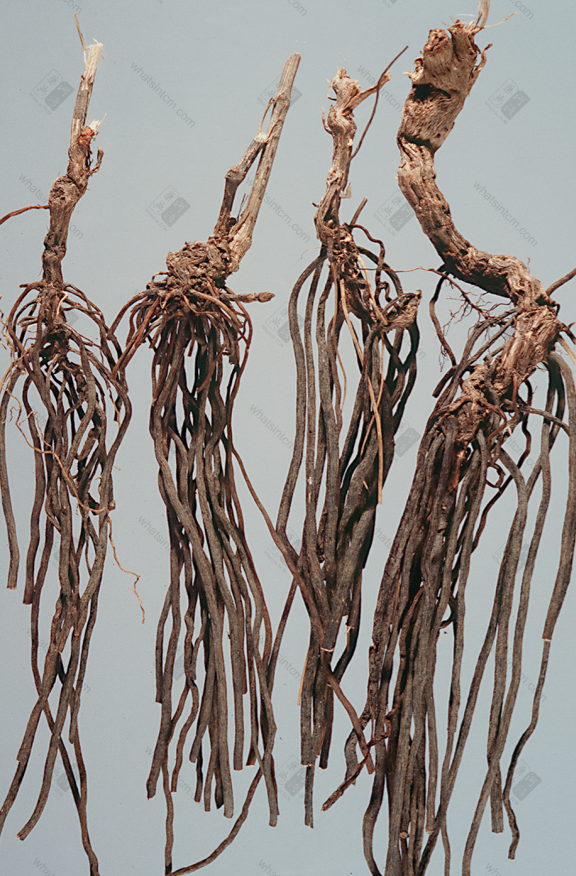 Guang Chinese Clematis Root (Rhizome is columnar, with prominent nodes, brownish-black, with many fine roots growing from the bottom)
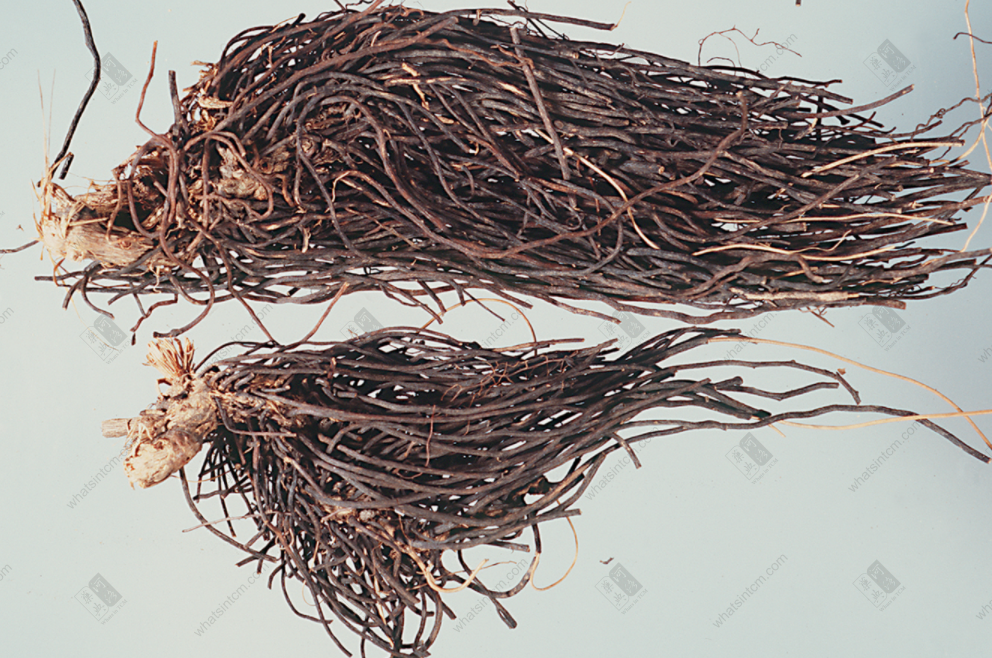 Sichuan Chinese Clematis Root (Rhizome cortex peels off, appearing fibrous, hard and not easily broken)
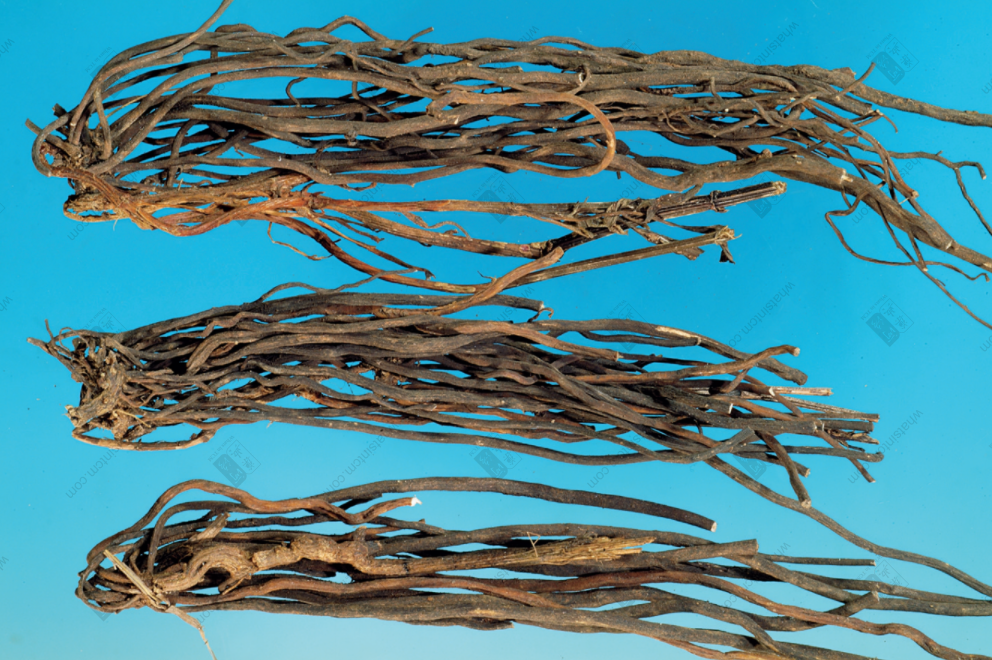 Guang Chinese Clematis Root
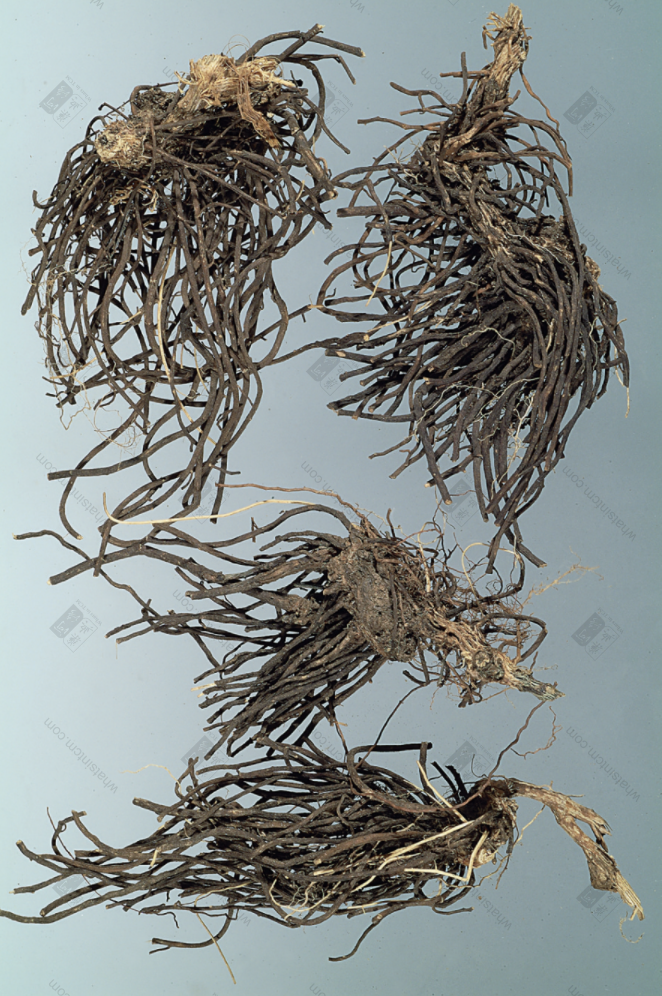 Iron Chinese Clematis Root
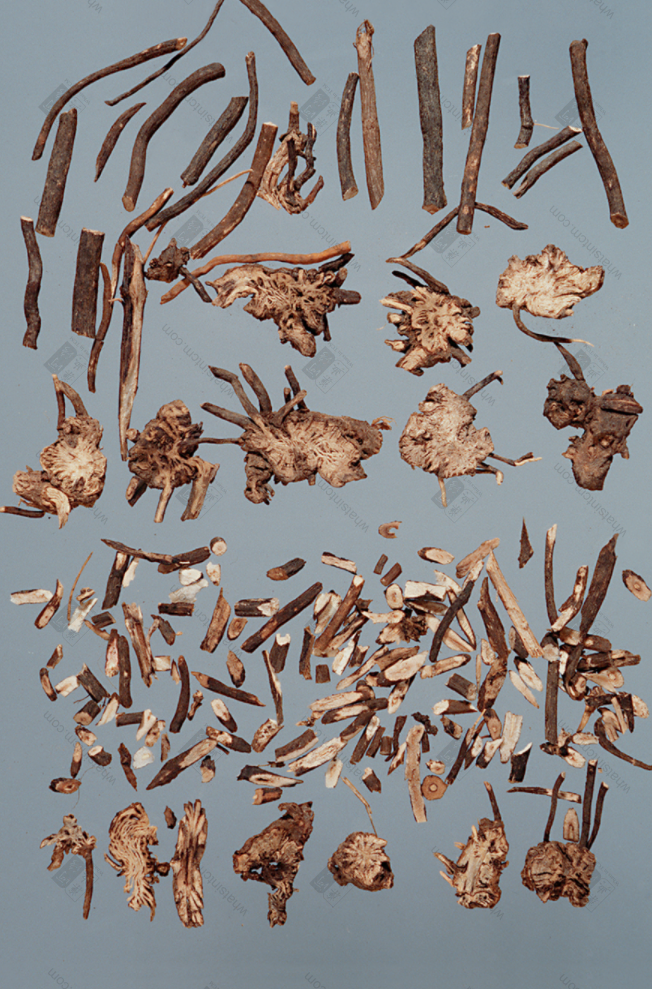 Chinese Clematis Root Slices (Periphery of the rhizome is grayish-yellow, often with gaps between the bark and wood, with a yellowish-white core)
【Naming】
【Source】
Song Dynasty Kaibao
【Common Usage Level】
C
【Botanical Origin】
The root and rhizome of Clematis chinensis Osbeck, belonging to the Ranunculaceae family.
【Characteristics】
The rhizome is irregularly lumpy, yellowish-brown, the cortex often peels off revealing a fibrous appearance, with raised nodes, knobby, with residual woody stems at the upper end, the outer bark of the woody core easily detaches, and many fine roots grow from the lower side (long, floating whiskers). The roots are slender, cylindrical, about 8-16cm long and 1-4mm in diameter, slightly curved, with a brownish-brown or brownish-black surface, with fine longitudinal lines, hard and brittle, easily broken.
The sliced pieces are in the form of thin strips, the rhizome is cut into irregular slices, the outer skin is brownish-brown, the transverse section is circular, the periphery is grayish-yellow, and the central woody core is yellowish-white. The odor is weak, and the taste is slightly bitter. Wine-prepared Chinese Clematis Root exhibits a fiery color and a slight alcoholic aroma.
【Processing】
1. Raw Chinese Clematis Root 2. Wine-prepared Chinese Clematis Root
【Identification】
“Zhenglei Bencao”: “It is best to harvest on Bing, Ding, Wu, and Ji days, choosing those that do not hear the sound of water.” “Yifangleiju”: “Chinese Clematis Root with iron feet is preferred, remove the reed.” “Yifangleiju”: “Chinese Clematis Root: … Those that do not hear the sound of water are good. Chinese Clematis Root, … this herb is harvested earliest among all herbs, and those that do not hear the sound of water are good.” “Yifangleiju”: “Chinese Clematis Root. Its nature is very good, it does not interfere with other medicines, only avoid tea, it can be decocted with Licorice Root and Gardenia Fruit as a substitute drink, and those that do not hear the sound of water are still good.” “Benjing Fengyuan”: “Yellowish-white and loose ones are good.” “Bencao Bian Du”: “Moxa moxibustion is good.”
Those with rhizomes, fibrous roots, long strips, even strips, thick and firm, black skin, white flesh on the cut surface, powdery texture, no above-ground residual stems, and no mud and impurities are considered good.
【Identification Terminology】
1. Dou (兜): Generally refers to the root of a clustered plant. Such as Chinese Clematis Root, Rubia Root, Large Thistle, Angelica Pubescens Root, Sichuan Achyranthes Root, etc. The head of the dou root is called “dou lu (兜蘆).”
2. Dou Gen (兜根): Refers to some medicinal materials composed of clustered fine roots or fleshy roots. Such as Chinese Clematis Root.
3. Maweizhuang (馬尾狀): Often refers to some medicinal materials with shortened rhizomes or inconspicuous taproots, which have several branch roots of similar thickness and length, sometimes further divided into fine roots, but clear and not messy, like a horse’s tail.
【Category】
Roots