



Chrysanthemum
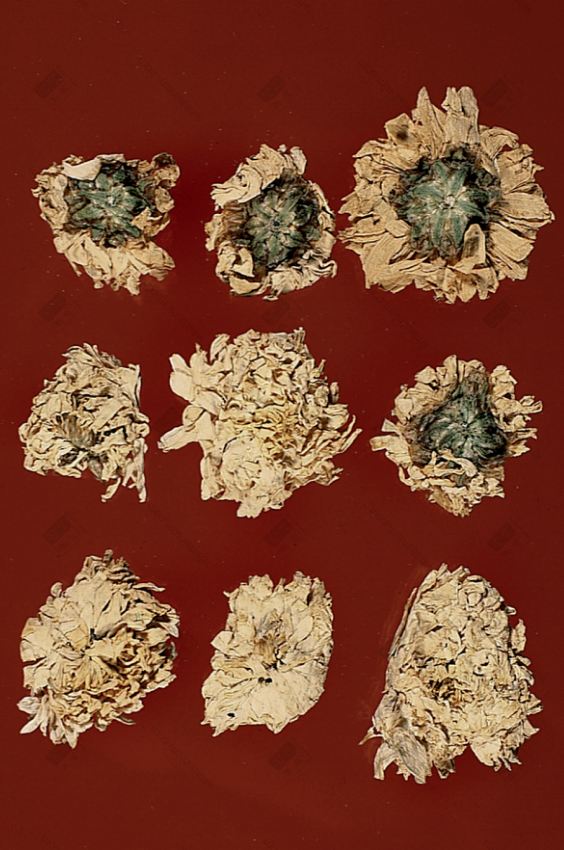
Gong Chrysanthemum (Round flower head, ligulate and tubular, green stem base, light and crisp, fragrant and sweet)
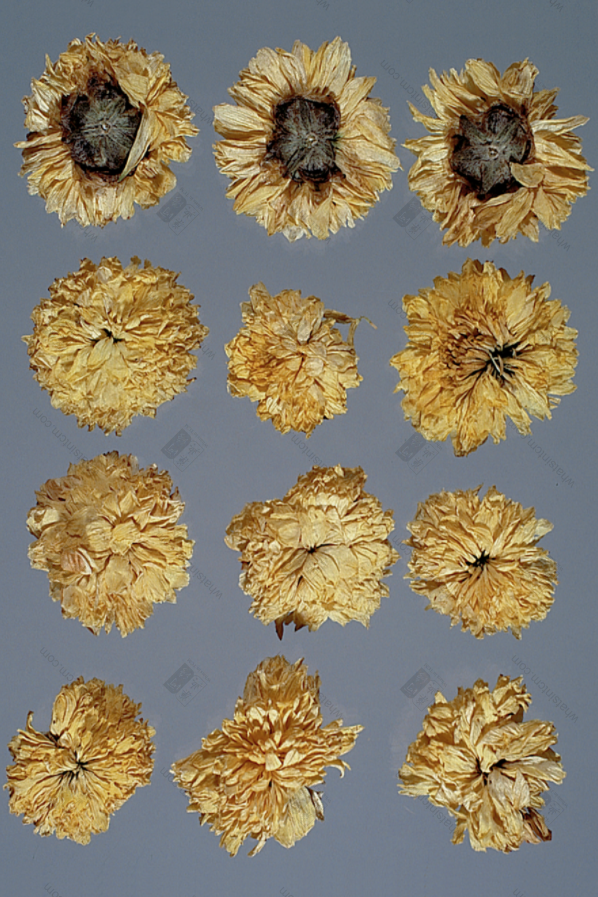
Hangzhou Chrysanthemum (Flat, oval shape; check dryness by hand)
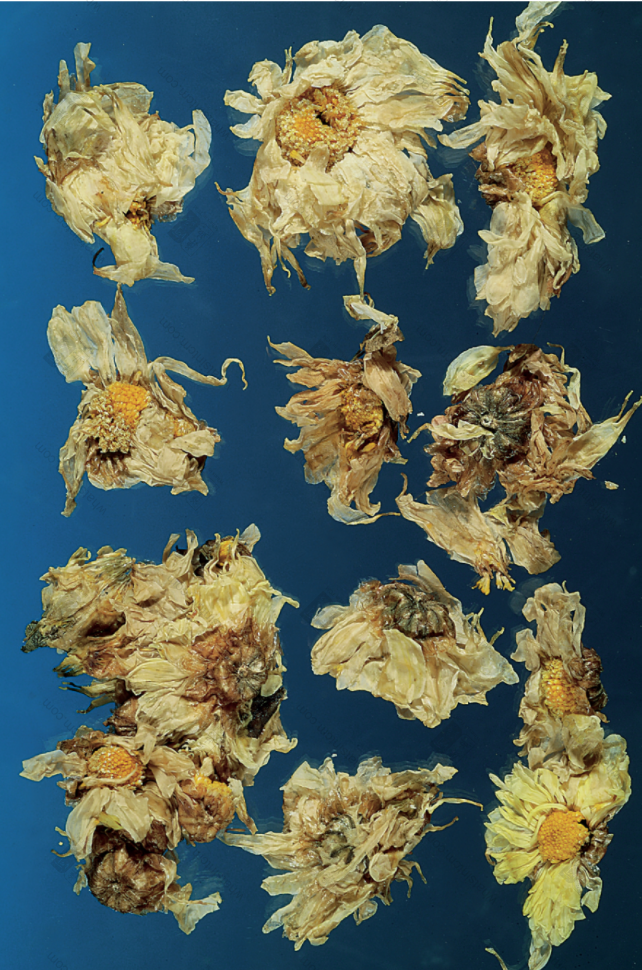
Chrysanthemum
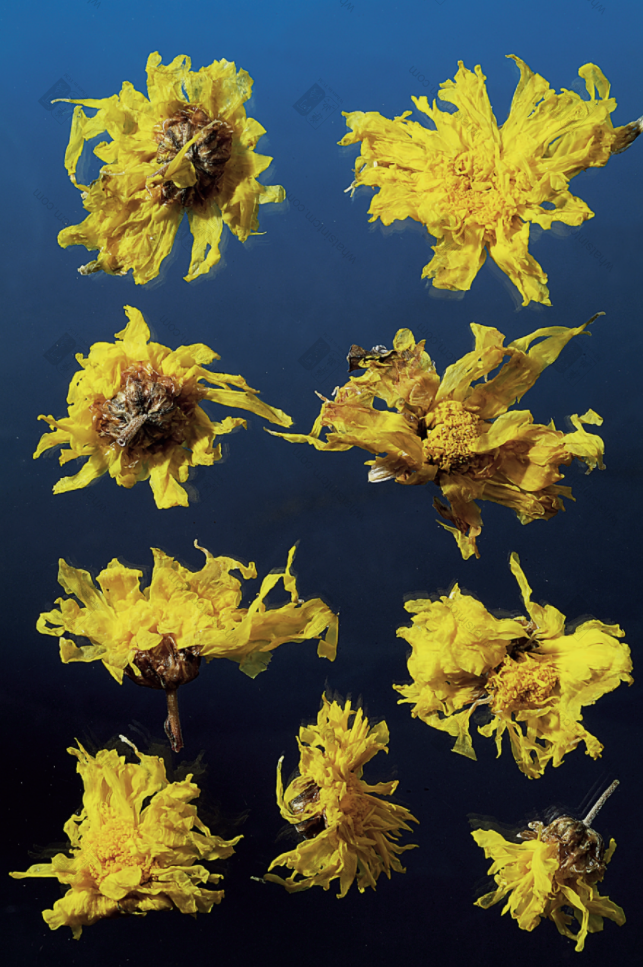
Su Jin Chrysanthemum
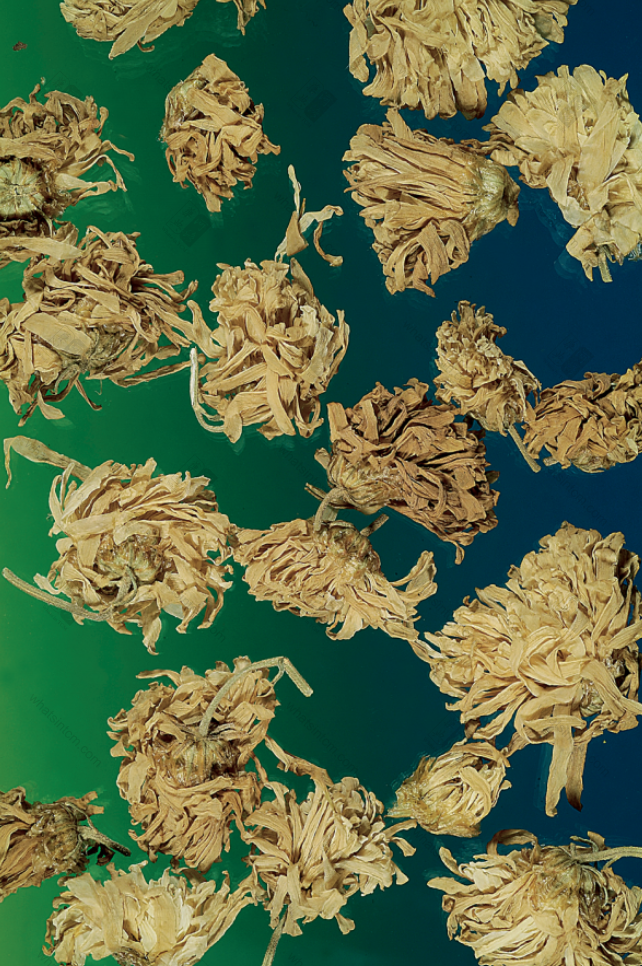
Chrysanthemum (Cultivated in Hebei)
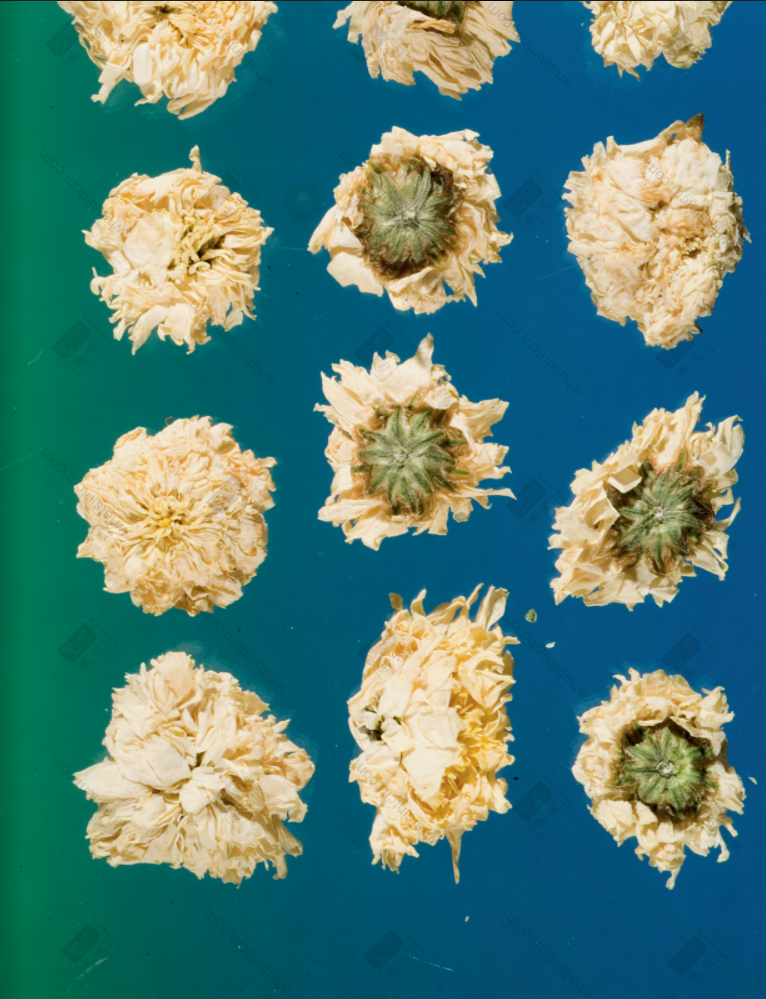
Taitung Chrysanthemum
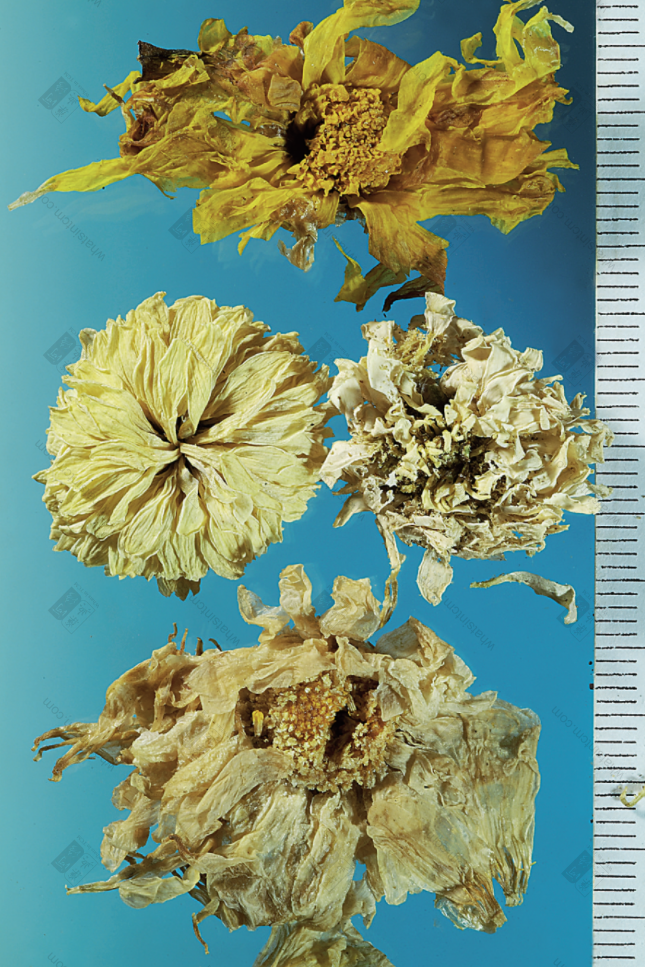
Jin, Taiwan, Gong Chrysanthemum
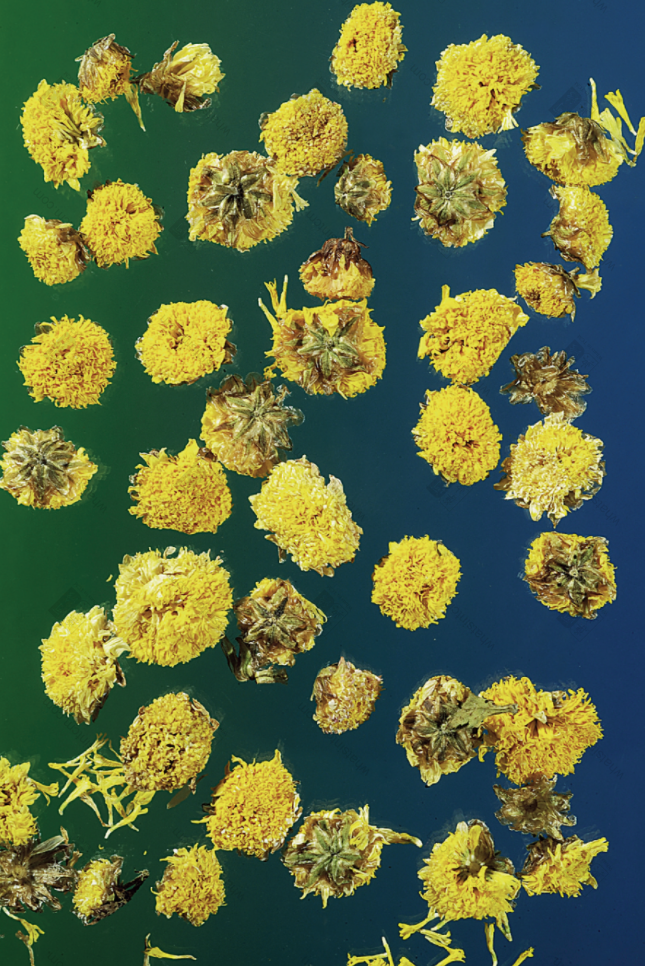
Small Jin Chrysanthemum
【Name】
Chrysanthemum
【Source】
Superior Grade in the Classic of Herbal Medicine
【Frequency of Use】
A
【Botanical Origin】
Dried flower heads of the Compositae family, Dendranthema morifolium (Ramat.) (Chrysanthemum morifolium Ramat.), C. boreale Mak., C. lavandulaefolium (Fisch.) Mak.
【Characteristics】
The flower heads are slightly disc-shaped, small and tight, 2-3 cm in diameter. The involucre is composed of 40-60 bracts arranged imbricately in 5-8 layers. The bracts are lanceolate to ovate, pale greenish-white, slightly hairy, with thinner, membranous edges. The ligulate flowers are approximately 200 in number, yellowish-white or golden-yellow. The central part of the flower head contains 40-100 tubular flowers with pale yellow, five-lobed corollas. The ovary is dark brown, with five slightly ridged lines. The ratio of ligulate to tubular flowers varies among different Chrysanthemum varieties. Some may have only ligulate flowers without tubular flowers. The size and length of the corollas also vary. All flowers are attached to a slightly conical, protruding receptacle. The texture is soft, the aroma is pleasant, and the taste is slightly sweet.
【Processing】
1. Raw Chrysanthemum 2. Stir-fried Chrysanthemum 3. Chrysanthemum Charcoal
【Identification】
《Annotations of Famous Physicians》: “There are two types of chrysanthemums: one with a purple stem, fragrant aroma, and sweet taste, whose leaves can be used to make soup; this is the true chrysanthemum. The other has a green stem and is large, with the aroma of Artemisia and a bitter taste, inedible, called ‘Yi’, and is not a true chrysanthemum.” 《Illustrated Materia Medica》: “The ones from Jutan in Nanyang are the best.” 《Classified Materia Medica》: “Pearl Chrysanthemum is also good for medicinal use.” 《Classified Materia Medica》: “The one with a purple stem, fragrant aroma, thick and tender leaves that are edible, and small, very sweet flowers is the true chrysanthemum,” “The ones from Jutan in Nanyang are the best,” “It is best to maintain a continuous wine fragrance.” 《Supplement to Materia Medica Derivatives》: “Chrysanthemum flowers. Only the ones with single leaves, small and yellow flowers, and bloom in season are good.” 《Monthly Ordinances》: “Chrysanthemums have yellow flowers.” 《Formulas for Universal Relief》: “Unopened Chrysanthemum is the best.” 《Essentials of Materia Medica》: “The ones with sweet and delicious flower stamens are the best.” 《Materia Medica Enlightenment》: “Many colors, yellow and small ones that bloom in season are good.” 《Eight Discourses on Following Life》: “Chrysanthemum. Chrysanthemums must have small flowers, yellow color, thick leaves, purple stems, fragrant aroma, and sweet taste to be called Sweet Chrysanthemum. The stamens can be used to make soup and are the true ones.” 《Materia Medica Seeking Truth》: “The plump and white ones are good.” 《Distinguishing Good and Bad》: “The ones with extremely fresh yellow petals, tall and large, are the best.” The best ones are dry, white in color, glutinous in texture, fragrant in taste, with large flower heads and no broken petals.
【Identification Terminology】
1. Scalded Flower: Refers to certain flower medicinal materials that are scalded in boiling water during steaming, such as Hangzhou Chrysanthemum.
2. Core: Generally refers to the “stamens” inside the flower. Sometimes refers to the stamens and pistils of the flower, such as Paeonia obovata. Sometimes it also refers to the tubular flowers in the center of the flower head, such as Chrysanthemum and plants of the Compositae family.
3. Putang Flower: Another name for Hangzhou Chrysanthemum. Because the boiling water rises during the steaming process and scalds the Chrysanthemum.
【Category】
Flowers