
Cinnabar
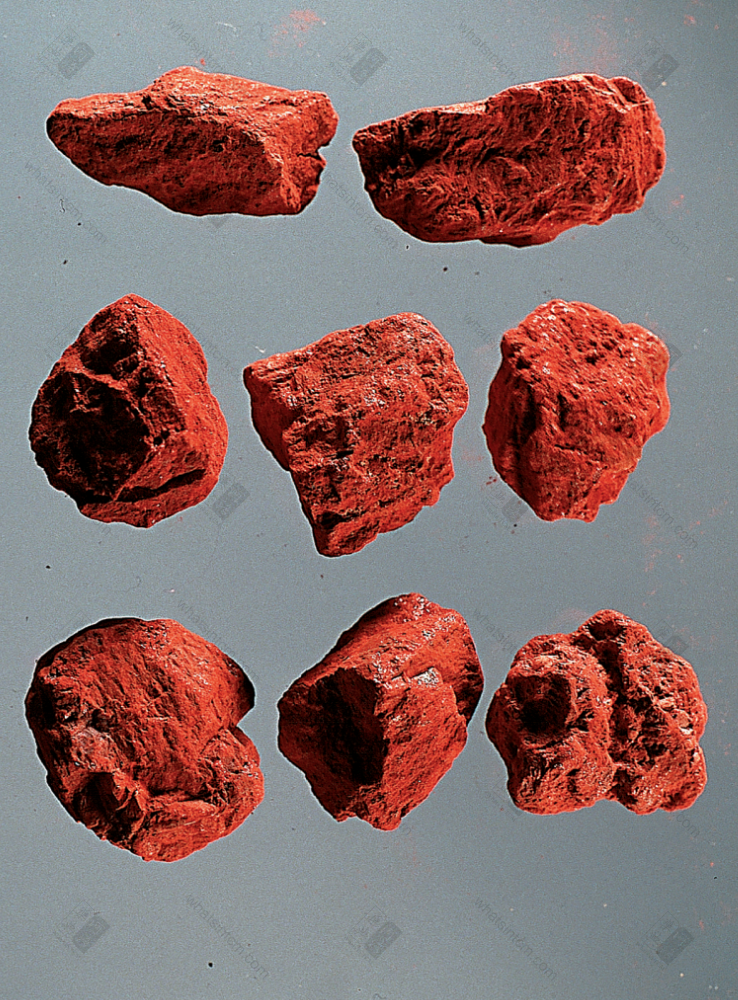
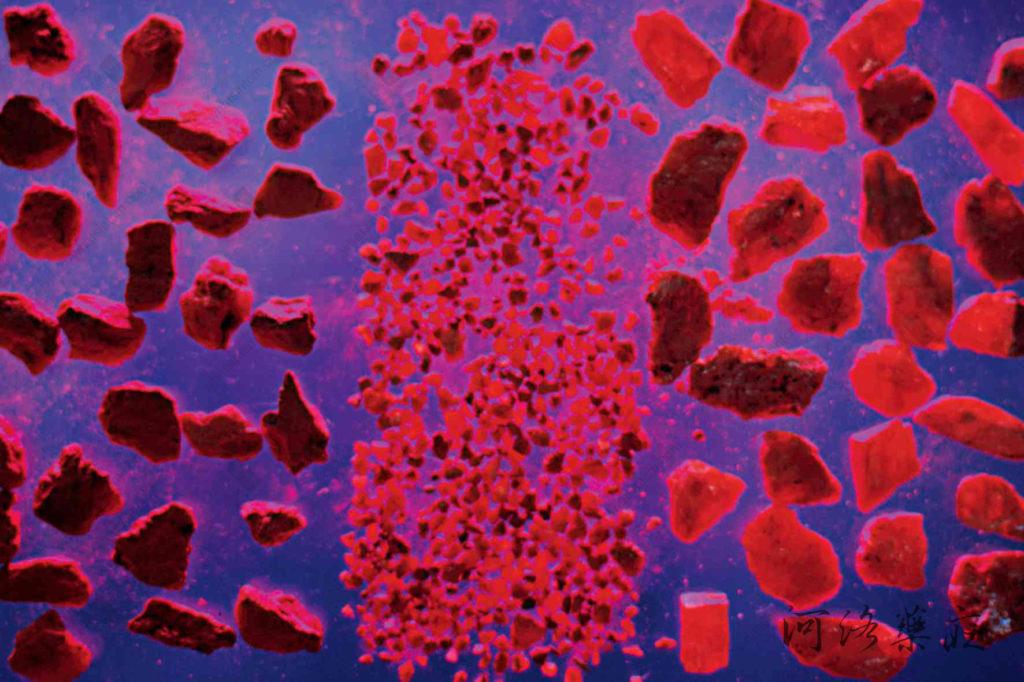
<a href=’https://whatsintcm.com/dt_articles/硃砂/’>Cinnabar (lumps, bright red, extremely heavy, flakes, smooth and shiny, adamantine luster, brittle and easily broken)
【Naming】
<a href=’https://whatsintcm.com/dt_articles/硃砂/’>Cinnabar
n 【Source】n
Superior grade in the Divine Husbandman’s Classic of Materia Medica
n 【Common Usage Level】n
C
n 【Botanical Source】n
Natural mercuric sulfide ore, i.e., cinnabar ore.
n 【Characteristics】n
Usually a bright red, extremely heavy mineral. Generally in the form of flakes of uneven size and thickness, or irregular lumps, granules, earthy masses, and powder, rarely in crystalline form; pure product is bright red in color, with an adamantine luster, and is carmine red, vermilion, reddish-brown, or nearly black, sometimes with a lead-gray tarnish. Transparent or opaque. Brittle and soft, with a hardness of 2-2.5 and a specific gravity of 8-8.2. Streak is bright red.
n 【Identification】n
《名醫別錄》[Famous Doctors’ Records]: “Cinnabar, when ground into powder, is called True Vermilion. The one with a luster like mica and that can be split is good.” 《本草經集注》[Collected Annotations to the Materia Medica]: “The clear and lustrous one is the best.” 《新修本草》[Newly Revised Materia Medica]: “The very best is bright cinnabar.” 《本草圖經》[Illustrated Materia Medica]: “The one without stones is the better.” 《證類本草》[Classified Materia Medica]: “The one with a luster like mica and that can be split is good,” “It grows on stone platforms in shrines; the one who obtains it and carries it with them will ward off evil,” “Only the bright and lustrous one is the best,” “The one harvested in winter is good.” 《普濟方》[Prescriptions for Universal Relief]: “Good Chen cinnabar should be wrapped in a silk bag; if it’s a large lump, break it into smaller pieces; only the red one is the best.” 《普濟方》[Prescriptions for Universal Relief]: “Cinnabar in lumps is the best.” 《普濟方》[Prescriptions for Universal Relief]: “One tael of cinnabar; the one from Chenzhou is the best; do not use the one mixed with sand and stones.” 《普濟方》[Prescriptions for Universal Relief]: “All of amethyst, white quartz, cinnabar, realgar, sulfur, etc., must be bright and clear, with a fresh and clean color and texture to be considered good. Otherwise, they will cause the body to become dry, feverish, and cause dry mouth, leading to death.” 《本草綱目》[Compendium of Materia Medica]: “The one with a purple color that does not stain paper is old mine cinnabar and is of the highest grade.” 《本草綱目》[Compendium of Materia Medica]: “The one with a purple color that does not stain paper is old mine cinnabar and is of the highest grade,” “Guihai Zhi says: The Materia Medica considers Chen cinnabar to be the best,” “Quxian Gengxin Yu Ce says: Cinnabar stone produced in the Wuxi Mountain cave, which receives the due south Qi, is the best,” “There is also one like a horse’s tooth with a bright light, which is of the highest grade,” “Therefore, all metals are not as good as cinnabar gold.” 《本草備要》[Essentials of Materia Medica]: “The one produced in Chen that is as bright as an arrowhead is good (named Arrowhead Cinnabar).” 《絳雪園古方選注》[Selected Annotations to Ancient Formulas from the Jiangxue Garden]: “Cinnabar (grind, water-fly, the one resembling Guanyin’s face is good).” 《本草易讀》[Easy-to-Read Materia Medica]: “The ones from Chenzhou and Jinzhou are the best.” 《本草簡要方》[Concise Essential Formulas]: “The one produced in Guizhou is good.” 《增藥辨》[Distinguishing Increased Medicinals]: “The large ones are like hibiscus flowers, the small ones are like arrowheads; when ground, they are bright and fresh red, which is the highest grade.” The one with a鮮紅鮮豔 color, luster, translucent, brittle and easily broken, and free of sand and stone impurities is the best. To test, place a small amount of cinnabar on a glass plate and crush it with a pen tube. If the color inside and out is red after crushing, it is a pure product. If the inner color is white, it is mixed with stone and of poor quality. This product is insoluble in water, nitric acid, and sulfuric acid, but it is soluble in aqua regia and sodium sulfide solution.nThe cinnabar currently sold is of the highest quality with a color and luster similar to a mirror, also known as mirror cinnabar or mirror flake cinnabar. Because this type of cinnabar is sold on the market as both mined ore and processed powder, it is not easy to distinguish. When purchasing, simply pay attention to its authentic source, appearance, and inner layer.nIts appearance is no different from ordinary cinnabar. The easiest way to identify it is to add its fine powder to hydrochloric acid and wipe it on a clean copper sheet. If the copper surface turns silver-white, it is genuine; if it turns another color, it is inferior. Because it is odorless, most pharmacists rarely use their mouth or nose to distinguish it, but rather use the above method to identify it.nTaiwan market products: Cinnabar (Dan cinnabar), Mirror cinnabar, Bean cinnabar, Zhu Bao cinnabar, Ling cinnabar (Chen cinnabar, artificial synthesis). Hong Kong goods: Cinnabar, American, Canadian, South African, and Australian cinnabar.n(1) Natural products are divided according to their shape:n1. Mirror Cinnabar: Also known as mirror flake cinnabar, flake cinnabar, split cinnabar. This is the best type of cinnabar, processed and split into flakes, with an oblique square or long strip shape, irregular edges, uneven size and thickness, 6-15 cm in diameter, about 0.3 cm thick, slightly cracked surface, shiny like a mirror and transparent, and the layered part is dark red. Loose and brittle, easily broken, depending on its texture and color, the product is divided into (1) Red Mirror: bright red, loose and brittle, excellent quality. (2) Green Mirror: dark red, purplish-blue, harder texture, ground powder is also bright red, slightly inferior quality.n2. Bean Cinnabar, Zhu Bao Cinnabar: Graded after sieving into granular form. Large ones are called Bean Cinnabar, and small broken grains are called Zhu Bao Cinnabar.n(1) Bean Cinnabar: Also known as Bean Cinnabar, Individual Cinnabar, irregular polygonal or quasi-circular lumps, many edges, bean-shaped, mostly large, each mixed with small grains, crimson, with a bright light, dark color, heavy and hard, not easy to break. This type is further graded according to the size of the grains.n(2) Zhu Bao Cinnabar: Also known as Kou Mi Cinnabar, Yang Jian Cinnabar, smaller broken grains, fine powder, crimson, sometimes mixed with white rock. In the past, in Hong Kong, this type was further divided into True Yang Jian Cinnabar, with a crimson color, and Supplementary Yang Jian Cinnabar, with a purplish-gray color and a darker luster. However, there is no distinction between true and supplementary in Taiwan. Currently, this type of Yang Jian Cinnabar is divided into first to third grades.n(2) Artificial Cinnabar: Commonly known as Chen Cinnabar, Ling Cinnabar, Silver Cinnabar, Ping Kou Cinnabar, Ma Ya Cinnabar. In the Hong Kong pharmaceutical market, it is called Ling Cinnabar, and in Taiwan, it is commonly called “Chen Cinnabar.” This type is different from natural cinnabar. It is a semi-synthetic product made from mercury and sulfur as raw materials, heated, refined, and sublimated. The complete form is basin-shaped. Because of its loose and fragile texture, most of the products are in the form of lumps of varying sizes, showing purple-red or purple-black, with a metallic luster, easily broken longitudinally, and the cross-section is fibrous, with bundle-like needle-shaped longitudinal lines. The powder is bright red or red-black. This type is mainly produced in Chongqing and Kunming, with a large difference in quality and a low price.nCinnabar is mainly produced in the mountainous areas adjacent to the three provinces of Sichuan, Guizhou, and Hunan. Cinnabar produced in Xinhuang, Chenxi, and other places in Hunan Province is of the best quality. The ancient name of this place was Chenzhou, so the highest-grade cinnabar is still called Zhu Chen Cinnabar or Dan Cinnabar in some medicinal material stores. In addition, it is also produced in Tongren and Wanshan Special Zone in Guizhou, Guangxi, Yunnan, and other places.nThe cinnabar sold on the market is divided into many types due to its increasing number of botanical sources. The most common are Hong Kong goods: Cinnabar, American, Canadian, South African, and Australian Cinnabar. Although the names are the same, the soil quality in different places varies greatly, and the quality of the ore mined is uneven. In addition, the processing technology is different, which affects the medicinal properties of cinnabar. Generally, when purchasing this type of medicinal material, if you want to buy high-quality goods that have no side effects on the internal organs of the human body after taking them, you must focus on the following points: The most basic requirement for so-called high-grade cinnabar is that the cinnabar ore must not contain impurities. However, this type of ore is formed by the precipitation of hot alkaline solutions and most often occurs in carbonaceous rocks and is easily mixed with other ores. Therefore, the reference value of this identification method currently accounts for only a small proportion and cannot be generalized.nNo matter where cinnabar is produced, the higher the mercury content, the better the quality, up to about 60%. The original ore is in the form of flakes, irregular lumps, earthy masses, and powder. The best is the one with a bright red color, an adamantine luster, and a carmine red color. In the past, most of the cinnabar sold on the market was natural ore. In recent years, the synthetically produced Ling Cinnabar is available in large quantities and at a low price, but the quality is inferior. Therefore, most of the Chinese medicine importers in Taiwan still use natural ore.
n 【Category】n
Minerals
n 【Photos】nn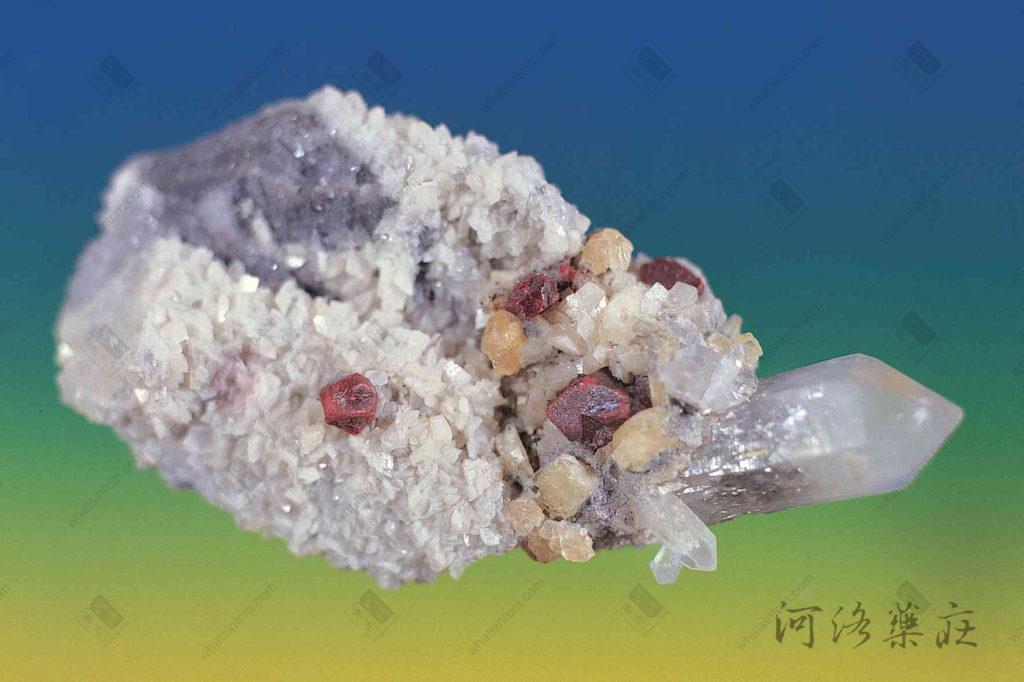 nn
nn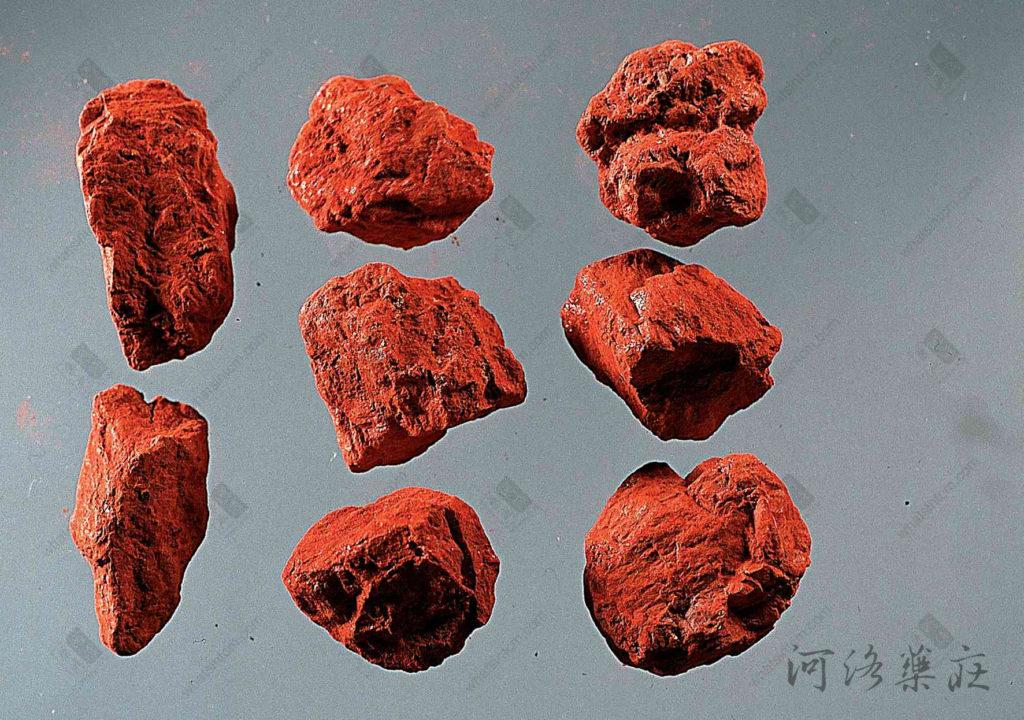 nn
nn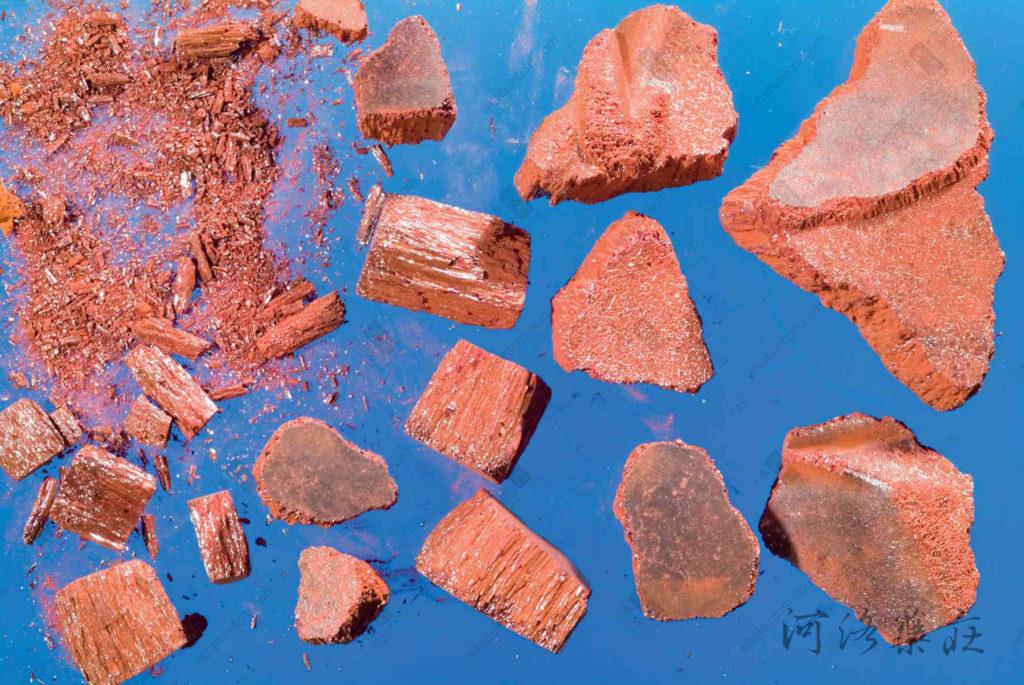 nn
nn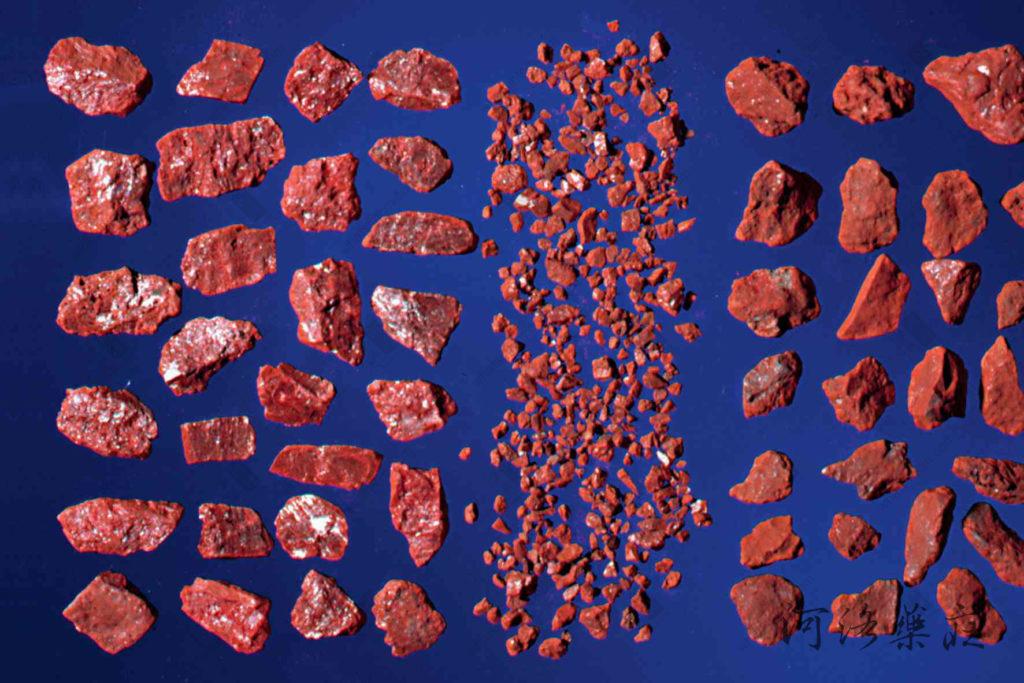 nn
nn