



Croton Seed
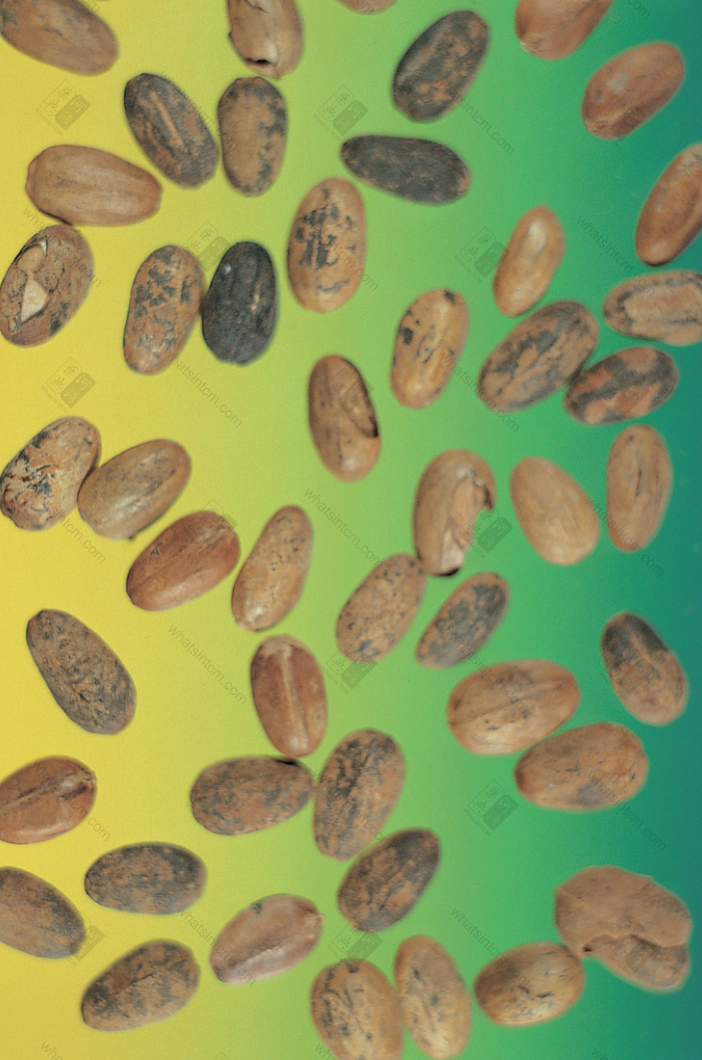
Croton Seed (Oval, with three prominent longitudinal ridges, grayish-yellow, flat apex with petiole scar, white kernel rich in oil)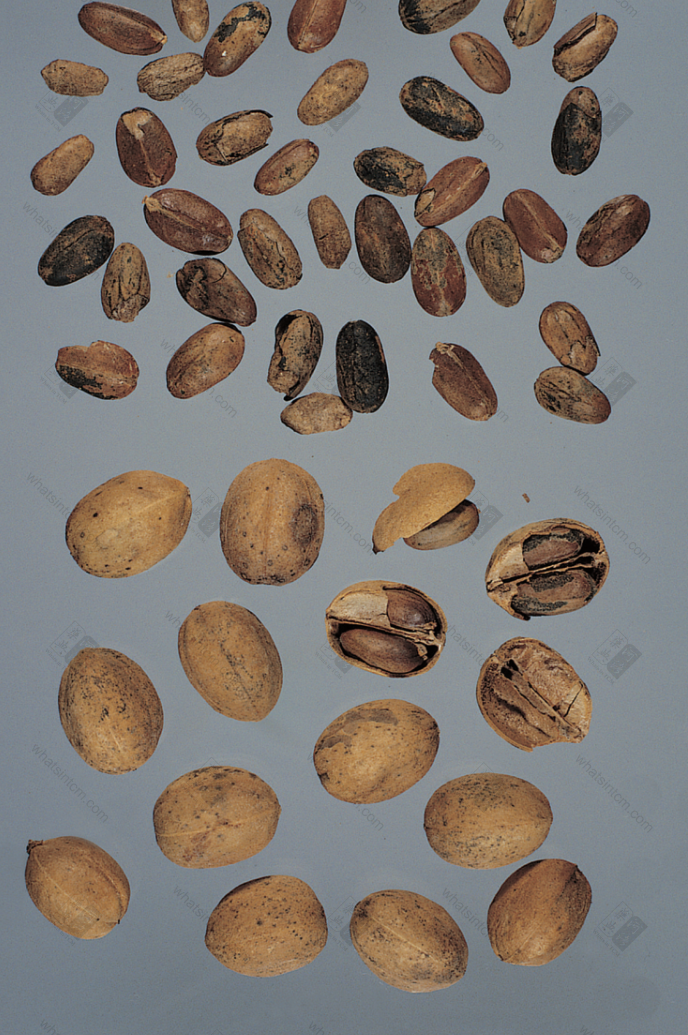
Croton Seed and Shell (Scar)
【Naming】
n 【Source】n
Shen Nong’s Herbal Classic, Lower Grade
n 【Frequency of Use】n
E
n 【Botanical Origin】n
Dried ripe seeds of Croton tiglium L. of the Euphorbiaceae family.
n 【Characteristics】n
Elliptical in shape, slightly flattened, with a raised dorsal surface, about 1 to 1.5 cm long, about 6 to 9 mm in diameter, and about 4 to 7 mm thick. The surface is grayish-brown and smooth. The caruncle is at one end of the hilum and is a small protrusion. There is a raphe between the chalaza and the caruncle, which is a slightly raised longitudinal ridge. The cross-section is slightly square. The seed coat is thin, firm, and brittle. After peeling, the kernel can be seen. The endosperm is thick, light yellow, and oily. It has no odor, a slightly astringent taste, and then a lasting pungent sensation. Croton Seed Frost: A white or bluish-white fine powder. When rubbed, a slight amount of oil seeps out, causing redness and blistering on the hands. Odorless, with a bitter and slightly pungent taste.
n 【Processing】n
1. Croton Seed Kernel 2. Croton Seed Frost
n 【Identification】n
《Herbal Materia Medica》: “The one that has been heated is good.” 《Zu Ji》: “The larger the Croton Seed, the better.” 《Essentials of Materia Medica》: “The important thing is that wine is the best.” 《Identification of Good and Bad》: “The ones with a pungent taste, more oil content and a heavy body, and a fresh color are top grade.”nIt is best to have large, plump seeds with white kernels. Seeds that are relatively empty and have kernels with oil and discoloration are of inferior quality.
n 【Identification Terminology】n
1. Scar: Refers to the hilum, caruncle, or chalaza on fruit or seed medicinal materials, which are commonly called “scars” by medicinal workers. For example, the dark-colored chalaza at the top of the Croton Seed is called a scar.
n 【Category】n
Seeds