



Gardenia

Gardenia (Mountain Gardenia) (Oval, red-yellow, shiny, prominent longitudinal ridges, thin and brittle skin, persistent calyx at the top, seed mass)
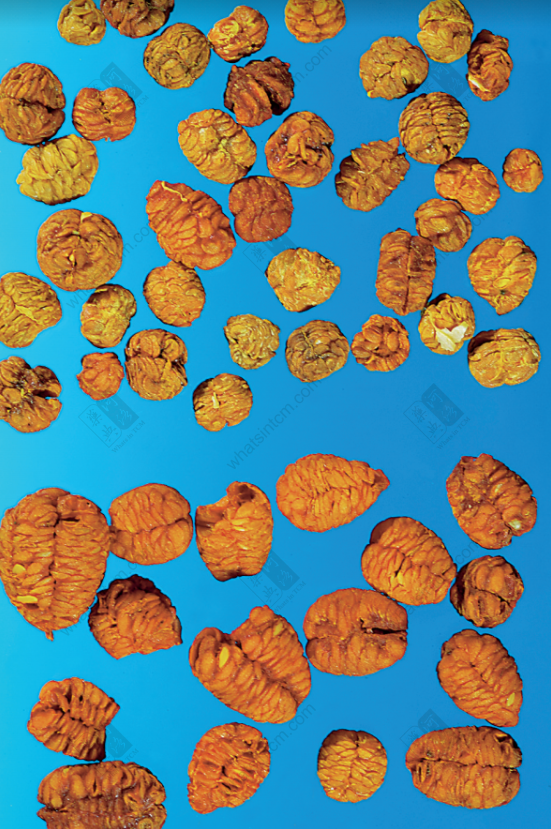
Mountain Gardenia (Wild on top, cultivated below)

Water Gardenia (Large and long fruit)
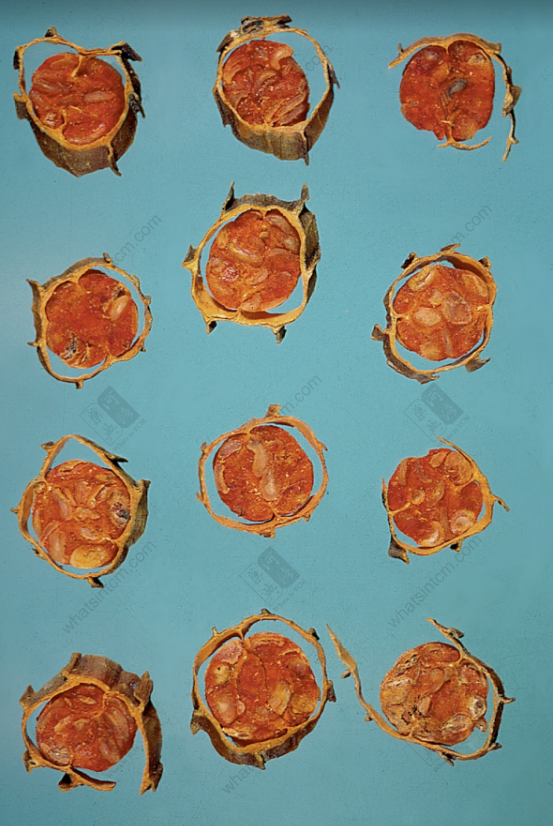
Water Gardenia slices
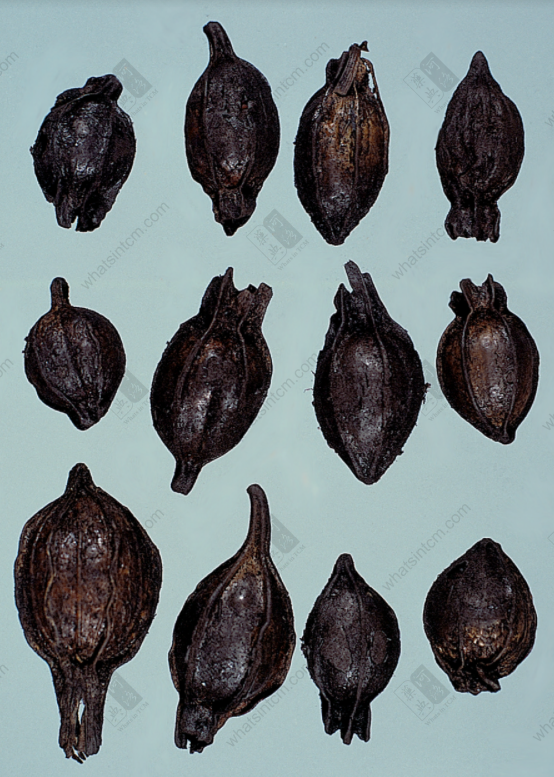
Gardenia Carbon (Charred Gardenia)

Gardenia Kernel, Stir-fried and Carbonized
【Naming】
Gardenia
【Source】
Classified as medium grade in the Ben Jing (Shennong’s Classic of Materia Medica)
【Common Usage Level】
A
【Botanical Origin】
The dried, mature fruits of small-fruited Gardenia of the Rubiaceae family, Gardenia jasminoides Ellis. var. radicans (Thunb.) Makino, and G.. spp.
【Characteristics】
It is long oval or oval in shape, about 1.5~4.5㎝ long and about 0.5~2㎝ thick. The surface is dark red or reddish-yellow, slightly shiny, with 5~8 longitudinal ridges, and there is a rib between each longitudinal ridge. The fruit has persistent sepals at the top and is slightly pointed at the other end, with a fruit stalk scar. The pericarp is thin and brittle, the inner surface is reddish-yellow and shiny, with 2-3 raised false septa, and contains many seeds, with the pulp and seeds bonded into a mass. The seeds are flattened and round, dark red or reddish-yellow, and densely covered with fine wart-like protrusions. When immersed in water, it can dye the water bright yellow. It has a slight odor and a bland, slightly sour taste.
【Processing】
1. Stir-fried Gardenia 2. Gardenia Carbon (Charred) 3. Ginger-Gardenia
【Identification】
Superior quality is indicated by being dry, small, whole grains, and red in color inside and out. Good quality is indicated by being small, whole, full kernels, and red in color inside and out. Inferior quality is indicated by being large, with a brownish-yellow outer skin, relatively shriveled kernels, and reddish-yellow in color. This product is best when the skin is thin, full, and reddish-yellow in color.
【Chapter】
Fruits