



Haitongpi (Erythrinae Cortex)
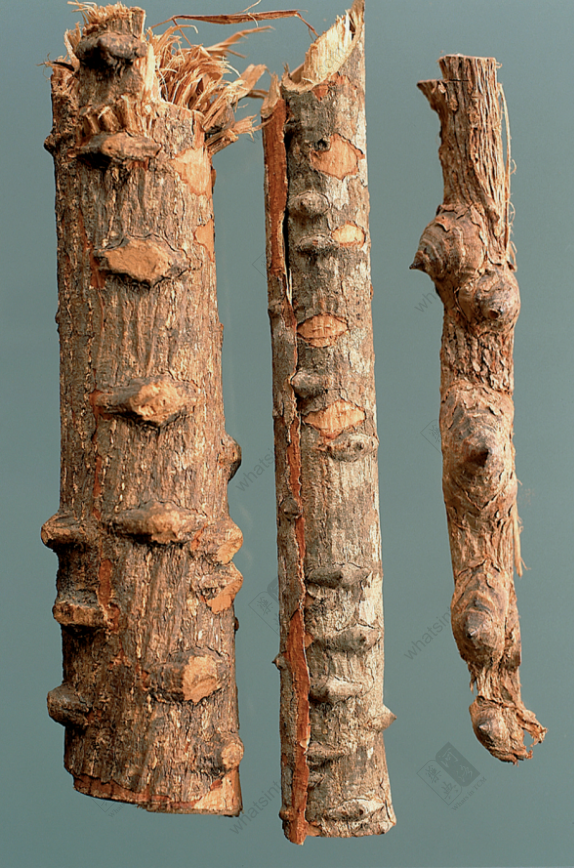 Haitongpi (Erythrinae Cortex) (2nd from the left: genuine product, large round nail thorns; 1st from the right: Kapok bark)
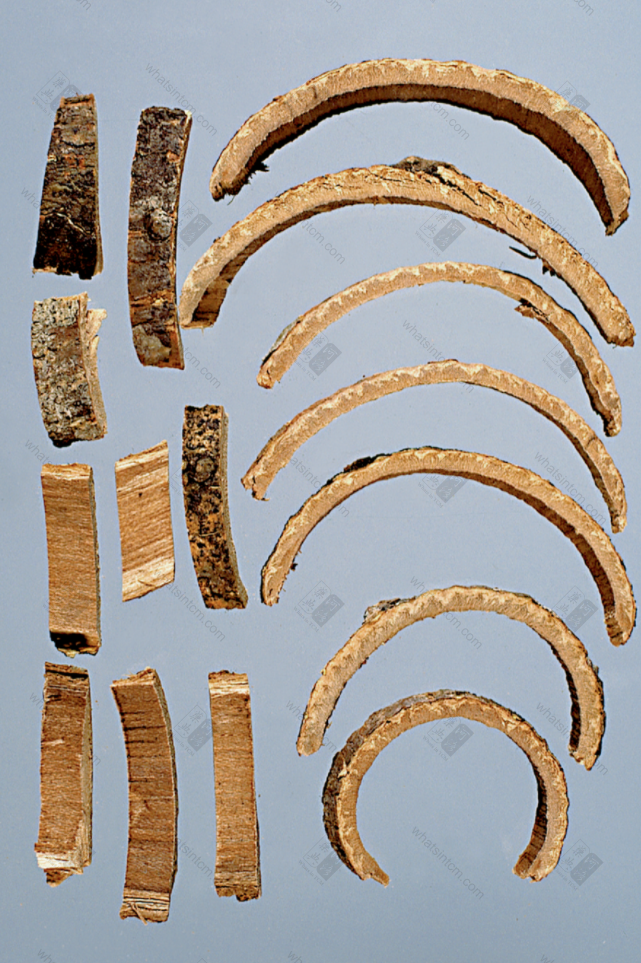 Haitongpi (Erythrinae Cortex) slices
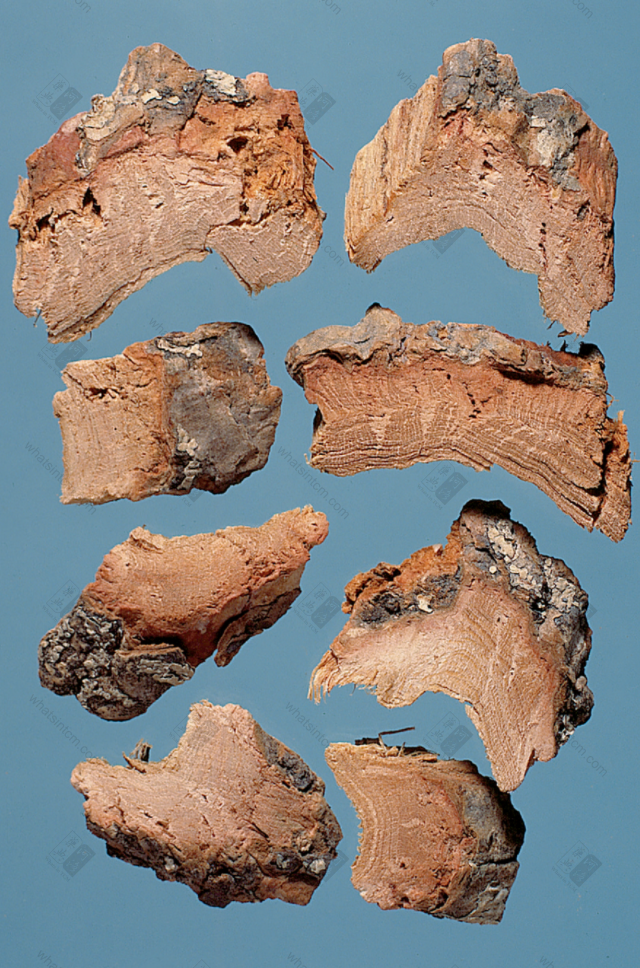 Haitongpi (Erythrinae Cortex) slices (Incorrect product: *Kalopanax septemlobus*)
[Naming]
[Source]
Song Kaibao‧Haitong
[Frequency of Use]
E
[Botanical Origin]
The dried bark of the coral bean tree, Erythrina indica L. (Fabaceae).
[Appearance]
The dried stem bark is semi-tubular or in flakes, about 30-60 cm long and 1-2 mm thick. The outer surface is yellow-green or gray-brown, with sparse longitudinal cracks and relatively dense yellow lenticels, and large round nail thorns on the bark. The phelloderm is easily detached, exposing the brownish-yellow inner bark. The inner surface is light yellow to light yellowish-brown, smooth, with fine longitudinal lines. It is hard and tough, easily longitudinally split, and not easily transversely broken. The fracture surface is yellowish-white and rich in fibers. It has a slightly fragrant odor and a bitter taste.
The processed pieces are cut into small segments about 15-20 mm long, slightly curved inward on both sides. The outer surface is grayish-brown with wrinkles and numerous round nail thorns. The inner surface is yellowish-brown with fine longitudinal lines. It has a fragrant odor, and chewing it tastes bitter and numbs the tongue.
[Identification]
The best quality has large pieces of bark with nipple-like nail thorns.
[Identification Terminology]
1. Nail Thorns: Refers to the nipple-like protrusions on the surface of the medicinal material. The nail thorn tissue is the same as the phellogen layer and is entirely composed of phellem cells.
[Category]
Bark