



Large and Small Thistle
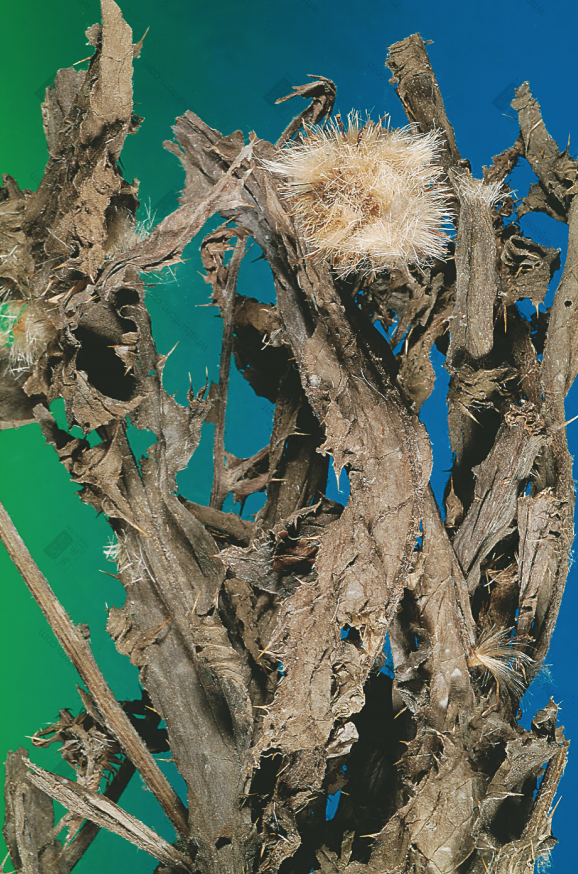 Large Thistle (Herb with greenish-brown, shrunken leaves, spiny edges, head-shaped inflorescence remaining on the branch ends, white feathery pappus, oblong-conical shape, fine longitudinal lines, and curved longitudinal grooves)
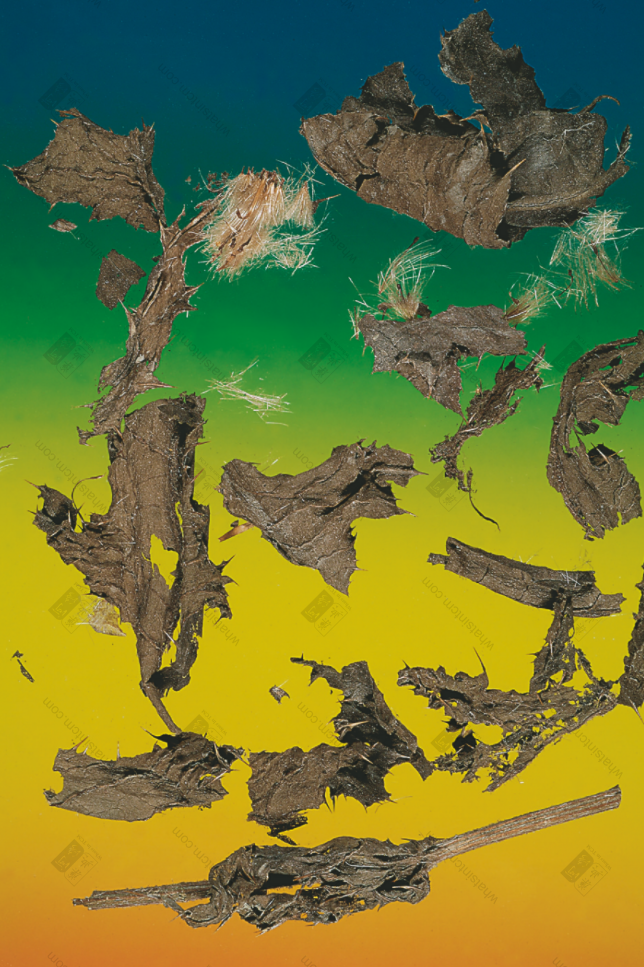 Large Thistle
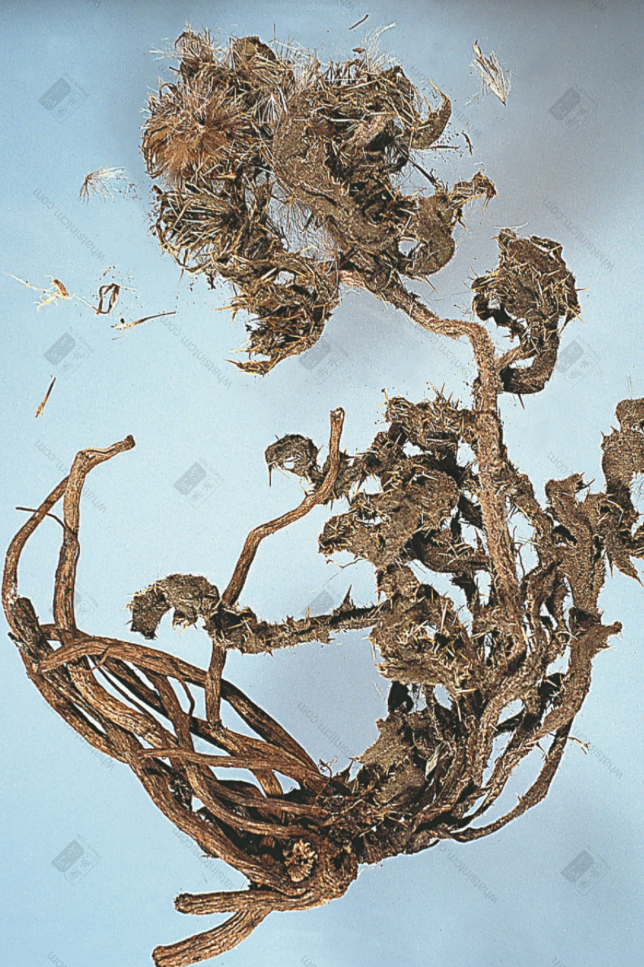 Small Thistle
 Small Thistle (Spiny edges, dried root is cylindrical, surface is earthy brown)
 Large and Small Thistle (Root is spindle-shaped, grows in clusters, texture is hard and brittle)
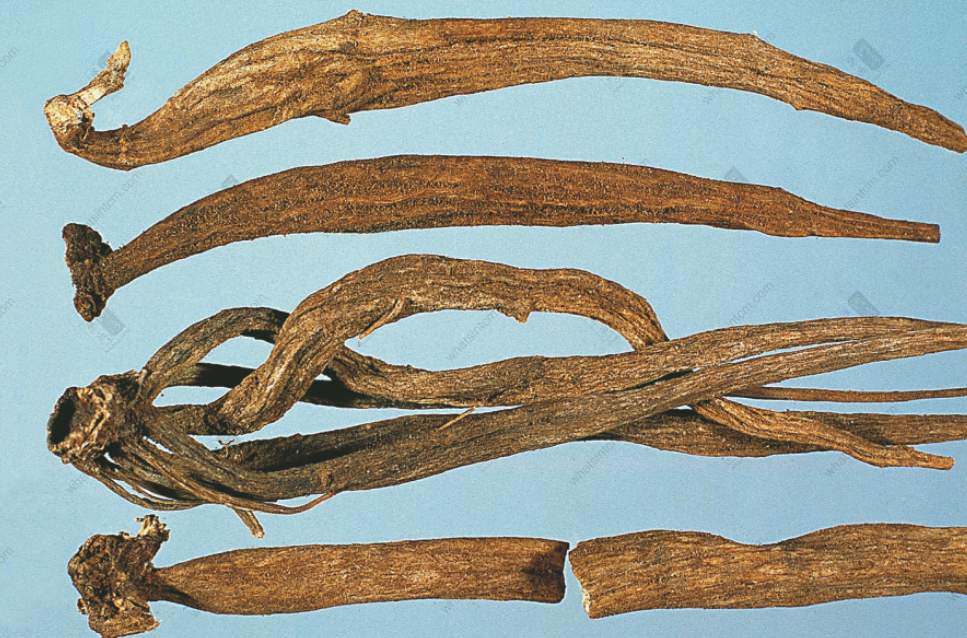
 Large Thistle Slices
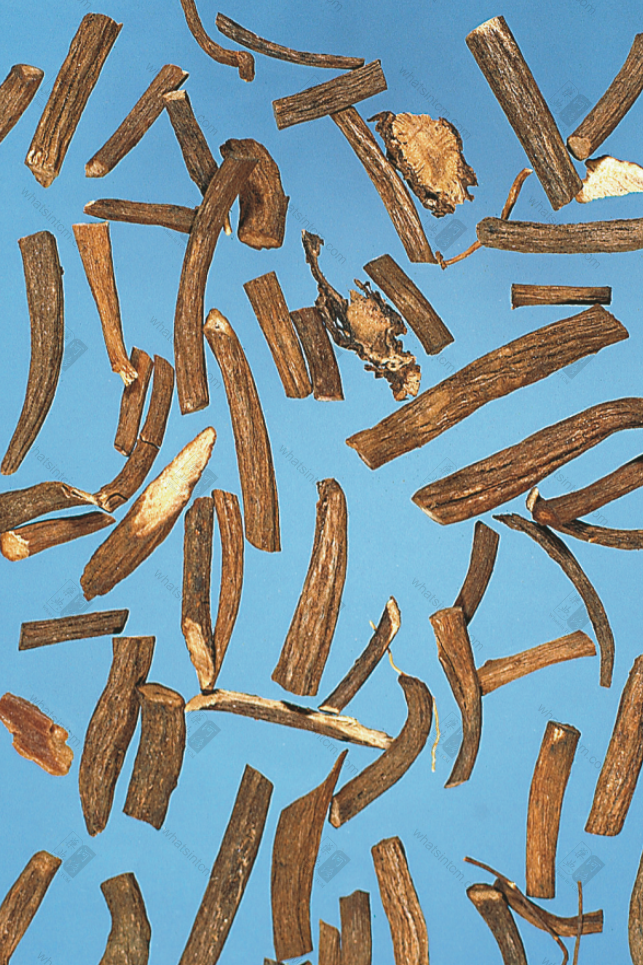 Large Thistle Slices
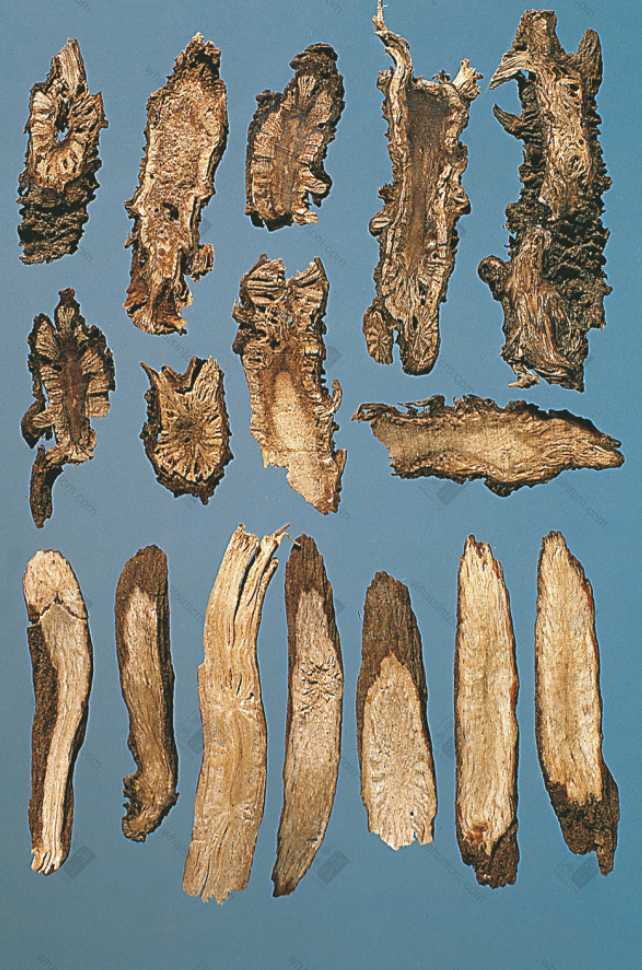 Large and Small Thistle Slices (Alternating yellowish-green and blackish-brown)
 Large and Small Thistle Slices
【Naming】
【Source】
別錄中品 (Separate Records of Famous Physicians)‧Large Thistle, Small Thistle
【Common Usage Level】
C
【Botanical Origin】
The dried aerial parts or roots of Cirsium japonicum DC. (Large Thistle) and Cephalanoplos seqetum (Bge) Kitam. (Small Thistle) of the Compositae family. In the Taiwan market, only the roots are used.
【Characteristics】
(1) Large Thistle:
1. Whole herb: Stem is cylindrical, approximately 4-10mm thick, surface is purplish-brown or brown, with longitudinal wrinkles, densely covered with grayish-white filamentous wool. The texture is loose and brittle. The fracture surface is yellowish-white with a loose white pith in the center. Leaves are mostly broken and shrunken, with unevenly long spines on the edges, brittle and easily detached. Head-shaped inflorescences remain on the branch ends, tubular flowers are mostly withered and absent, the involucre is withered yellow, and white feathery pappus is exposed. The odor is faint, and the taste is bland.
2. The tuberous root is oblong-conical, or slightly curved, often clustered, with a blackish-brown surface, with fine dense longitudinal lines, sometimes with curved longitudinal grooves, 6-10cm long, 5-15mm in diameter, slightly hard and brittle, the fracture surface is relatively neat, yellowish-white, slightly granular. Large Thistle Charcoal: Appears charred black.
(2) Small Thistle:
1. Whole herb: Stem is 20-45cm long, 2-5mm in diameter, surface is purplish-brown to greenish-brown, the stem is hollow, covered with fine hairs, the cross-section is fibrous, yellow, leaves are mostly curled or incompletely broken, yellowish-green to dark green, leaves have cobweb-like white hairs, leaf edges have yellow spines, sometimes with head-shaped inflorescences like a bun, bracts are yellowish-green, pappus is feathery white, often exposed, the odor is special and the taste is sweet.
2. The dried root is cylindrical, tapering at the bottom, with a diameter of 3-7mm at the top, the surface is earthy brown, with longitudinal ridges, bearing numerous slender fibrous roots, hard in texture, and fibrous in cross-section. Small Thistle Charcoal: Appears charred black.
【Processing】
1. Large and Small Thistle 2. Large and Small Thistle Charcoal
【Identification】
The whole herb is best when it is dry, grayish-green, with many leaves, free of impurities and mud. The root is best when it is thick, without fibrous roots, and has a rhizome head. In the Taiwan market, the whole herb is used in historical herbal texts and many regions of mainland China, and Large and Small Thistle are separated. However, in Taiwan, only the root is used, and Large and Small Thistle are not separated.
【Chapter】
Whole Herb Category