



Lian Fang (Lotus Receptacle)
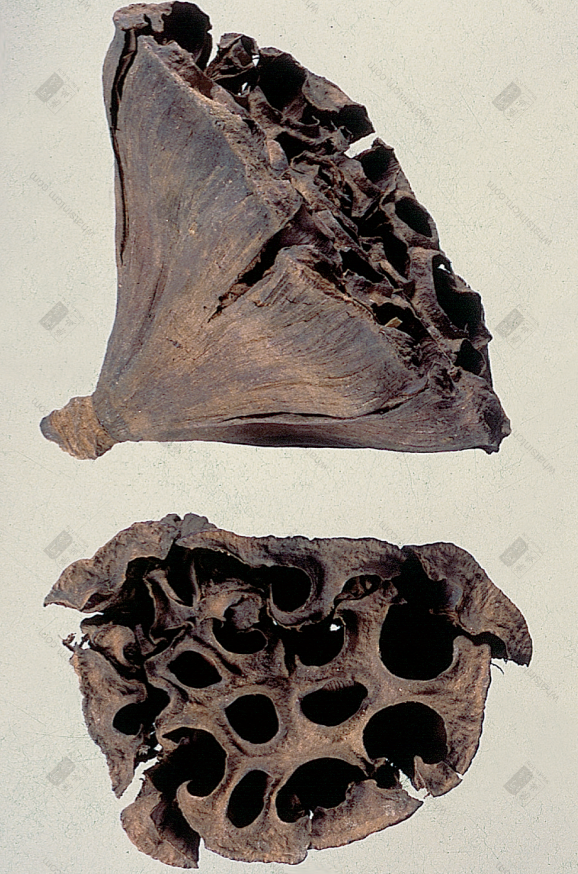 Lian Fang (Lotus Receptacle) (Inverted cone shape, most of the fruit is removed and torn, honeycomb-like round holes, purplish-brown color, with residual flower stalk attached, loose and brittle texture like sponge.)
【Naming】
【Source】
Shen Nong’s Classic of Materia Medica (Ben Jing), Superior Class
【Frequency of Use】
F
【Botanical Origin】
The dried, mature receptacle of the lotus, Nelumbo nucifera Geartn., of the Nymphaeaceae family.
【Characteristics】
Slightly inverted conical shape, often broken. The top surface is round and flat, 7-10 cm in diameter and 3-8 cm in height. The surface is purplish-red or greyish-brown, with longitudinal lines and wrinkles. The top surface has numerous round holes left after the fruits have been removed, resembling a honeycomb. The base has residual flower stalks. The texture is loose and soft like a sponge. It has no odor and a澀 (se) astringent taste.
【Processing】
1. Raw Lian Fang (Lotus Receptacle) 2. Lian Fang (Lotus Receptacle) Charred
【Identification】
Universal Relief Prescriptions (Puji Fang): “A dried-up skull, meaning an old lotus seedpod shell, is best.” Classified Collection of Medical Formulas (Yifang Leiju): “Dried Lian Fang (Lotus Receptacle), those that are a year old are good.”
Larger individuals with a purplish-red color are considered best.
【Category】
Flowers