



Niú Xī (Achyranthes)
<img class="wp-image-13001 size-full" src="https://whatsintcm.com/wp-content/uploads/2020/07/p61-13-1-懷牛膝.png” alt=”” width=”586″ height=”882″ /> Huái Niú Xī (Achyranthes root from Huaiqing) (slender cylindrical shape, with longitudinal wrinkles)
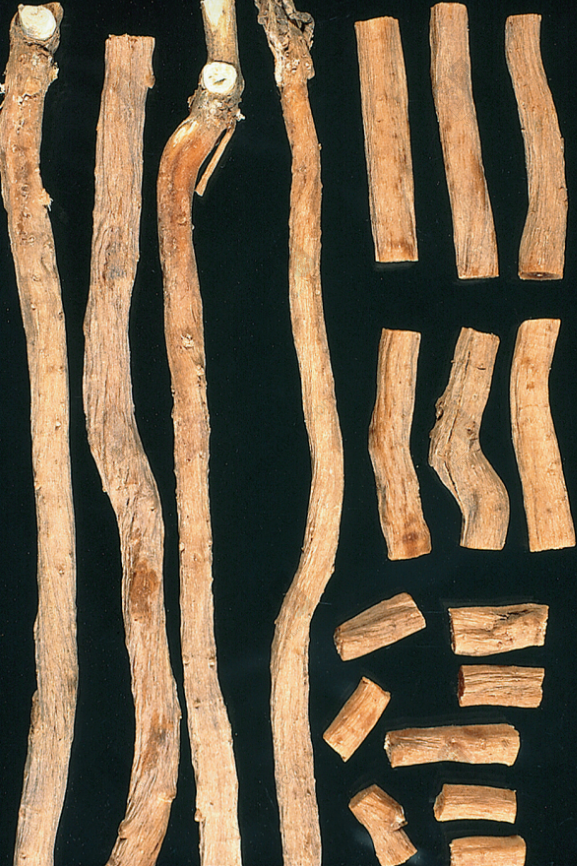 Huái Niú Xī Top left (small nodules), right (coarse pieces)
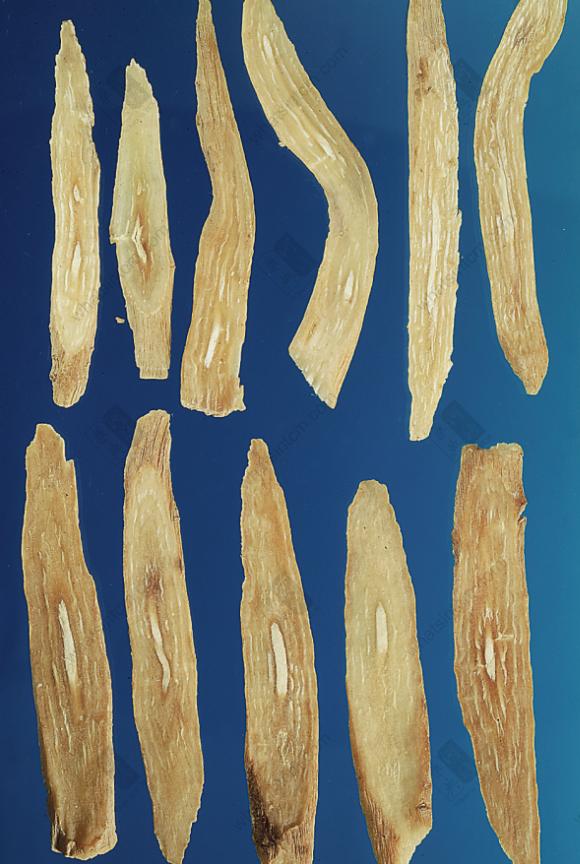 Huái Niú Xī slices (compass pattern)
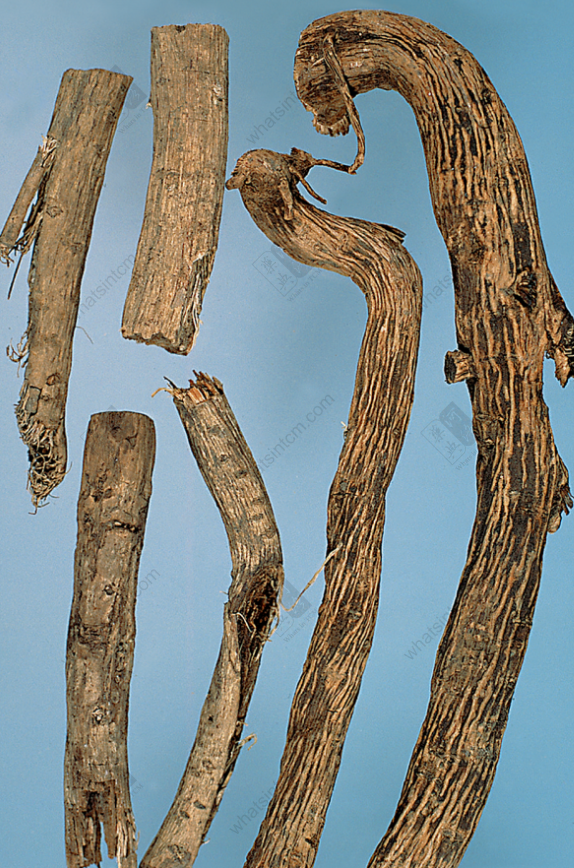 Authentic Chuān Niú Xī (Achyranthes root from Sichuan) (commonly known as Dù Niú Xī in Taiwan)
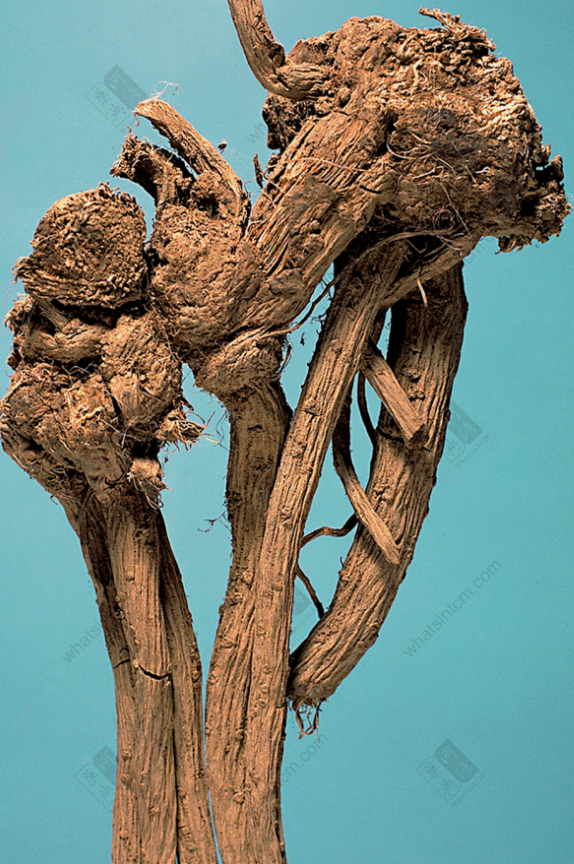 Chuān Niú Xī (large nodules)
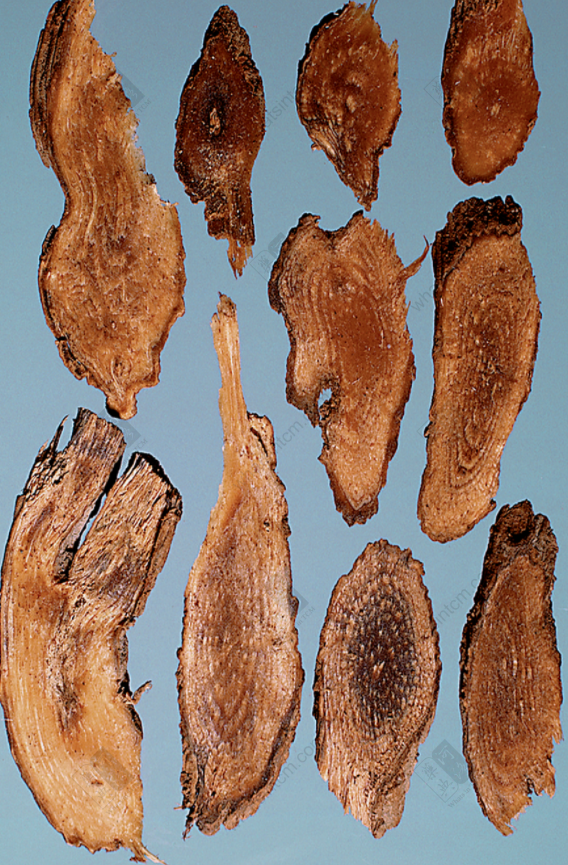 Chuān Niú Xī slices (tendon points, compass pattern, dark brown and oily)
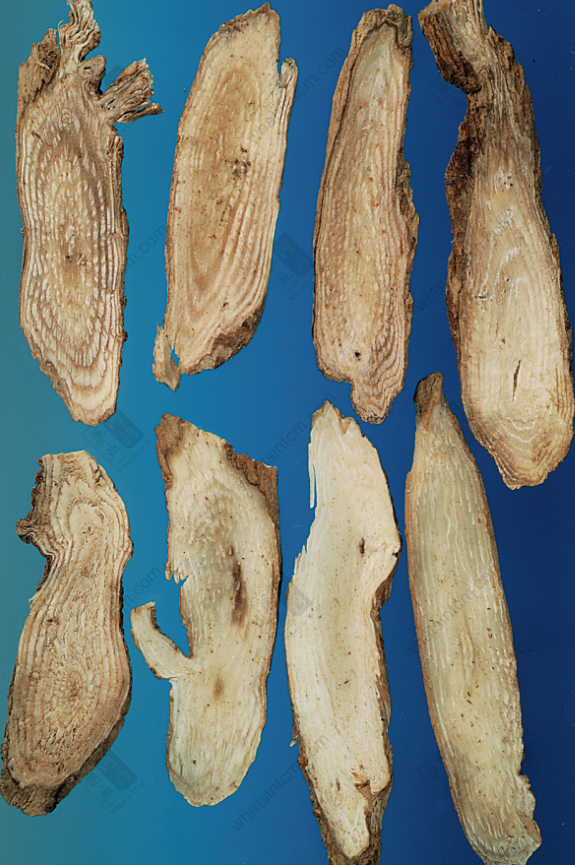 Second-grade Chuān Niú Xī slices
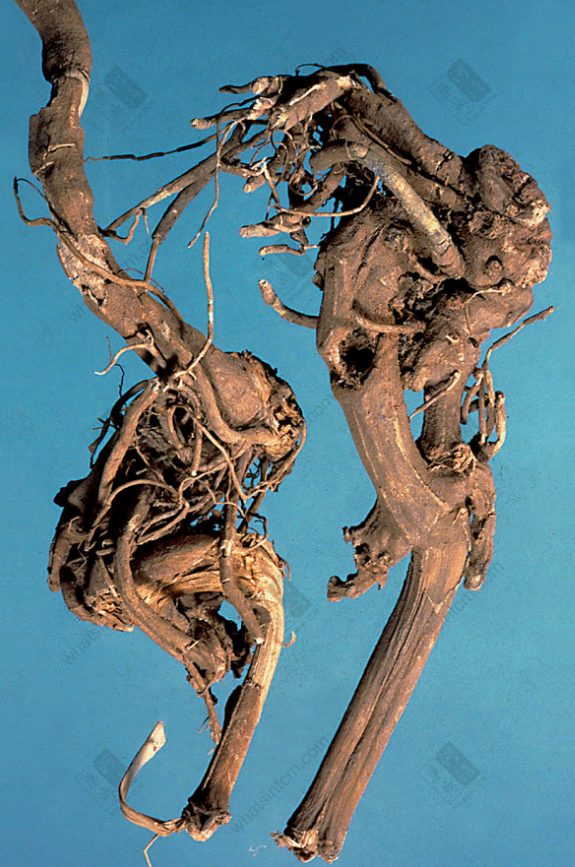 Chuān Niú Xī (Wèi Niú Xī, twisted and knotted)
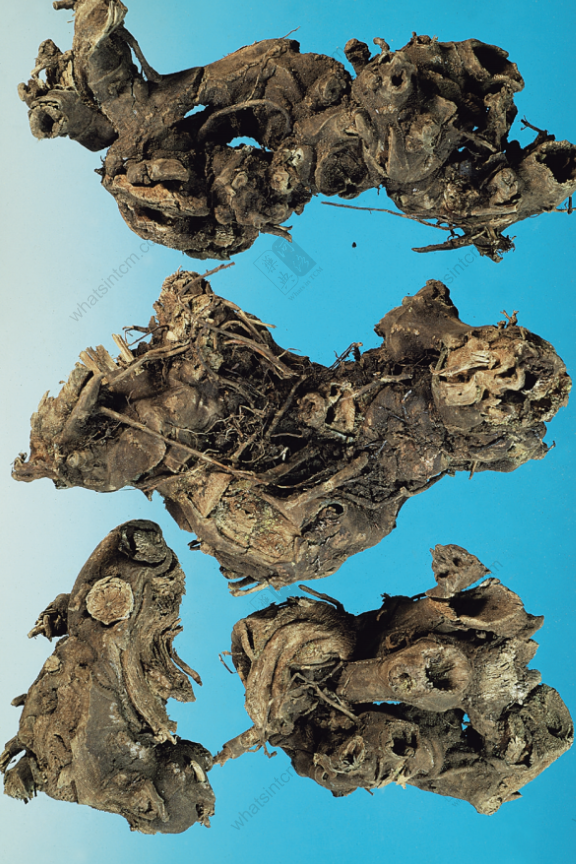 Wèi Niú Xī
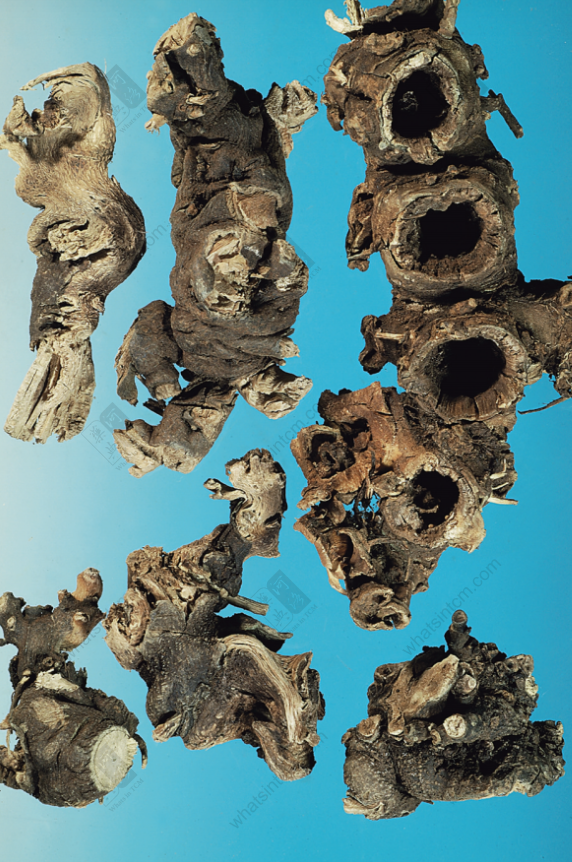 Fake Wèi Niú Xī
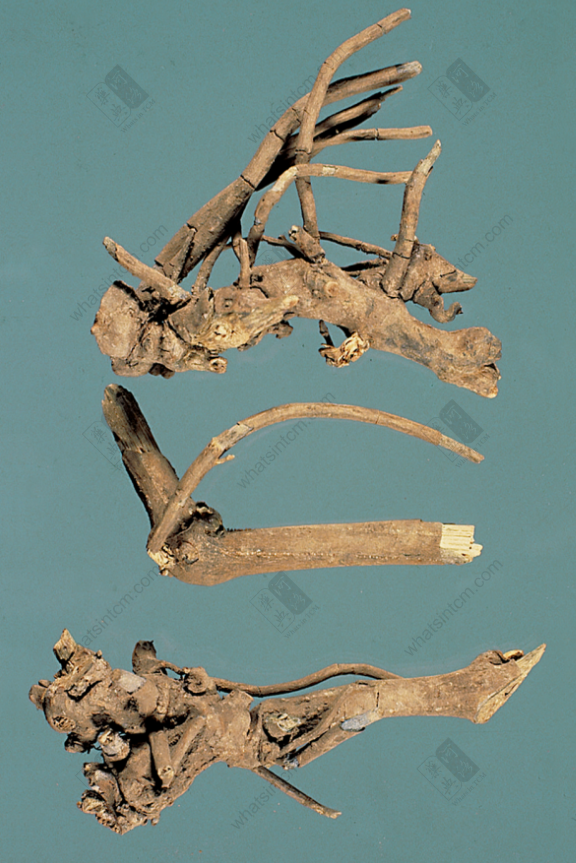 Chuān Niú Xī head (Wèi Niú Xī)
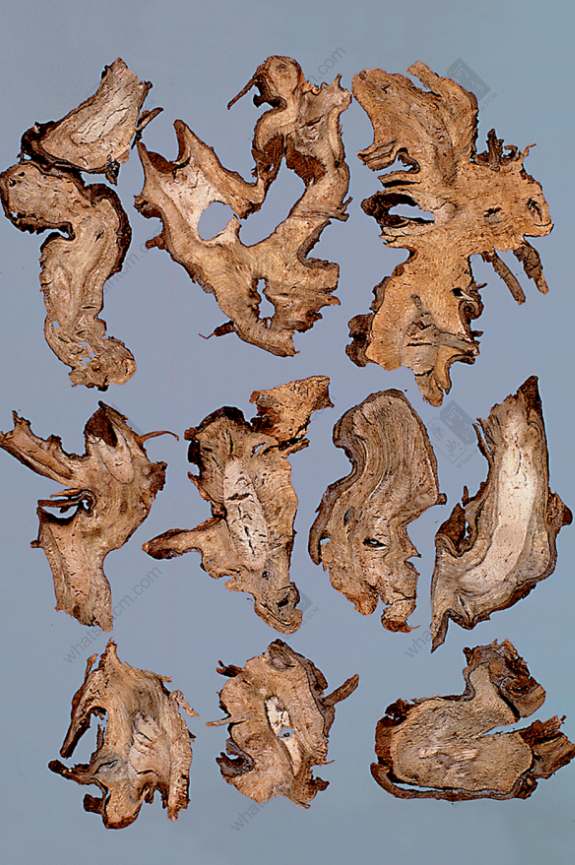 Chuān Niú Xī slices (Wèi Niú Xī, white pith)
【Naming】
【Source】
Classified as a superior herb in the Shennong Ben Cao Jing
【Frequency of Use】
A
【Botanical Origin】
Huái Niú Xī is the dried root of Achyranthes bidentata Bl. (Amaranthaceae). Chuān Niú Xī is the root of Cyathula officinalis Kuan (Amaranthaceae). Wèi (Chuān) Niú Xī is the rhizome and root of Strobilanthes forrestii Diels (Acanthaceae).
【Characteristics】
(1) Huái Niú Xī: It is slender and cylindrical, sometimes slightly curved, thicker at the upper end and thinner at the lower end. It is approximately 20-90 cm long and 0.2-1 cm in diameter. The surface is yellowish-brown or light brown, slightly glossy. The surface has slightly twisted and shallow longitudinal wrinkles, and transverse lenticels. Branch roots and fine root scars are evident. It is hard and brittle, easily broken, and the fracture surface is flat.
Prepared slices of Huái Niú Xī: Cut into small pieces or coarse slices. The outer skin is yellowish-white or greyish-yellow, with wrinkles. It is hard and brittle, the cut surface is uneven, slightly translucent, and there is a distinct yellowish-white wood core in the middle. There are many small tendon points (vascular bundles) around it, with cross-sections arranged in 2-4 rings (compass pattern), and the taste is slightly sweet. Wine-prepared Huái Niú Xī: After being stir-fried with wine, the color darkens.
(2) Chuān Niú Xī: It is cylindrical, thicker, tapers at the lower end, slightly curved, and varies in length from 25-60 cm, and about 0.5-2 cm thick. It is twisted and not straight, resembling a walking stick. The outer surface is greyish-brown, the surface is rougher, with slightly twisted and thicker longitudinal grooves, and transverse lenticels are distributed. Branch root scars are evident. It is tough and not easily broken. (This product is commonly known as Dù Niú Xī in Taiwan; Note: Dù Niú Xī in ancient herbal books refers to Stemona japonica, and the medicinal material is the root of Stemona, which is different from the common name in Taiwan).
Prepared slices: Obliquely cut into thin slices. The cut slices are light yellow, yellowish-brown, or dark brown, oily, gelatinous, or fibrous. There is a small yellowish-white wood core in the center, and there are many light yellow tendon points (vascular bundles) around it, arranged in several concentric rings (compass pattern). The aroma is slightly sweet, then slightly bitter. The color becomes darker after steaming with wine.
(3) Wèi Niú Xī (commonly known as Chuān Niú Xī in Taiwan): The rhizome is thick, multi-branched, twisted and knotted, with many remaining stem bases. Numerous fibrous roots are clustered, slender and cylindrical, up to 10 cm long and 1-6 mm in diameter. The surface is dark grey, smooth and wrinkle-free, often with annular fracture cracks, sometimes peeling off to reveal the wood core. The wood core is tough and not easily broken.
Prepared slices: Transverse slices: Thin transverse slices, the cortex of the rhizome slices is thick, the endodermis is obvious, the xylem is dark grey, and there is a thick and obvious white pith in the center.
【Processing】
1. Huái Niú Xī 2. Wine-prepared Huái Niú Xī 3. Chuān Niú Xī 4. Wine-steamed Chuān Niú Xī
【Identification】
“Chuān Niú Xī from Huai Prefecture is better” (Puji Fang). “Wash Niú Xī to remove the reed head, soak in wine overnight and use dry. If you need to use it urgently, it is better to steam it with wine” (Puji Fang). “Niú Xī…if you need to use it urgently, it is better to steam it with wine” (Puji Fang). “Roots that are extremely long and soft are good”, “The male plant with purple stems and large nodes is better” (Zheng Lei Ben Cao). “Roots that are fat and moist are good”, “Those from Huai Prefecture are the best” (Ben Cao Pin Hui Jing Yao). “[Hong Jing said] Stems that are purple and have large nodes are male, those that are green and thin are female, and the male is better”, “Only those planted by families in the northern soil and Sichuan are good” (Ben Cao Gang Mu). “Those from Sichuan and Huaiqing Prefecture, which are long, large and fat, are good” (Ben Cao Bei Yao). “Those that are long, large, and fat are good” (Ben Cao Qiu Zhen). “In the Song Dynasty, those from Huaiqing were considered good” (Ben Cao Yi Du). “Light yellow, long, large, and fat, with a soft substance, are superior” (Liang Lie Jian Bie).
1. Huái Niú Xī: The best ones have thick and long roots, fine and firm skin, and are light yellow in color. 2. Chuān Niú Xī: The best ones have thick and long roots, are soft, the cross-section is brownish-red, and the substance is oily. Those that are small, grey in color, hard, dry, and lack oiliness, and are spongy are inferior.
【Identification Terminology】
1. Compass pattern: Due to abnormal growth, Chuān Niú Xī and Huái Niú Xī form numerous small dot-like vascular bundles, discontinuously arranged in several concentric rings, which can also be called a compass pattern.
2. Large nodules: Refers to Huái Niú Xī medicinal material with a larger reed head.
3. Small nodules: Refers to Huái Niú Xī medicinal material with a smaller reed head.
4. Horse brush: Refers to Huái Niú Xī medicinal material that is thin and short, and of inferior quality.
【Category】
Root category