



Qian Hu (Peucedani Radix)
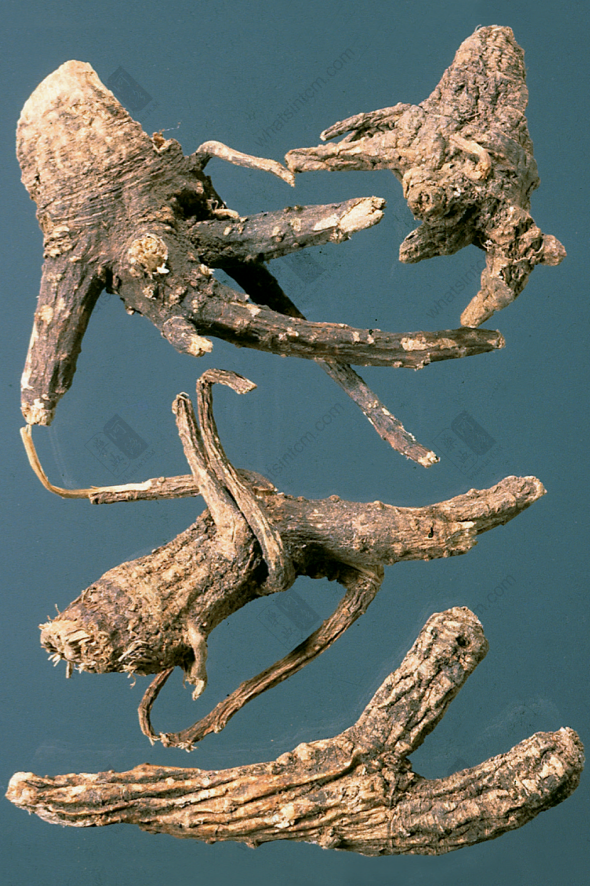 Huai Qian Hu (with brown bracts) (cylindrical-conical-fusiform, grayish-yellow, dark brown, relatively soft texture)
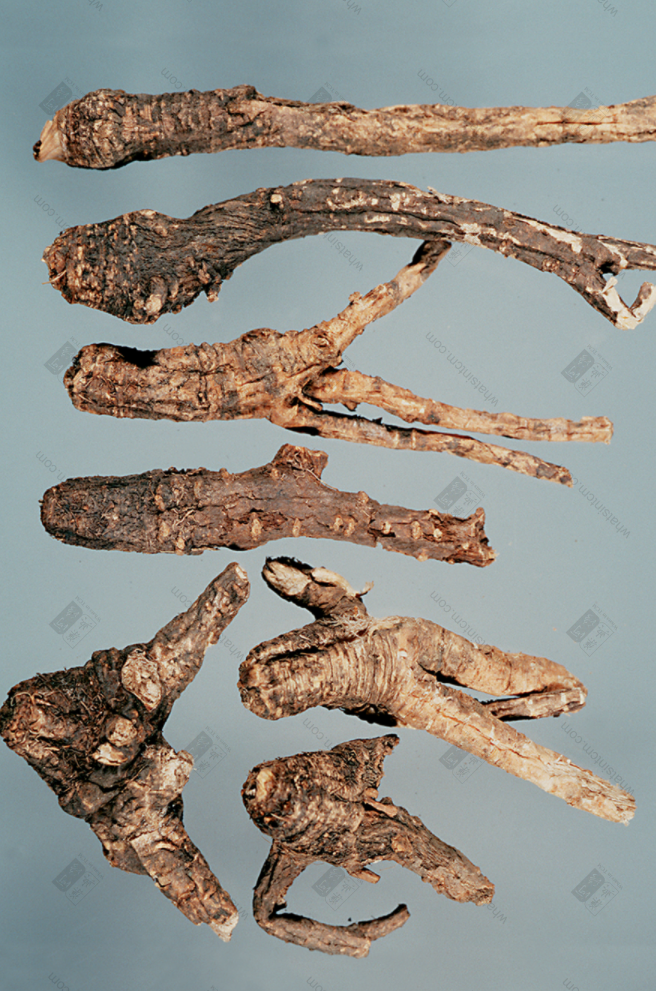 Huai Qian Hu (pipe-shaped, upturned mustache-shaped) (root head has residual fibrous hairs from leaf sheaths, common in Xin Qian Hu)
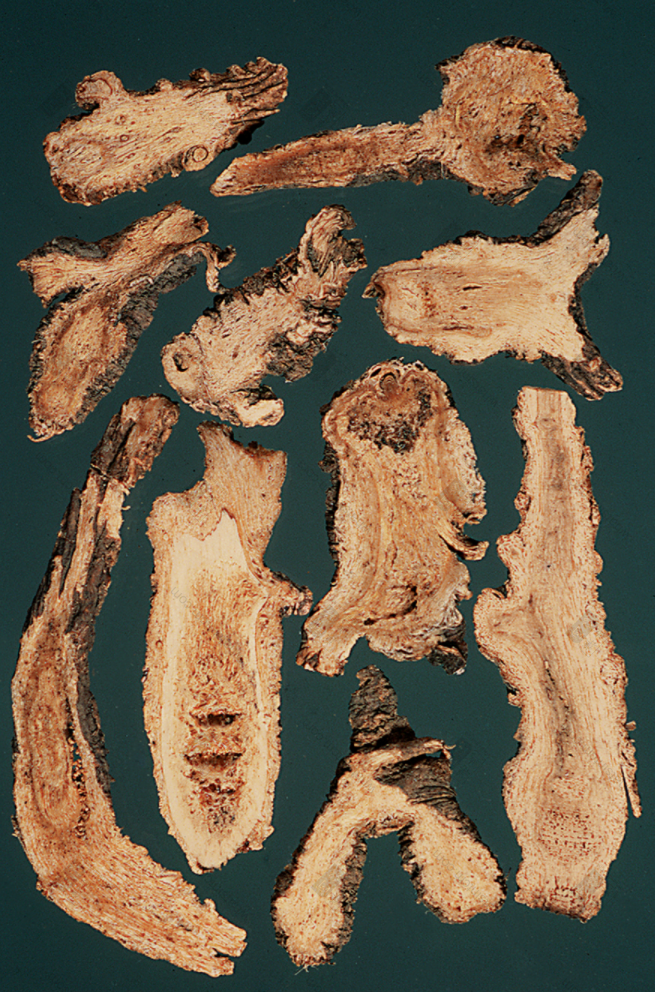 Huai Qian Hu Slices (brownish-yellow, oily spots, radial ring patterns)
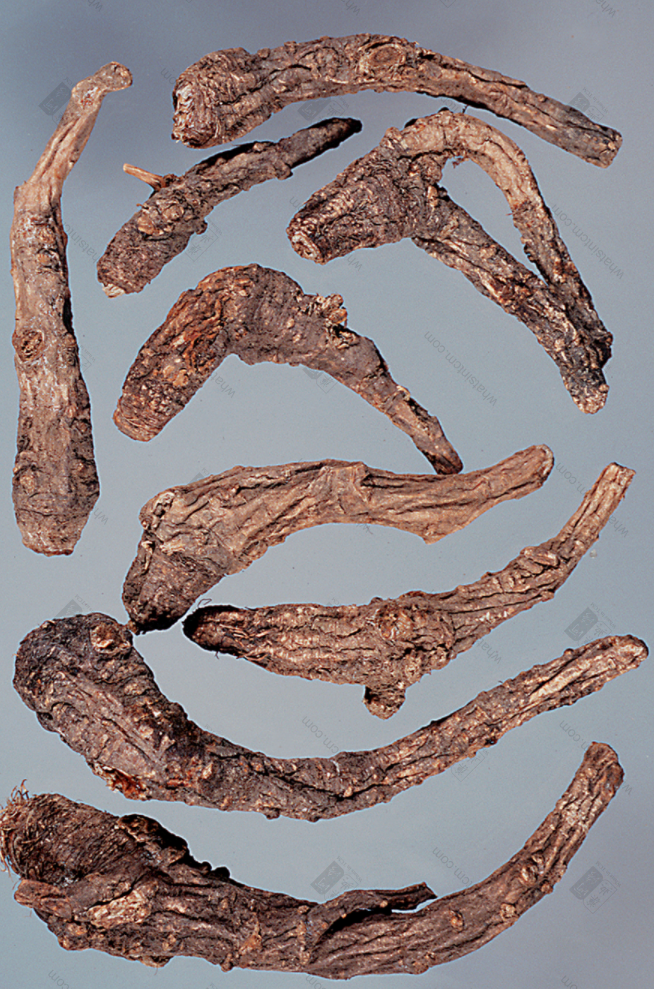 Su Qian Hu
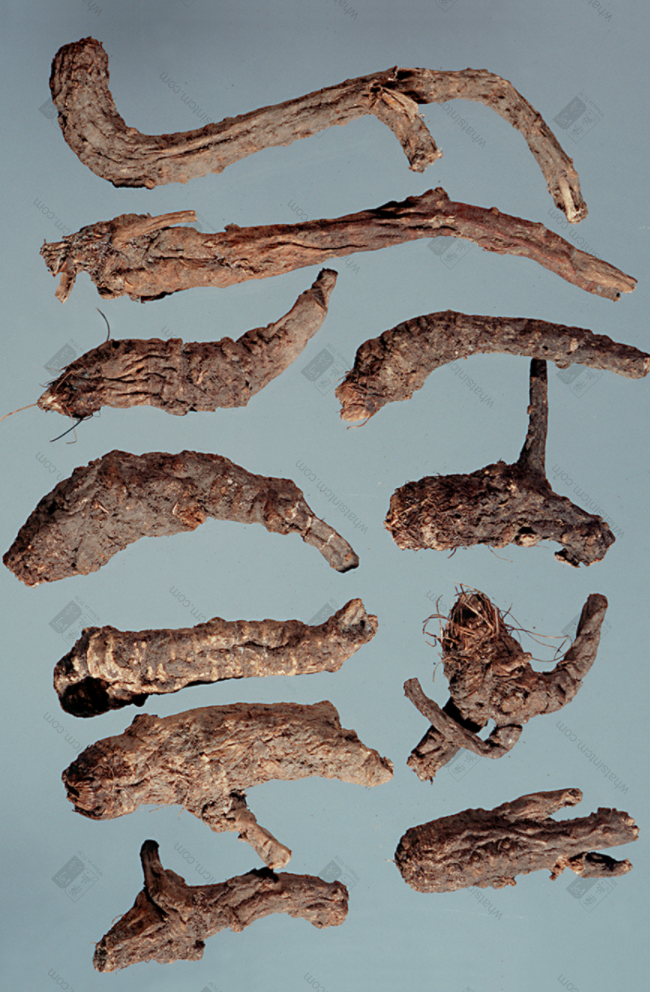 Xin Qian Hu
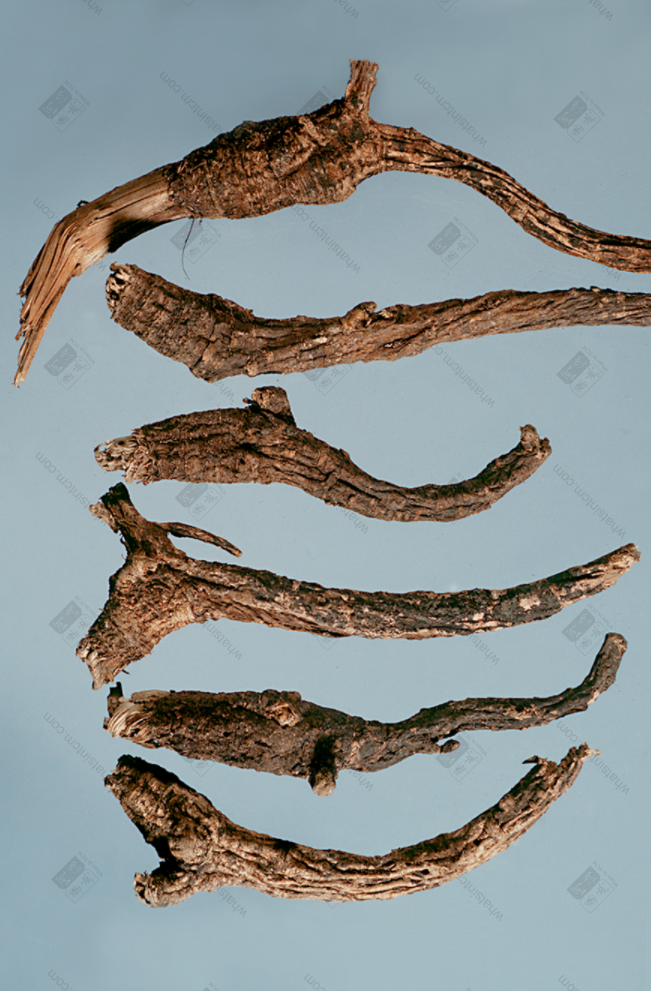 Xi Qian Hu
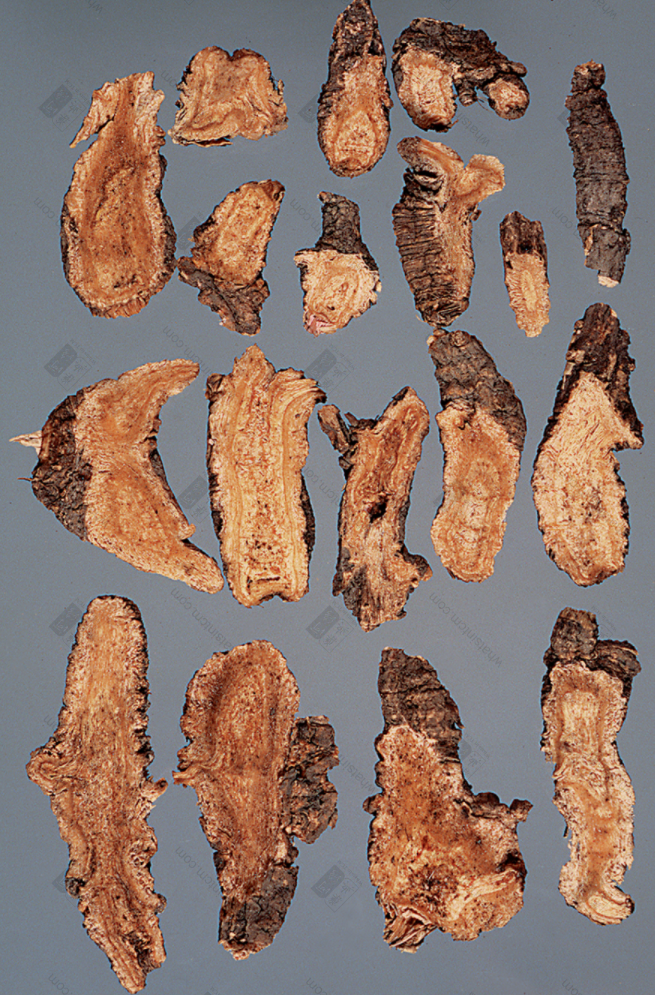 Qian Hu Slices
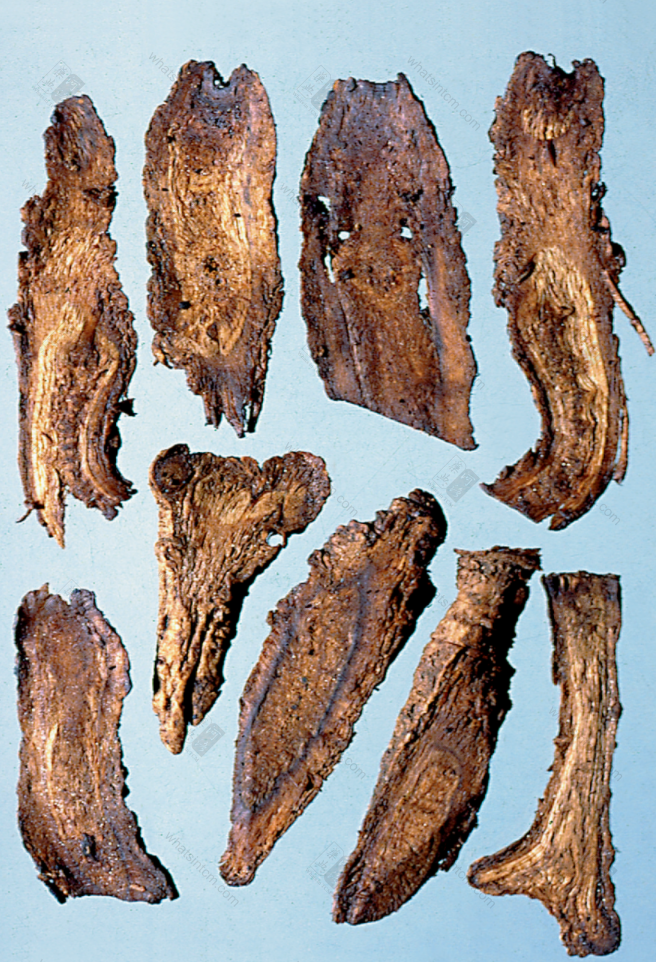 Honey-Processed Qian Hu Slices
【Naming】
【Source】
別錄中品 (Ming Yi Bie Lu, Middle Grade)
【Common Usage Level】
B
【Botanical Origin】
The root of Peucedanum praeruptorum Dunn. (White-flowered Qian Hu) or Peucedanum decursivum Maxim. (Purple-flowered Qian Hu), both belonging to the Umbelliferae family.
【Characteristics】
White-flowered Qian Hu: The main root is thick and short, cylindrical or obconical, wider near the lateral roots, with slight lateral branching at the lower part. It is about 2-5 cm long and 1-2 cm in diameter. The outer surface is brownish-black, grayish-yellow, or dark brown. The top of the root head has stem scars, residual leaf bases, and dense fine ring patterns. The lateral roots are cylindrical, slightly thinner at the lower end, often curved obliquely, with slight longitudinal grooves and transverse lenticels. The cork layer is easily peeled off. It is brittle and easily broken with a relatively soft texture. The cross-section is yellowish-white, with a brown cambium ring and radial rays. It has an aromatic odor and a slightly bitter and pungent taste.
Purple-flowered Qian Hu is similar, but the root is longer and has several lateral roots. It has a harder texture. The cross-section is off-white, with indistinct rays. The odor and taste are both milder.
Prepared slices are transverse or oblique thin slices, about 1-2 mm thick. The cut surface is yellowish-white to yellowish-brown. The cortex has small fissures and a ring-shaped cambium layer. When observed under a magnifying glass, the phloem rays are more curved, and many small oil spots can be seen. It has a fragrant odor and a bitter taste.
【Processing】
1. Raw Qian Hu 2. Prepared (Processed) Qian Hu
【Identification】
《Ben Cao Pin Hui Jing Yao》: “The ones with moist and solid roots are good.”
《Ben Cao Gang Mu》: “[Shi Zhen says] The root should have black skin and white flesh, and be fragrant to be genuine,” “Generally, those from the north are superior.”
《Ben Cao Bei Yao》: “Those with black skin, white flesh, sweet taste, and fragrant aroma are good.”
《Yao Xing Qie Yong》: “Those with fragrant aroma and tender texture are good.”
《Zeng Yao Bian》: “Genuine Qian Hu is best produced in Wuxing. The root is similar to Chai Hu (Bupleuri Radix) but softer, and the taste is also fragrant and delicious.”
《Liang Lie Jian Bie》: “The good quality ones have a black exterior, yellowish-white interior, are tightly packed, and have a long body.”
Good quality Qian Hu should be dry, have thick branches, black skin color (iron-like texture), soft white flesh, no seedlings, no hairs, and no soil.
【Identification Terms】
1. Crab legs: The lower part of the roots of purple-flowered Qian Hu branches horizontally, shaped like crab legs.
2. Chicken feet Qian Hu: The main root of white-flowered Qian Hu branches, shaped like a human character, resembling chicken feet.
3. Brown bract head: Refers to the above-ground stem covered with clasping leaf bases, with residual brown leaf stems and brown hair-like vascular bundles of varying lengths.
4. Pipe, upturned mustache: The special shapes of Huai Qian Hu resemble a pipe or upturned mustache.
【Category】
Roots