

Qing Dai (Indigo Naturalis)
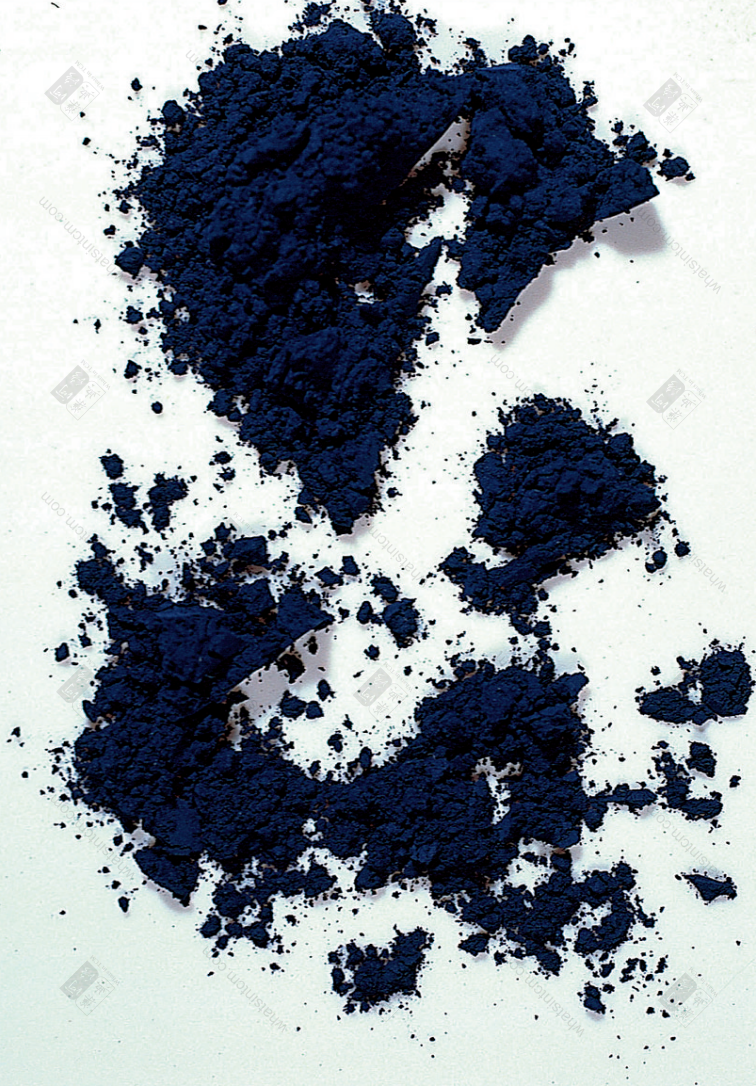 Qing Dai (Fine powder, grayish-blue to dark blue, light in texture, easily scattered, feels fine and grit-free when rubbed between fingers, floats on water surface and does not sink, burns with a bright purple flame for a relatively long time)
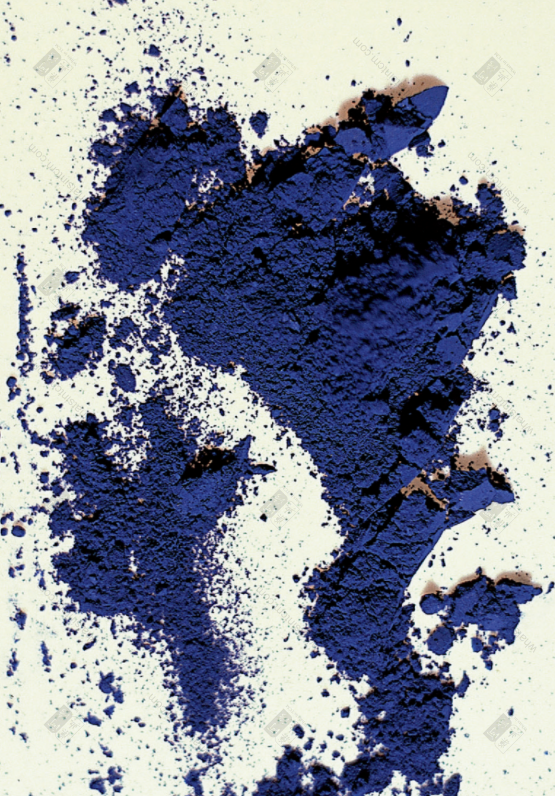 Qing Dai (Fake product)
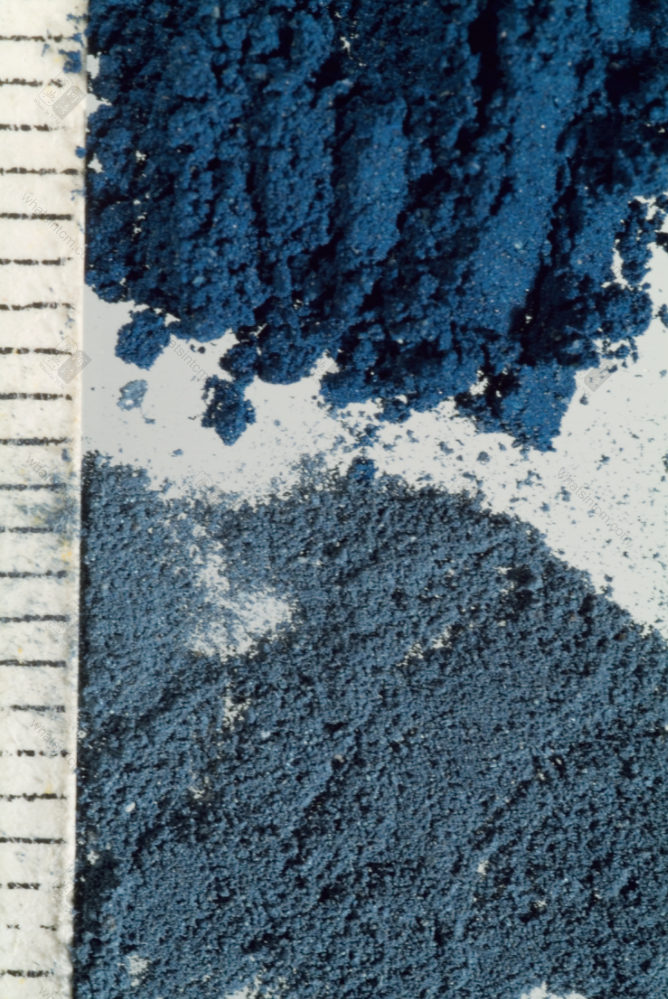 Qing Dai – Real on top, fake on the bottom
【Naming】
【Source】
Song Kai Bao
【Commonly Used Degree】
C
【Origin】
It is a dried pigment processed from the stems and leaves of plants such as Baphicacanth cusia (Nees) Brem. of the Acanthaceae family, Indigofera tinctoria L. of the Fabaceae family, Isatis oblongate DC. of the Brassicaceae family, or Polygonum tinctorium Lour. of the Polygonaceae family.
【Characteristics】
It is an extremely fine powder, grayish-blue or dark blue in color, light in texture, easily scattered, adheres to hands and paper, and feels fine and grit-free when rubbed between fingers. It has a grassy odor and a slightly sour taste.
【Identification】
“Ben Cao Pin Hui Jing Yao” states: “The lighter it is, the better.”
Good quality is indicated by being light, finely powdered, able to float on water surface, producing a purple-red flame when burned, or turning into black ash when heated on an iron sheet, and having no sand or stones when chewed. If it is heavy and solid, appears in clumps, has small white spots, and sinks in water with granular particles, the quality is inferior.
Based on experience, there are several ways to identify authenticity and quality:
(1) Add Qing Dai to clear water in a teacup and stir. Qing Dai should be light and float on the water surface, with a very small amount of lime sinking. The sunken lime should be in powder form. If there are too many impurities, the sunken lime will be granular and in larger quantities.
(2) Qing Dai can form clumps when compressed. If mixed with too many impurities, it will not form clumps.
(3) Take some Qing Dai and bake it on an iron rack. The genuine product turns into black fine powder after melting. If it turns yellowish-brown or gray, it is a fake product.
(4) Take some Qing Dai and place it on coarse paper or kraft paper and burn it. The genuine product will have a yellow flame with a ruby-like light. If there is no yellow ruby-like light, it is a fake product. If there is not much yellow or the ruby-like light is not obvious, it has been adulterated.
(5) Qing Dai is light, delicate, and dark blue in color, stains the hand when touched, floats on water, burns with a blue-purple flame, and has a grassy odor and a slightly sour taste. Fake products are heavy, light in color, sink in water, do not burn when ignited, and are easily identified.
【Category】
Other categories