



Sang Ji Sheng (Taxillus Chinensis)
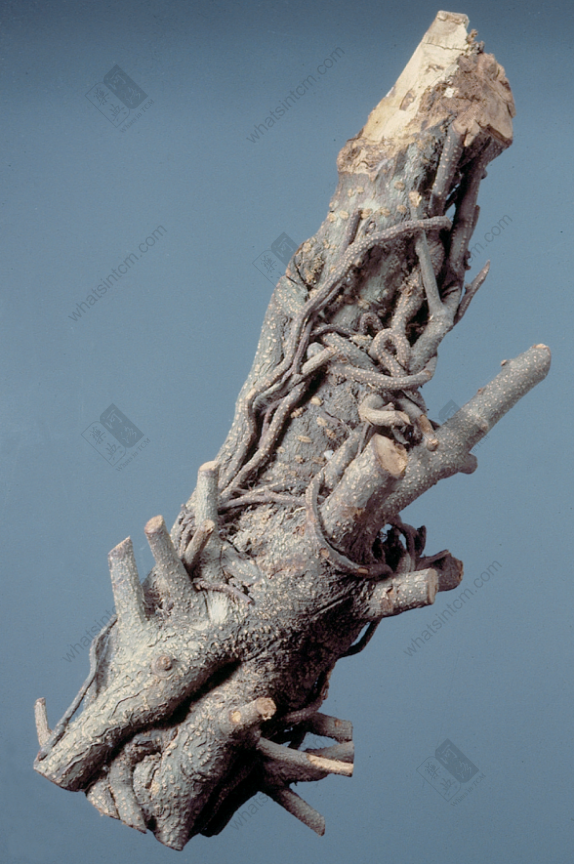 Sang Ji Sheng (Cylindrical and twisted, reddish-brown, young branches with villous hairs, hard in texture)
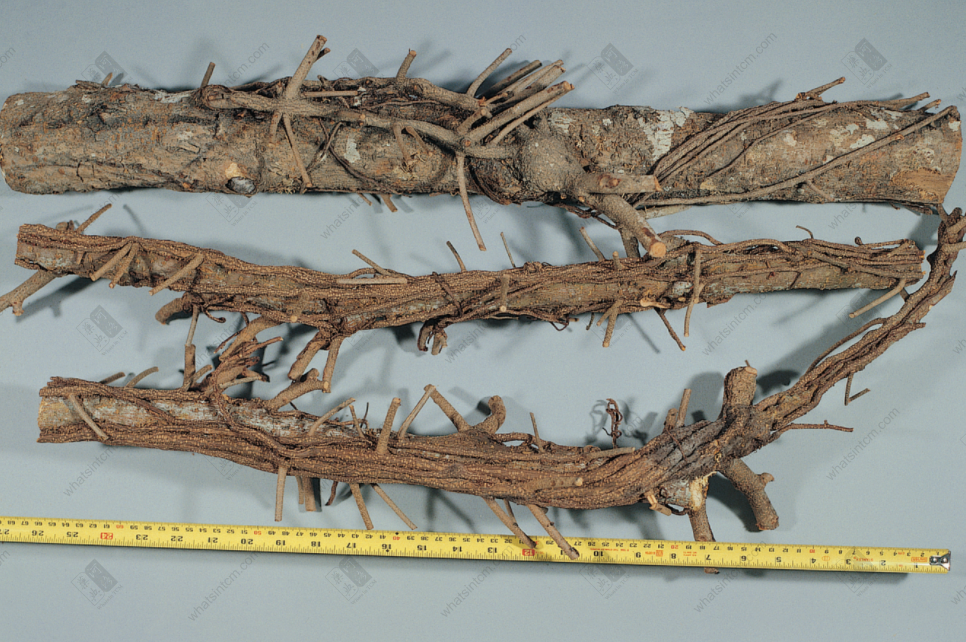
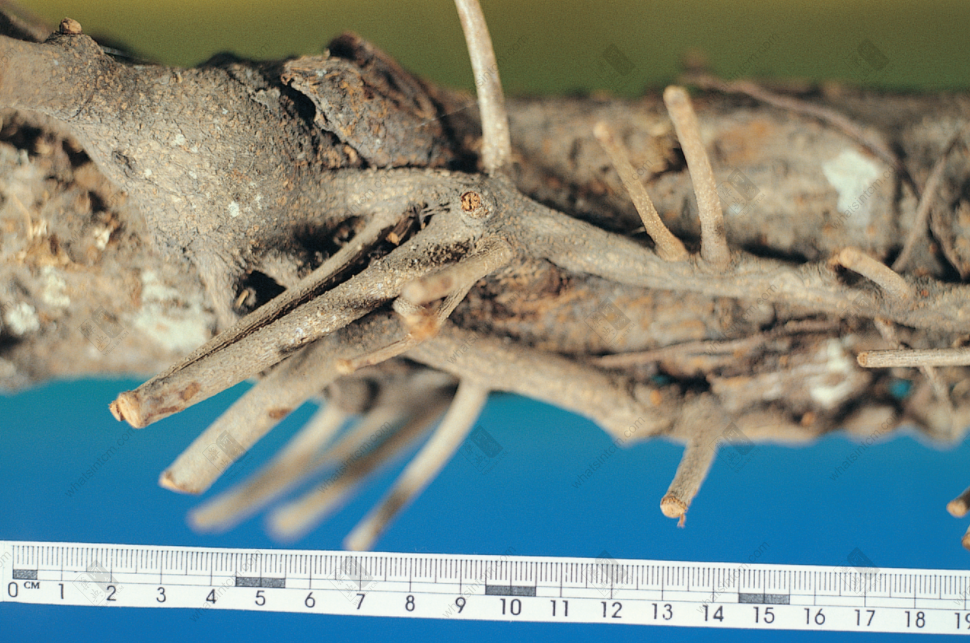
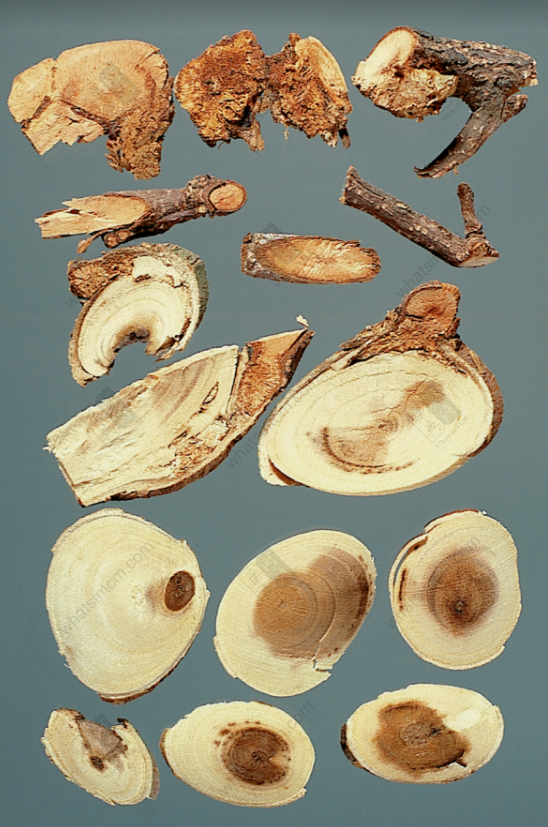 Sang Ji Sheng slices (Slices of Sang Zhi (Mulberry Twig) where *Sang Ji Sheng* is parasitic)
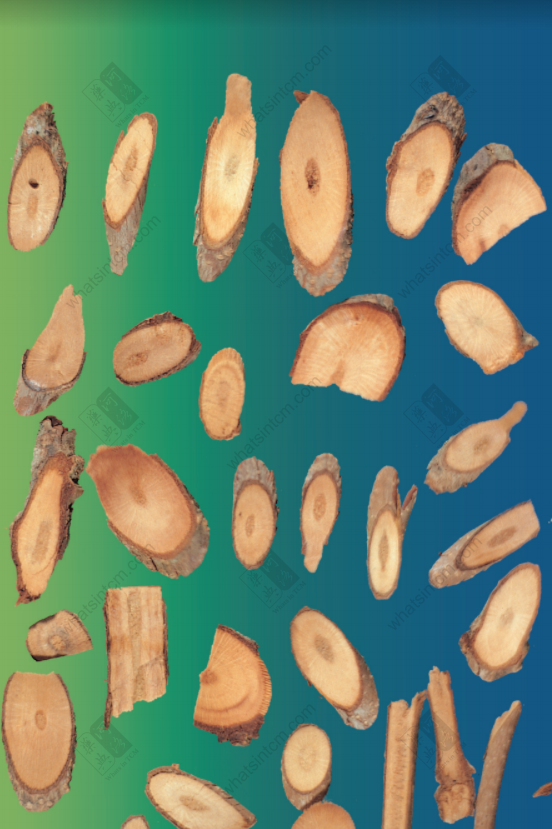 Sang Ji Sheng slices
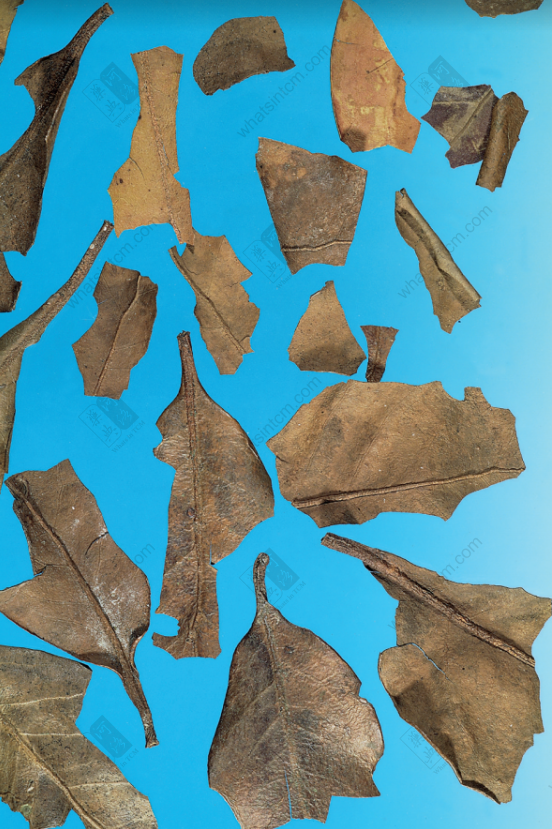 Sang Ji Sheng leaves (Oblong-elliptic, mostly curled with obvious leathery texture)
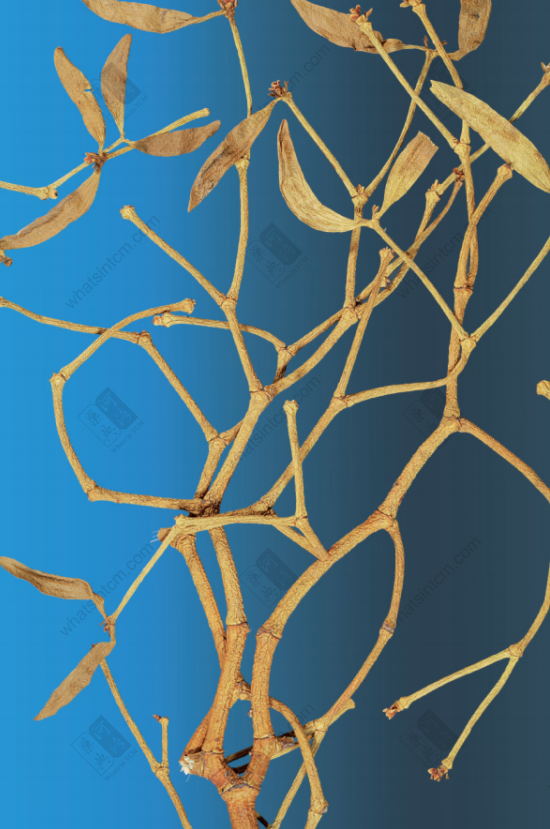 Northeast Yellow Mistletoe (Branches with leaves, 2-3 branches)
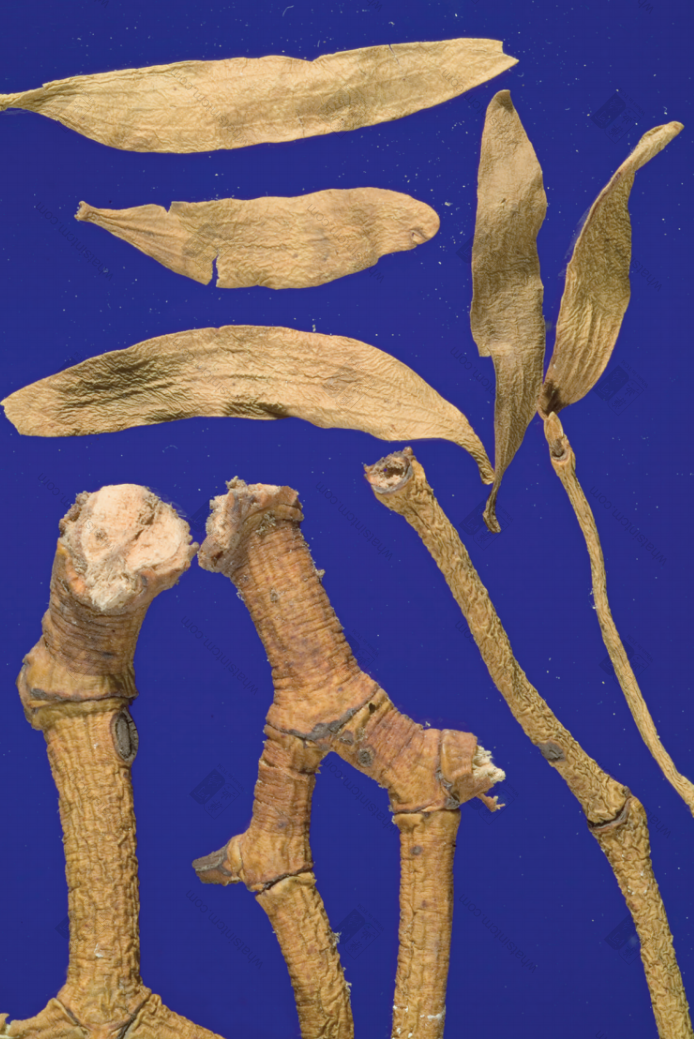 Northeast Yellow Mistletoe slices (Cylindrical branches with enlarged nodes, yellowish-brown, leaves opposite, twig handle, berries shriveled)
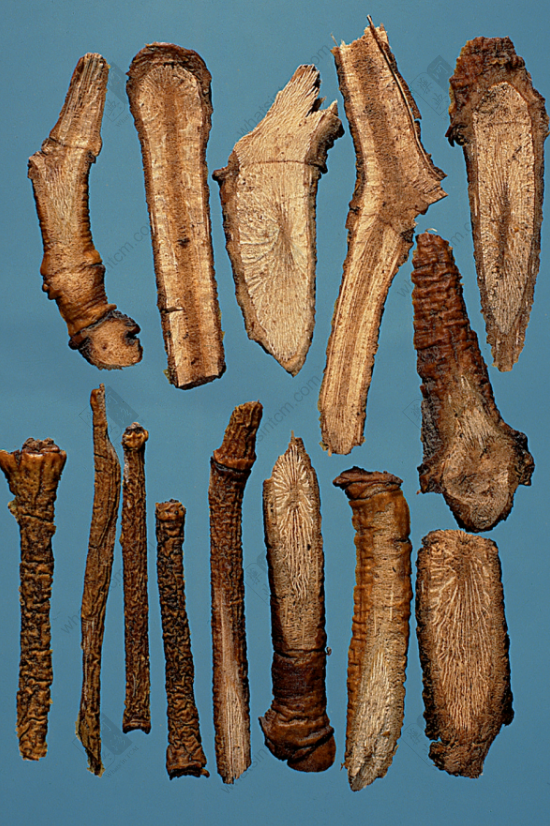 Yellow Mistletoe slices (Clear growth ring, rays appear whitish)
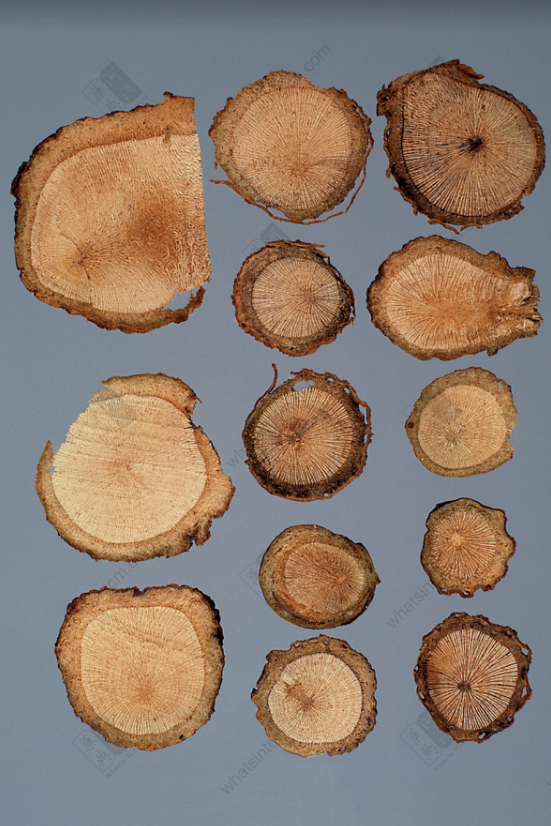 Yellow Mistletoe slices
【Naming】
【Source】
Superior Grade in the Classic of Herbal Medicine
【Common Use Degree】
C
【Botanical Origin】
Dried leafy stems and branches of Loranthaceae plant Loranthus parasiticus (L.) Merr. or Viscum coloratum (Komar.) Nakai.
【Characteristics】
(1) Sang Ji Sheng: Also known as Guang Ji Sheng. Branches and stems are cylindrical, more than 30cm long and 0.5-1cm in diameter, with branches or branch scars. The surface is grayish-brown or reddish-brown, with longitudinal striations, and numerous small, light-colored lenticels protruding from the skin. Young branches may have brown fine hairs and leaves, and villi can be seen. Leaves are oblong-elliptic or ovate, opposite or alternate, young leaves are covered with fine villi, or the back of the leaves is densely covered with rusty hairs, which are easily detached and appear leathery. It is hard in texture and has an uneven fracture surface. It has no odor and a bland taste.
The decoction piece is a transverse or oblique slice, about 1-3mm thick; the bark section of the cut surface is thin, purplish-brown, and easily separated from the wood. The wood is brown, the rays are light in color and very obvious, and there are annual rings visible. The pith is dark brown, often accompanied by slices of the mulberry twig on which it parasitizes.
(2) Viscum coloratum, also known as Yellow Mistletoe, Northern Mistletoe, or Willow Mistletoe. The dried stems and branches are cylindrical or flattened, yellowish-green, wrinkled, with branches, without leaves or with leaves on the branches, with obvious longitudinal wrinkles, stems with nodes, internodes 3-5cm long, often 2-3 branches grow from the nodes. It is light and brittle in texture and easily broken. Leaves are opposite at the ends of the branches and are extremely easy to fall off. The leaves are oblong-ovate or small and scale-like, yellowish-brown, with obvious wrinkles and three veins. It has a slight odor and a slightly bitter taste, and some have a sticky texture when chewed.
The decoction piece is a transverse or oblique slice, about 0.2-1.3cm in diameter and about 2mm thick, with a golden yellow appearance; the cut surface is light yellow; the bark is relatively loose, the cambium ring is obvious, the rays are whitish, and the pith is small. The leaves are irregular strips of fragments.
【Identification】
《Zheng Lei Ben Cao》: “The one with thick and sticky juice is good.” 《Zheng Lei Ben Cao》: “The true one has a deep yellow color and thick and sticky juice in the core.” 《Ben Cao Gang Mu》: “The one from mulberry trees is the best.”
Leaves are oval-round, the body and stem are as firm as wood, and the shape is like a tree branch. The best ones are those with large strips, tender quality, reddish-brown color, and not broken, while old and rough branches are second best.
【Category】
Woody Vine Category