



Shang Lu (Pokeweed Root)
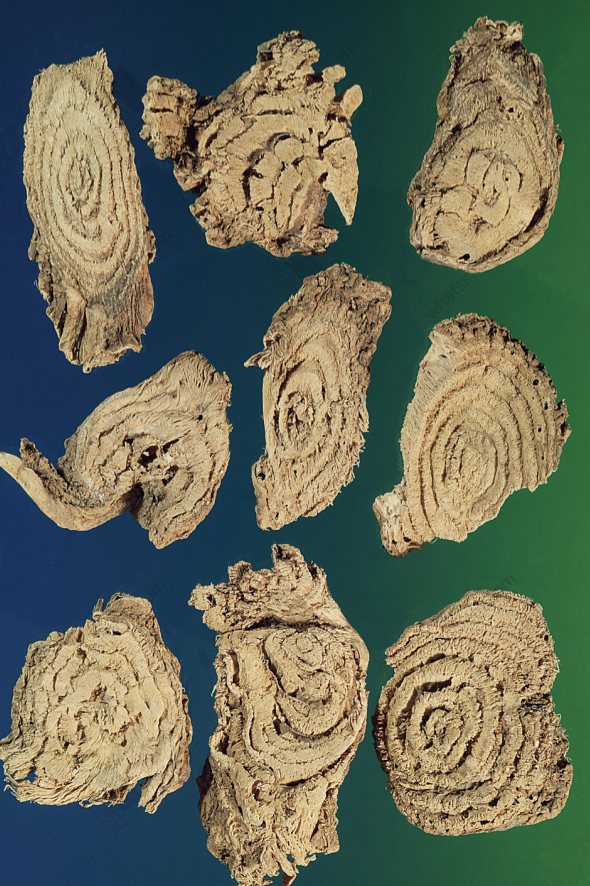 Shang Lu (Pokeweed Root) slices
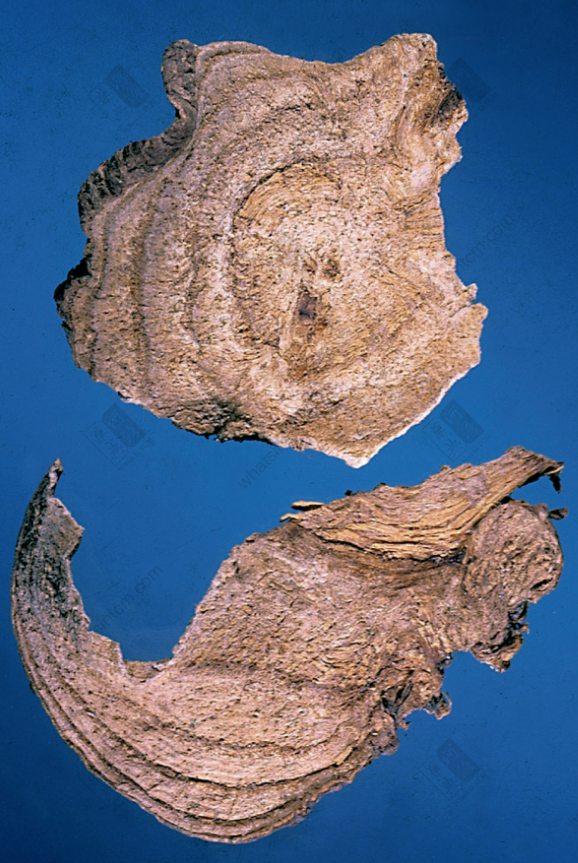 Shang Lu (Pokeweed Root) slices (Compass pattern = concentric rings)
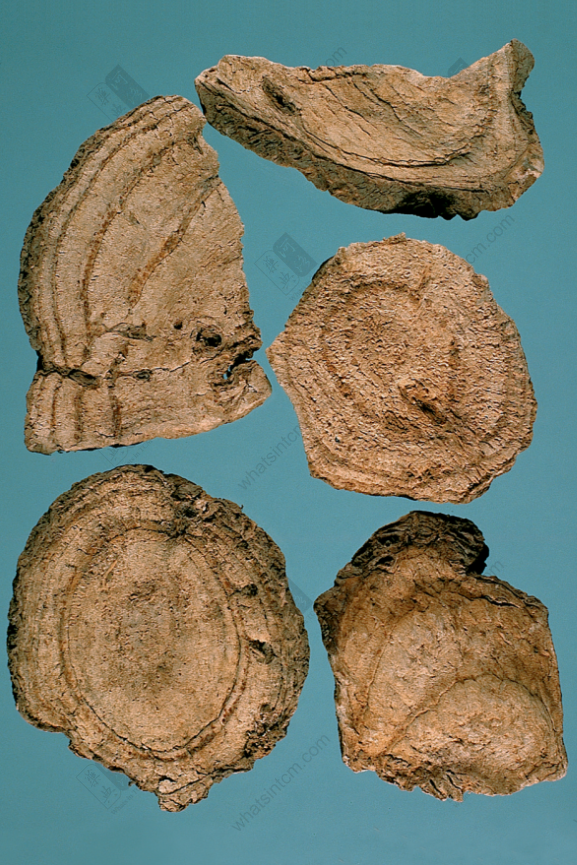 Shang Lu (Pokeweed Root) slices (Outer skin grayish-brown, edges wrinkled, xylem raised in concentric rings)
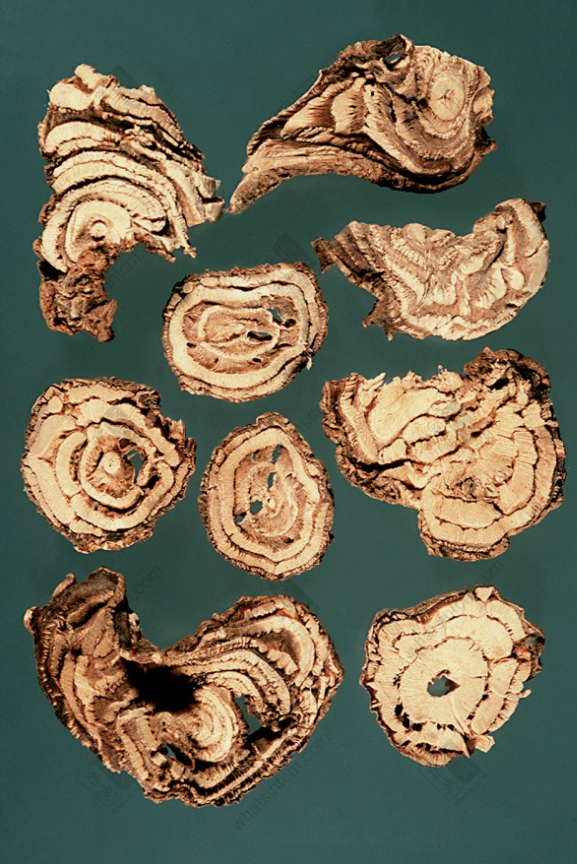 Shang Lu (Pokeweed Root) slices
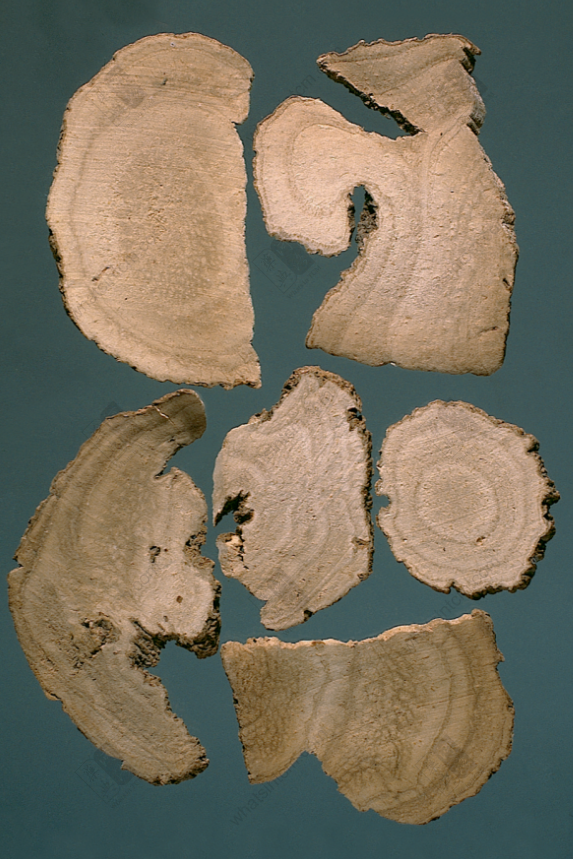 Shang Lu (Pokeweed Root) slices
【Naming】
【Source】
Classified as “Lower Grade” in the Shen Nong Ben Cao Jing (Divine Husbandman’s Classic of Materia Medica)
【Commonly Used Degree】
E
【Botanical Origin】
The root of Phytolacca esculenta Van Hout. belonging to the Phytolaccaceae family.
【Characteristics】
The commercial product consists of transversely cut slices. These slices are curved and uneven, with wrinkled edges, ranging from 2 to 8 cm in diameter and 0.3 to 1 cm in thickness. The outer surface is yellowish-brown to dark brown, displaying irregular wrinkles. A few slices may exhibit stem scars and roots. The cut surface is yellowish-white to yellowish-brown, uneven, with the phloem depressed and the xylem raised, exhibiting approximately 3 to 10 layers of concentric rings. The texture is hard and not easily broken.
Prepared slices appear as irregular, curved pieces of varying lengths and about 1 to 3 mm thick. The cross-section reveals several distinct layers of concentric rings. The xylem appears yellowish-white and has a slightly fishy odor. Vinegar-processed Shang Lu is yellow.
【Processing】
1. Raw Shang Lu (Pokeweed Root) 2. Vinegar-processed Shang Lu (Pokeweed Root)
【Identification】
“Excellent and Inferior Identification”: “The best is that which is grayish-white and large.”
Generally, those with large slices, white color, powdery texture, and clear ring patterns are considered superior. Those with a hard texture and a purplish color are considered inferior.
【Identification Terminology】
1. Ring Pattern: Generally refers to: (1) ring patterns on medicinal materials, mainly node scars, also known as transverse lines; (2) ring patterns on the cross-section of medicinal materials, mainly the pericycle of the cambium; (3) layered ring patterns, referring to the tertiary structure produced by divisional activity, such as the layered ring patterns of Shang Lu (Pokeweed Root).
2. Compass Pattern, Concentric Rings: Refers to a type of atypical structure in roots. The cross-section of the medicinal material has several concentric rings. Some rings are wavy, and some are discontinuous. The cross-section of Shang Lu (Pokeweed Root) has a tertiary structure formed due to abnormal growth. Because the pericycle cells regain the ability to divide, a new cambium is formed. Cells divided outward produce phloem, and cells divided inward produce xylem, separated by parenchyma cells. After drying, the xylem protrudes, and the parenchyma cells are depressed. Therefore, 3 to 10 uneven concentric rings are formed on the cross-section, called the compass ring.
【Chapter】
Roots