



Silkworm Feces
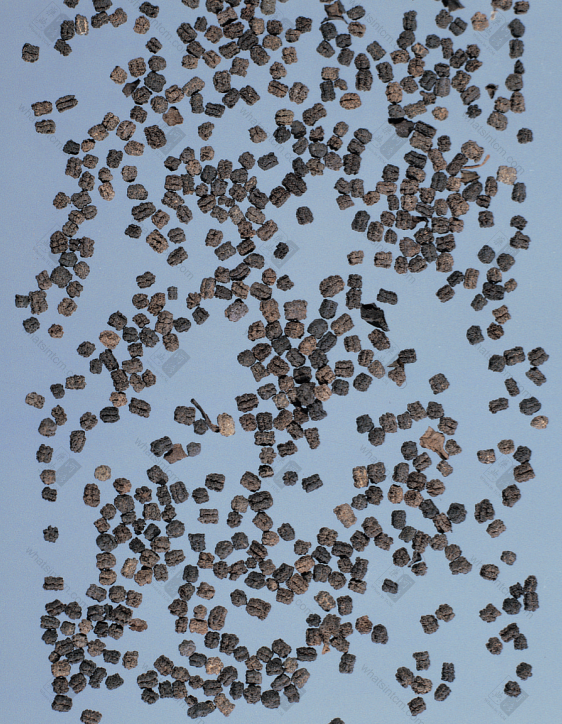 <a href=’https://whatsintcm.com/dt_articles/蠶砂/’>Silkworm Feces (蠶砂) (Appears as short, cylindrical granules, with a greyish-black and rough surface, and 6 distinct longitudinal ridges)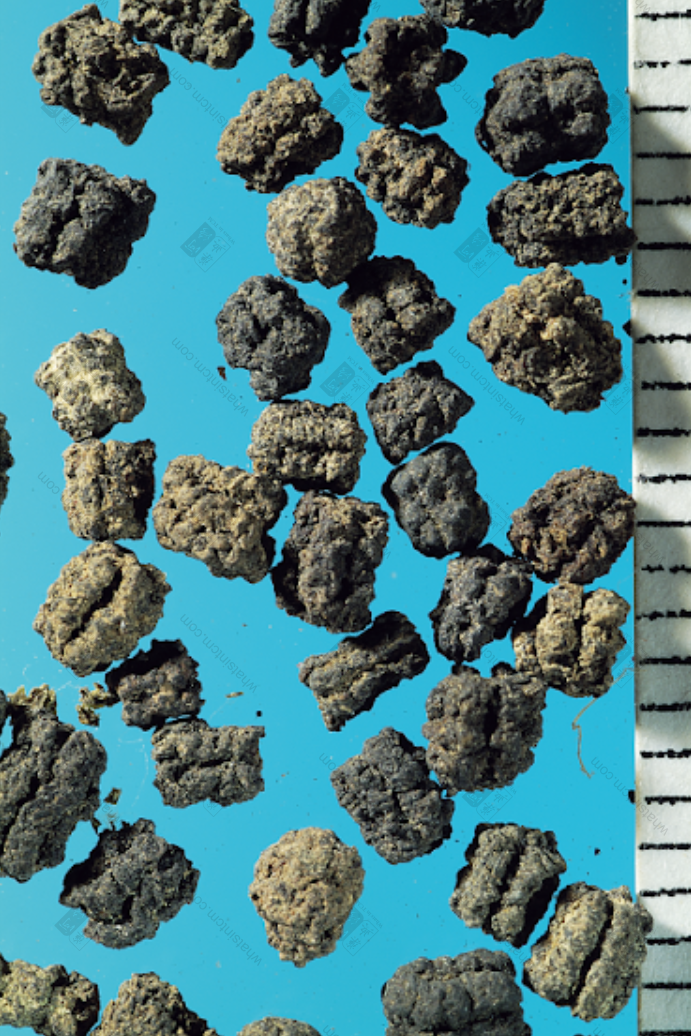
<a href=’https://whatsintcm.com/dt_articles/蠶砂/’>Silkworm Feces (蠶砂)
【Name】n
<a href=’https://whatsintcm.com/dt_articles/蠶砂/’>Silkworm Feces (蠶砂)
n 【Source】n
Shen Nong’s Classic of Materia Medica, Middle Grade
n 【Frequency of Use】n
E
n 【Origin】n
It is obtained from the dried excrement of the larvae of the silkworm moth, Bombyx mori L.
n 【Characteristics】n
Dried <a href=’https://whatsintcm.com/dt_articles/蠶砂/’>Silkworm Feces (蠶砂), appear as short, cylindrical granules, 2-5 mm in length and 1.5-3 mm in diameter. The surface is greyish-black, rough, with 6 distinct longitudinal ridges and 3-4 transverse shallow lines. The ends are slightly flat, with a hexagonal shape. It is hard and brittle in texture, and easily breaks into pieces when exposed to moisture. It has a slight grassy odor.
n 【Processing】n
1. <a href=’https://whatsintcm.com/dt_articles/蠶砂/’>Silkworm Feces (蠶砂) 2. Stir-fried <a href=’https://whatsintcm.com/dt_articles/蠶砂/’>Silkworm Feces (蠶砂)
n 【Identification】n
“Yi Fang Lei Ju” (Classified Prescriptions) says: “Ma Ming Gan is late <a href=’https://whatsintcm.com/dt_articles/蠶砂/’>Silkworm Feces (蠶砂), the ones harvested in May are good.” “Ben Cao Qiu Zhen” (Seeking Truths in Materia Medica) says: “However, only the late ones are good.” nIt is best if it is black in color, dry, free of impurities, and not moldy, with a relatively hard texture, and makes a rustling sound when rubbed by hand. In particular, the feces of autumn silkworms are the best. Hence the name “Late <a href=’https://whatsintcm.com/dt_articles/蠶砂/’>Silkworm Feces (蠶砂)”.
n 【Category】n
Invertebrate Animals