



Soap Bean Thorn (Zao Jiao Ci)
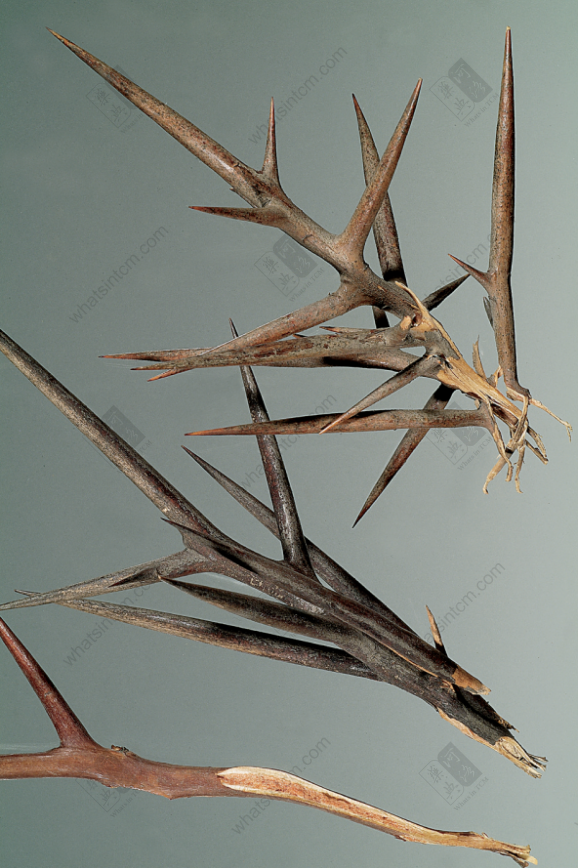 Soap Bean Thorn (Main thorns are long, branched thorns are short, brownish-red, light in weight, hard in texture, and not easily broken)
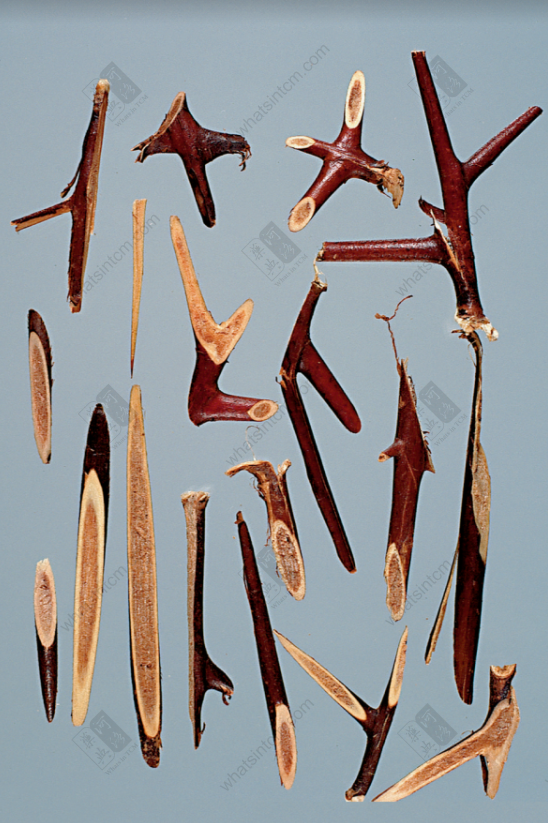 Soap Bean Thorn Slices (Reddish-brown, xylem is yellow, pith is loose)
【Naming】
Soap Bean Thorn
【Source】
Classified as “Inferior Grade” in the Classic of Herbal Medicine.
【Common Usage Level】
C
【Botanical Origin】
The dried thorns from the stem of the legume Gleditsia sinensis Lam.
【Characteristics】
Complete thorns have multiple branches. The main thorn is cylindrical, 5-15 cm long, with a sharp tip. The branched thorns are generally 1.5-7 cm long and sometimes further branched into smaller thorns. The surface is brownish-purple, with a reddish-brown tip, smooth or with fine wrinkles. The texture is hard and difficult to break.
Most of the prepared slices are longitudinal or oblique slices with varying shapes. Some are long and thin, while others are pointed thorns, about 0.5-1 mm thick. The outer surface is blackish-brown. The cut surface is reddish-brown around the edges and yellowish-white xylem in the center. It has a mild taste.
【Identification】
“Universal Relief Prescriptions” states: “Use Soap Bean Thorn in any amount. Scrape the skin and soak in raw sesame oil. The older the better.” “Universal Relief Prescriptions” states: “Soap Bean Thorn one tael, baked, aged, black, and large are best.” “Collection of Medical Formulas” states: “Use Soap Bean Thorn in any amount, scrape the skin, soak in raw sesame oil, seal and store in earthenware according to experienced recipes. The older the better.”
Good quality ones should be dry, without bark or twigs, whole or sliced, and have a reddish-brown cinnabar center (pith). The powder of this product has sneeze-inducing properties, produces a persistent foam when shaken with water, and has a hemolytic effect.
【Category】
Vines and Trees