



Sweet Flag
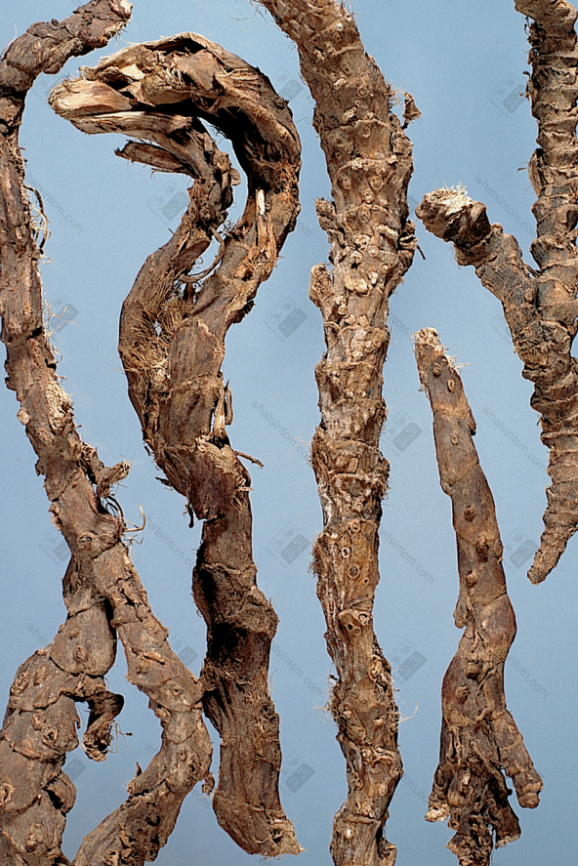
Stone Sweet Flag (Flattened cylindrical, curved, grayish-brown, flattened triangular leaf scars, attached scaly material, hard texture)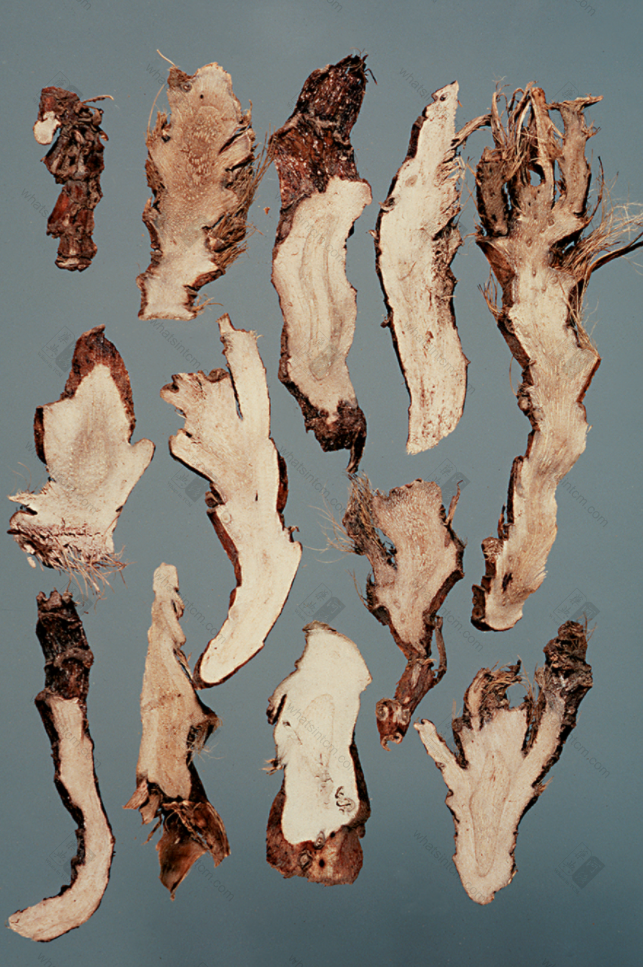
Stone Sweet Flag Slice (Clearly fibrous)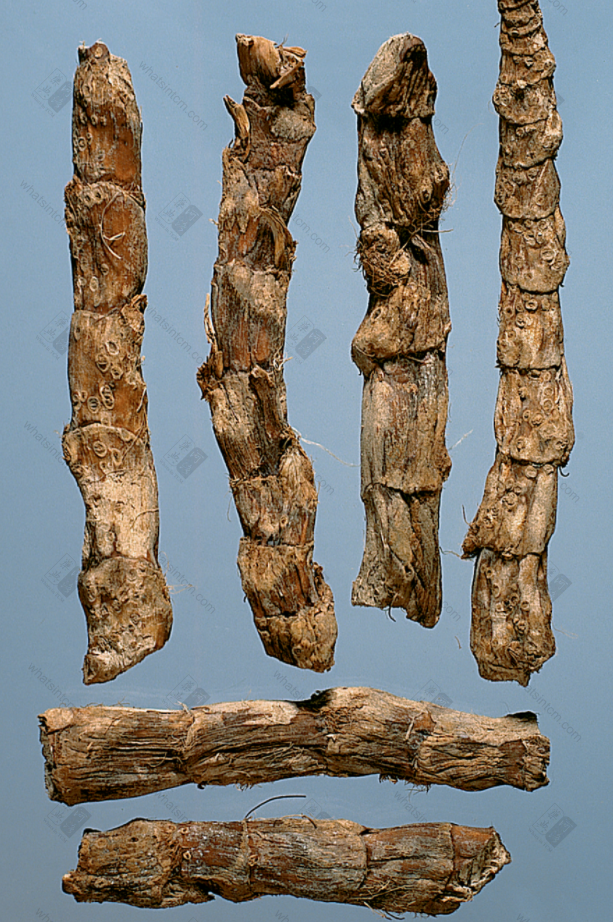
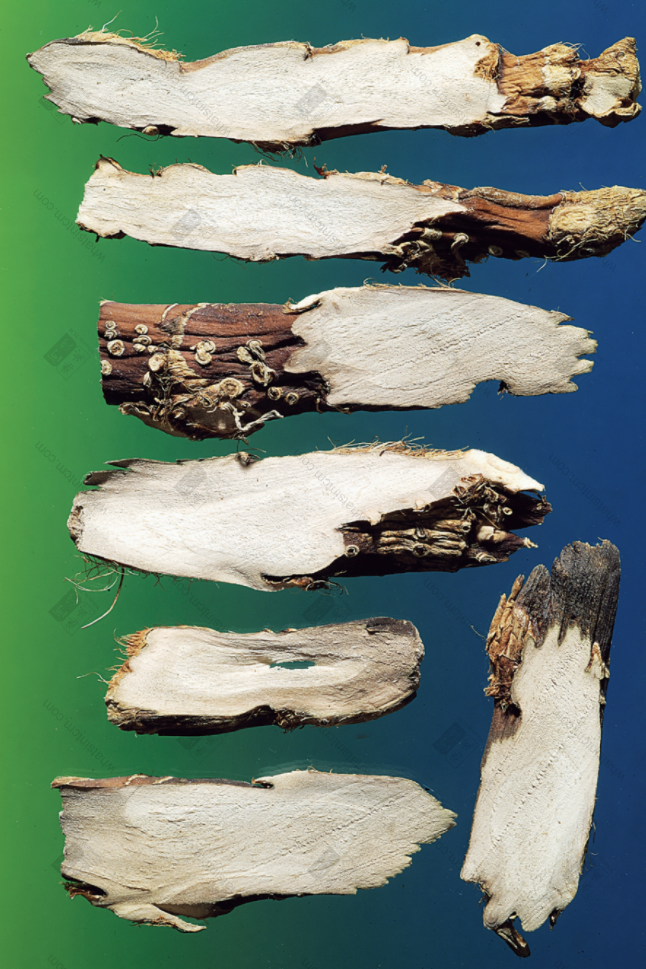 Aquatic Sweet Flag Slice
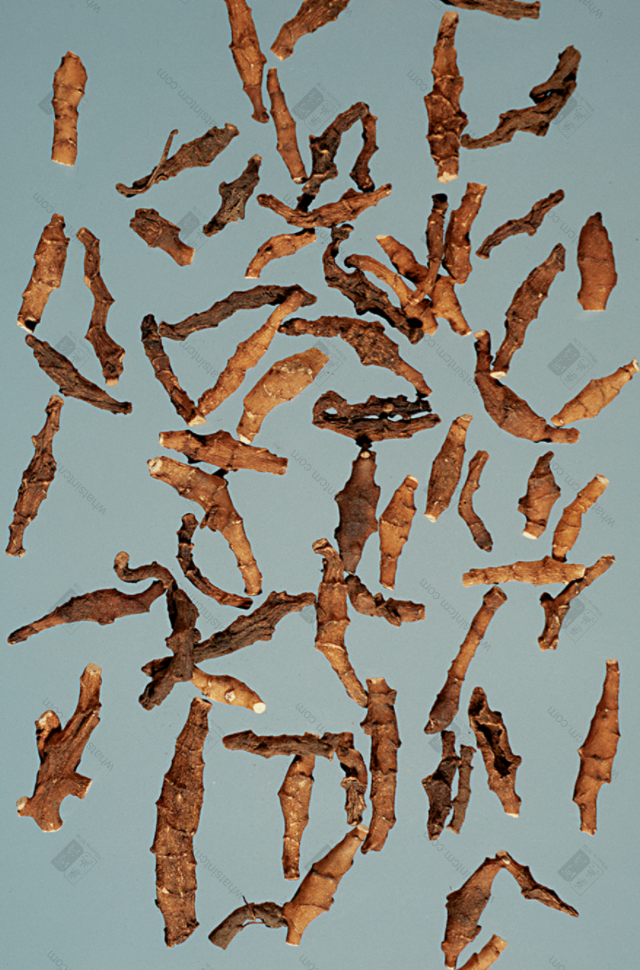
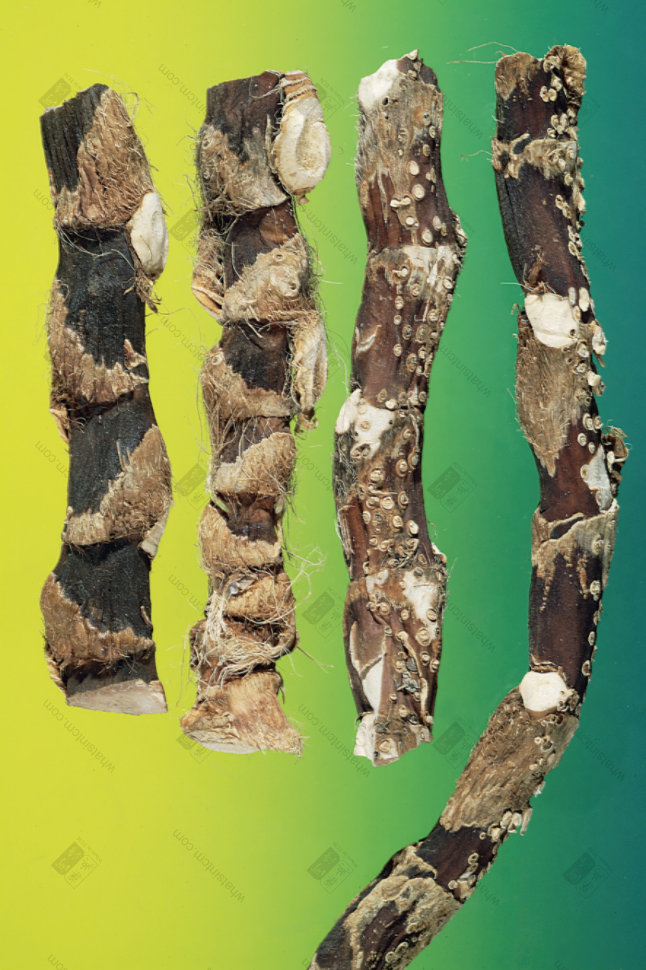
Nine-jointed Sweet Flag (Short and dense nodes, distinct fusiform shape, light brown, numerous ring-shaped scaly leaf bud scars)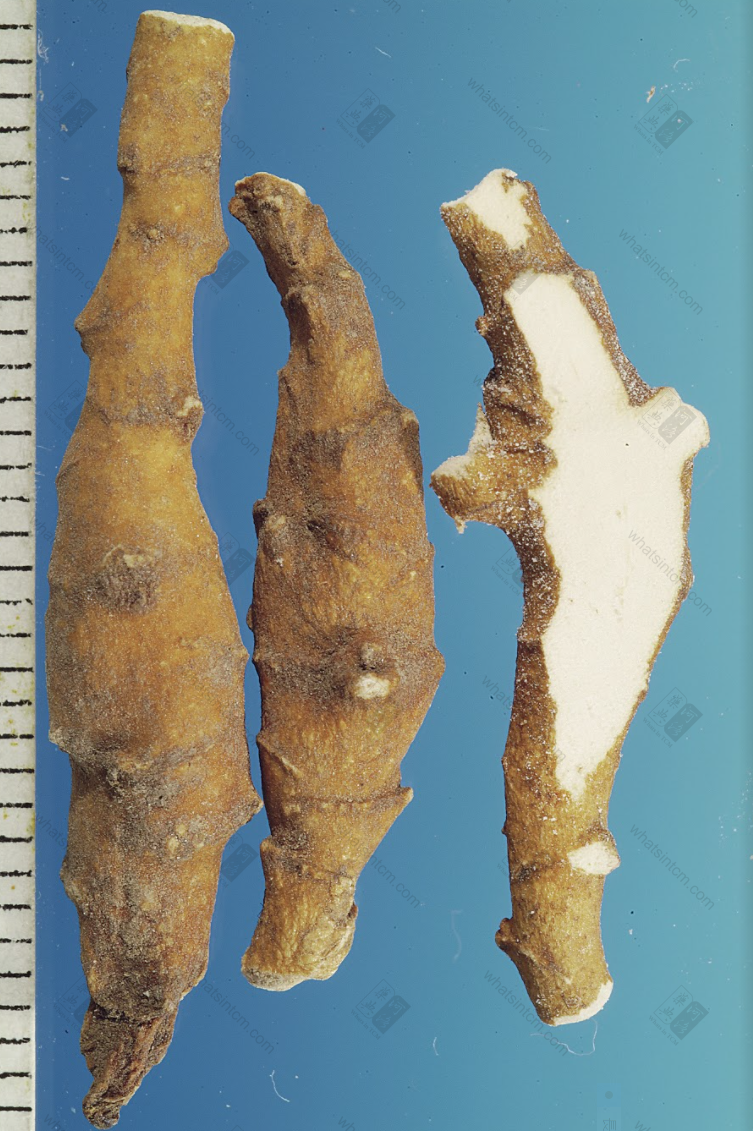 Nine-jointed Sweet Flag (White and brittle inside, powdery)nn【Naming】n
n 【Source】n
Shen Nong’s Classic of Materia Medica, Upper Class
n 【Common Usage Level】n
B
n 【Botanical Origin】n
Stone Sweet Flag is the rhizome of Acorus gramineus Soland. of the Araceae family. Nine-jointed Sweet Flag is the rhizome of Anemone altaica Fisch. Ex C. A. Mey of the Ranunculaceae family.
n 【Characteristics】n
(1) Stone Sweet Flag is slightly flattened cylindrical, slightly curved, sometimes branched, generally 3-10~20 cm long, and approximately 0.5-1 cm in diameter. The surface is grayish-yellow or brown, with tightly packed segments. The internodes are approximately 3-6 mm long, and the rough segments resemble centipedes, with slightly flattened triangular leaf scars arranged alternately on the left and right. Sometimes scaly material is attached to them, and there are numerous rounded protruding root scars below. Leaf bases sometimes remain on the internodes and are fibrous. Occasionally, there are short, thin roots. The texture is hard and difficult to break, and the fracture is fibrous.nSlices: Longitudinal slices or oblique slices with a grayish-yellow epidermis, with segments and leaf scars. The cut surface is off-white to light brown, with a ring-shaped endodermis and brown oil spots visible. The fibrous nature is very obvious. It has an aromatic odor and a slightly pungent taste.n(2) Nine-jointed Sweet Flag is fusiform, slightly curved, about 1.5-6 cm long, and 1-5 mm in diameter. The exterior is brownish-yellow with obvious nodes, with numerous bud scars arranged alternately in a scaly pattern. The internodes often have a few small, slightly raised root scars. The fractured surface is flat, off-white, and mostly powdery.
n 【Identification】n
Miscellaneous Records of Famous Physicians: “Sweet Flag with nine segments per inch is good; those with exposed roots should not be used.” Annotations to the Herbal Classic: “Closely segmented ones are good.” Newly Revised Materia Medica: “Those grown on the desert with closely segmented ones are good.” Prescriptions for Universal Relief: “Sweet Flag with dense nodes growing on stones is best.” Eight Treatises on Following Life’s Seasons: “Talking about the Immortal Spiritual Herb Sweet Flag ingestion method: Sweet Flag, those that grow in clear water on clean stones, and must be near the south-flowing water are good; those flowing north are not good.” Ancestral Remedies: “Remove the seedlings and leaves from Aster and remove the beards from Sweet Flag; the nine-segmented ones are best.” Source Exploration of Materia Medica: “Those with lateral branching are acceptable.” n1. Stone Sweet Flag: The best are those that are dry, without whiskers and roots, long strips, thick and plump, with an off-white fracture surface, and weak fibrousness.n2. Nine-jointed Sweet Flag: The best are those that are dry, thick and plump, yellow in color, and have many nodes.
n 【Identification Terminology】n
1. Vascular bundle dots: The small brown dots on the rhizome cross-sections of monocotyledonous plants such as Stone Sweet Flag, Blackberry Lily, Dioscorea bulbifera, and Galangal are scattered, limited outer phloem vascular bundles.n2. Node: Refers to the node in plant morphology, such as in Nine-jointed Sweet Flag.n3. Scale leaf scar: The rhizome of Nine-jointed Sweet Flag has numerous semi-annular protruding stem nodes that resemble scales.
n 【Category】n
Rhizomes