



Tu Fu Ling (Glabrous Greenbrier Rhizome)
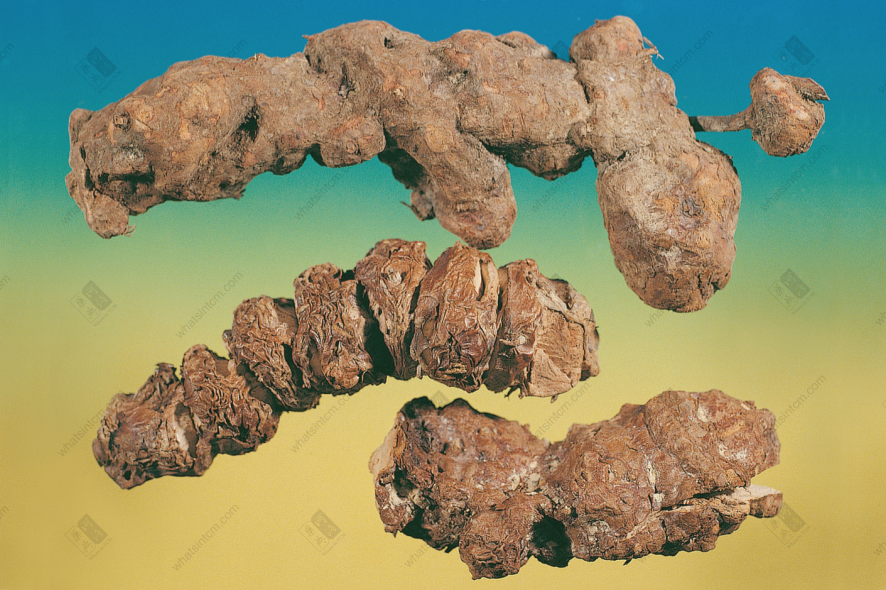 Tu Fu Ling (Nodular protuberances, yellowish-brown, depressed stem scars)
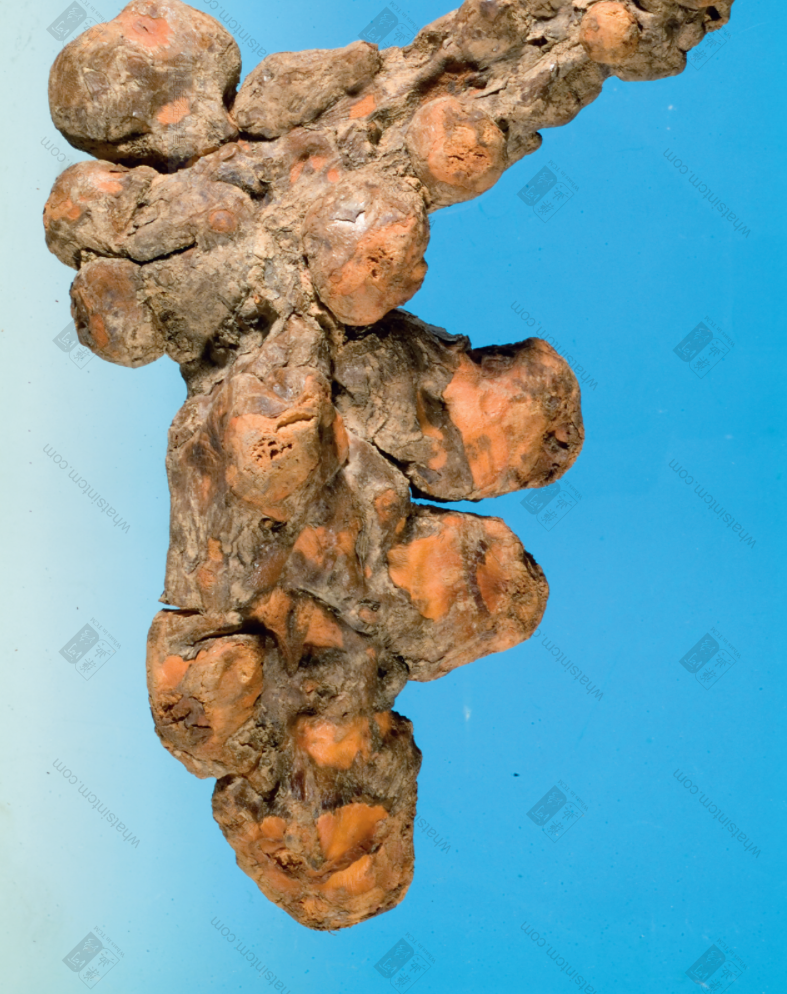 Tu Fu Ling
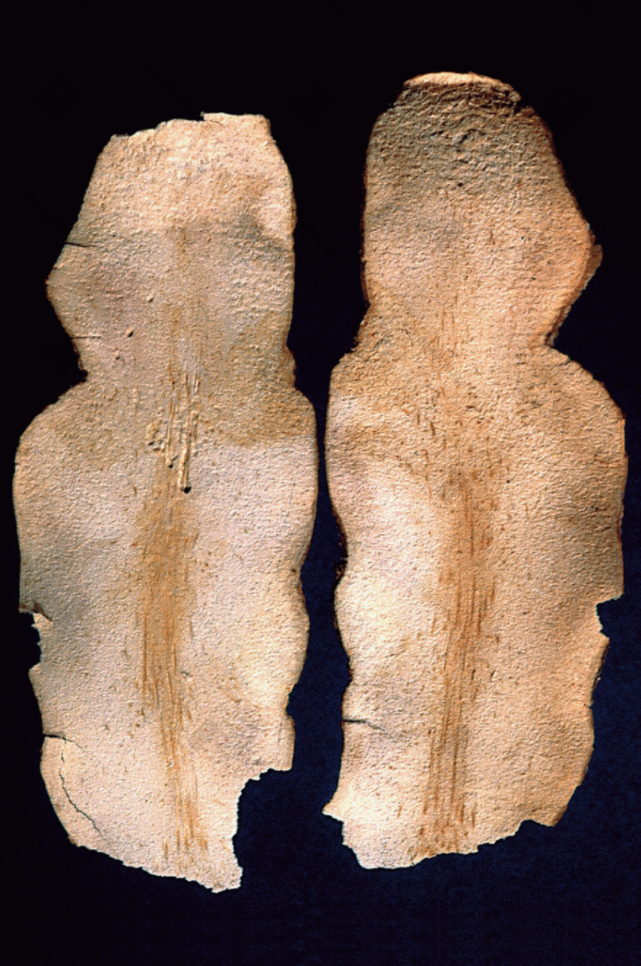 Tu Fu Ling Slice (Elastic when bent)
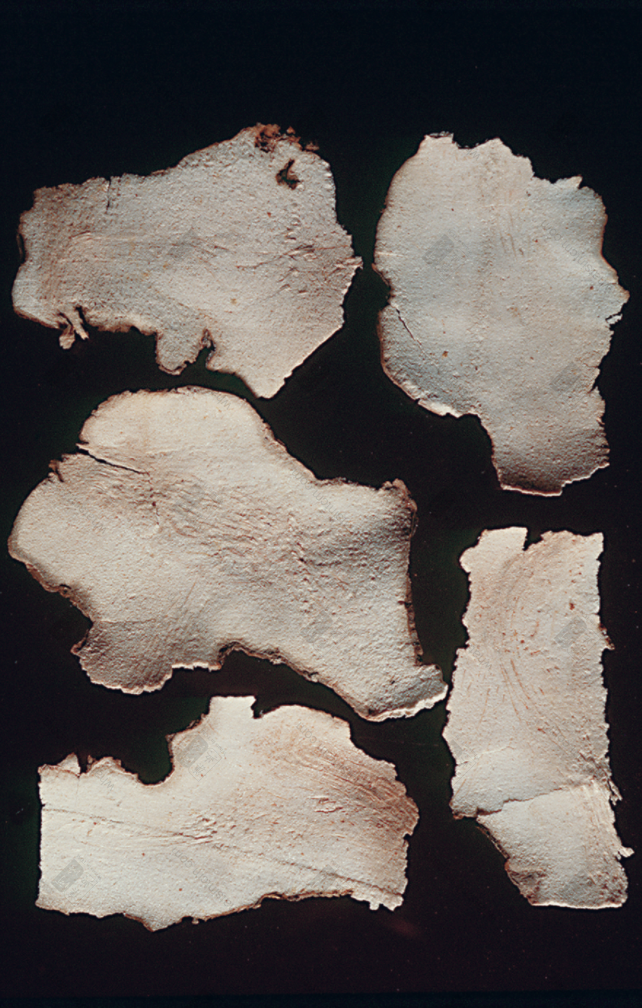 Tu Fu Ling Slice
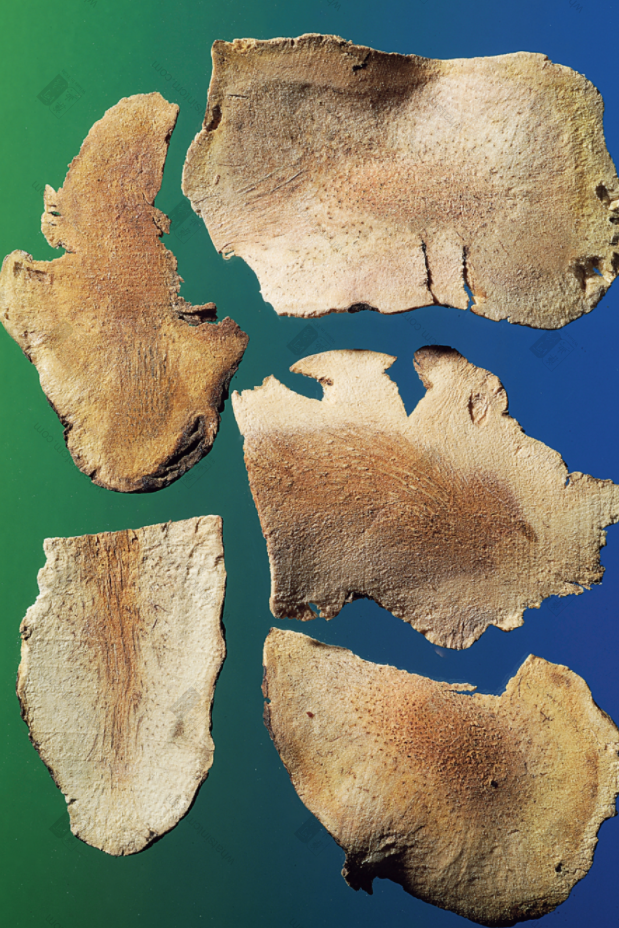 Wild Tu Fu Ling
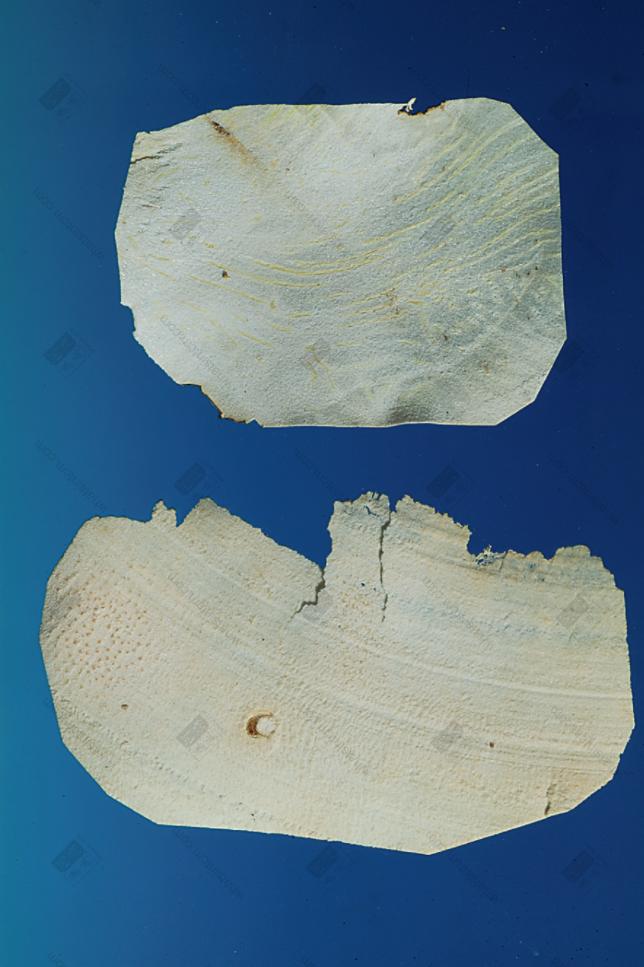 Tu Fu Ling (Top) Bi Xie (Bottom)
【Name】
Tu Fu Ling
【Source】
Compendium of Materia Medica
【Common Usage Level】
C
【Botanical Origin】
The dried rhizome of Smilax glabra Roxb. of the Liliaceae family.
【Characteristics】
It is an irregular nodular mass, slightly flattened cylindrical, curved and not straight with many branches, with nodular protuberances, about 5~15㎝ long and about 2~5㎝ in diameter. The surface is earthy brown, rough, with circular depressed stem scars and small fibrous root scars at the upper end, mostly uneven, or slender grayish-brown branch roots. It is hard in texture and not easy to break. The prepared slices are transverse or oblique thin slices, elliptical or irregularly circular, about 1~3㎜ thick, light pinkish-brown with a slightly red tinge, loose in texture and powdery. Under a magnifying glass or in sunlight, multiple vascular bundle small dots and small bright spots of luminous crystals can be seen, especially more near the outer edge.
【Identification】
《Ren Shu Bian Lan》: “Tu Fu Ling (the white one is better)”. 《Ben Cao Bei Yao》: “There are two kinds, red and white. The white one is better and can be boiled and eaten or eaten raw. Avoid tea.” 《Wen Tang Ji Yan Fang》: “Tu Fu Ling (that is, Tu Bi Xie. Choose the white and glutinous ones as the best)”.
Tu Fu Ling is best if the outer skin is light brown, large in shape and heavy in quality, and the inner color is white or slightly red, with less tendons and sufficient powder on the cross-section. If there are red spots in the heart or it has withered and rotted, it should not be used. Tu Fu Ling slices are often divided into two types, red and white. The white one is better, with a brown outer skin. The red slices are thick and small, and are of lower quality.
【Category】
Rhizomes