



Wolfberry Fruit (Gou Qi Zi)
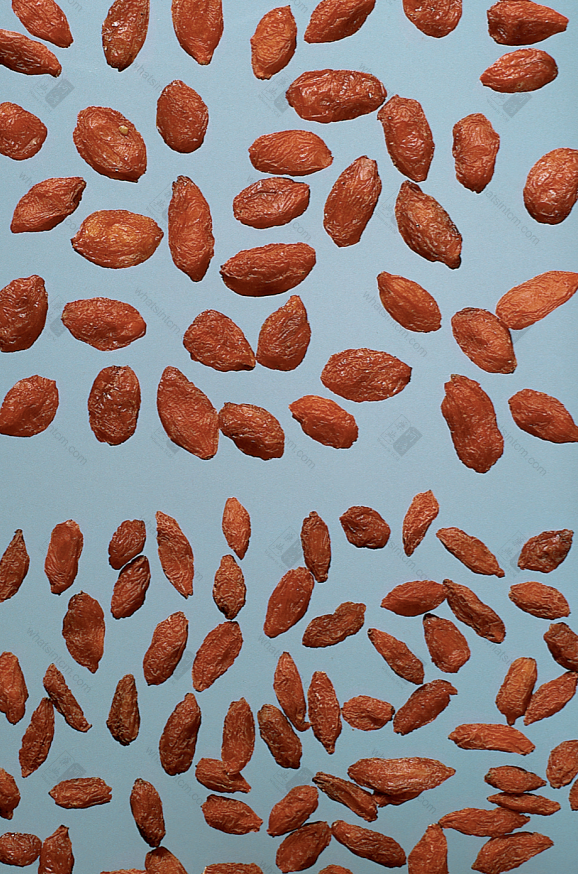
Wolfberry Fruit (Gou Qi Zi) (Top: Superior Gou Qi, Bottom: Grade A Gou Qi) (Elliptical, fusiform, slightly flattened, bright red, fleshy, soft, lustrous, with numerous flattened kidney-shaped yellow seeds; the fruit is wrinkled, sweet, and sour)
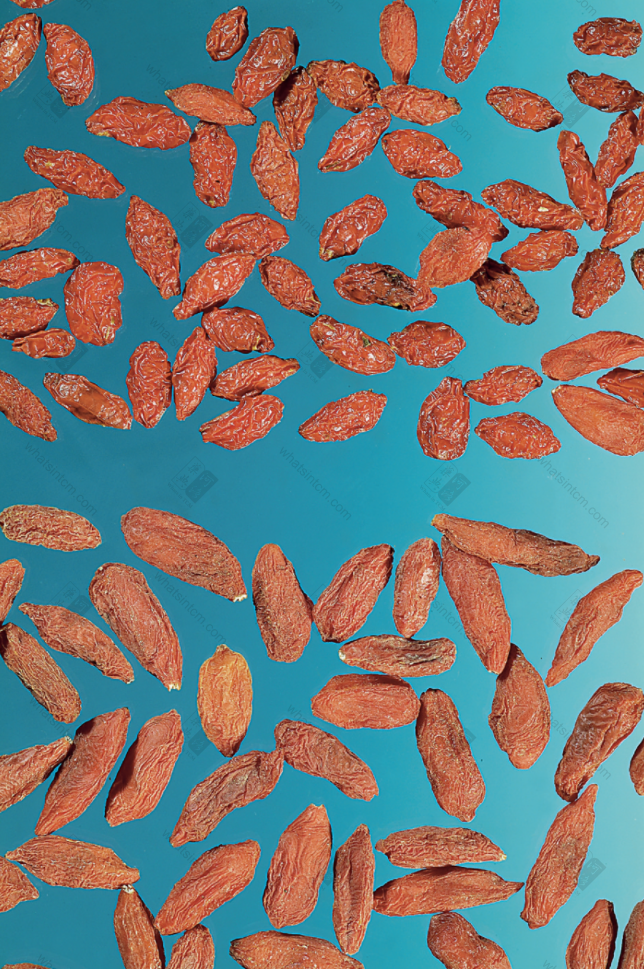
(Top) Artificially Dyed and Oven-Dried Sweet Wolfberry (Bottom) Ningxia Wolfberry
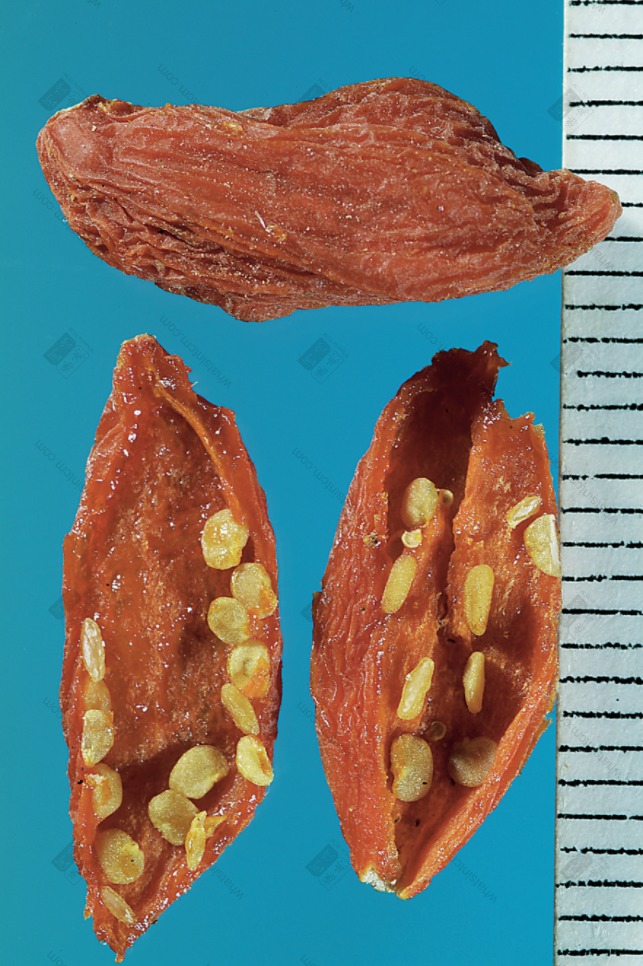
Ningxia Wolfberry (Long fruit, fine wrinkles, bright red, sweet and sticky when chewed)
【Naming】
【Source】
Shen Nong’s Herbal Classic, Upper Grade
【Common Usage Degree】
A
【Botanical Origin】
The dried and ripe fruit of Lycium chinense Mill. or Lycium barbarum L. (family Solanaceae).
【Characteristics】
(1) Western Wolfberry: Also known as Gan Qi (sweet wolfberry), it is the dried and ripe fruit of Lycium barbarum. It is divided into two types: long fruit and round fruit. The long fruit is long oval to fusiform, often flattened, slightly pointed at both ends, 1.2~1.8㎝ long, 0.5~0.8㎝ wide in the middle; the round fruit is oval, slightly flattened, blunt at both ends, 1~1.5㎝ long, 0.6~0.9㎝ wide. The surface has fine wrinkles, and the color is bright red to dark red. Sun-dried products are bright red, and oven-dried products are dark red. After storing for more than half a year, the color gradually becomes darker and duller. Slightly glossy, with a white fruit stalk mark at one end, the pulp is thick and soft, flexible and unevenly wrinkled, fleshy and moisturizing with sugary properties, containing 20~50 yellow kidney-shaped seeds. It has a fragrant and sweet smell, a sweet taste, and the seeds are slightly sour and astringent. It is slightly glossy, with a white fruit stalk mark at one end, the pulp is soft and moist, containing many yellow seeds.
(2) Tianjin Wolfberry: The fruit is oval or ovoid, slightly pointed at both ends, 0.8~1.5㎝ long. 3~5㎜ in diameter, the surface is blood red or dark red, with tighter fine wrinkles, no luster, the texture is soft and slightly moisturizing, one end is sharp, the other end is slightly round, the fruit body is mostly not flattened, relatively solid, the pulp is thinner, the sugar content is less, and it contains 20~40 yellow flattened kidney-shaped seeds, the seed shape is slightly the same as the above species. Although the number of seeds is not as many as Ningxia Wolfberry Fruit, but because the fruit is thin, the pulp is thin, and there is less sugar, the seeds account for a large proportion.
【Identification】
《Zheng Lei Ben Cao》: “The white, thornless ones are good”, “The roots that resemble the shape of a living being are the best”. 《Pu Ji Fang》: “Wolfberry Fruit harvested in winter are the best”. 《Ben Cao Gang Mu》: “Those that curl and harden when exposed to wind and sun, and turn red are the best”. 《Ren Shu Bian Lan》: “Wolfberry Fruit from Ganzhou that are small and red are the best”. 《Ben Cao Bei Yao》: “Those produced in Ganzhou, which are red, moist, and have few seeds are good”. 《Jiang Xue Yuan Gu Fang Xuan Zhu》: “Wolfberry Fruit… those that are still bright red are the best”.
The best are those that are large, fleshy, have few seeds, are red, and are soft in texture; those that are small, thin, have many seeds, and are grayish-red in color are of lower quality.
【Identification Terminology】
1. Oily Fruit: Refers to Wolfberry Fruit that have oxidized and turned oily black due to excessive ripeness, improper drying, or poor storage.
2. Ningxia Wolfberry, sticky when chewed: A distinguishing characteristic. Products on the Taiwan market: Gan Qi, Jin Qi (Blood Qi), Grade A, Grade B, Grade C Qi, Superior Qi, Auxiliary Qi.
1. Western Wolfberry Fruit (Western Wolfberry, Gan Qi, Ningxia Wolfberry): The botanical origin is Lycium barbarum. Produced in Zhangye (Ganzhou), Wuwei, and Jiuquan in Gansu. It is named after its original production in Ganzhou. The place of origin is divided into three specifications: long fruit, short fruit, and round fruit. In the pharmaceutical business, it is only divided into long fruit and round fruit.
Products from Ningxia are called Ningxia Wolfberry Fruit, with long and large grains and a slightly darker red color; products from Xinjiang are called Xinjiang Wolfberry Fruit, with large and round grains and a bright red color; products from Inner Mongolia are called Inner Mongolia Wolfberry Fruit, which are also round fruit. Especially the Xinjiang Wolfberry Fruit, the grains are particularly large, the pulp is particularly thick, the seeds are particularly few, and the taste is particularly sweet, and its sweetness is like Xinjiang raisins.
2. Blood Wolfberry Fruit (Tianjin Wolfberry Fruit, Tianjin Qi, Hebei Wolfberry Fruit, Blood Qi, Blood Qi Zi): Its original plant is Lycium chinense, produced in Hebei, Shanxi, Shandong, and Henan, and distributed in Tianjin, hence the name. It is also called Blood Qi or Blood Qi Zi because its color is as red as blood. The taste is sweeter than Ningxia Wolfberry Fruit and slightly sour and astringent. The quality is not as good as Gan Qi.
The empirical identification method for freshness is that new goods have better freshness. The surface color of the Wolfberry Fruit grains is bright red for Gan Qi and blood red for Blood Qi. Because the freshness is sufficient, the pulp is soft, moist, and juicy when chewed, and the taste is purely sweet. Goods with better preservation have a white mark where the fruit stalk has been removed at one end of the grain, and a small raised point due to the remaining style base at the other end. The entire grain has wrinkles on the outside, but the grain is complete.
Old goods have poor freshness, and the color of the grain surface is brownish-red. Due to being placed for too long, the pulp contains too much moisture that has evaporated. The pulp is harder when chewed, feels less soft and juicy, and there are many seeds and little pulp. Wolfberry Fruit that have deteriorated have a slightly sour taste. More old goods are mixed together, and the taste is not purely fragrant, but mixed with a sour taste.
【Category】
Fruits