



The Common Water-Reducing TCM Herb ‘Adzuki Bean’ (Chixiaodou), Why is it Green?
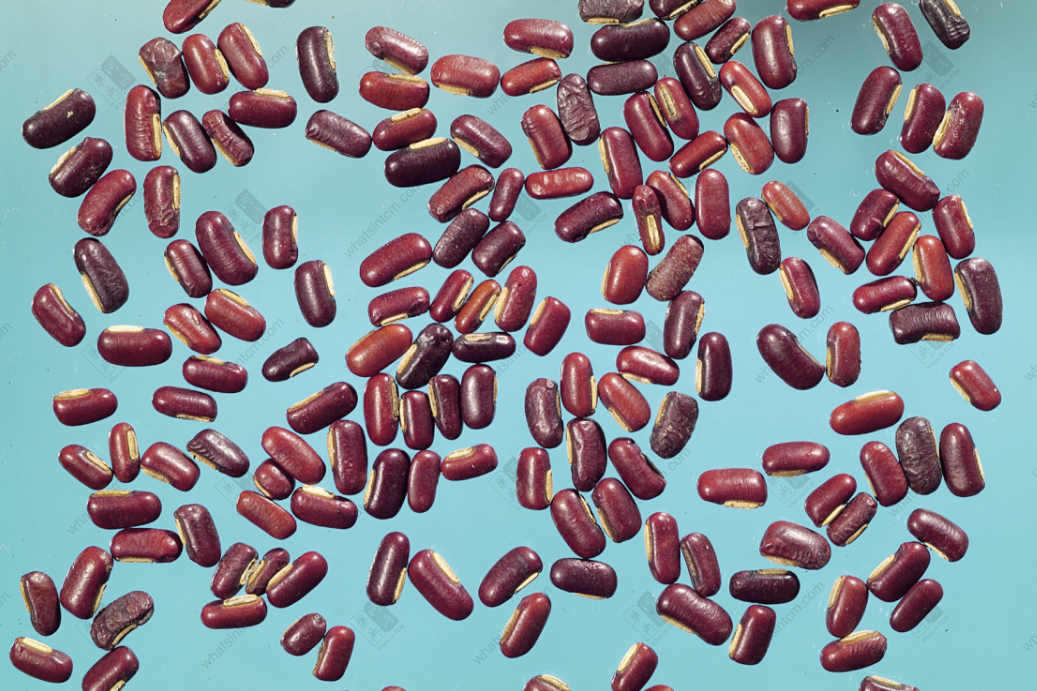 Adzuki bean: Slightly cylindrical and flattened, seed coat is brown, smooth, slightly lustrous, with a white linear hilum.
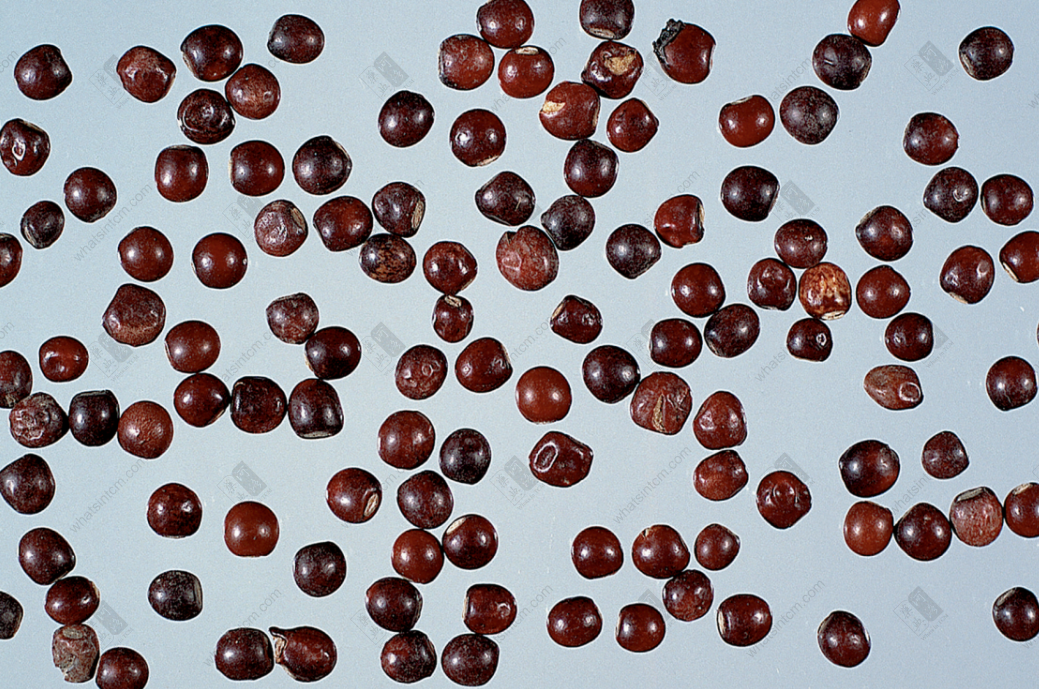 Pigeon pea: Round, a deeper red color, usually lacks luster.
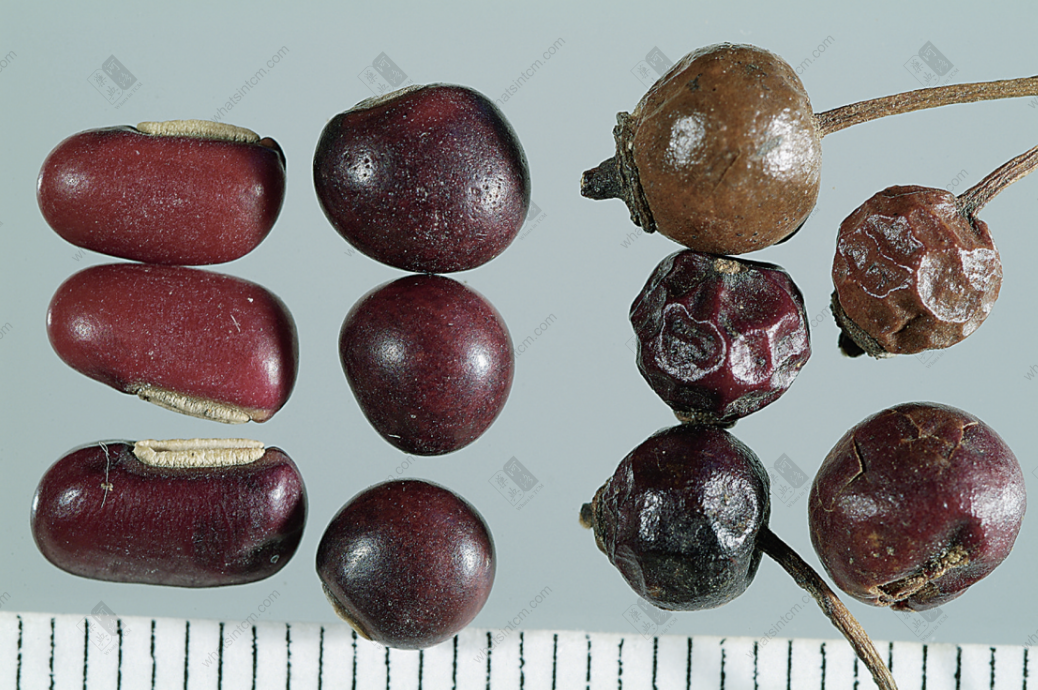 Left: Adzuki bean, Middle: Pigeon pea, Two rows on the right: *Rosa laevigata* seed
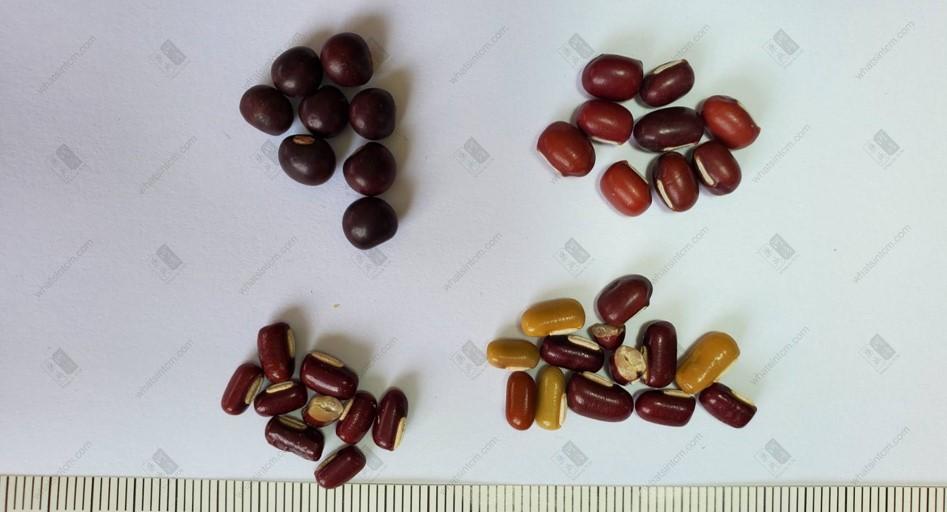 Top left: Pigeon pea, Bottom left: Adzuki bean, Top right: Red bean, Bottom right: Red and green Bambara groundnut. Provided by Dr. Chen Dazhen.
“The deep autumn in the southern country, how can one bear it? Holding red beans, how many times one caresses them. These clustered things are naturally unfeeling, who entrusts their idle sorrows to them?”
“Song of Red Beans” by Wang Guowei
The poem speaks of the deep autumn season in the south, holding red beans and caressing them repeatedly. Yet, these clustered red beans are naturally unfeeling objects; who is it that entrusts their idle sorrows to them? Despite this sentiment, the health benefits of consuming red beans are significant.
According to the fourth edition of the Taiwanese Pharmacopoeia, Adzuki bean (Chixiaodou) (https://whatsintcm.com/dt_articles/%e8%b5%a4%e5%b0%8f%e8%b1%86/) is the dried mature seed of the leguminous plant *Vigna umbellata* (Thunb.) Ohwi & H. Ohashi. It is also known as rice adzuki bean, pig liver red, and degree adzuki bean, and is mainly produced in Zhejiang, Hunan, Guangdong, Jiangxi, and other regions. In addition to large-scale red bean production in southern Taiwan, some adzuki beans are also cultivated. Typically, after the pods mature in autumn and before they crack open, the entire plant is harvested and sun-dried. Once dry, the seeds are threshed, impurities are removed, and they are dried for use. The medicinal material is oblong and somewhat flattened, with a deep purplish-red surface and slight luster. It is firm and not easily broken, with a faint aroma and a slightly sweet taste. Generally, those that are firm, solid, plump, and purplish-red are considered superior.
The *Shennong Ben Cao Jing* (The Divine Farmer’s Materia Medica) records: “Adzuki bean, it primarily treats water retention and expels pus and blood from carbuncles. It grows in plains and marshes.” This indicates its efficacy in reducing swelling and promoting the discharge of pus and blood from abscesses. Li Shizhen, the author of *Ben Cao Gang Mu* (Compendium of Materia Medica), also stated: “This bean, when it is small, tight, and dark red, is used in medicine. Those that are slightly larger, bright red, or light red do not cure diseases…” This highlights the standards for selecting adzuki beans.
When purchasing adzuki beans, one may inadvertently acquire counterfeit products. Therefore, caution is advised during selection. A common counterfeit is the red bean, which is what we generally call adzuki bean. The following methods can be used for identification: First, shape. Red beans are typically short and cylindrical, while adzuki beans are oblong and slightly flattened. Second, the surface. Red beans are dark reddish-brown and lustrous, while adzuki beans are dark purplish-red with less luster. Third, diameter. Red beans are about 0.4-0.6 cm, while adzuki beans are smaller, mainly around 0.3-0.5 cm. Finally, the hilum difference. Red beans have no protrusion, while adzuki beans have a linear protrusion. These four points are simple identification methods. Additionally, pigeon peas may also be mistaken for adzuki beans in the market. Pigeon peas can be identified by their round shape, deeper red color, larger diameter of about 0.6-0.9 cm, and usually lack of luster, making them easy to distinguish. Lastly, there is a variety called Bambara groundnut. Its appearance ranges in color from red, green, or yellowish-green, and its shape is similar to adzuki beans. Although they belong to the same genus *Vigna*, Bambara groundnuts are larger. The seed cotyledons also differ; adzuki beans are typically milky white, while red Bambara groundnuts are yellow. If the color is not discernible, tasting can help; adzuki beans usually have a stronger beany smell, while red Bambara groundnuts have a less pronounced beany smell. If still uncertain, one can germinate the seeds and observe the leaf shape. Bambara groundnuts are called so because their leaf tips are fine and pointed, resembling bamboo leaves. These identification methods should enable everyone to make smart and correct purchases. Previously, green-colored Bambara groundnuts resembling adzuki beans were mistaken for mung beans and sold as such. Therefore, buyers should exercise caution.
Adzuki bean is a commonly used Traditional Chinese Medicine in Taiwan. The Taiwan Food and Drug Administration has established standard specifications for sulfur dioxide testing and standard content limits for heavy metals such as arsenic, cadmium, mercury, and lead, allowing the public to use it with peace of mind.
【Image provided by】Professor Zhang Xianzhe, “Illustrated Guide to Authentic Medicinal Materials” https://whatsintcm.com