


The “Prime Minister of Flowers” in Full Bloom, Also a Key Herb for Nourishing Blood and Relieving Pain
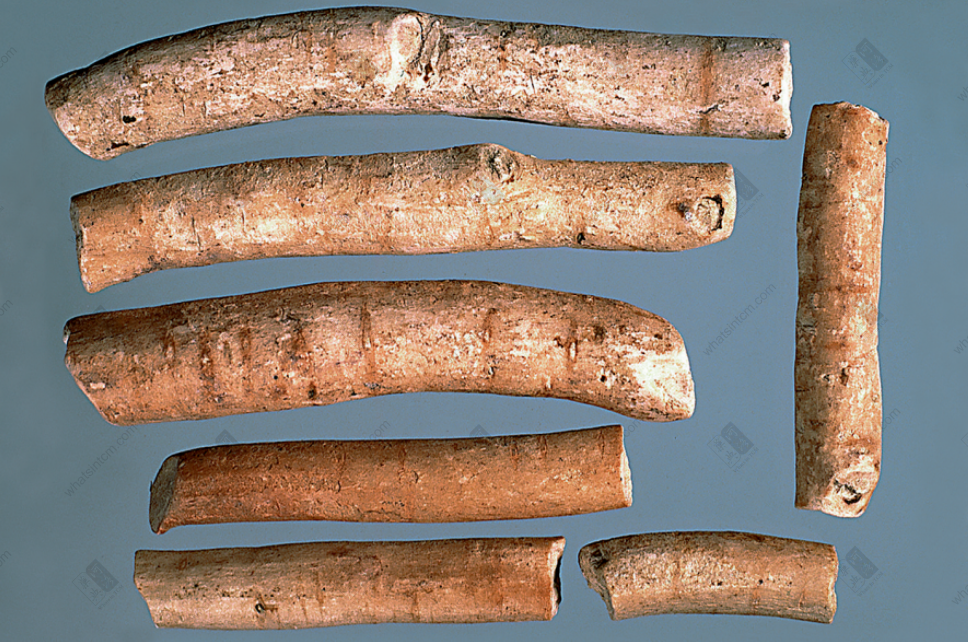 Sichuan White Peony Root: The 3 large roots on the upper left are first-grade, and the remaining 4 are second-grade. The medicinal material is cylindrical and less curved.
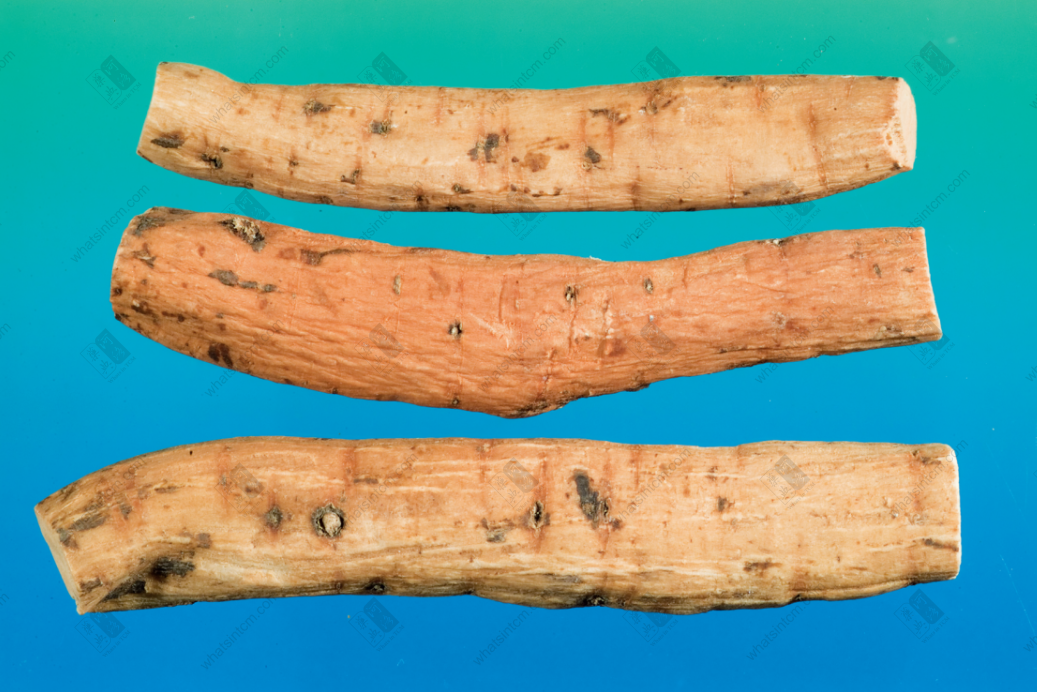 Eastern Peony Root: Longitudinal striations are clearly visible on its surface.
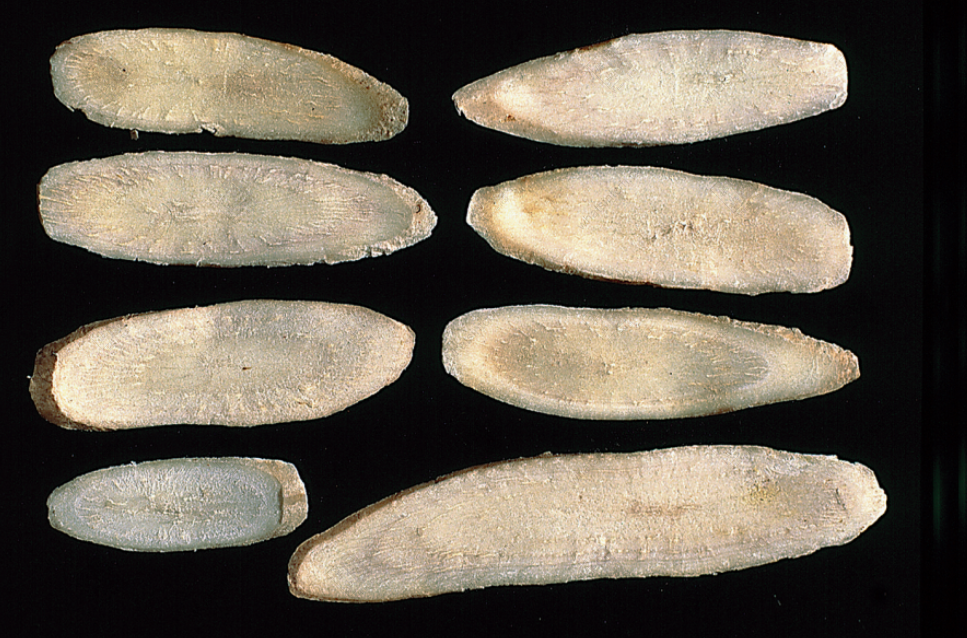 Sliced White Peony Root
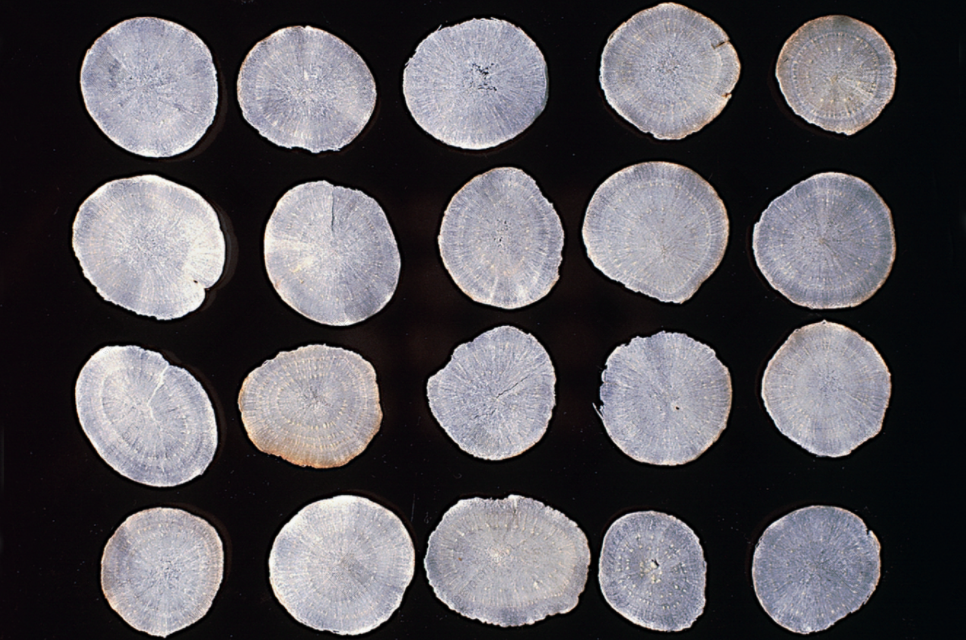 Cross-section of White Peony Root (round slice): Sufficiently powdery, feels sticky to the touch, and the cambium ring is clearly visible.
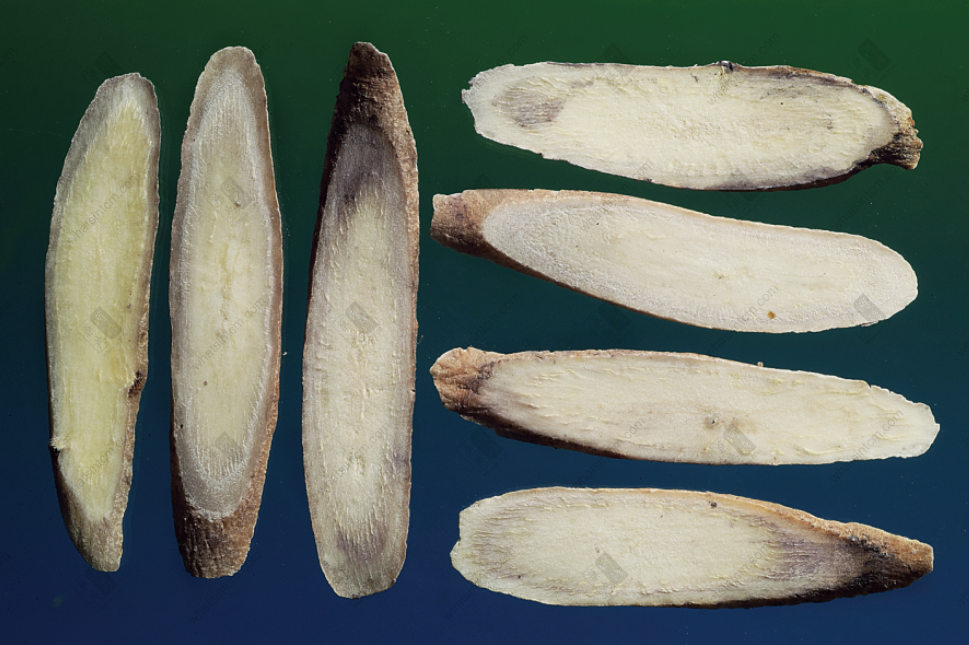 White Peony Root slices without sulfur fumigation.
“Forbidden elixir gives birth to red medicine, a faint fragrance it cannot hold. Fortunately, it is cut from the earth, meeting the bright sun’s time. Its name appears in the Tongjun Records, its fragrance heard in the Zheng Kingdom’s poems. If this solitary root can be of use, it is not merely for its blossoms that we love.” Tang Dynasty, Zhang Jiuling
This poem describes the growing environment and characteristics of the peony plant, and also indicates its medicinal properties, leading to its inclusion in the ancient book “Tongjun Cai Yao Lu” (Tongjun’s Herbal Record).
According to the fourth edition of the Taiwan Herbal Pharmacopoeia, White Peony Root (https://whatsintcm.com/dt_articles/%e7%99%bd%e8%8a%8d/) is the dried root of Paeonia lactiflora Pall. of the Ranunculaceae family, after the skin has been removed. It is mainly produced in Zhejiang, Anhui, Sichuan, and Shandong. The commercial products are divided into Hangbaishao, mainly produced in Zhejiang; Bobaishao, mainly produced in Bozhou, Anhui; and Chuanbaishao, mainly produced in Sichuan, due to their different origins. Central Taiwan also cultivates it, usually blooming in April and May of the Gregorian calendar, primarily for ornamental purposes. It is typically harvested in summer and autumn, washed clean, the root ends and fibrous roots removed, then boiled thoroughly in boiling water, cooled, and the outer skin removed with a bamboo knife or peeled and sun-dried for storage.
Another similar medicinal material is Red Peony Root (https://whatsintcm.com/dt_articles/%e8%b5%a4%e8%8a%8d/). According to the fourth edition of the Taiwan Herbal Pharmacopoeia, Red Peony Root is the dried root of Paeonia lactiflora Pall. or Paeonia veitchii Lynch of the Ranunculaceae family. It is mainly produced in Gansu, Qinghai, Sichuan, and Tibet. In the Book of Materia Medica Annotations written by Tao Hongjing during the Wei, Jin, Southern and Northern Dynasties, it is recorded: “Peony… is white and large, other regions also have it but it is mostly red, the red ones are slightly more beneficial.” From “white and large,” it can be understood that peony at that time mainly referred to White Peony. From “the red ones are slightly more beneficial,” it can be seen that Red Peony existed at that time, but was not yet common. Generally, good quality White Peony raw material is characterized by thick and long roots, uniform and straight, firm texture, rich in powder, without a white core or cracks, and a clean surface. In clinical use, White Peony mainly nourishes blood and Yin, calms liver Yang, softens the liver, and relieves pain. Red Peony mainly clears heat, cools blood, removes stasis, and relieves pain, so it is important to distinguish them carefully in usage.
There are several ways to identify White Peony medicinal material. Since it is better to have a sufficient powder content, “stickiness to the hand” is used as a criterion for the quality of the medicinal material. “Stickiness to the hand” refers to the feeling of stickiness when touching the cross-section with one’s hand. In addition, the cross-section of White Peony medicinal material has fine radial patterns in the woody part, commonly known as “chrysanthemum heart,” which is also a distinguishing feature. Furthermore, the aroma of the medicinal material should be faint, and it should taste slightly bitter and sour. Additionally, White Peony produced in Zhongjiang, Sichuan, has a pink surface and a whitish powder cross-section, and is commonly known as “white with a hint of red,” which is one of its main distinguishing characteristics.
There are some medicinal materials that are easily confused in the market, and consumers should pay attention when purchasing. The first is Cloud White Peony, which is the dried root of Paeonia suffruticosa or Paeonia rockii of the Ranunculaceae family. It has obvious longitudinal striations and rootlet marks, is not easily broken, and the cross-section is light yellow. Another is Baoji White Peony, which is the dried root of Paeonia decomposita. Its main characteristic is a grayish-white surface, relatively small roots, a light yellow cross-section, weaker powder content, and dispersed and indistinct chrysanthemum patterns. The last one is Wuyao, which is the dried root of Lindera strychnifolia of the Lauraceae family. Its characteristics include a yellowish-brown or yellowish-brown surface, a yellowish-white cross-section where annual rings are visible, a darker center, and a cooling sensation when tasted.
Genuine White Peony in the market can be seen as cross-sections, oblique sections, or rib pieces. When purchasing, one should be aware of excessive sulfur fumigation. The medicinal material usually appears very white and tastes very sour. In Taiwan, due to the established testing standards by the authorities, this is currently rarely seen. Another type is aged stock that has been stored for too long; its color is usually darker or reddish-brown. If it is extracted residue, the cross-section is usually yellowish-brown and dry, with a bland taste. Additionally, if the medicinal material has a white cross-section with indistinct radial patterns and a smooth feeling to the touch, its quality is not very good. Another type is hollow slices, where the inside of the medicinal material is hollow, or the hollow interior is dark brown. The last type is thin peony roots with a grayish-black surface. When fresh, slices are made without removing the outer skin. These are called “black and white peony” in their place of origin. Their efficacy as thin roots is yet to be studied.
White Peony has many different processing methods depending on its clinical function. Common methods include stir-frying with wheat bran, where the wok is heated over high heat, wheat bran is sprinkled, and when it smokes, the cleaned White Peony slices are added and stir-fried rapidly until the surface turns yellow, then removed and cooled. Another is vinegar-processed White Peony, where White Peony is mixed evenly with rice vinegar, allowed to moisten thoroughly, then placed in a pot and stir-fried over low heat until the surface turns slightly yellow, then removed and cooled. There is also soil-stir-fried White Peony, where fine powder of stove hearth soil is placed in a pot, stir-fried over medium heat, then White Peony slices are added and stir-fried until the surface is soil-colored and fragrant, then removed, and the remaining soil powder is sieved and cooled for use. Another is wine-processed White Peony, where White Peony is moistened thoroughly with yellow wine, then placed in a pot and stir-fried over low heat until the surface turns slightly yellow, then removed and cooled. The “Collected and Annotated Prescriptions for Women” by the great physician Xue Ji of the Ming Dynasty, a專書 on gynecology, often uses wine-fried White Peony. Because White Peony is sour and cold in nature and taste, it is acceptable for postpartum women to use it in tonics like the Great Nourishing Soup or Eight-Treasure Soup when stir-fried with wine. For those with spleen and stomach deficiency cold and weakness, and sallow complexion, White Peony should also be stir-fried with wine. This shows the significant clinical importance of wine-processed White Peony.
In addition to being a commonly used medicinal material in Traditional Chinese Medicine, White Peony can also be used as a general food ingredient according to the “List of Edible Raw Materials Available for Food Use” issued by the Ministry of Health and Welfare. Moreover, it is added to commonly used medicinal meals such as Si Wu Tang. Therefore, the Taiwan Herbal Pharmacopoeia also clearly stipulates the standard limits for sulfur dioxide and heavy metals in the medicinal material, allowing the public to use it with peace of mind.
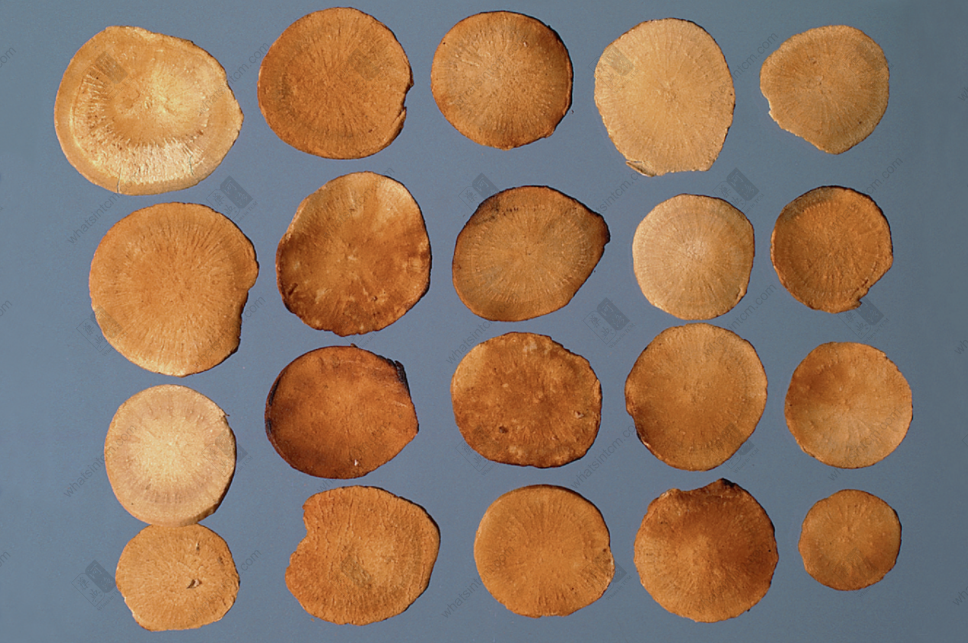 Wine-processed White Peony Root
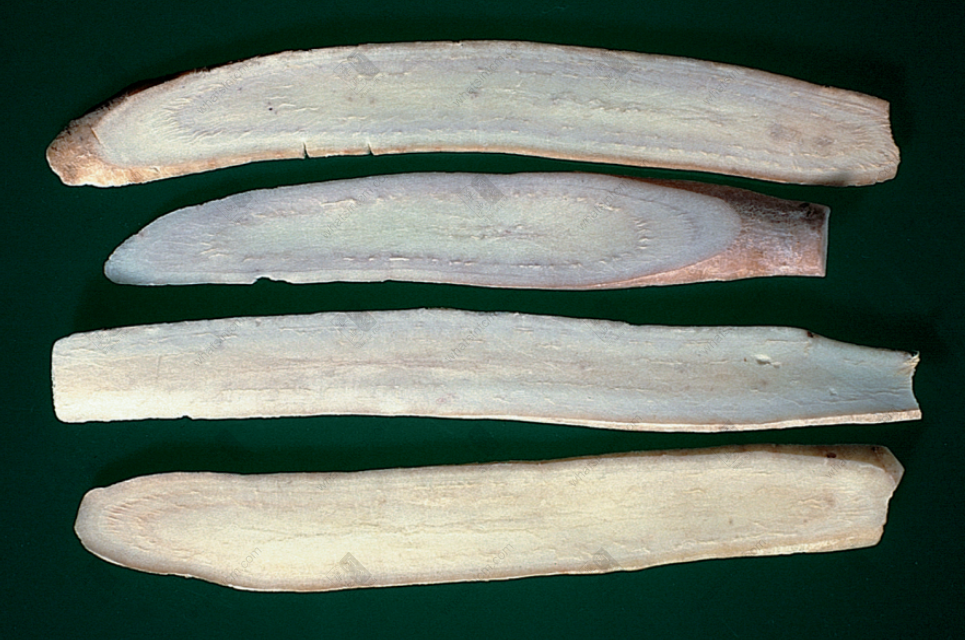 White Peony Root rib slices
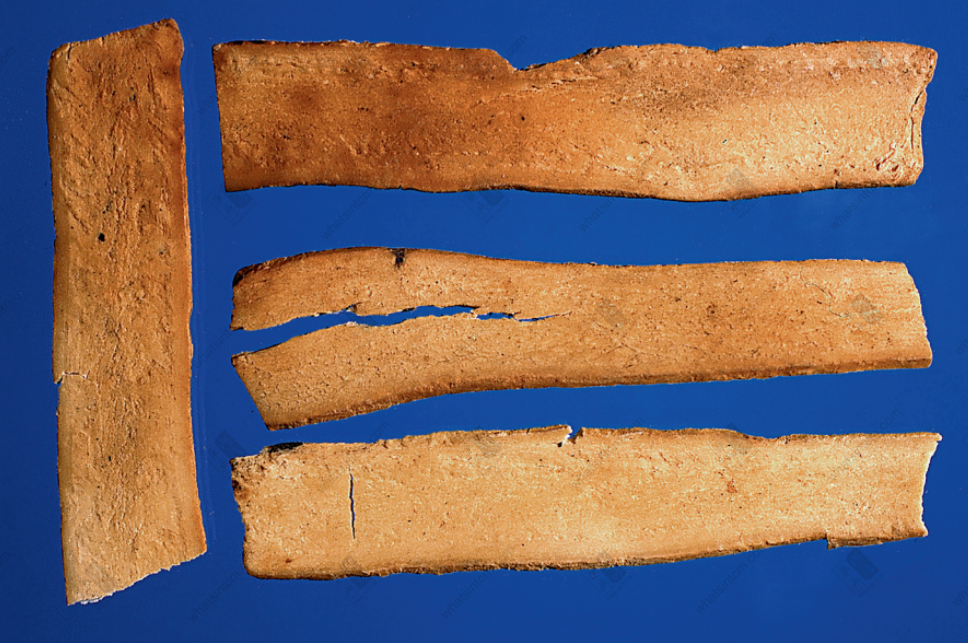 Wine-processed White Peony Root rib slices
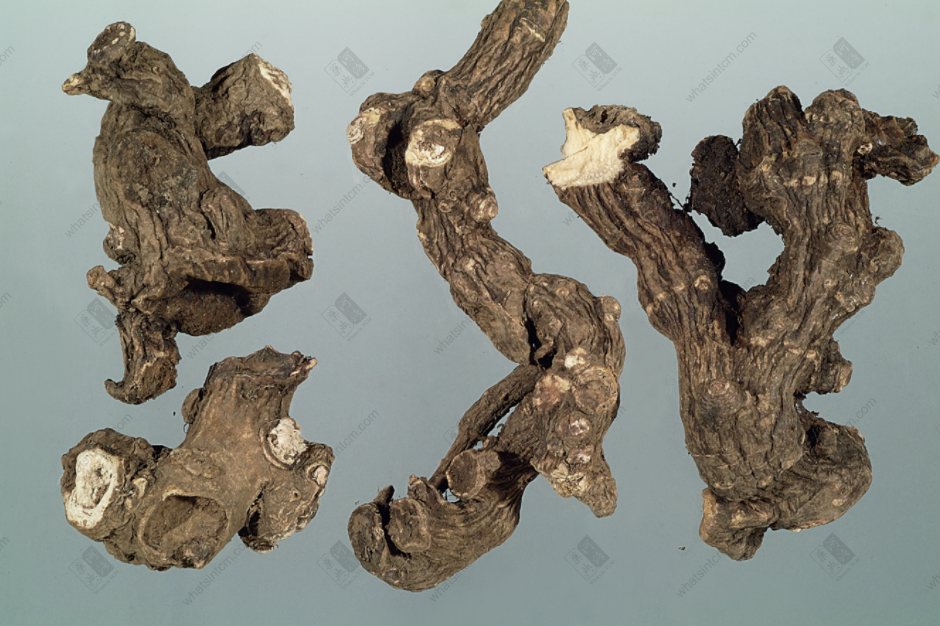 Raw Red Peony Root material
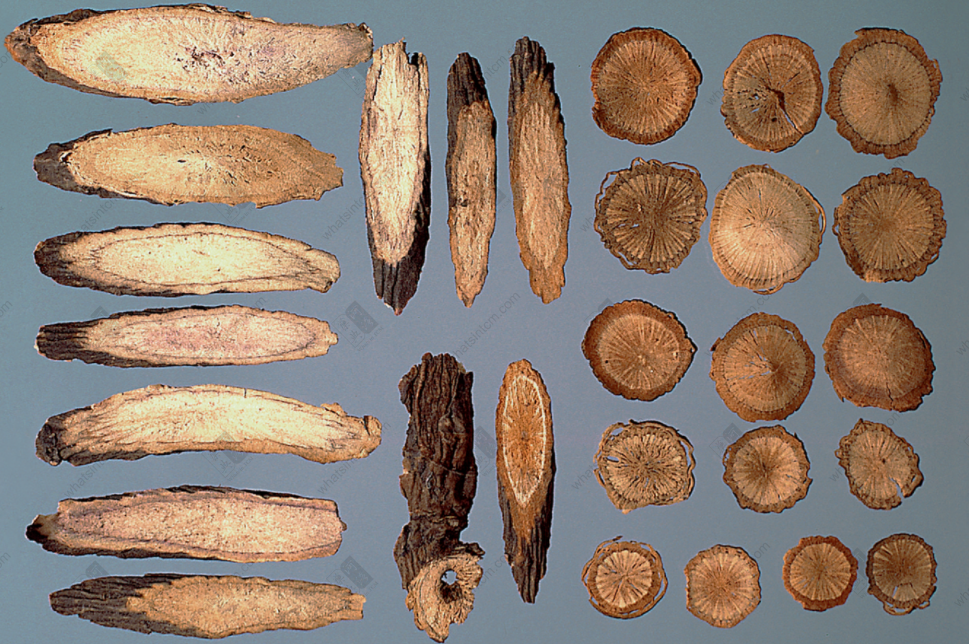 Red Peony Root slices: The left side is an oblique slice, and the right side is a round slice. The medicinal material is reddish-brown and has chrysanthemum patterns and a special aroma.
【Images provided by】Professor Zhang Xianzhe, “Illustrated Guide to Authentic Medicinal Materials” https://whatsintcm.com