



What to do about bad breath from constantly wearing a mask??
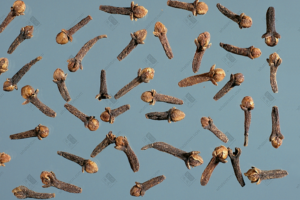
Cloves (Male)
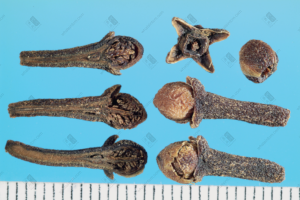
Cloves (Male): Short club-shaped buds, spherical corolla, brownish-red, oily, aromatic with a pungent and numbing taste.
“The clove plant is delicate, its tangled branches still bowed low. Fine leaves with fine hairs, sparse flowers display a simple elegance. Planted deeply behind a small study, it may be near the recluse’s dwelling. Late to fall amidst orchids and musk, let go of the desire to be crushed to powder.” – Du Fu of the Tang Dynasty
The first four lines of this poem, using a direct descriptive technique, portray the subtle and elegant image of the clove flower. It is outwardly plain yet inwardly refined, with a rich fragrance, earning it the title “Gentleman Among Flowers.” The latter four lines reveal the clove flower’s noble and pure inner qualities. The recluse mentioned in the poem was often used in ancient times as a metaphor for a hermit. Du Fu, in his later years, harbored ambitions that he could not express, thus he used the gentle clove to signify his resolve.
According to the third edition of the Taiwan Chinese Materia Medica, cloves are the dried flower buds of the Myrtaceae plant *Syzygium aromaticum* (L.) Merr. et L.M.Perry. (https://whatsintcm.com/en/dt_articles/clove/). There is another type of clove from the Oleaceae family, whose flowers have a light and elegant fragrance and is a common ornamental plant for gardens. It is mainly produced in Zanzibar, Tanzania, as well as Malaysia and Indonesia. Zanzibar, with over five million clove trees, is a major producer and is thus known as the “Clove Island.” It is also cultivated in Hainan and Guangdong in mainland China. Harvesting typically occurs between October and March of the following year, when the flower buds turn from green to bright red. It is also known as *ding zi xiang*, *xiong ding xiang*, and *ji she xiang*. According to the Song Dynasty text *Ri Hua Zi Ben Cao*: “Cloves treat bad breath, rebellious stomach, kidney qi, surging flank pain, perineal pain, strengthen yang, warm the waist and knees, detoxify alcohol, resolve accumulations, and eliminate cold deficiency.” This indicates its efficacy in treating halitosis, as well as refreshing the mind, opening the senses, and promoting the flow of qi to relieve pain. Additionally, the Song Dynasty text *Kai Bao Ben Cao* records: “Cloves warm the spleen and stomach, and stop cholera. (Treats) bloating, wind toxins and various swellings, and tooth decay.” This also suggests that cloves can improve early gum swelling and pain. The scent of cloves that we sometimes detect in dental clinics is due to dentists using eugenol to treat gum pain and swelling. Because it can eliminate bad breath and treat gum pain, some people dilute it and use it as a mouthwash for general oral hygiene. Cloves are divided into male cloves and female cloves based on the part harvested and the time of harvest. Male cloves are the flower buds of the clove plant, while female cloves are the mature fruits of the clove plant. The main distinguishing feature is that male cloves have a bud at the top and are nearly spherical, with a cylindrical calyx tube at the bottom, and four triangular, cruciate calyx lobes at the apex. Female cloves are generally rod-shaped, with four split calyx lobes at the apex that curve inwards, and a remnant of the pedicel at the base, appearing oblong overall. Therefore, their differences can be distinguished. Clinically, both have therapeutic effects, with male cloves containing several times more eugenol than female cloves, leading to slightly different uses.
Cloves, due to their unique aroma, can warm the middle jiao and regulate qi, as well as promote the flow of qi and relieve pain. The eugenol they contain also possesses good antibacterial properties. Therefore, they are added to products such as toothpaste, perfume, and cigarettes. In Europe and Western countries, they are also added to Christmas foods for flavoring, such as in the Swedish traditional Christmas food *Pepperkakor*. In some places, whole oranges are studded with cloves and decorated with beautiful patterns, then tied with ribbons and hung on Christmas trees, filling the indoor air with the scent of citrus and cloves.
The U.S. Food and Drug Administration (FDA) found in animal studies that three current food additives, when used in high doses, pose a carcinogenic risk. These are styrene, which enhances the aroma of fruit juices and seafood; eugenyl methyl ether; and pyridine. Eugenyl methyl ether is most commonly used in beverages and candies as a flavoring agent for fruit flavors such as orange, lemon, pineapple, grape, and cranberry. The Food and Drug Administration of Taiwan’s Ministry of Health and Welfare is also expected to follow the United States’ lead and completely ban this substance as a food additive starting January 1, 2024, to ensure public health and safety.
【Image provided by】Professor Chang Hsien-che, “Authentic Chinese Medicinal Materials Illustrated Guide” https://whatsintcm.com
【Author Profile】
Education: Ph.D. in Chinese Medicine, China Medical University
Current Position: Assistant Researcher, Center for Medical Intelligence, Taichung Hospital, China Medical University
Editor, Department of Chinese Materia Medica, Committee for Compiling Common Textbooks for Chinese Medicine Schools Nationwide
Distinguished Lecturer, Industrial Technology Research Institute
Adjunct Lecturer, School of Post-Baccalaureate Chinese Medicine, China Medical University
Adjunct Assistant Professor, Department of Pharmacy, Kaohsiung Medical University
Co-founder of Heluo Materia Medica www.whatsinTCM.com
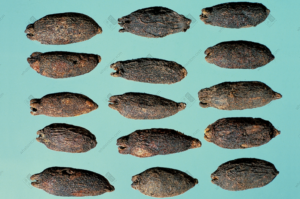
Cloves (Female): Oval fruit, blackish-brown color, four-lobed calyx at the apex, cotyledons embracing, pungent and spicy taste, brittle and hard texture.
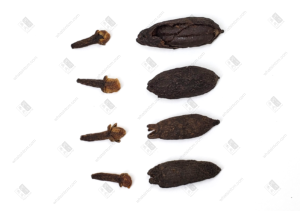
Comparison of Cloves: Left is male clove, right is female clove. Top right is the clove seed with the outer skin removed. Provided by Dr. Chen Da-zhen.