



Honey
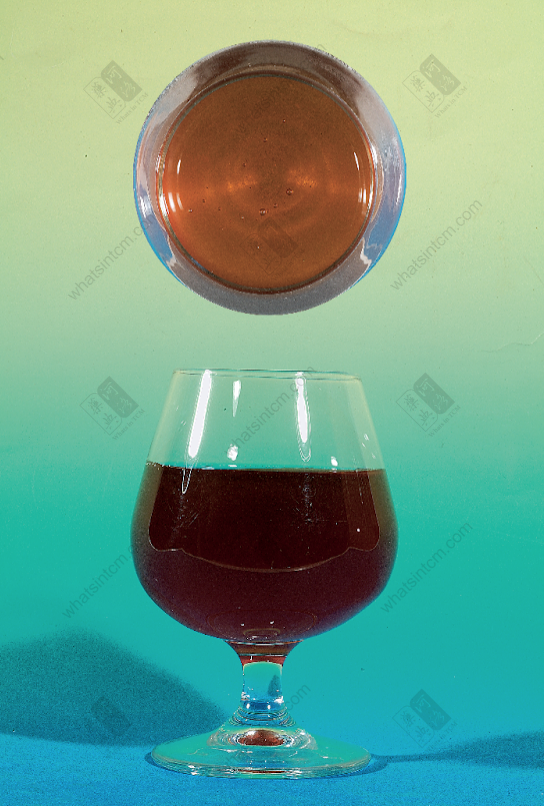 Honey (Translucent light yellow thick liquid, crystallizes into a solid when left for a long time, resembling solidified fat, sweet)
【Name】
【Source】
Shen Nong’s Herbal Classic, Superior Grade
【Common Use Level】
D
【Botanical Origin】
Processed from the carbohydrate substance brewed in beehives by the Chinese honey bee Apis chinensis Fabr., or the Italian honey bee Apis mellifera L., and related insects of the same genus.
【Characteristics】
It is a colorless or light yellow, thick liquid, translucent, glossy, and viscous. White to light yellow honey is also called “white honey,” while orange-yellow to brownish-yellow honey is also called “yellow honey.” It is translucent and glossy when fresh, but becomes opaque after a long time. After prolonged storage or exposure to cold, it precipitates granular crystals of glucose resembling fish roe. It has a fragrant aroma and a very sweet taste. The specific gravity (at 25°C) is approximately 1.355.
【Identification】
《Zheng Lei Ben Cao》: “Rock honey, with a color as white as cream, is the best,” “Rock honey, Ben Jing”. 《Pu Ji Fang》: “Home-raised white honey is superior. Wood honey is next. Cliff honey is next.”. 《Ben Cao Gang Mu》: “Shi Zhen said: Honey taken from mountain rocks is the best,” “Winter and summer are superior,” “The original name in Ben Jing was rock honey, probably because those grown on rocks are good.” 《Ben Cao Chong Yuan》: “The one that is as white as cream is the best. If people make barrels, raise and harvest it, it is called domestic honey, and this honey is the best.”
Due to differences in origin, climate, humidity, and nectar source plants, the viscosity (oiliness), color, and aroma of honey also vary. Generally, spring honey such as locust flower honey, milk vetch honey, jujube flower honey, and rapeseed flower honey are light in color and have high viscosity. Fragrant aroma, sweet taste, and better quality. Autumn honey, such as buckwheat flower honey and cotton honey, is dark in color, has a slightly smelly aroma, and a slightly sour taste, and the quality is inferior.
Quality depends on the plants collected by bees during brewing and the amount of water in the honey. It is best if the honey is white and clean, contains little water, has an oily texture, is as thick as solidified fat, drips down like silk when picked up with a wooden stick, and coils like folds, with a clear and sweet taste without sourness, is clean, has no impurities, and no peculiar smell. It is translucent when fresh, but easily becomes opaque after a while, and glucose crystals precipitate out. It has a good aroma and a sweet taste. Pure honey will not deteriorate after a long time.
Unethical beekeepers add malt sugar, sucrose, starch, dextrin, and other impurities when selling honey, or feed the bees sand sugar during beekeeping. The simple and experienced identification methods are as follows:
1. Add flour, dextrin, and other starch-like substances: Take 2gm of honey, add 10ml of water, heat to boiling, add 1 drop of iodine test solution or 1 drop of iodine tincture. If it appears blue, purple, green, or reddish-brown, it is mixed with starch or dextrin. Insert a red-hot smooth iron wire into the honey, and when it is pulled out after a while, there will be attachments on the iron wire. The starch value is less than 8.
2. Add maltose: Take 1 part of honey sample, inject it into a test tube, add 4 parts of water, and then slowly add 95% alcohol. (a) If it only becomes slightly turbid, it is honey. (b) If white flocculent precipitates, it is mixed with malt sugar.
3. If malt sugar is added, the crystallization of glucose is not obvious, and it can penetrate to the surface of the paper when dripped on paper.
4. Adding sucrose: Fehling’s reaction turns cherry red.
5. Adding invert sugar: 5-hydroxymethylfurfural (HMF) appears or is higher than that of pure honey.
6. Burn a smooth iron wire red, insert it into the honey, and if the iron wire becomes rough after it is pulled out, it proves that it is mixed with impurities.
7. Add other impurities: (a) Take a sample, dilute it with water, stir it evenly, let it stand, and if there are floating or sinking objects, it is a fake. (b) Take 5mI of the sample, place it in a 50mI volumetric flask, dilute it with 10mI of water, add 2 drops of ammonia test solution, then add water to the mark, shake well, filter, let it stand for 5 minutes, and measure on a polarimeter. Honey mixed with sucrose (sucrose content exceeds 20%) is dextrorotatory. (c) Take a transparent glass bottle and fill it with 2/3 of the sample. Tighten the lid and turn the bottle upside down. If the bubbles rise quickly, it proves that a certain amount of water has been added. After picking up the honey with a wooden stick, if the drops fall quickly and do not form a filamentous shape, it indicates that water has been added; or take a small amount with a wooden stick and apply it on absorbent paper or filter paper, if water stains are scattered after 1-2 minutes, it also proves that water has been added. (d) Take a small amount of honey in a test tube, dilute it with 5 times distilled water, then add a small amount of 10% sodium hydroxide, plug the test tube with cotton, put a piece of wet litmus paper on the mouth of the tube, heat the test tube, and if the litmus paper turns blue, it proves that there are ammonium compounds (mixed with chemical fertilizers).
8. Add cold boiled water to the honey, stir it with chopsticks, and it will quickly disperse. It is pure honey. If it does not disperse or is very slow, it is not pure and contains more sugar.
9. Use toilet paper, drip a little honey on it, and it will form a ball, and it will not disperse. It is like a water drop and is better. If it disperses and is uneven, and some are in large clumps, it is not pure.
10. Use pure real honey and use the taste to sweeten it. A small drop on the palate will quickly dissolve. Depending on the source of the honey, it has the aroma of longan flower or lychee flower. Or use your nose to smell it. This method of identification by smell is the most reliable and fastest as long as you have experience.
11. Glucose is dextrorotatory and fructose is levorotatory. Under the measurement of a polarimeter, ordinary honey is levorotatory. If it is found to be dextrorotatory, it is not pure honey.
12. There is another more serious type of counterfeiting. Boil malt sugar with sucrose water, and then add a small amount of lychee honey or longan honey to mix and sell. Or boil dried longan with water until thick, filter out the longan residue, and then add sand sugar and malt sugar to boil. This can be seen from the consistency, color, aroma, and appearance.
13. The composition of honey produced in Taiwan is generally 18% water, 35.2% dextrose (glucose), 42% levulose (fructose), 0% sucrose, 1.6% dextrin, 0.2% ash, 2.3% protein, and 0.8% fat. The composition of honey varies depending on the source plant, especially the content of fructose and glucose, which varies depending on each type of source plant. Because Taiwan is located in the subtropics and has a mild climate, sucrose can be completely converted into monosaccharides. This is a characteristic of Taiwan honey.
Other physicochemical identification: (1) Physicochemical property determination: Turbidity, polarimeter measurement is levorotatory. (2) Physical constants: Crystallization, density. (3) Inspection: Acidity, starch, dextrin, impurities. (4) Content determination: Concentration, starch value (DN), 5-hydroxymethylfurfural (HMF), caramel, reducing sugar.
【Section】
Invertebrates