



Yuan Zhi (Radix Polygalae)
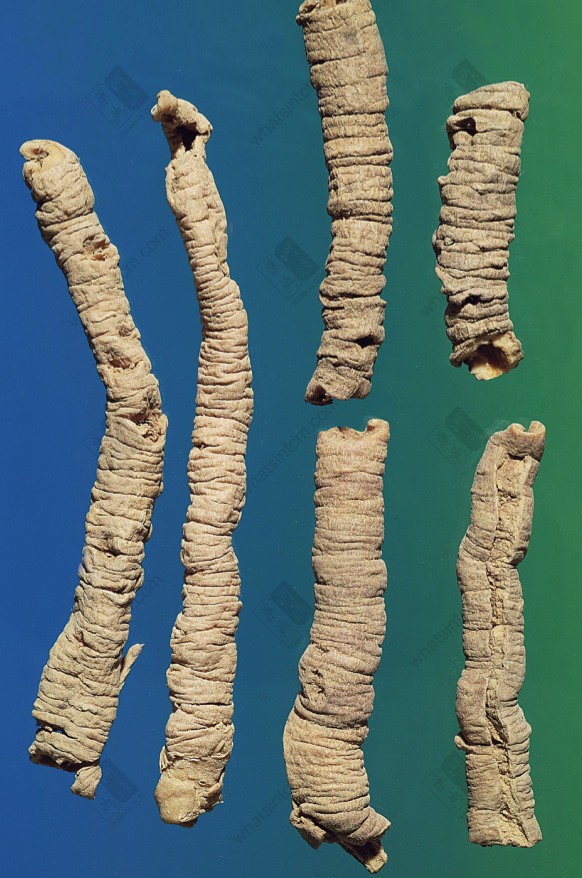 Wild Large Yuan Zhi (Zhi Tong) (Cylindrical, with transverse wrinkles, nodular)
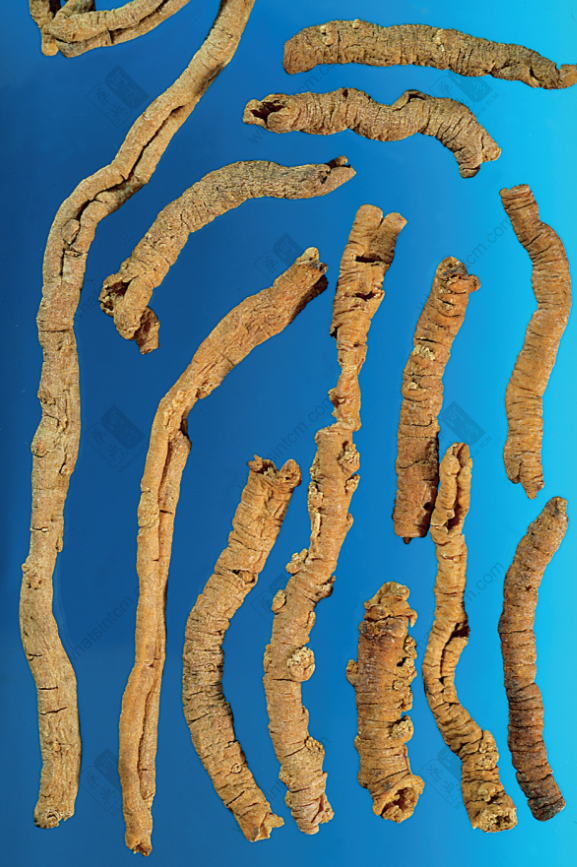 Wild Yuan Zhi (Slightly curved, grayish-yellow, tubular, broken and rolled inward)
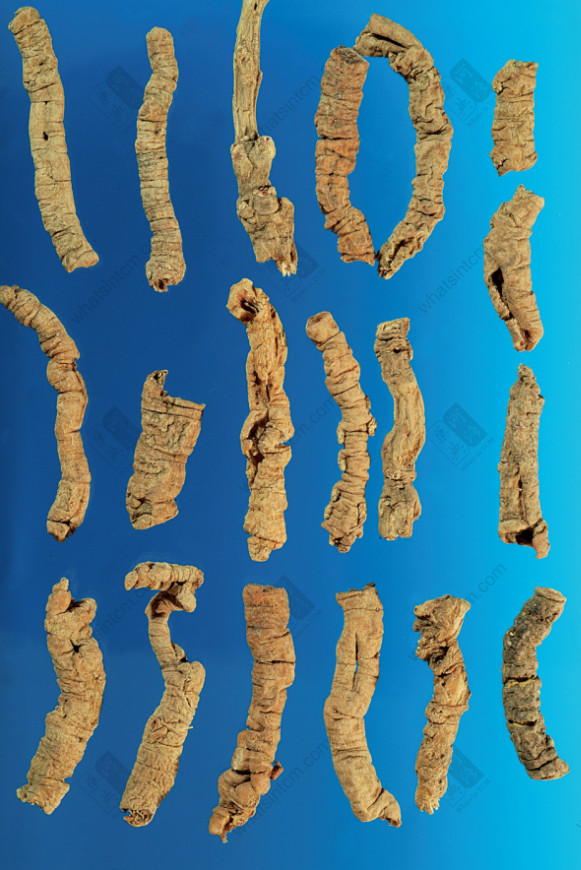 Wild Yuan Zhi (Zhi Rou) (Pith removed)
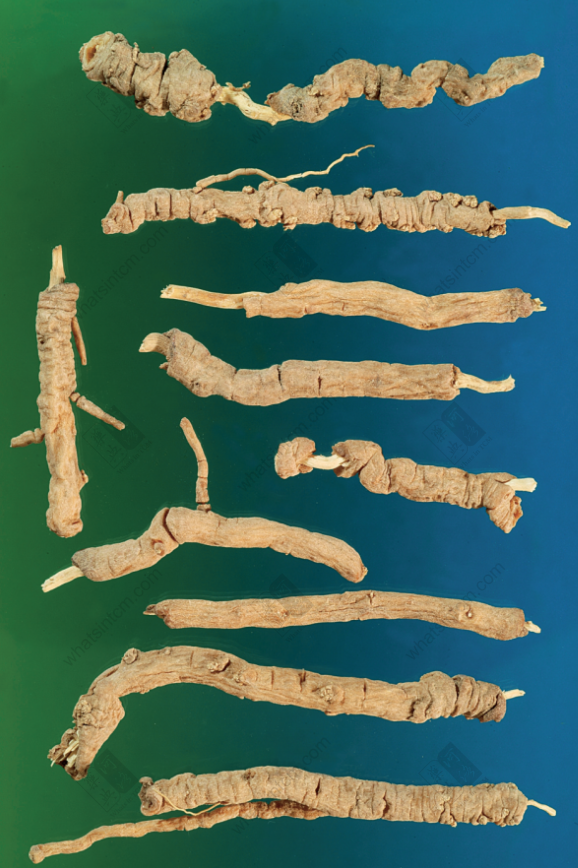 Zhi Gun (Small strips with pith)
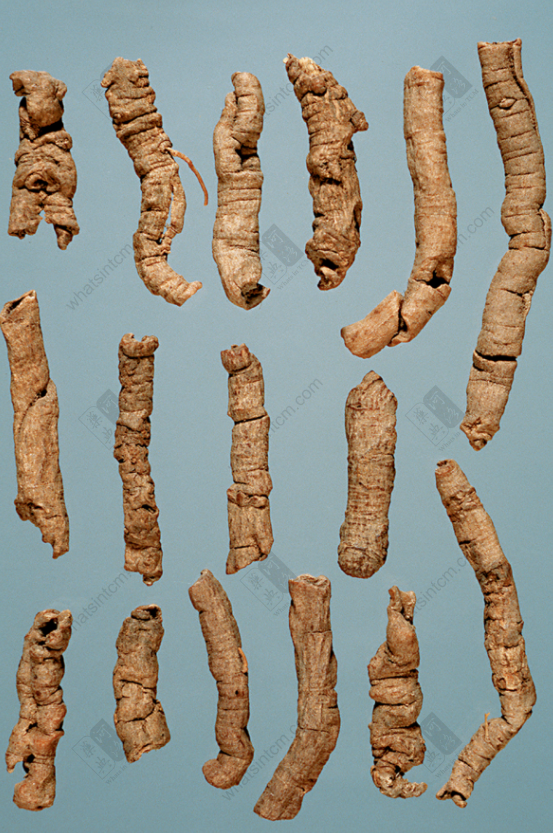 Cultivated Yuan Zhi
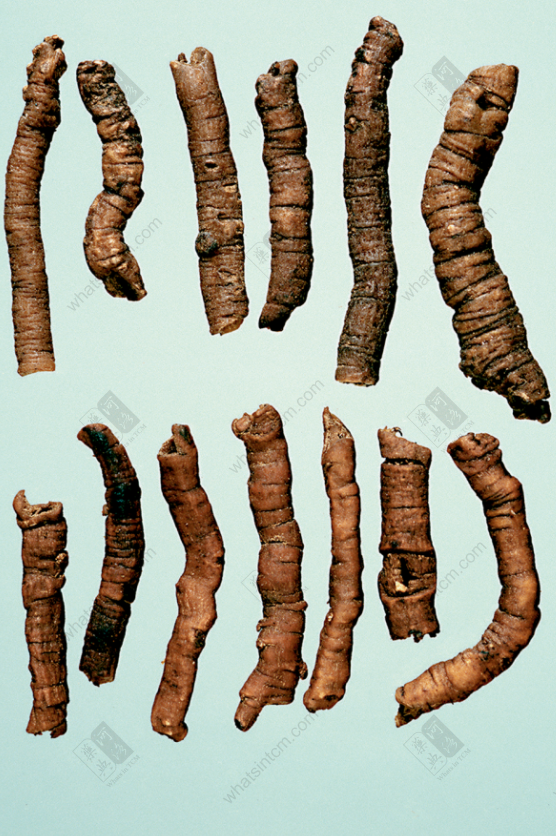 Honey-fried Yuan Zhi (Top), Prepared with Licorice water (Bottom)
【Naming】
【Source】
Shen Nong’s Classic of Materia Medica, Superior Grade
【Common Use Degree】
B
【Botanical Origin】
Root or root bark with the xylem removed of Polygala tenuifolia Willd. of the Polygalaceae family.
【Characteristics】
The root is cylindrical, slightly curved, with the pith removed, forming a hollow tube. It is about 10cm long and 3-6mm thick. The outer surface is light brown, rough with coarse root scars, and has deep transverse wrinkles that are slightly nodular. The cortex is quite thick and easily separated from the xylem. The cortex wrinkles resemble earthworms. The texture is hard, and the taste is bitter, slightly pungent, and produces a throat-scratching sensation.
The commodity includes two types: Yuan Zhi Tong (tube) and Yuan Zhi Rou (flesh). Yuan Zhi Tong is the cortex with the xylem removed, appearing cylindrical and curled. Yuan Zhi Rou is mostly broken, thin, with fewer transverse wrinkles, and has longitudinally split cracks. Yuan Zhi Gun (stick) is small, with a relatively hard, light yellow xylem in the center.
The prepared slices are cut into small segments of about 2.5cm in length, and after processing, they appear brown, sticky, and soft in texture.
【Processing】
1. Raw Yuan Zhi 2. Processed Yuan Zhi 3. Honey-Yuan Zhi
【Identification】
《Essential Compendium of Materia Medica》: “Those from Yimen are the best.”
Those with thick flesh, coarse, thin skin, white flesh, tender, soft, glutinous, and without a solid core are considered the best. For Zhi Geng (stalk) with the core not removed, those with thick branches, shiny skin, and yellow color are considered good. Those with hair (commonly known as ‘Tiantouji’ – field chicken) are the worst.
【Identification Terminology】
1. Core: Generally refers to tissues with different morphology and texture in the central part and the edge part of medicinal materials, which is called “core”. Due to the different medicinal materials, the essence of the core is also different. For example, the Yuan Zhi refers to the xylem, the core of Mai Dong refers to the stele, and the Lotus Seed core refers to the embryo.
2. Tiantouji (Field Chicken): Refers to the Yuan Zhi medicinal material with long hairs. Experience suggests that it is the worst quality Yuan Zhi.
3. Bone: Generally refers to the wood core inside some medicinal materials, which is the xylem in anatomy. For example, the developed xylem of Yuan Zhi is called bone.
4. Yuan Zhi Rou (Flesh): Refers to the Yuan Zhi root bark that has been hammered open and the xylem removed. The remaining bark is mostly broken. The flesh is thin and has fewer transverse lines.
5. Yuan Zhi Gun (Stick): Mostly small Yuan Zhi roots that are not suitable for processing to remove the core. The center retains a light yellow xylem.
6. Goose Quill Zhi Tong (Tube): Mostly coarser Yuan Zhi roots that have had their xylem removed after being rubbed. The remaining bark is cylindrical or a hollow long tube, shaped like a goose feather quill.
【Category】
Root Category