



Radix Scrophulariae
<img class="size-full wp-image-13051" src="https://whatsintcm.com/wp-content/uploads/2020/07/p64-14-1-玄參.png” alt=”” width=”886″ height=”594″ /> Radix Scrophulariae (Large Radix Scrophulariae) (Coarse longitudinal wrinkles)
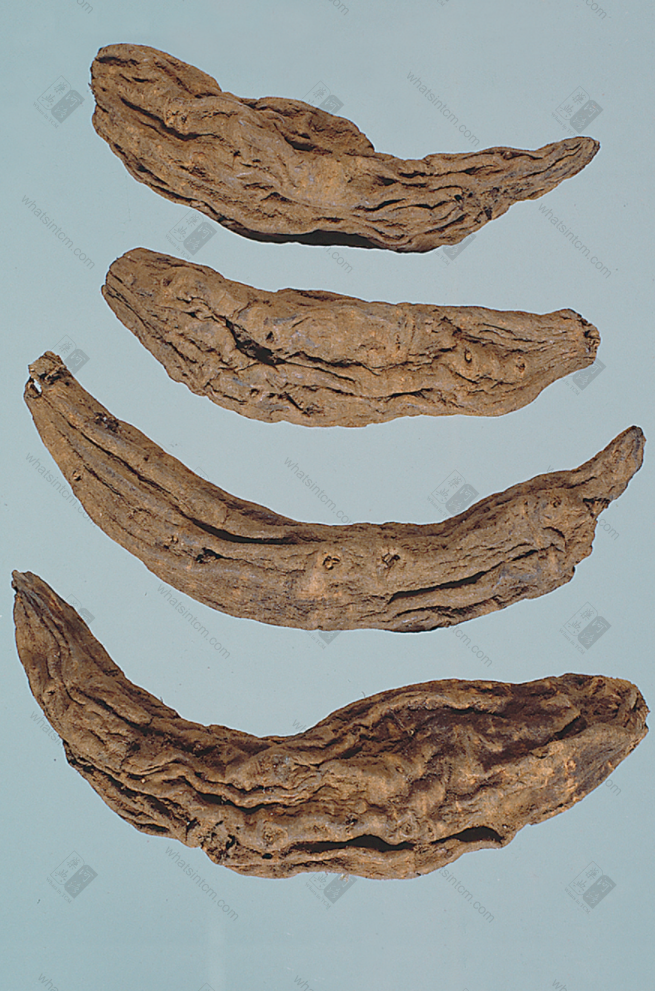 Small Radix Scrophulariae (Cylindrical-spindle shaped)
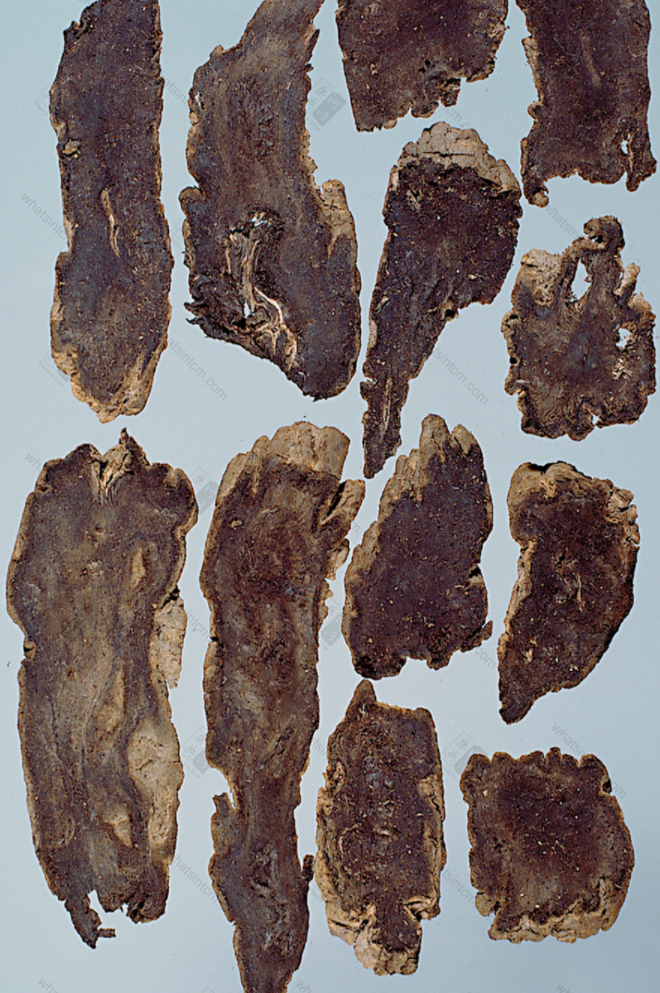 Radix Scrophulariae Slices (Black, oily)
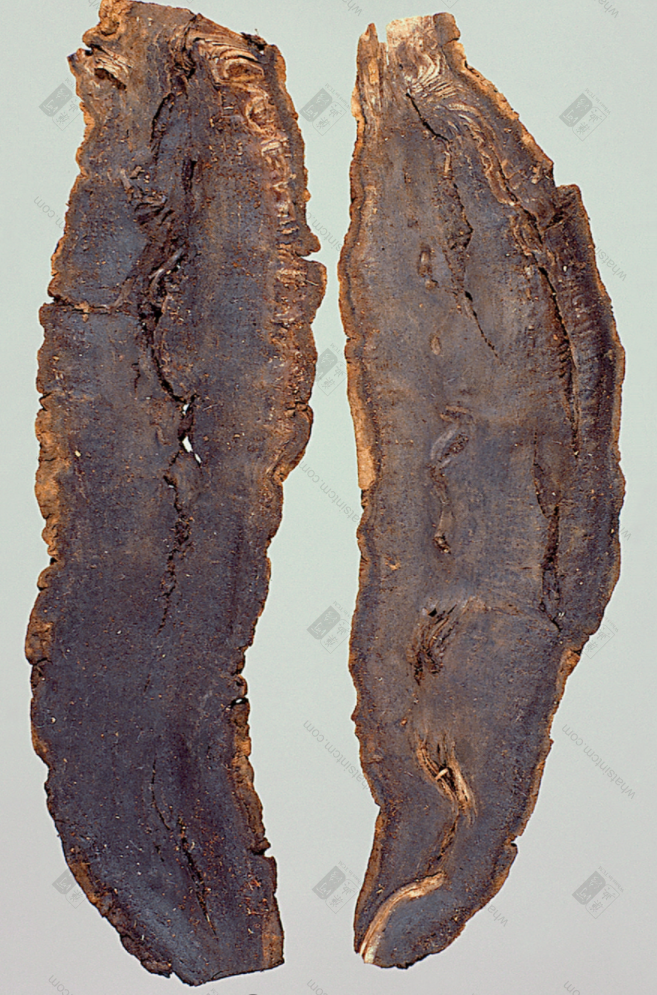 Large Radix Scrophulariae Slices
【Naming】
【Source】
Shen Nong’s Herbal Classic of Materia Medica, Middle Grade
【Common Usage Level】
B
【Botanical Origin】
Dried root of Scrophularia ningpoensis Hemsley and related species in the same genus, family Scrophulariaceae.
【Characteristics】
This product is cylindrical or fusiform, sometimes curved like a sheep’s horn. It is plump in the middle and slightly thinner at both ends. It is about 6-20cm long, and the diameter in the middle is about 1.5-2.5cm. The surface is grayish-yellow or brownish-brown, with obvious coarse longitudinal wrinkles and sparse transverse cracks. There are occasional transverse fissures (lenticels) and concave pits left by fibrous roots. It is hard and not easy to break. The outer skin of the processed product is gray-brown, with longitudinal grooves and fibrous root marks, and the edges are twisted and uneven. The cut surface is black, oily like raw rehmannia, slightly shiny and patterned, without cracks. The vascular bundles of the xylem are pale yellow and arranged radially (chrysanthemum pattern), and the medullary rays are also black. It has a burnt smell, sweet, slightly bitter and salty taste.
【Identification】
《Classified Materia Medica》: “The black and moist ones are good.” 《Ren Shu Bian Lan》: “Radix Scrophulariae produced in the south, the black ones are good.” 《Good and Bad Identification》: “The ones that are black inside, moist, plump, and large are superior.” The best ones are those with large branches, fine skin, thick flesh, heavy and firm texture, clean cut peduncles, no hollow bubbles, glutinous, and black and oily flesh with a sweet taste. The ones with small branches, rough skin, attached peduncles, hollow sections, woody texture, and little flesh are of poor quality.
【Identification Terminology】
1. Jiao Shen (角參, Horn Ginseng): The tuberous root of Radix Scrophulariae is long and slightly curved, resembling a sheep’s horn.
2. Hei Shen (黑參, Black Ginseng): Another name for Radix Scrophulariae, named after its black color.
3. Yuan Shen (元參): Radix Scrophulariae was renamed Yuan Shen to avoid the taboo of Emperor Xuan’s name (玄).
【Category】
Root Category
Related Products
