



Gastrodia Tuber (Tian Ma)
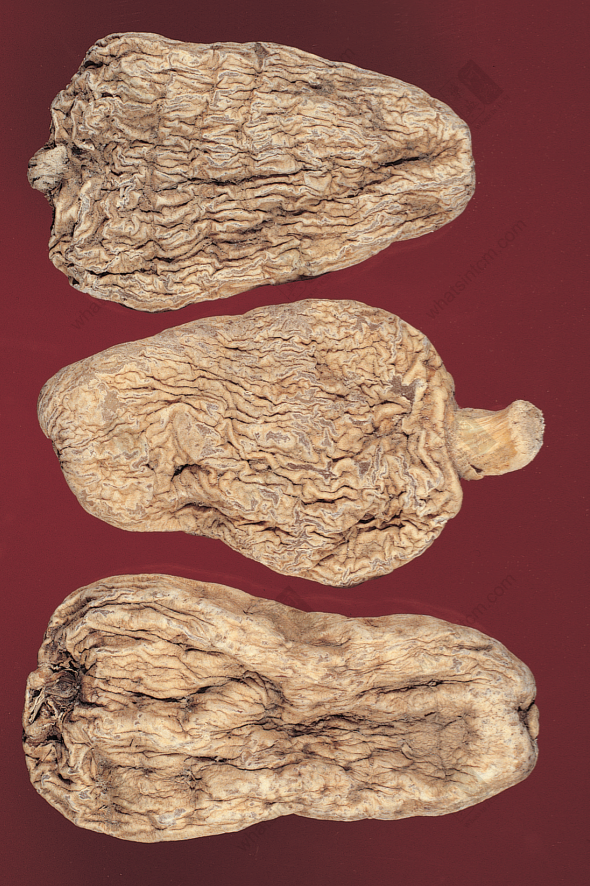 First Grade Sichuan Gastrodia Tuber (Tian Ma) (Sesame seed spots, disc-shaped base) (Oval, slightly flattened, yellowish-white, wrinkled and curved, semi-transparent)
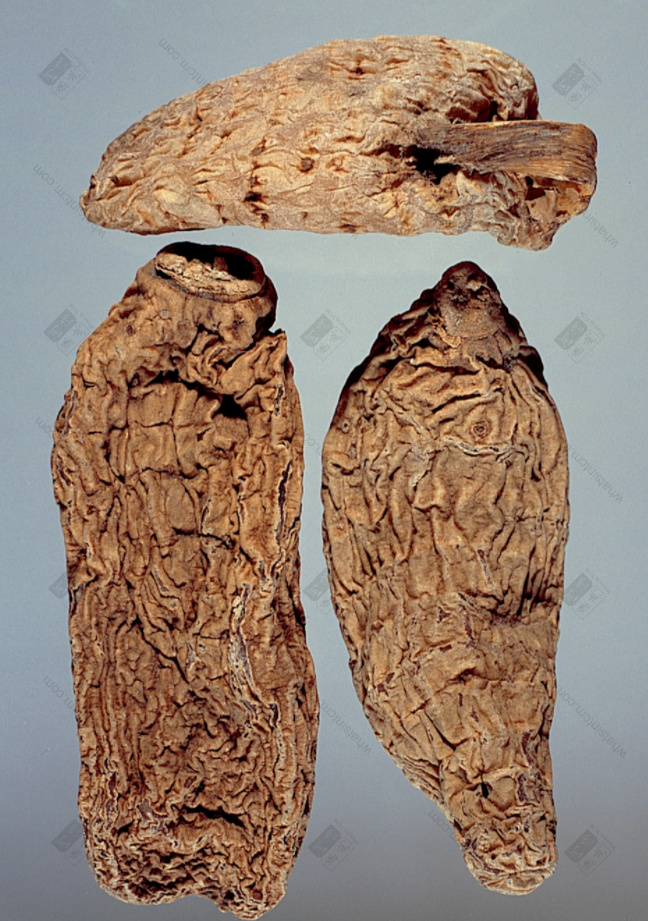 Second Grade Sichuan Gastrodia Tuber (Tian Ma) (Parrot’s beak, toad skin)
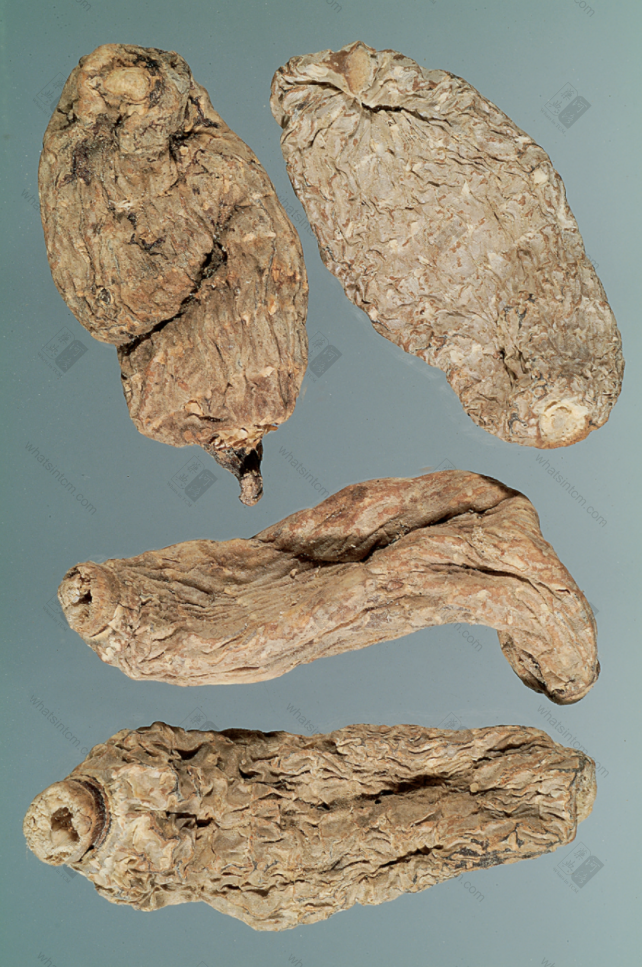 Sichuan Gastrodia Tuber (Tian Ma) (Top), Yunnan Gastrodia Tuber (Tian Ma) (Bottom)
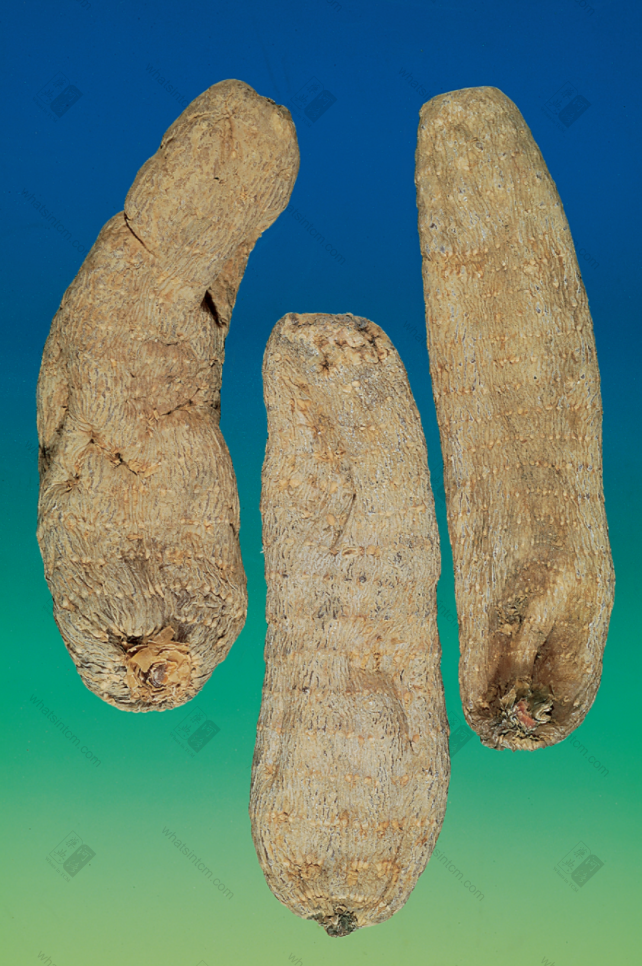 Sichuan Gastrodia Tuber (Tian Ma) (Fish scale pattern, round navel scar, dotted ring) (Longitudinal stalk joint has a red base)
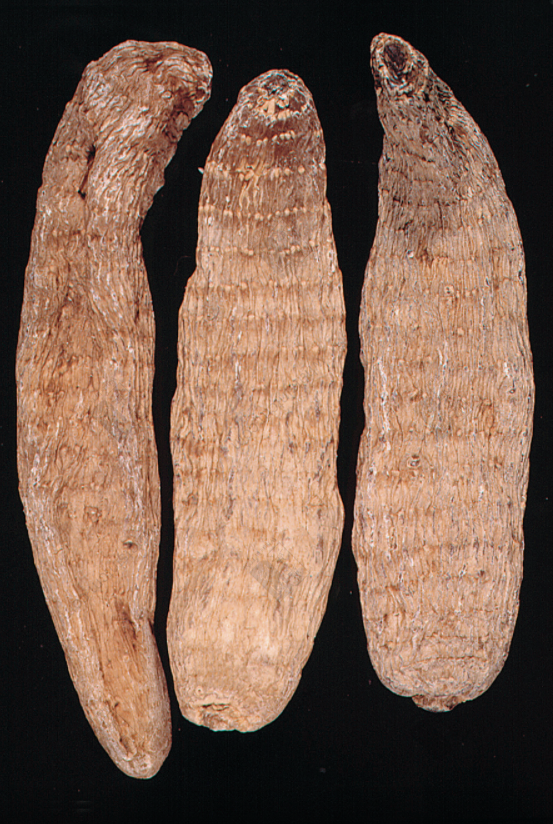 Guizhou Gastrodia Tuber (Tian Ma)
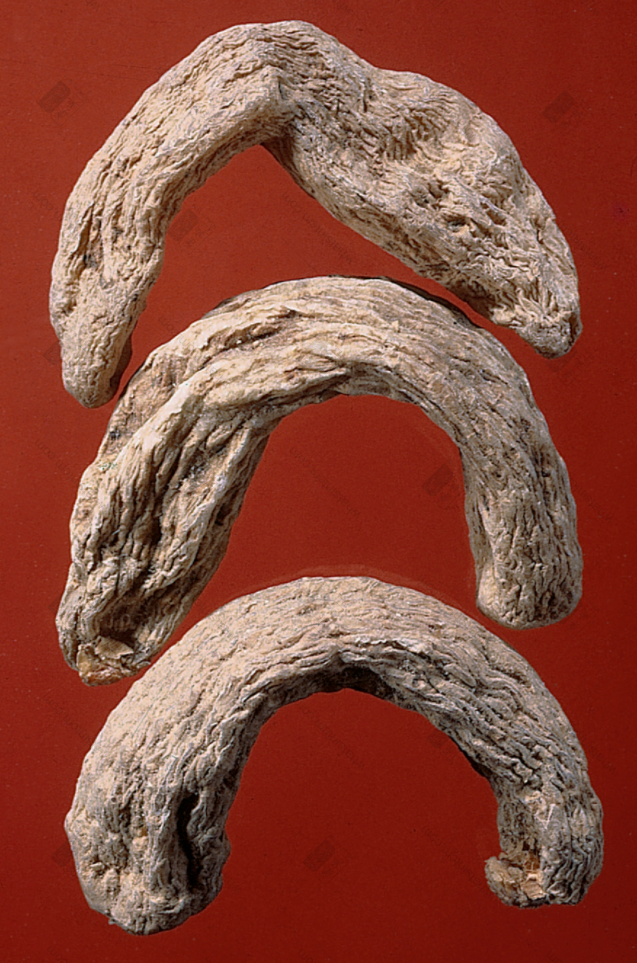 Guizhou Gastrodia Tuber (Tian Ma) (Pickled cucumber)
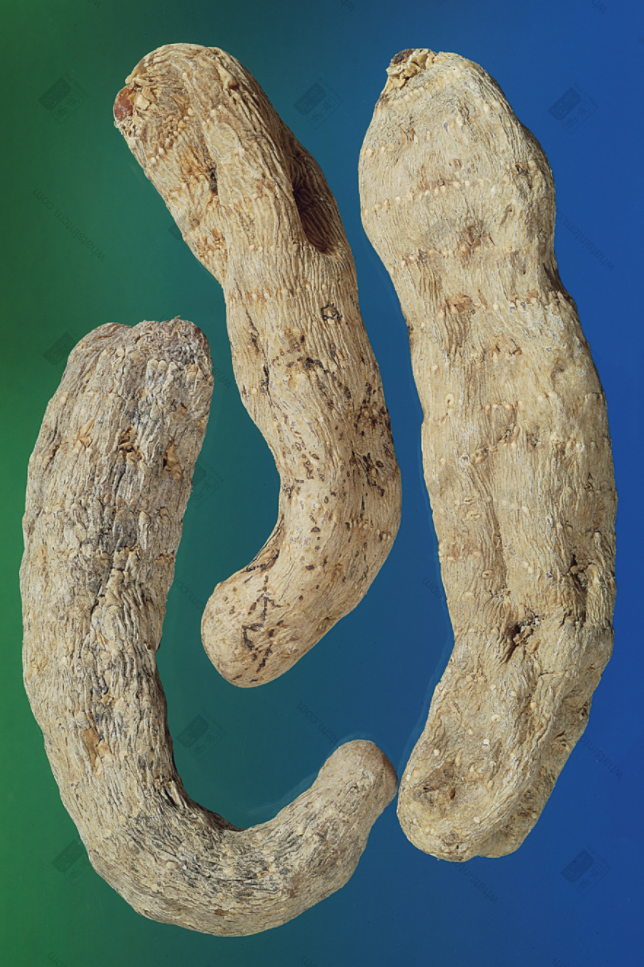 Guizhou Gastrodia Tuber (Tian Ma) (Right 1 sulfur fumigated)
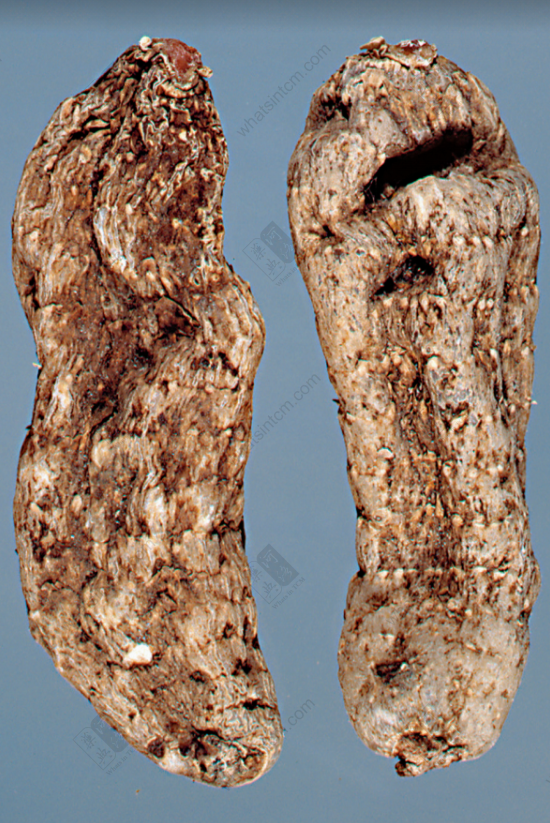 Cultivated Guizhou Gastrodia Tuber (Tian Ma)
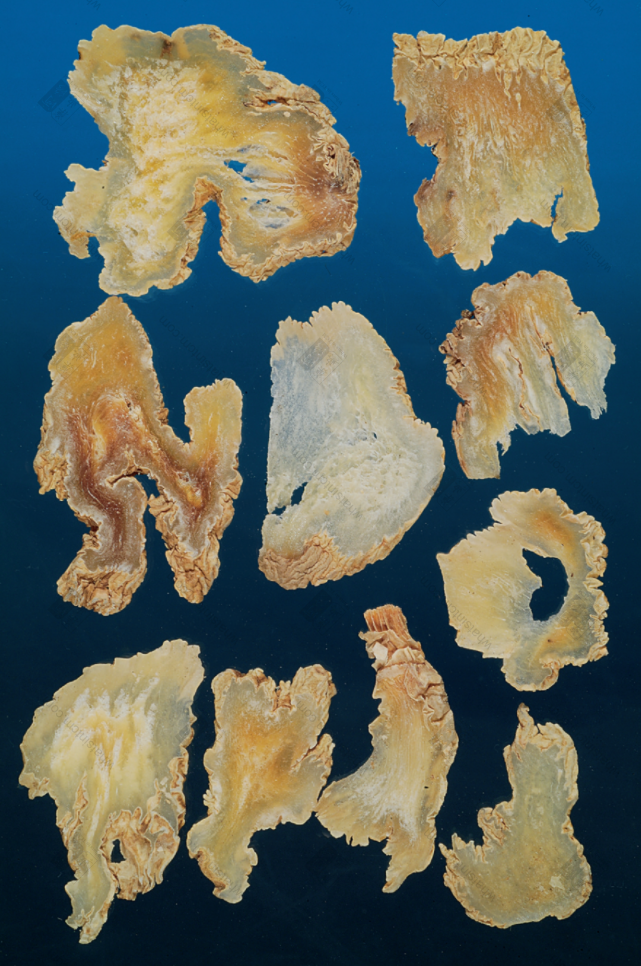 Wild Sichuan Gastrodia Tuber (Tian Ma) Slices (Gem-like luster) (Fissures, semi-transparent)
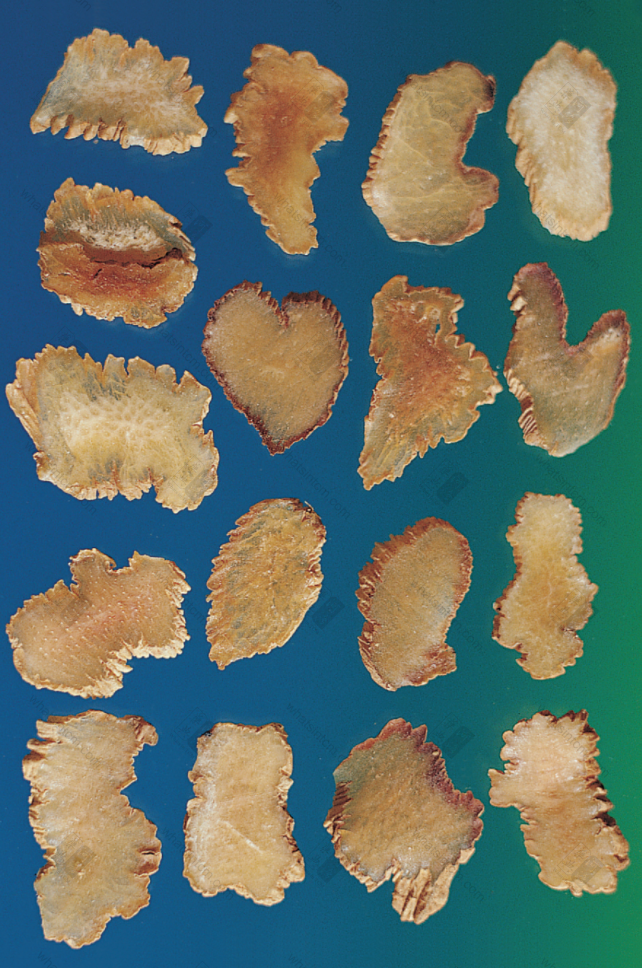 Wild Third Grade Gastrodia Tuber (Tian Ma) Slices
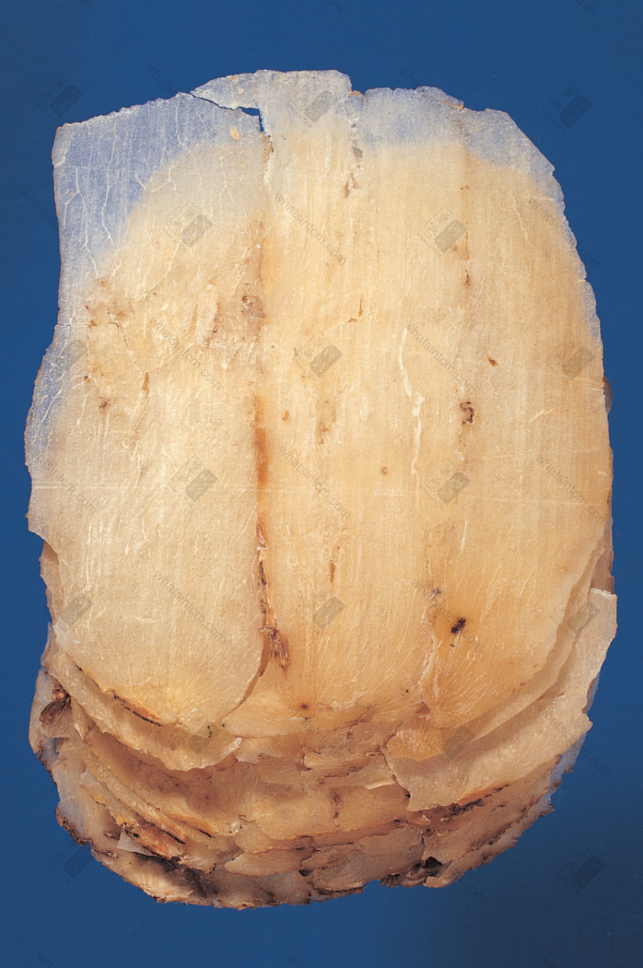 First Grade Sichuan Gastrodia Tuber (Tian Ma) Slices (Flattened and cut combination)
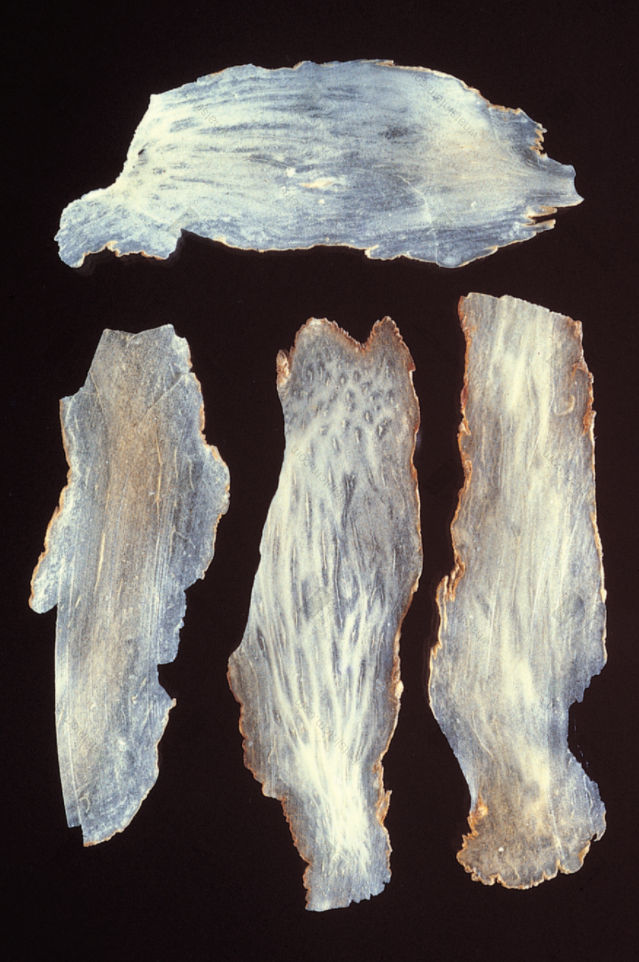 Sichuan Gastrodia Tuber (Tian Ma) Slices
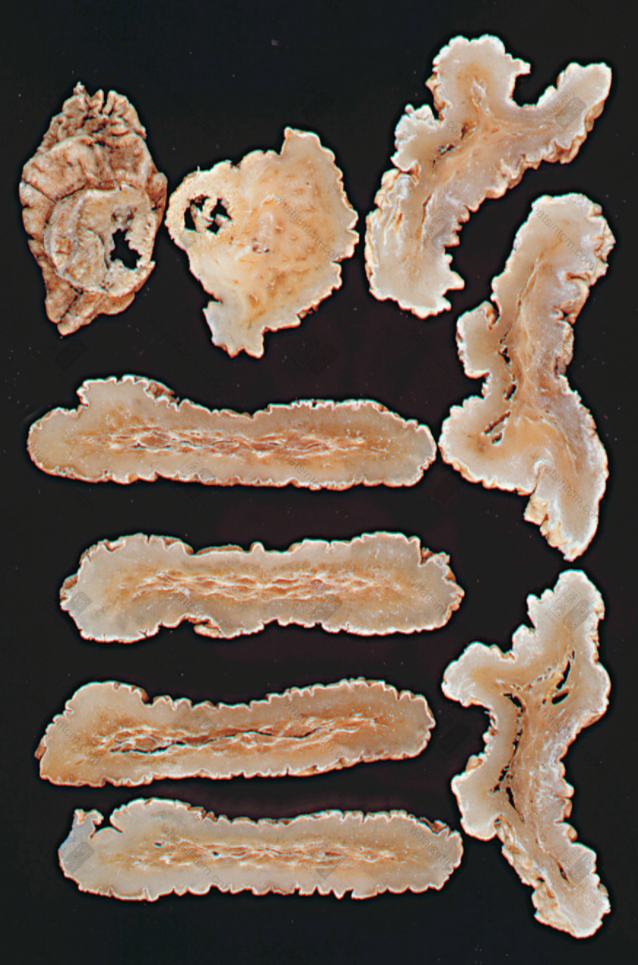 Sichuan Gastrodia Tuber (Tian Ma) Slices
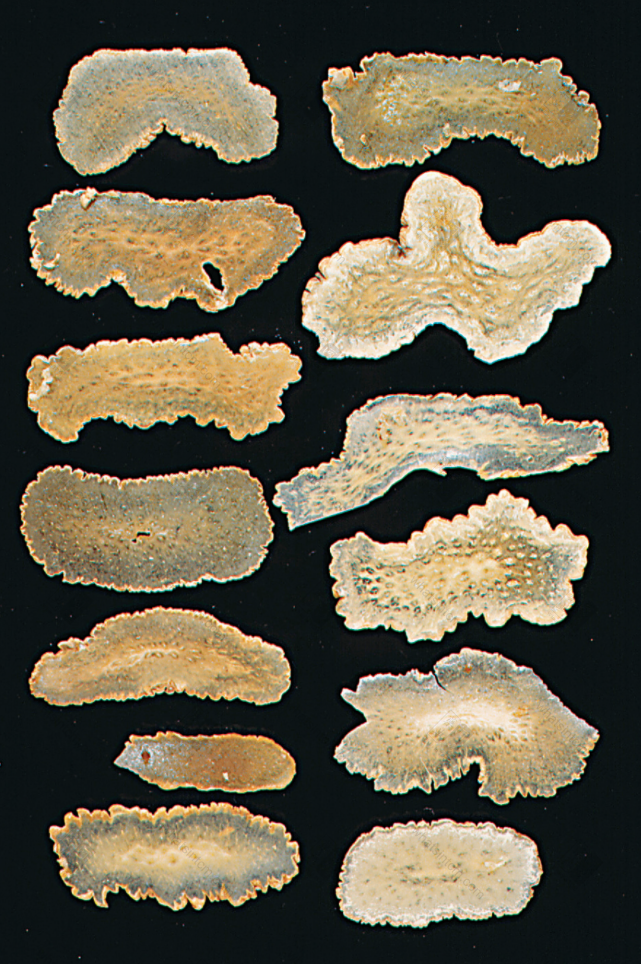 Guizhou Gastrodia Tuber (Tian Ma) Slices (Gem-like luster)
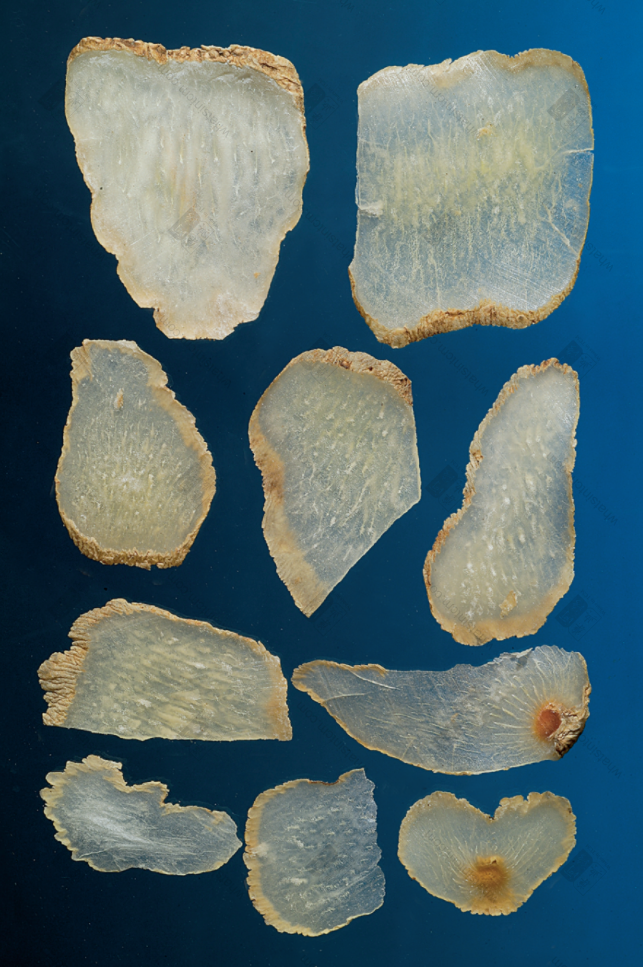 Cultivated Guizhou Gastrodia Tuber (Tian Ma) Slices
【Naming】
【Source】
Song Kaibao
【Common Use Degree】
B
【Botanical Origin】
The tuber of Orchidaceae Gastrodia elata B1.
【Character】
Oblong-elliptic, slightly flattened, flat-round or long-round, wrinkled and curved. The upper end has remnants of dried bud scales, a stem base, red or brownish-red, commonly known as “parrot’s beak”. The lower end is disc-shaped with circular root scars, presenting as a disc-shaped scar, called “belly button”. It is 6~10㎝ long, 2~5㎝ in diameter, and 0.9~2㎝ thick, and can also be longer. The surface is yellowish-white or light yellowish-brown, semi-transparent, often with remnants of light-colored flaky outer skin, mostly with longitudinal wrinkled patterns, commonly known as “ginger skin”, and several rows of inconspicuous fibrous root scars arranged in a ring of transverse ring patterns (dotted ring patterns in a dozen circles), commonly known as “sesame seed spots”. Winter Gastrodia has fine and few wrinkles. Spring Gastrodia has coarse wrinkles and is hard and difficult to break, with a horny texture.
The decoction piece is a very thin small slice, irregularly shaped, 0.8~1.5㎝ wide. The cut surface is semi-transparent, shiny, horny, commonly known as “waxy-like”, and visible vascular bundles in the form of dots or lines. The center is sometimes white and powdery. It is brittle, easy to break, and crunchy when chewed, with stickiness.
【Processing】
1. Raw Gastrodia Tuber (Tian Ma) 2. Baked Gastrodia Tuber (Tian Ma) 3. Stir-fried Gastrodia Tuber (Tian Ma)
【Identification】
《Essential Compendium of Materia Medica》: “The one with white and clear roots is good”.《Convenient Manual of Benevolent Techniques》: “Gastrodia that looks like a melon is the best”. 《Explanations of Materia Medica》: “Should be slightly cold, is good”. 《Essentials of Materia Medica》: “The one that is bright and firm is good”. 《Identification of Good and Bad》: “The yellowish-white, transparent, and melon-like one is a good product”.
This product should be semi-transparent. The surface has hemp spots, wrinkles, and ring sections. The upper end has a “parrot’s beak” (red bud). It is heavy in colloid, breaks without turning into powder when hit, and is crunchy and sticky when chewed. A large size, solid body, tight wrinkles, fine skin, thick and tender flesh, yellowish-white color, bright cross-section, and semi-transparency are generally considered excellent, also known as “Bright Gastrodia”. Uneven sizes, grayish-brown color, coarse skin, thin flesh, light body, and hollow ones are inferior. Wild products are superior to cultivated products, and winter Gastrodia is of better quality than spring Gastrodia. A hollow center is the main characteristic of wild Gastrodia.
【Identification Terminology】
1. Winter Gastrodia: Refers to Gastrodia medicinal materials harvested after the winter solstice when the red bud scales of Gastrodia have not emerged from the soil. The tuber is full and of good quality.
2. Sow Skin: The tuber skin of Gastrodia has annular wrinkles or residual coarse skin, shaped like the skin texture on the back of a sow.
3. Sow Bubble (Sow Shell): Refers to Gastrodia medicinal materials that are light in weight, porous, and hollow.
4. Horny (Waxy-like): Refers to some Chinese medicinal materials containing starch and other polysaccharides, which, after processing, especially steaming and cooking, gelatinize the starch and polysaccharides, and exhibit a translucent and shiny appearance after drying, especially noticeable on the cut surface. Such as Gastrodia, Bletilla striata, etc., their cut surfaces all appear horny. The cut surface of Gastrodia is semi-transparent, shiny, horny, commonly known as “waxy-like”.
5. Grooving: (1) Refers to the longitudinal grooves formed on the surface of roots or rhizome medicinal materials after drying. Such as Gastrodia, Rhubarb, Asparagus, Stemona, Aster, Atractylodes lancea, Ligusticum sinense, etc., all have grooving. (2) Refers to deer antlers that are not full and shrink into a grooved shape.
6. Bright Gastrodia: Refers to Gastrodia that is washed clean, skinned, rinsed with clean water again, steamed thoroughly, and dried after harvesting. Its characteristics are large size, solid body, yellowish-white and bright color, and semi-transparent appearance.
7. Sesame Seed Spots: Degenerate fibrous root scars or unique slightly protruding buds on the surface of Gastrodia. The surface is yellowish-white or light yellowish-brown, and several rows of inconspicuous fibrous root scars arranged in a ring of transverse ring patterns are visible, arranged in a discontinuous ring of small dots.
8. Spring Gastrodia: Refers to Gastrodia medicinal materials harvested before the beginning of summer when Gastrodia has just emerged from the soil and is sprouting. The quality is not as good as winter Gastrodia.
9. As if Decapitated: Refers to spring Gastrodia medicinal materials with a stem base.
10. Disc-shaped Base (Concave Umbilicus, Belly Button): Refers to the round umbilical scar at the bottom of Gastrodia, which is a scar left after detachment from the mother Gastrodia, and is a key point in identifying genuine Gastrodia.
11. Ginger Skin-like: The surface of the Gastrodia tuber is grayish-yellow or light brown, with longitudinal wrinkled fine lines, shaped like ginger skin.
12. Pickled Cucumber Gastrodia: Gastrodia is flat-round or long-round, slightly curved, resembling pickled cucumber.
13. Toad Skin (Hama Skin): Refers to the residual latent buds and longitudinal and transverse wrinkles on the surface of Gastrodia medicinal materials, resembling the outer skin of a toad.
14. Mirror Surface: The cut surface of Gastrodia is flat, bright, horny, and semi-transparent, called a mirror surface, which is the result of starch gelatinization. In addition, Corydalis, Turmeric, Bletilla striata, Curcuma longa, etc., also “show a mirror surface”, but are called “horny” or “have a waxy luster”.
15. Gem-like Luster: Mostly refers to some horny medicinal materials, the horny texture is honey-white and tender, the luster is smooth, bright, and eye-catching.
16. Parrot’s Beak (Red Braid): The brownish-red or reddish-yellow dried bud scales or ribbon-like stem scars remaining at the top of the Gastrodia (winter Gastrodia) tuber, which are formed by the extension of bud scales. It is an important feature for identifying the authenticity of Gastrodia.
【Chapter】
Rhizomes