

Lotus Seed
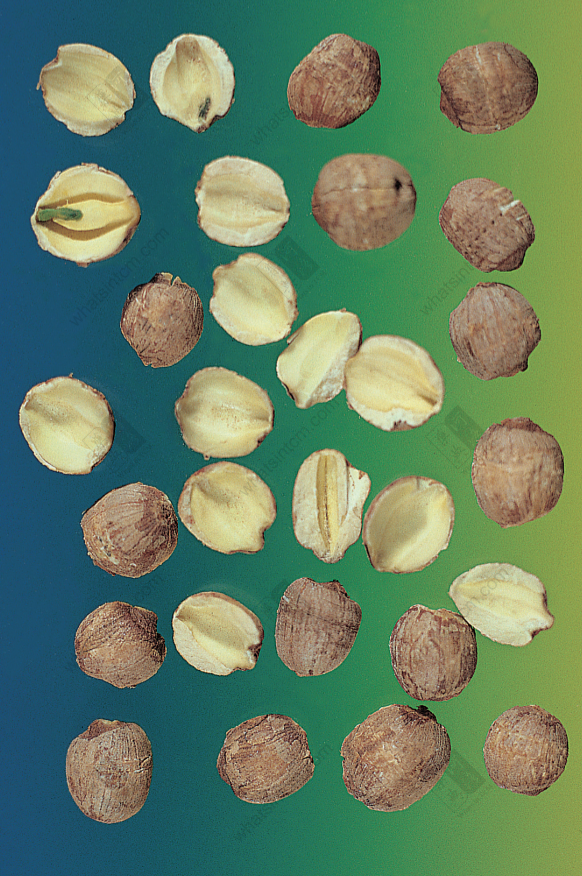 Red Lotus Seed (oval, reddish-brown, with obvious longitudinal lines and nipple-like protrusions and cracks)
 Fresh Lotus Seed
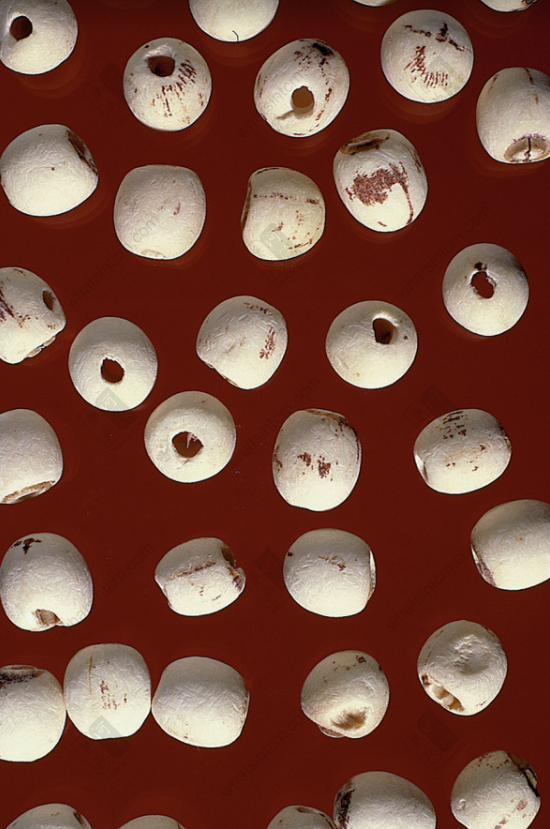 Xiang Lotus Seed
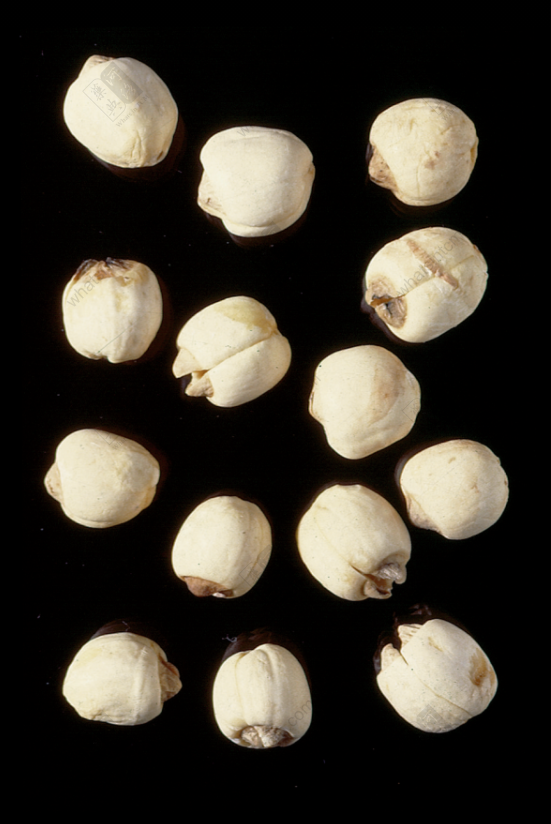 White Lotus Seed (outer skin removed, yellowish-white)
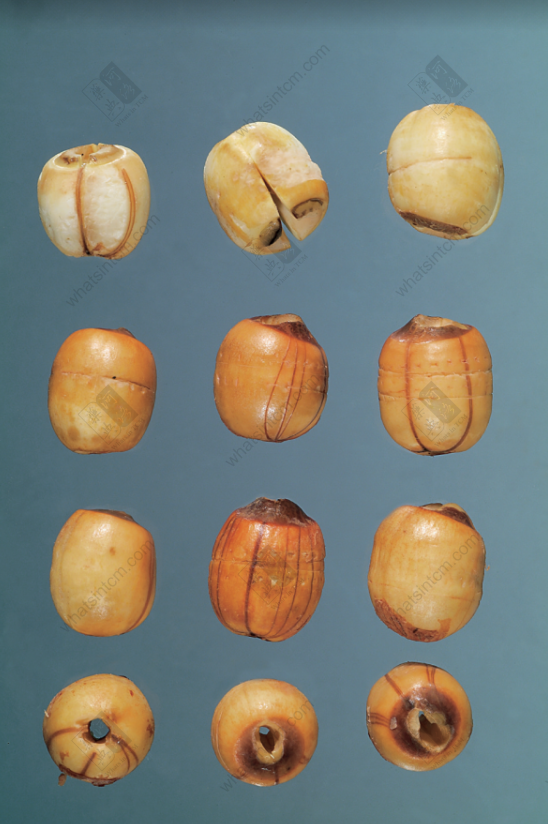
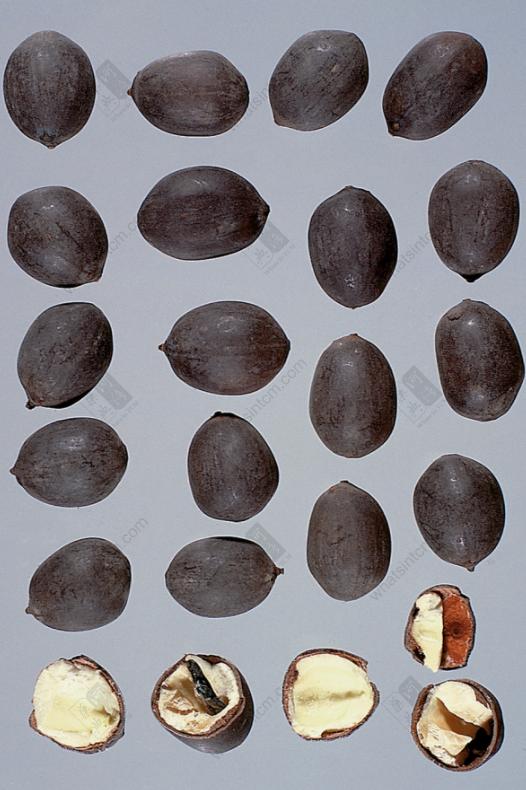 Stone Lotus Seed (Sweet Stone Lotus) (harvested after frost, slightly pointed at both ends, gray-black, with grayish-white powdery frost)
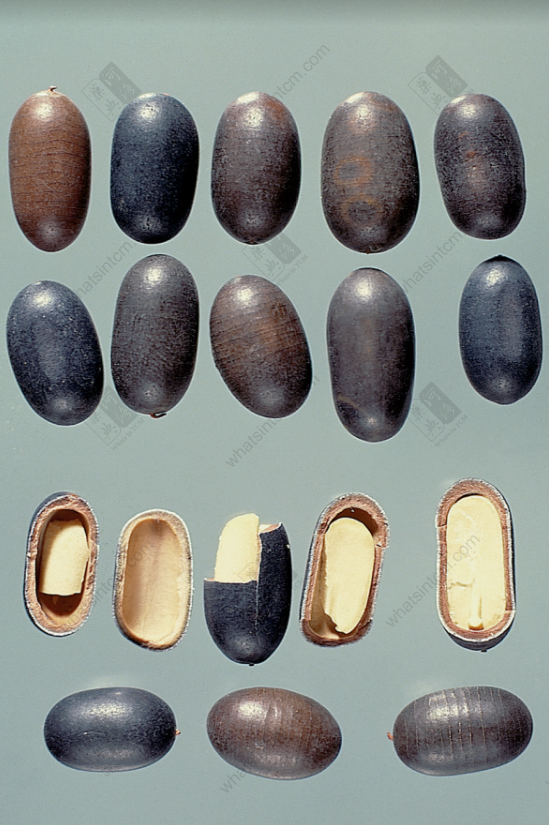 Stone Lotus Seed (Bitter Stone Lotus) (oval, blunt and round at the ends, jet black, with annular transverse cracks, hard, difficult to break open)
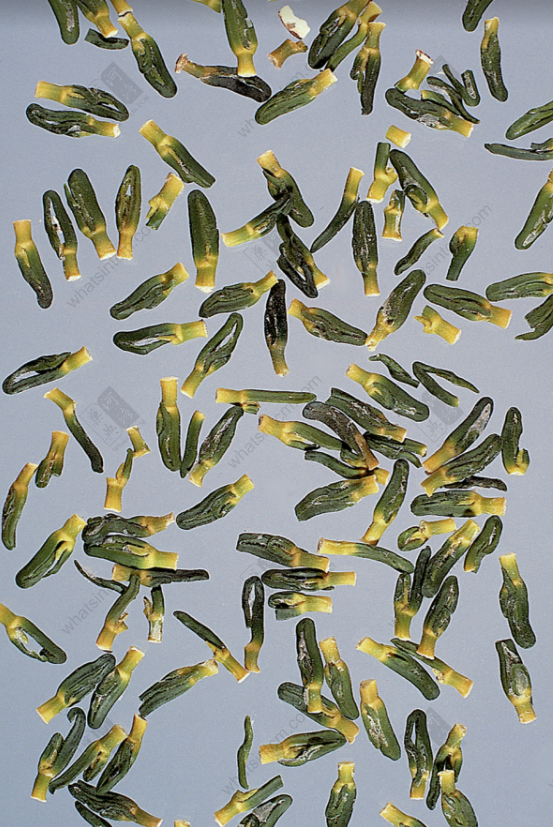 Lotus Plumule (Lian Xin) (green embryo with 2 branches, one long and one short, thin rods curled into an arrow shape, the tip folded downwards, between the tiny embryo cotyledons)
【Naming】
【Source】
Shen Nong’s Herbal Classic, Upper Grade
【Common Use Degree】
B
【Botanical Origin】
The dried, mature seeds of the lotus plant Nelumbo nucifeya Gaertn. The lotus plumule (Lian Xin) is the green embryo of the lotus seed. Stone Lotus Seed is the dried, mature fruit, commonly known as Sweet Stone Lotus. Another type is the seed of Caesalpinia minax Hance of the Fabaceae family, commonly known as Bitter Stone Lotus.
【Characteristics】
(1) Lotus Seed (Lian Rou): Oval in shape, 1.2~1.7 cm long and 0.7~1.2 cm in diameter. The outer skin is reddish-brown or yellowish-brown, with longitudinal lines, closely adhering to the seed kernel and difficult to peel off; one end has a dark reddish-brown nipple-like protrusion (apical protrusion), often with cracks. Some seeds have had the outer skin removed. Its surface is yellowish-white, the seed kernel has 2 cotyledons, plump and hard in texture, mealy, with a large space in the center, containing the green embryo (lotus plumule, green heart), odorless, sweet and bland with a slightly astringent taste.
(2) Lotus Plumule (Lian Xin): Slightly rod-shaped, 1.2~1.6 cm long, greenish-blue at the tip, with 2 branches, one long and one short, with the tips folded back and tightly adhering to each other. After softening with water, it can be unfolded to reveal 2 shield-shaped curled young leaves. The central embryo is upright, about 2 mm long. The radicle at the base is yellowish-green, slightly cylindrical, 2-4 mm long. Brittle, easily broken, the fracture surface has many small holes. Odorless, bitter taste.
(3) Stone Lotus Seed (Sweet Stone Lotus): The fruit taken from the lotus seedpod after frost. Slightly pointed at both ends, 1.5~2 cm long and 0.8~1.2 cm in diameter, the surface is grayish-brown or grayish-black, covered with grayish-white powdery frost. After removing the frost, it is slightly shiny and has densely grown light-colored small dots. Under a magnifying glass, many transverse lines can be seen. The tip has a small round hole, and the base has a short fruit stalk. Hard in texture, not easy to break open; the pericarp is about 1 mm thick, and the inner surface is reddish-brown. There is one seed inside, with two cotyledons, yellowish-white, very plump; the embryo, hypocotyl, and young leaves can be seen in the middle, all greenish-yellow, i.e., lotus flesh. Odorless, astringent and slightly sweet taste.
(4) Bitter Stone Lotus: The seed is oval, blunt and round at both ends, 1.5~2.5 cm long and 7~12 mm in diameter, the surface is jet black, sometimes with annular transverse cracks, hard in texture, difficult to break open. After removing the seed coat, the inside is two yellowish-white, plump cotyledons, shaped like peanut kernels, odorless, and extremely bitter taste.
【Preparation】
1. Stone Lotus Seed 2. Lotus Seed 3. Lotus Plumule (Lian Xin)
【Identification】
《Universal Relief Prescriptions》: “Stone Lotus. The ones that turn black in autumn are good.” 《Universal Relief Prescriptions》: “Use Lotus Seed from the belly of a goose. The ones that the goose eats feces in the fields are good.” 《Herbal Benefits and Harms》: “Best used in porridge.” 《Quality Discrimination》: “The ones that are hard as stone after cooking, black and large are good.”
1. Stone Lotus Seed: The ones that are black in color, plump, and hard in texture are the best.
2. Lotus Seed: The ones that are large, plump, and uniform are the best.
3. Lotus Plumule (Lian Xin): The ones that are large, greenish-blue in color, and have not been cooked are the best.
【Category】
Seed Category